
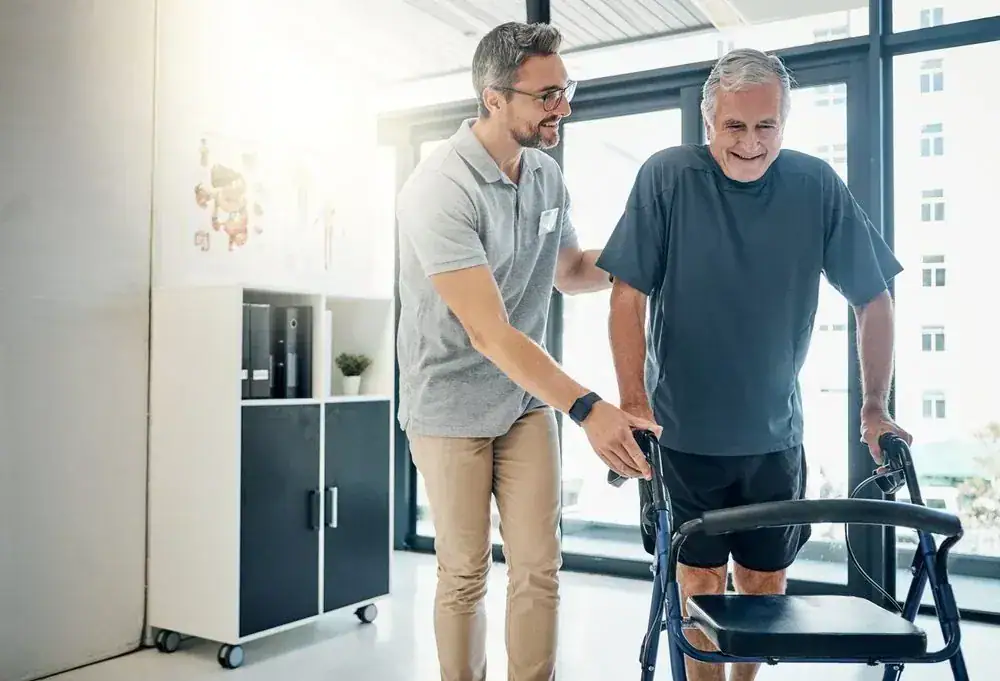
If you’ve fallen before, or if you’re starting to feel unsteady on your feet, you already know what’s at stake. Your independence. Your ability to stay in your own home. The simple freedom to walk to the mailbox without second-guessing every step.
Here’s what most people don’t realize: up to two-thirds of falls can be prevented. Not by luck. Not by avoiding movement. But through targeted physical therapy that rebuilds strength, improves balance, and addresses the specific reasons you’re at risk in the first place.
You don’t have to accept falling as part of getting older. When you work with a physical therapist who understands elderly fall prevention, you’re not just doing generic exercises. You’re retraining your body to respond faster, stand stronger, and move with the kind of confidence you thought was gone for good. That means fewer close calls, less fear, and more control over your daily life.
We’ve been providing home-based physical and occupational therapy across Nassau County for over a decade. We specialize in treating patients who have difficulty leaving their homes—whether due to mobility limitations, recent falls, or chronic conditions that make travel exhausting or unsafe.
Our therapists come to you in Carle Place and surrounding communities throughout Long Island. That means no stressful car rides, no waiting rooms, and no rushing to make an appointment across town. You get personalized care in the environment where you actually live, which is exactly where fall prevention needs to happen.
We treat every patient with the same attention and respect we’d want for our own family. Our approach is straightforward: assess your specific risks, create a plan that fits your abilities and goals, and help you build the strength and balance you need to move through your home safely.
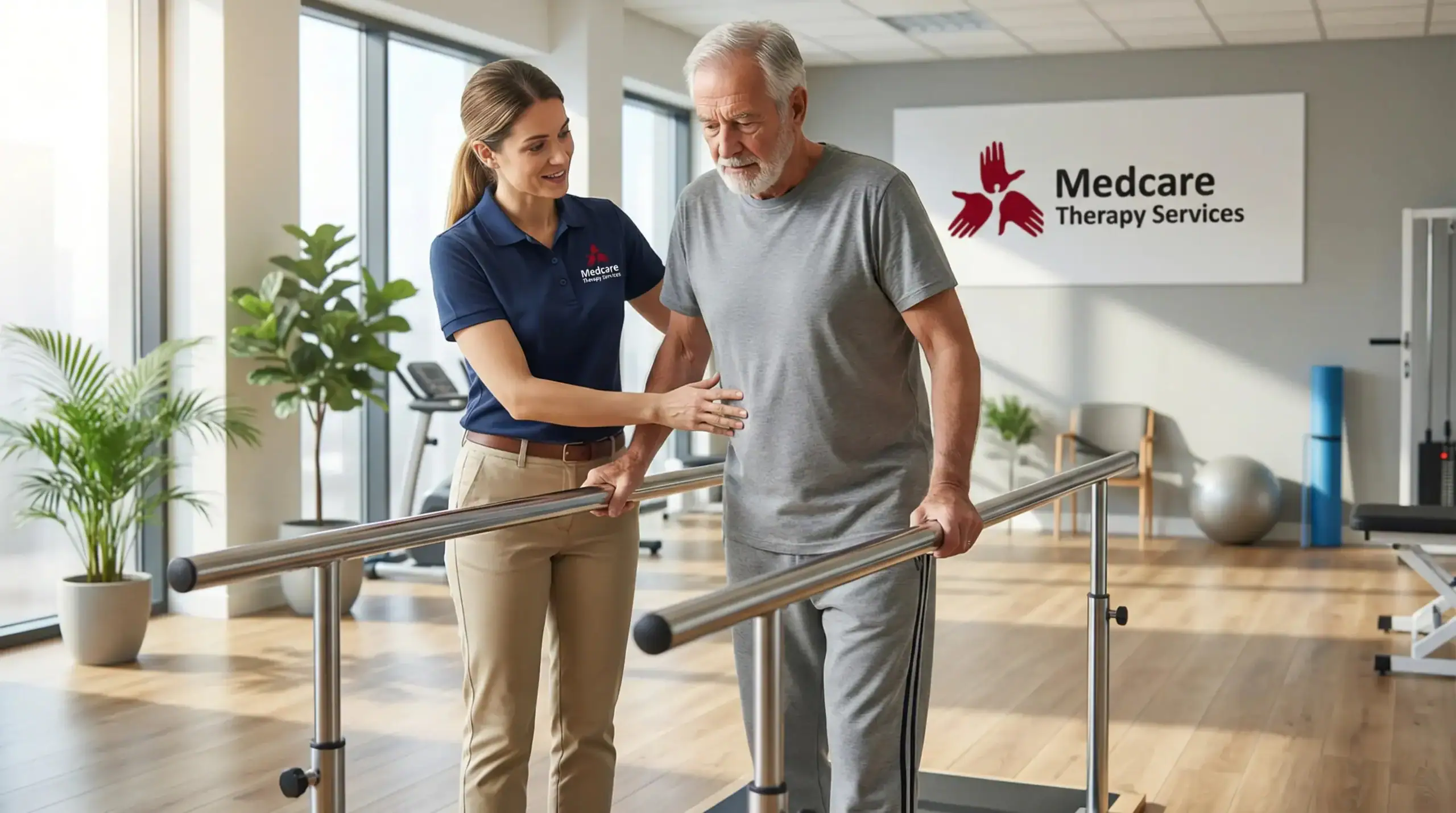
Your therapist starts with a thorough assessment in your home. We look at how you move, where you feel unsteady, and what environmental factors might be increasing your risk. This isn’t a clipboard checklist—it’s a real conversation about what’s been happening and what you’re worried about.
From there, we build a customized program that combines balance exercises for seniors with strength training tailored to your current abilities. You might work on standing from a chair without using your hands, walking with better posture and control, or improving your reaction time when you start to lose balance. These aren’t one-size-fits-all exercises pulled from a handout. They’re specific to what your body needs right now.
As you progress, we adjust the program. What felt challenging in week one becomes your baseline. We add complexity, increase resistance, and keep pushing your abilities forward—but always at a pace that feels manageable. You’ll also learn how to continue these exercises on your own between sessions, so the benefits compound over time.
The goal isn’t just to prevent the next fall. It’s to give you back the confidence to move freely in your own home without constantly calculating risk in your head.
Ready to get started?
Your fall prevention program includes a full home safety evaluation. We identify tripping hazards, lighting issues, and areas where you might benefit from grab bars or other modifications. Small changes in your environment can make a significant difference, and we help you prioritize what matters most.
You’ll receive a personalized exercise plan that focuses on multicomponent training—the most effective approach for reducing falls in older adults. That means combining balance work, strength training, and gait training into a program that addresses your whole body, not just one weak area.
Here in Carle Place and across Nassau County, we’re seeing more older adults choose to age in place rather than move to assisted living. That’s a great choice when you have the right support. With more than 200,000 residents over 60 in Nassau County alone, the need for accessible, home-based fall prevention has never been higher. We understand the local housing stock, the challenges of Long Island’s older homes, and the specific needs of this community.
We also work on reducing the psychological side of fall risk. Fear of falling can be just as limiting as physical weakness. When you start to avoid activities because you’re scared, your muscles weaken and your balance gets worse—which actually increases your risk. We help you break that cycle by building real skills and real confidence at the same time.
Most people start noticing small improvements within the first two to three weeks. You might feel steadier when you stand up from a chair, or you might catch yourself before stumbling where you used to lose your balance. These early wins matter because they start rebuilding your confidence right away.
Significant, measurable improvements in strength and balance typically show up around the six to eight week mark if you’re consistent with your exercises. That’s when you’ll notice bigger changes—like walking without holding onto furniture, feeling stable on uneven surfaces, or moving through your home without that constant low-level anxiety about falling.
The timeline depends on where you’re starting from and how often you’re able to practice between therapy sessions. If you’ve had multiple falls or you’re recovering from an injury, it might take a bit longer. But even small improvements reduce your risk, and that protection builds over time as you get stronger.
You can find balance exercises online, but here’s the problem: you don’t know which ones you actually need. Fall risk isn’t the same for everyone. Your balance issues might stem from weak hips, poor ankle mobility, vision changes, medication side effects, or a combination of factors. Without an assessment, you’re guessing.
A physical therapist identifies your specific risk factors and designs a program that targets those areas. We also make sure you’re doing exercises correctly, which matters more than most people realize. Poor form can reinforce bad movement patterns or even increase injury risk, especially if you’re already unsteady.
There’s also the progression piece. As you get stronger, the exercises need to get harder to keep delivering results. A therapist adjusts your program over time so you’re always working at the right level—not too easy, not too risky. That’s hard to manage on your own, especially when you’re not sure what “harder” should look like or when you’re ready for the next step.
Medicare Part B covers physical therapy when it’s medically necessary, and fall prevention absolutely qualifies if you have a documented fall risk. That might mean you’ve fallen recently, you have a condition that affects balance like neuropathy or Parkinson’s, or your doctor has identified you as high-risk based on an assessment.
You’ll need a physician’s order for therapy, but most primary care doctors are more than willing to write one if you’ve expressed concerns about falling. From there, Medicare typically covers 80% of the approved amount after you’ve met your deductible, and you’re responsible for the remaining 20%. Many supplemental insurance plans cover that remaining portion.
If you have a Medicare Advantage plan or private insurance, coverage varies by plan. We can verify your benefits before you start and let you know what to expect. The key is making sure the therapy is documented as medically necessary and tied to a specific diagnosis or fall risk, not just general wellness. Most of our patients in Carle Place and Nassau County find that their insurance covers the majority of their treatment.
That’s one of the most common concerns we hear, and it makes complete sense. If you’ve fallen before, or if you’ve been feeling unsteady, the last thing you want to do is put yourself in a situation where it might happen again.
Here’s how we handle it: every exercise is designed with safety in mind. You’re never asked to do something without proper support nearby—whether that’s a sturdy chair, a countertop, or the therapist standing right next to you. We start with exercises that feel manageable, even easy, and build from there. You’re in control of the pace.
The other thing to understand is that controlled challenge is actually how you reduce fall risk. If you only do things that feel 100% safe, you never improve. But we’re not talking about reckless challenge—we’re talking about exercises that gently push your limits in a supported environment. Over time, what felt scary becomes routine, and your body learns to handle situations that used to throw you off balance. That’s how you get your confidence back.
The biggest difference is that we’re working in the actual environment where you need to be safe. Your home has its own layout, its own hazards, and its own challenges. We can address those directly instead of simulating them in a clinic setting. If you struggle with the transition from your bedroom to the bathroom in the middle of the night, we work on that exact movement in that exact space.
Home-based therapy also removes the barriers that keep people from getting care in the first place. No transportation stress, no getting dressed and ready to leave the house, no exposure to other people if you’re immunocompromised or just prefer privacy. You save energy and time, which means you can put more focus into the actual therapy.
For older adults in Carle Place who have mobility limitations or who find it exhausting to travel, home-based care isn’t just more convenient—it’s often the only realistic option. And because we’re seeing you in your home, we get a much clearer picture of your daily life and what’s actually putting you at risk. That leads to better, more practical recommendations that you’ll actually use.
First, falling during therapy doesn’t mean the program isn’t working. Fall prevention reduces your risk significantly, but it doesn’t eliminate every possibility—especially early on when you’re still building strength. If you do fall, we treat it as important information, not a failure.
We’ll reassess what happened. Was it environmental—a rug, poor lighting, an obstacle you didn’t see? Was it physical—your legs gave out, you got dizzy, you lost your balance? Was it related to timing, like rushing to the bathroom or moving too quickly after standing up? Understanding the cause helps us adjust your program and address gaps we might have missed.
We’ll also work with you on fall recovery techniques if that’s appropriate. Some people fall because they don’t know how to catch themselves or how to get up safely afterward. Learning those skills can reduce injury risk and give you more confidence, even if another fall happens down the road. The goal is to make you more resilient in every way possible—stronger, steadier, and better prepared to handle the unexpected.
Other Services we provide in Carle Place