
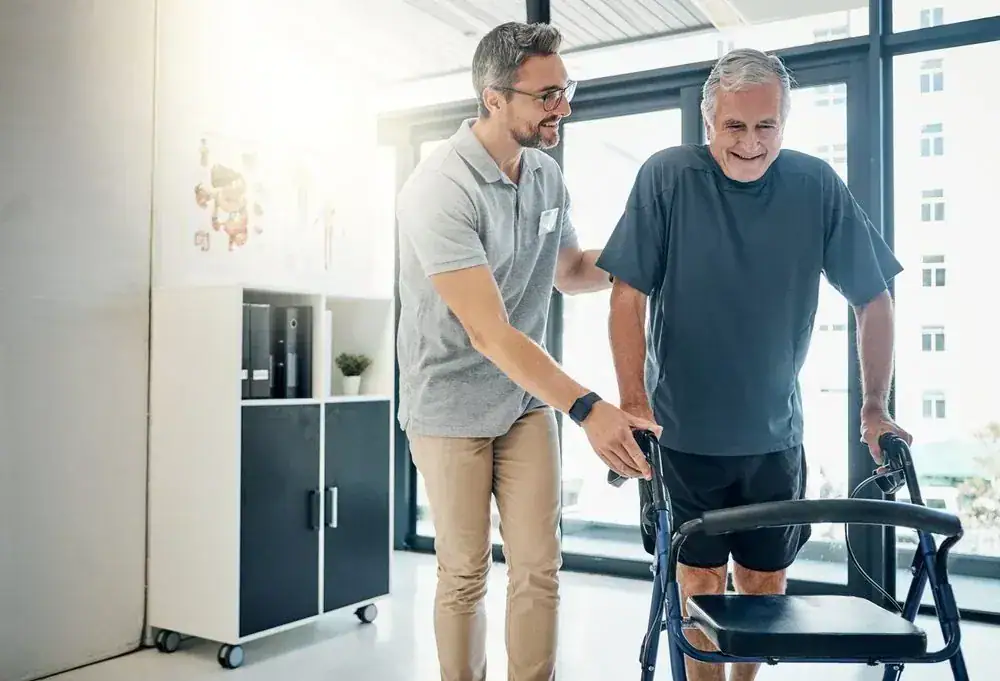
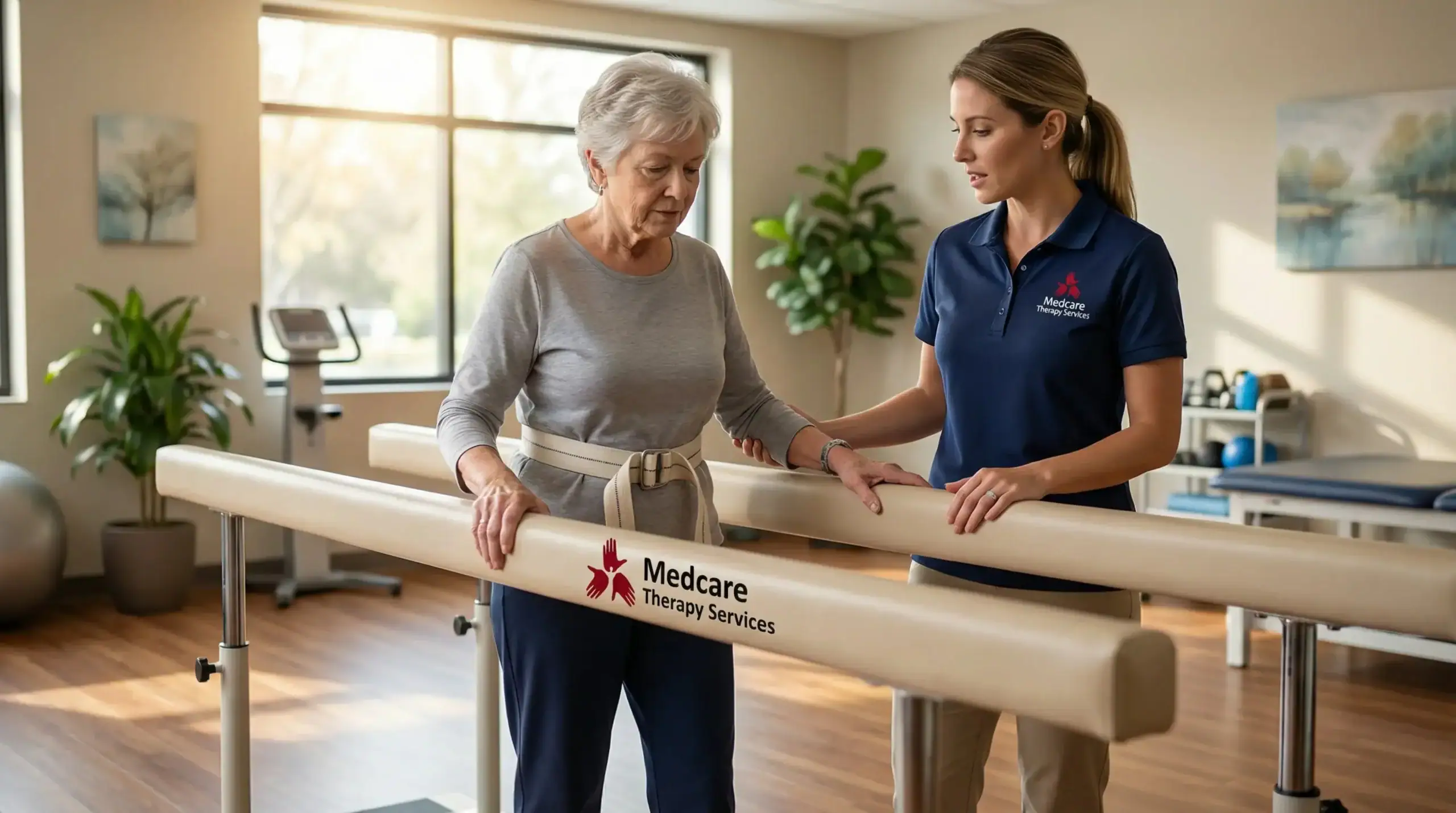
You stop limiting yourself. That’s what happens when balance improves and confidence returns.
Right now, you might be avoiding stairs, skipping social events, or holding onto furniture when you walk across a room. Maybe you’ve already had a close call. Or maybe you just don’t feel as steady as you used to, and that uncertainty is starting to dictate what you do and where you go.
Here’s what research shows: balance exercises for seniors reduce fall risk by 23-24% when done consistently. Strength and balance training combined can cut that risk in half. But the bigger shift isn’t just physical. It’s psychological. You start trusting your body again. You move through your day without second-guessing every step.
That’s what fall prevention therapy does. It rebuilds the physical foundation—strength, coordination, reaction time—and it gives you back the freedom to live without fear. You’re not just preventing a fall. You’re protecting your independence.
We’ve been delivering in-home physical therapy and occupational therapy across Long Island for over a decade. We’re licensed, Medicare-approved, and locally based—which means we understand the specific challenges seniors face in Nassau County, where 88% of injury hospitalizations for adults over 65 are caused by falls.
We come to your home. That eliminates transportation barriers, reduces stress, and lets you work with a therapist in the environment where you actually need to feel confident. Every plan is personalized, and every session is built around your goals, your limitations, and your pace.
You’re treated like family here. That’s not a tagline. It’s how we operate. We take the time to listen, assess properly, and build a program that actually fits your life.
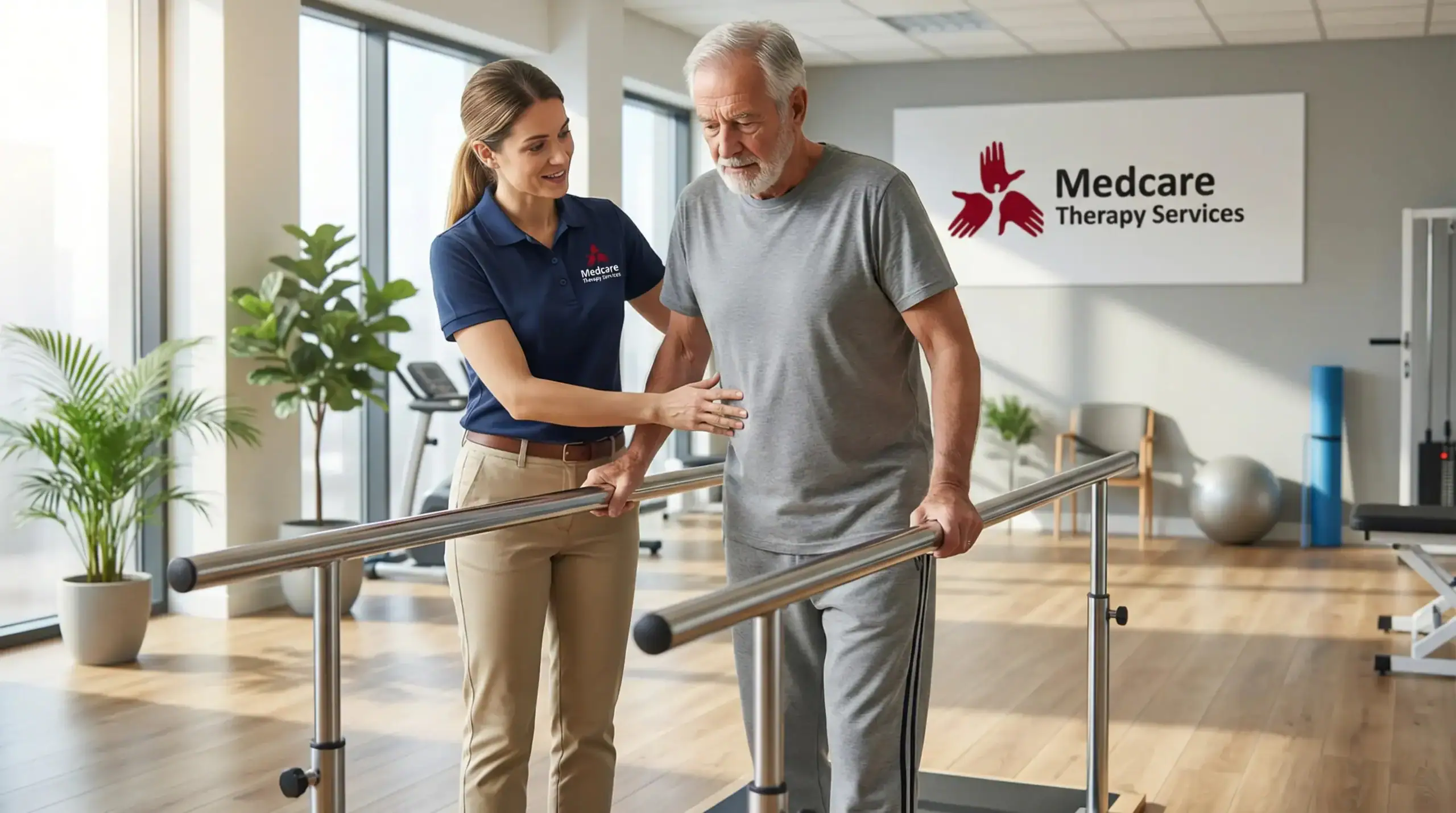
First, we assess. A licensed physical or occupational therapist comes to your home and evaluates your balance, gait, strength, mobility, and environment. We’re looking at how you move, where the risks are, and what’s contributing to instability—whether that’s muscle weakness, medication side effects, vision issues, or hazards in your home.
Then we build your plan. Based on that assessment, we design a program that typically runs 12 weeks and includes balance training, strength exercises, gait training, and functional movement work. Sessions happen three or more days per week, right in your home, for about 45 minutes each. Everything is adapted to your current ability level.
As you progress, we adjust. You’ll notice improvements in how you stand, how you walk, and how quickly you can react if you start to lose balance. We also work with you on environmental modifications—simple changes that make your home safer without making it feel institutional.
Most of our clients see measurable improvements within the first few weeks. But the real goal isn’t just better balance. It’s getting you back to doing the things you’ve been avoiding.

Ready to get started?
Every fall prevention program includes a comprehensive fall risk assessment. That means we evaluate your gait, balance, muscle strength, medications, vision, hearing, and home environment. This isn’t a generic checklist. It’s a detailed look at the factors that are actually putting you at risk.
From there, you get a personalized exercise program. That includes balance training exercises—like standing on one foot, weight shifting, and controlled movements that challenge your stability. You’ll also do strength training, because strong legs and core muscles are essential for preventing falls. We incorporate gait training to improve how you walk, and functional exercises that mimic real-life movements—getting up from a chair, reaching for something on a shelf, turning around quickly.
Here’s what matters for Long Island seniors: you’re statistically more at risk than most of New York State. Nassau and Suffolk counties rank 4th and 5th for fall prevalence. That’s not a scare tactic. It’s a fact. And it means that balance training isn’t optional—it’s a survival skill. We also address the psychological side. Many seniors develop a fear of falling, even if they haven’t fallen yet, and that fear leads to inactivity, which leads to further decline. We help you rebuild confidence while rebuilding strength.
Everything is covered by Medicare and most commercial insurances. You don’t need to figure out transportation. You don’t need to leave your house. You just need to be ready to move.
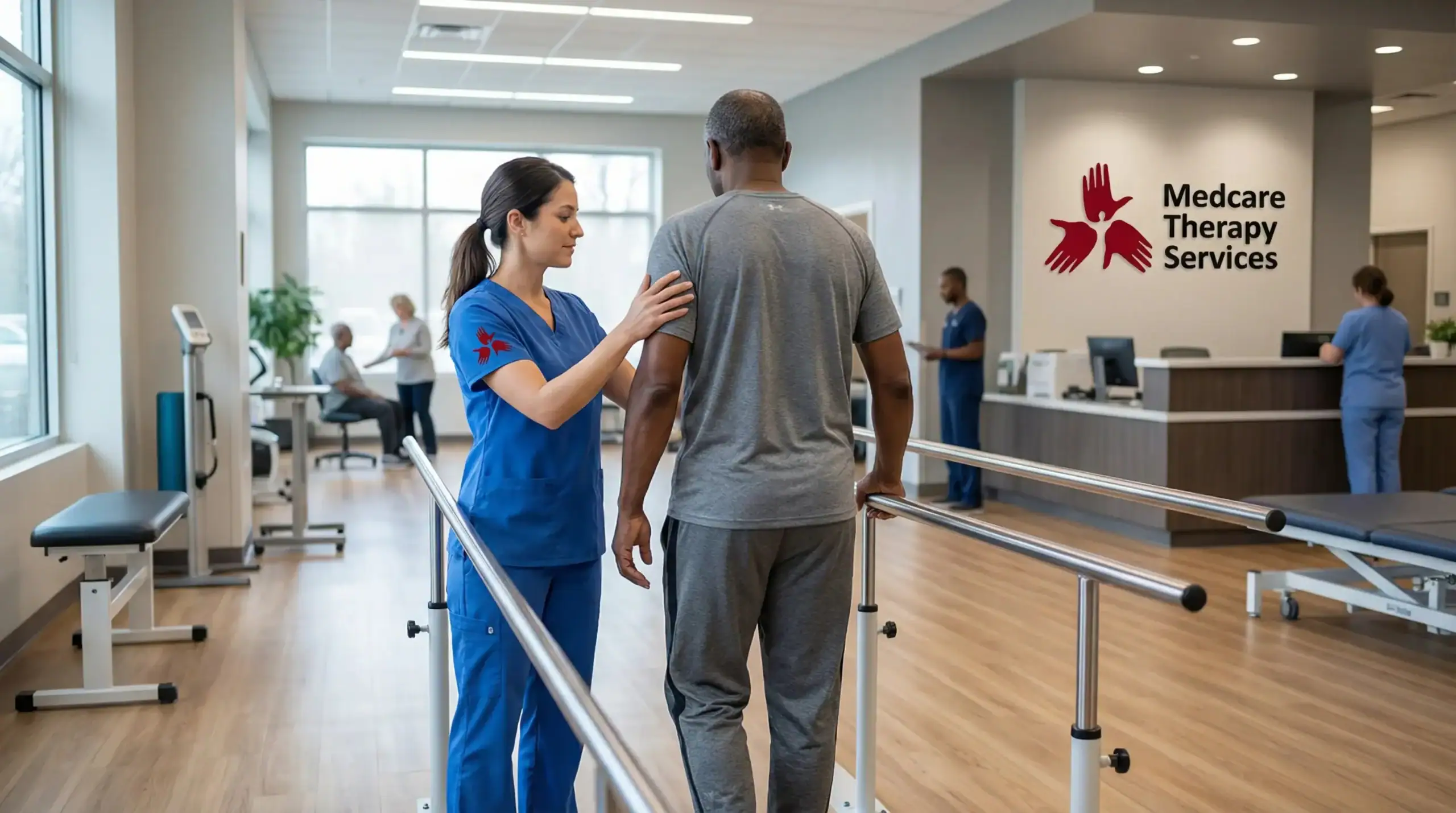
If you’ve fallen in the past year, you’re at higher risk. If you’re afraid of falling, even without a history of falls, that’s also a red flag. Other signs include feeling unsteady when you walk, needing to hold onto furniture or walls for support, difficulty getting up from a chair, dizziness or lightheadedness, or taking four or more medications.
Age is a factor too. One in four adults over 65 falls every year. In Nassau County, where the median age is nearly 42 and more than 200,000 residents are over 60, the numbers are even higher. But falls aren’t inevitable. They’re predictable and preventable.
A licensed therapist can conduct a fall risk assessment in your home. We evaluate your balance, strength, gait, and environment to identify specific risk factors. From there, we build a plan to address them. The earlier you start, the more effective the intervention.
You’ll do exercises that challenge your stability in a controlled way. That might include standing on one leg, shifting your weight from side to side, walking heel to toe, or practicing controlled movements like reaching or turning. These aren’t random activities. They’re evidence-based exercises designed to improve your reaction time, coordination, and postural control.
You’ll also do strength training. Weak legs and core muscles are major contributors to falls, so we focus on exercises that build functional strength—squats, leg lifts, step-ups, and resistance work. Gait training is another component. We work on how you walk, how you turn, and how you navigate obstacles.
Everything is adapted to your current ability. If you’re using a walker, we work with that. If you have arthritis or joint pain, we modify accordingly. The goal is to challenge you without overwhelming you. Most programs run about 12 weeks, with sessions three or more days per week. Research shows that’s the sweet spot for reducing fall risk by up to 50%.
Yes. Medicare Part B covers outpatient physical therapy and occupational therapy when it’s medically necessary and prescribed by a doctor. Fall prevention therapy qualifies if you have documented risk factors—like a history of falls, balance issues, or mobility limitations.
We accept Medicare and nearly all commercial insurances. The process is straightforward. Your doctor provides a referral or prescription, we verify your coverage, and we schedule your in-home assessment. There’s no need to navigate this alone. We handle the paperwork and communicate directly with your insurance provider.
What matters is that cost shouldn’t be a barrier. Approximately 95% of fall-related hospitalization charges are billed to publicly funded programs like Medicare and Medicaid. Preventing a fall is far less expensive—and far less painful—than treating one. If you’re unsure about your coverage, call us. We’ll walk you through it.
Because 60% of fall-related hospitalizations happen at home. If your goal is to feel safe and confident in your own space, that’s where you need to train.
In-home therapy eliminates transportation barriers. For many Long Island seniors, getting to a clinic is stressful or impossible. Commute times in Nassau County average 36 minutes. That’s a significant burden when you’re already dealing with mobility issues. When we come to you, you save time, energy, and stress.
But the bigger advantage is context. We see how you actually move through your home. We identify hazards you might not notice—loose rugs, poor lighting, clutter, uneven thresholds. We can address those risks in real time and teach you how to navigate your environment safely. You also get personalized attention in a familiar setting, which helps with comfort and consistency. You’re more likely to stick with a program when it fits into your life instead of disrupting it.
Most people notice improvements within the first few weeks. You might feel steadier when you stand, more confident when you walk, or less fatigued after moving around. Those are early signs that your strength and coordination are improving.
Measurable changes—like improved balance test scores, faster reaction times, or increased muscle strength—typically show up around the 4-6 week mark. But the real benefits come with consistency. Research shows that balance training needs to happen at least three days per week for 12 weeks to significantly reduce fall risk.
Here’s what that looks like in practice: after a month, you’re moving with more control. After two months, you’re doing things you’d been avoiding—walking outside, climbing stairs, reaching for items on high shelves. After three months, your risk of falling has dropped measurably, and your confidence has returned. The timeline varies depending on your starting point, but the pattern is consistent. Stick with it, and you’ll see results.
We’ve been serving Long Island since 2010, and we specialize in in-home care. That’s not a side service for us. It’s what we do. We understand the specific challenges seniors face in Nassau and Suffolk counties, where fall rates are among the highest in New York State.
Every therapist is licensed, experienced, and trained in evidence-based fall prevention techniques. We don’t use generic programs. Every plan is built around your specific risk factors, goals, and limitations. You’re treated like family here—not because it sounds good, but because that’s how we operate. We take the time to listen, assess properly, and follow through.
We also manage our operations with the same level of care we bring to patient treatment. Our digital profiles are verified and secure. Our communication is responsive. Our reputation is built on trust, transparency, and results. You’re not just getting therapy. You’re getting a team that’s invested in your safety, your independence, and your quality of life.
Other Services we provide in Captree