

You’ve noticed it. The hesitation before standing. The extra second you need to steady yourself. Maybe you’ve already fallen once, and now every step feels like a risk.
That fear keeps you from doing what you want. Gardening. Walking to the mailbox. Getting up in the night without turning on every light.
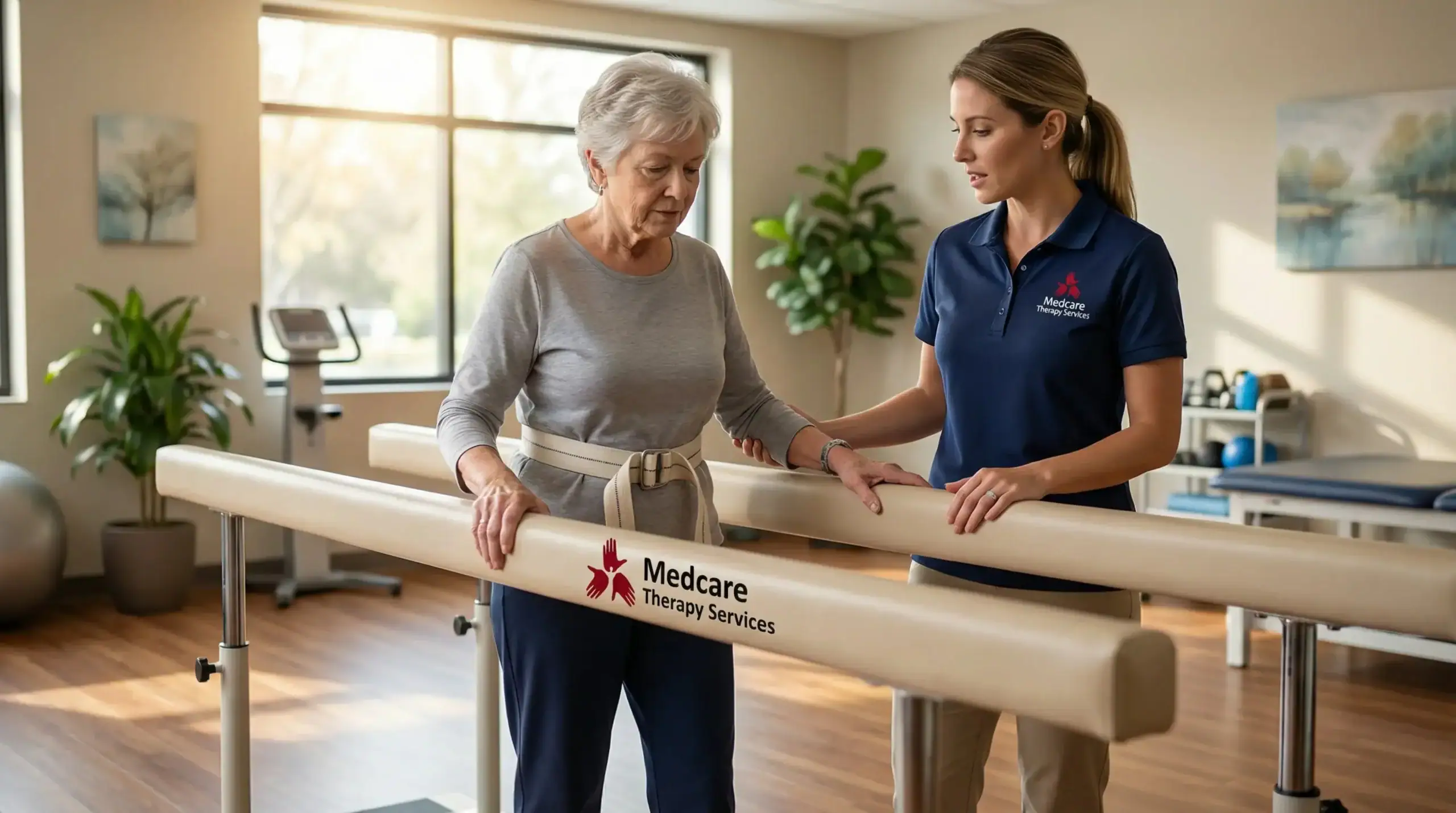
Physical therapy for balance changes that. Our therapists assess your specific fall risks—weak legs, poor balance, unsafe home layouts—and build a program around what your body actually needs. You’ll work through senior balance exercises designed to rebuild strength in your legs and core. You’ll practice movements that retrain your balance and reaction time. And you’ll do it at home, where it matters most.
Most patients see measurable improvements within weeks. Steadier steps. Less fear. More freedom to move through your day without second-guessing every movement.
Medcare Therapy Services has been delivering home-based physical therapy across Long Island for over a decade. Our licensed physical therapists specialize in elderly fall prevention, bringing evidence-based programs directly to seniors in Calverton and throughout Suffolk County.
We’re not a rotating staff of strangers. You’ll work with the same therapist who understands your home, your goals, and your progress. Every session is built around what you need—not a one-size-fits-all protocol.
Calverton’s senior population faces the same statistics as the rest of the country: one in four adults over 65 falls each year. But falls aren’t inevitable. With the right assessment, the right exercises, and the right support, you can reduce your risk by 30% to 40%. That’s not a guess—it’s what the research shows, and it’s what we see with our patients every week.

It starts with an in-home evaluation. Your physical therapist will assess your strength, balance, gait, and how you move through your daily routine. They’ll also walk through your home looking for fall hazards—loose rugs, poor lighting, furniture placement, bathroom safety.
From there, you’ll get a personalized exercise program. Many of our Calverton patients follow the Otago Exercise Program, a research-backed protocol that’s been shown to reduce falls by 35% to 40% in older adults. It includes strength training for your legs and core, balance exercises that challenge your stability in safe ways, and walking practice that builds endurance and coordination.
Sessions happen in your home, usually two to three times per week at first. Your therapist will guide you through each exercise, adjust difficulty as you improve, and teach you how to continue on your own between visits. You’ll also get specific recommendations for making your home safer—grab bars, lighting changes, clutter removal.
Most programs run eight to twelve weeks, depending on your progress and goals. By the end, you’ll have stronger legs, better balance, and a clear plan for maintaining your independence long-term.

Ready to get started?
You’ll receive a complete fall risk assessment that measures your strength, balance, walking speed, and reaction time. Your therapist will use standardized tests that help predict fall risk and track your improvement over time.
Your exercise program will include balancing exercises tailored to your current ability level. These aren’t generic stretches—they’re movements designed to challenge your stability, strengthen the muscles that keep you upright, and improve your ability to catch yourself if you start to lose balance.
You’ll also get a home safety evaluation. Your therapist will identify specific hazards in your Calverton home and give you practical recommendations. Some changes are simple—removing a throw rug, adding a nightlight. Others might require minor modifications like installing grab bars or adjusting furniture layout.
In New York, you can start physical therapy without a doctor’s referral for up to 30 days or 10 visits. After that, we’ll coordinate with your physician to continue care. Most of our patients use Medicare, which covers home-based physical therapy when you’re homebound or have difficulty leaving your house. We also accept most commercial insurance plans.

You’re at higher risk if you’ve already fallen once—even if you weren’t hurt. Falling once doubles your chances of falling again.
Other risk factors include difficulty standing from a chair without using your arms, feeling unsteady when walking or turning, needing to hold onto furniture or walls when moving around your house, or avoiding activities because you’re afraid of falling. Certain medications, vision problems, and chronic conditions like arthritis or diabetes also increase your risk.
A physical therapist can measure your fall risk using standardized tests. These assessments look at your leg strength, balance, walking speed, and how well you can recover if you start to lose your balance. If you’re in Calverton and you’re not sure whether you need fall prevention therapy, a quick evaluation can give you a clear answer.
Your program will include exercises that build leg strength and improve your balance control. Strength exercises might include sit-to-stand repetitions from a chair, heel raises while holding a counter, or leg lifts that target the muscles you use for walking and stability.
Balance exercises start simple and get harder as you improve. You might practice standing on one foot, walking heel-to-toe in a straight line, or reaching in different directions while maintaining your balance. Your therapist will make sure every exercise is safe and appropriate for your current ability.
The Otago Exercise Program, which many of our Calverton patients use, includes specific exercises you’ll do two to three times per week with your therapist, plus additional exercises you’ll practice on your own. The program is progressive—it gets more challenging as you get stronger. That’s how you actually reduce fall risk, not by doing the same easy exercises forever.
Yes, if you meet Medicare’s homebound criteria. You’re considered homebound if leaving your home requires considerable effort due to illness, injury, or disability. That doesn’t mean you can never leave—it means leaving is difficult and happens infrequently.
Medicare Part B covers home-based physical therapy when it’s medically necessary and ordered by a doctor. Fall prevention qualifies, especially if you’ve already fallen or have conditions that put you at high risk. You’ll pay 20% of the Medicare-approved amount after you’ve met your Part B deductible.
In New York, you can start therapy without a prescription for up to 30 days or 10 visits. After that, we’ll work with your doctor to get the necessary orders to continue your care. If you have a Medicare Advantage plan or supplemental insurance, your coverage may be different. We’ll verify your benefits before starting treatment so you know exactly what to expect.
Most patients notice improvements in strength and confidence within three to four weeks. Measurable changes in balance typically show up around the six-week mark. Research on the Otago Exercise Program shows that the full protective effect—reducing falls by 35% to 40%—develops over a three to six-month period.
Your program will likely include therapist visits two to three times per week for the first several weeks, then taper to once a week as you become more independent with your exercises. Total program length is usually eight to twelve weeks of active therapy, followed by a home exercise plan you’ll continue on your own.
The key is consistency. Balance and strength improvements don’t happen overnight, but they do happen if you stick with the program. Your Calverton-based therapist will track your progress using the same tests from your initial evaluation, so you’ll see objective proof that the work is paying off.
You’re practicing in the environment where you actually need to be safe. Your therapist sees how you move through your own home, where the hazards are, and what your daily routine looks like. That’s information you can’t replicate in a clinic.
If you have difficulty getting in and out of a car, navigating stairs, or sitting for a long drive, home therapy eliminates those barriers. You don’t have to worry about transportation, and you’re not exhausted before your session even starts.
Home-based fall prevention also lets your therapist address environmental risks directly. They can recommend specific changes to your Calverton home—better lighting in your hallway, a grab bar next to your bed, rearranging furniture to create clearer walking paths. You’ll practice the exact movements you do every day, like getting in and out of your own shower or navigating your own stairs, which makes the therapy more relevant and effective.
Tell your therapist right away. Even if you weren’t hurt, a fall during your program is important information. Your therapist will reassess your fall risk, figure out what contributed to the fall, and adjust your treatment plan accordingly.
If you were injured, your therapist will coordinate with your doctor to make sure you’re getting appropriate medical care. Once you’re cleared to continue therapy, your program may need to be modified based on any new limitations or concerns.
Falls during a prevention program aren’t common, but they do happen—and they’re not a sign that therapy isn’t working. Your body is relearning movement patterns and building strength, which takes time. What matters is that you’re actively reducing your risk instead of hoping you’ll stay lucky. Each session makes you stronger and steadier than you were before.
Other Services we provide in Calverton