
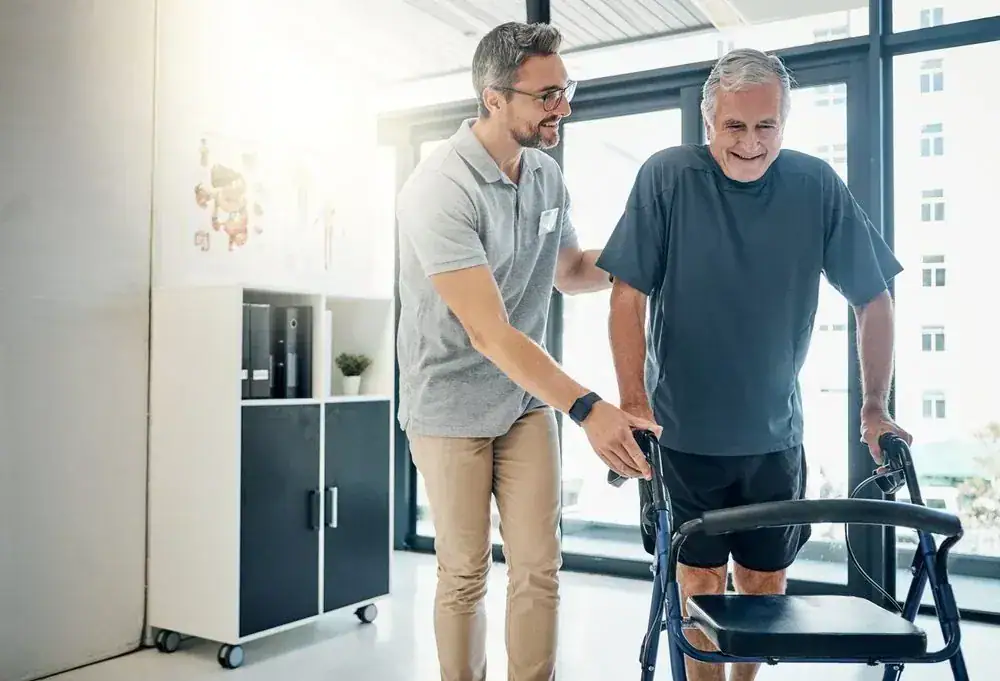
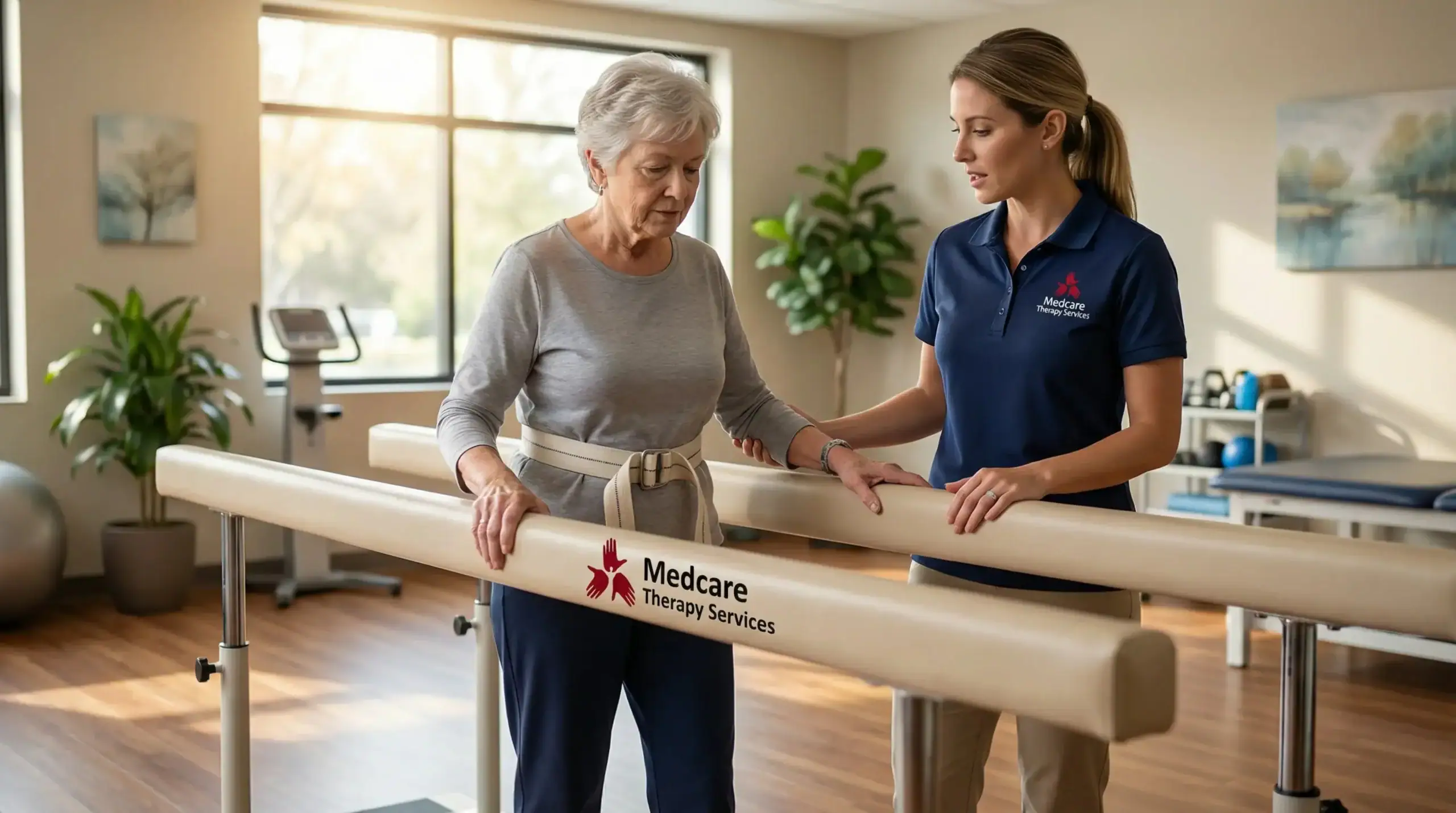
You stop second-guessing every step. That hesitation before getting out of bed, walking to the mailbox, or reaching for something on a shelf – it fades when your body remembers how to stabilize itself.
Balance exercises for seniors aren’t about preventing something that might happen. They’re about getting back to doing what you want without that constant background worry. Research shows that combining balance and strength training can cut fall risk in half for older adults living at home.
Your legs get stronger. Your reactions get faster. You feel steadier when you turn your head or stand up quickly. The fear doesn’t control your day anymore because your body has the tools to keep you upright. That’s what physical therapy for balance actually does – it rebuilds the physical confidence you’ve been missing.
We’ve been treating patients across Suffolk County for years, including our neighbors in Brookhaven, Centereach, Farmingville, Patchogue, and dozens of other Long Island communities. We’re not new to this.
Every Google Business Profile we manage is verified and secure. Our staff access is controlled. Your information stays protected. These aren’t small details – they matter when you’re trusting someone with your health data and your recovery.
We work with Medicare, Medicare Advantage, and most major insurance plans. Our physical therapists coordinate with your other doctors when needed. You’re not getting shuffled around or left to figure things out yourself.

You start with a fall risk assessment. Your physical therapist evaluates your strength, balance, gait, and any specific factors that increase your risk – like medication side effects, vision issues, or past falls. This isn’t a generic checklist. It’s a detailed look at what’s actually going on with your body.
From there, you get a personalized exercise program. Most patients come in two to three times per week. Sessions typically include balance training, strength exercises targeting your legs and core, and functional movement work that mimics real-life activities. You might practice standing on one foot, stepping over obstacles, or getting up from a chair without using your hands.
Your therapist also talks through home safety. Where are the trip hazards? Do you need a grab bar in the bathroom? Are your shoes giving you enough support? If you need an assistive device like a cane or walker, we’ll help you choose the right one and teach you how to use it correctly. The goal is simple: make you stronger and make your environment safer so falls become far less likely.

Ready to get started?
You get one-on-one time with a licensed physical therapist who specializes in balance and mobility for older adults. Every session is built around your specific needs, not a one-size-fits-all protocol.
Your program includes gait training to improve how you walk, strength exercises to rebuild muscle that’s been lost, and balance activities that challenge your stability in controlled ways. You’ll also work on coordination and reaction time – the skills that kick in when you trip or lose your footing.
In Brookhaven and across Long Island, falls are the leading cause of injury-related hospital visits for adults over 65. One in four seniors falls each year. But here’s what matters: the right exercises reduce that risk by 23% to 50%, depending on the study. That’s not a small number. It’s the difference between staying in your home and losing your independence.
You’ll also receive education on managing other risk factors – things like medication reviews with your doctor, vision checks, and nutrition guidance if muscle loss is a concern. Fall prevention isn’t just about exercise. It’s about looking at the full picture and addressing what’s actually putting you at risk.
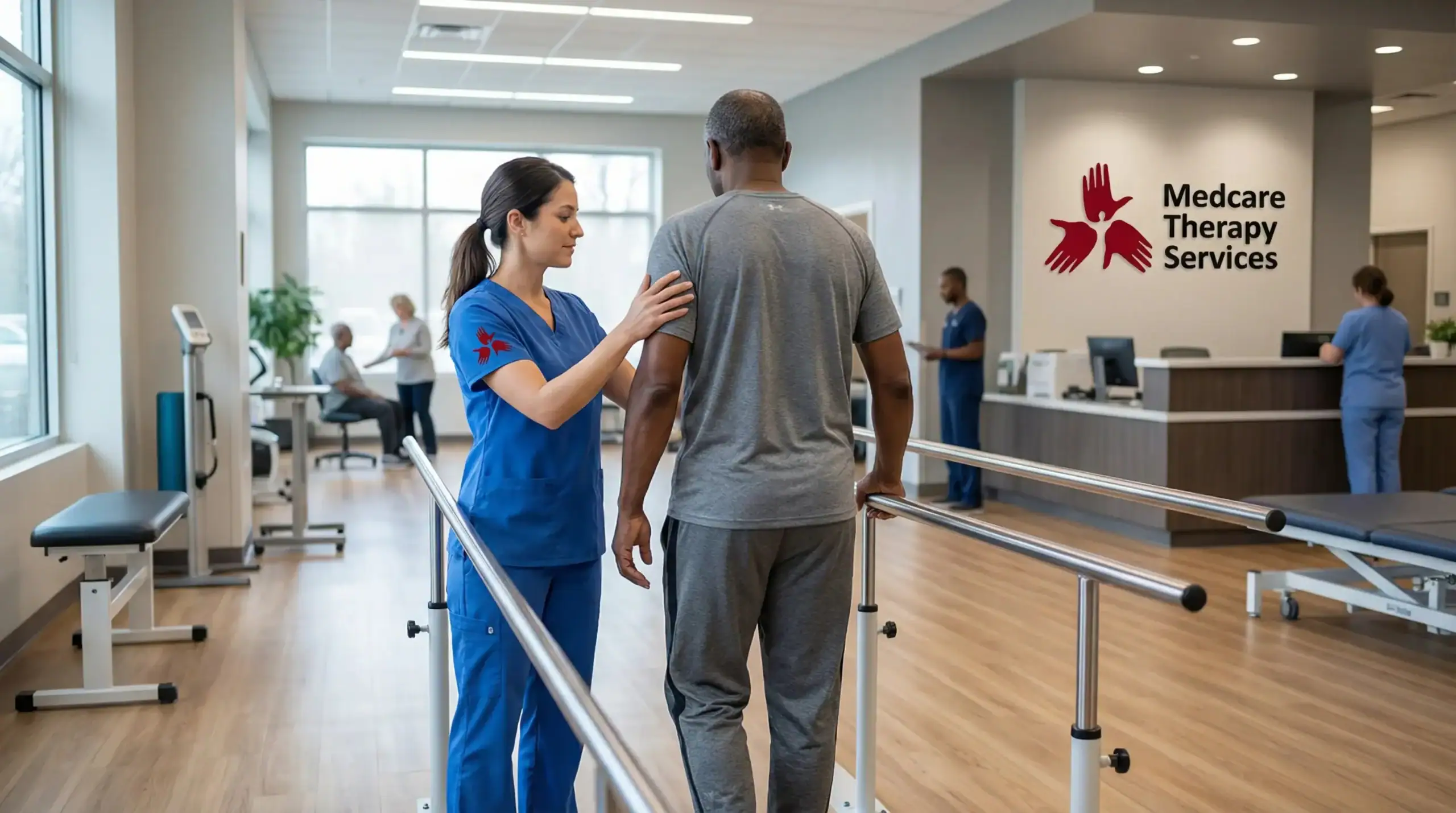
Most patients notice changes within four to six weeks if they’re consistent with their sessions and home exercises. You might feel steadier on your feet or notice that getting up from a chair feels easier. Strength takes a bit longer – usually eight to twelve weeks before you see measurable gains.
The timeline depends on where you’re starting from. If you’ve been inactive for a while or you’re recovering from a fall, it might take longer to rebuild that foundation. If you’re already fairly active but dealing with specific balance issues, you could see improvements faster.
What matters more than speed is consistency. Patients who attend their scheduled sessions and do their home exercises see better results than those who skip weeks or only show up occasionally. Your therapist will track your progress with objective measurements – things like how long you can stand on one foot or how fast you can walk – so you’ll know exactly where you’re improving.
Yes, in most cases. Medicare Part B covers physical therapy when it’s medically necessary, which includes balance problems and fall risk. Medicare Advantage plans typically cover it as well. Most private insurance plans also include physical therapy benefits, though your copay and visit limits will depend on your specific plan.
You’ll need a referral or prescription from your doctor in many cases. If you’ve already fallen or you’re having trouble with balance or walking, that’s usually enough to qualify. Your physical therapist can also provide documentation to support medical necessity if your insurance requires it.
Before you start, call your insurance company or ask our front desk to verify your benefits. You’ll want to know your copay, how many visits are covered per year, and whether you need prior authorization. We work with most major insurers, and we’ll help you understand what your out-of-pocket costs will look like before you commit to treatment.
No. If anything, falling once makes you more likely to fall again, so starting physical therapy now is even more important. After a fall, your body often compensates in ways that actually increase your risk – you might start moving more cautiously, which weakens your muscles, or you might develop a fear of falling that limits your activity even further.
Physical therapy after a fall focuses on rebuilding strength, restoring normal movement patterns, and addressing whatever caused the fall in the first place. Maybe it was a balance issue, maybe it was weak legs, maybe it was poor lighting in your hallway. Your therapist will figure out the root cause and build a plan around it.
The research is clear: seniors who complete a fall prevention program after their first fall are significantly less likely to fall again compared to those who don’t get treatment. You’re not too old, and it’s not too late. You just need the right program and someone who knows how to guide you through it safely.
Not much. Most of the exercises you’ll do at home use your body weight and things you already have – a sturdy chair, a countertop, a wall. Your therapist might recommend a resistance band or small weights if strength training is part of your program, but those are inexpensive and easy to find.
Some patients benefit from a balance pad or foam cushion for more advanced exercises, but that’s not something you need right away. Your therapist will start you with basic movements and progress you gradually. The goal is to make this sustainable, not to fill your house with equipment you won’t use.
If you do need an assistive device like a cane or walker, your therapist will help you choose the right one and make sure it’s adjusted to the correct height. Using the wrong device – or using it incorrectly – can actually increase your fall risk, so proper fitting and training matter. But for most home exercises, you don’t need anything fancy. Just a safe space and a commitment to doing the work.
Fall prevention therapy is more specific. It targets the exact systems that keep you upright – your balance, your leg strength, your ability to react when you start to tip, and your confidence when moving. Regular physical therapy might address pain or mobility after an injury, but fall prevention digs into the mechanics of stability.
Your therapist will assess things like your gait pattern, how well you can shift your weight, whether you can stand on one leg, and how your vision and inner ear are affecting your balance. Then we’ll design exercises that challenge those specific areas. You might do single-leg stands, heel-to-toe walking, or exercises on unstable surfaces to train your body to adjust when the ground isn’t perfectly flat.
There’s also a big focus on functional movements – the things you do every day that put you at risk. Getting in and out of the shower. Reaching for something on a high shelf. Walking on uneven pavement. Your therapist will simulate those scenarios in a controlled environment so your body learns how to handle them safely. It’s not just about getting stronger. It’s about getting stronger in the ways that actually prevent falls.
You can do some exercises on your own, but starting with a therapist makes a huge difference. Here’s why: you don’t know what you don’t know. You might think your balance is fine when really you’re compensating in ways that increase your risk. Or you might skip the exercises that would help you most because they feel awkward or uncomfortable.
A physical therapist identifies your specific weak points and builds a program around them. We also make sure you’re doing the exercises correctly. Bad form doesn’t just make the exercise less effective – it can actually be dangerous if you’re already unstable. Your therapist watches how you move, corrects your technique, and progresses you at the right pace.
Once you’ve gone through a structured program and you understand what you’re doing and why, then yes, you can maintain a lot of it on your own at home. But skipping the assessment and jumping straight into random balance exercises you found online is risky. You need someone who can evaluate your fall risk, address your specific issues, and teach you how to exercise safely. That’s what we do, and that’s why the research shows professionally guided programs work better than self-directed ones.
Other Services we provide in Brookhaven