
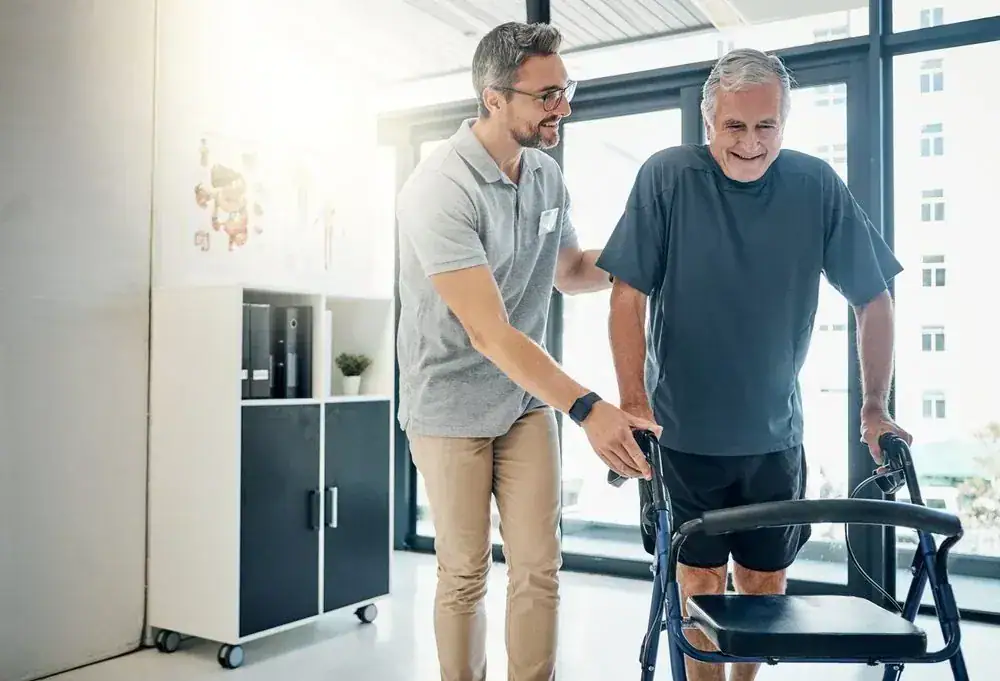
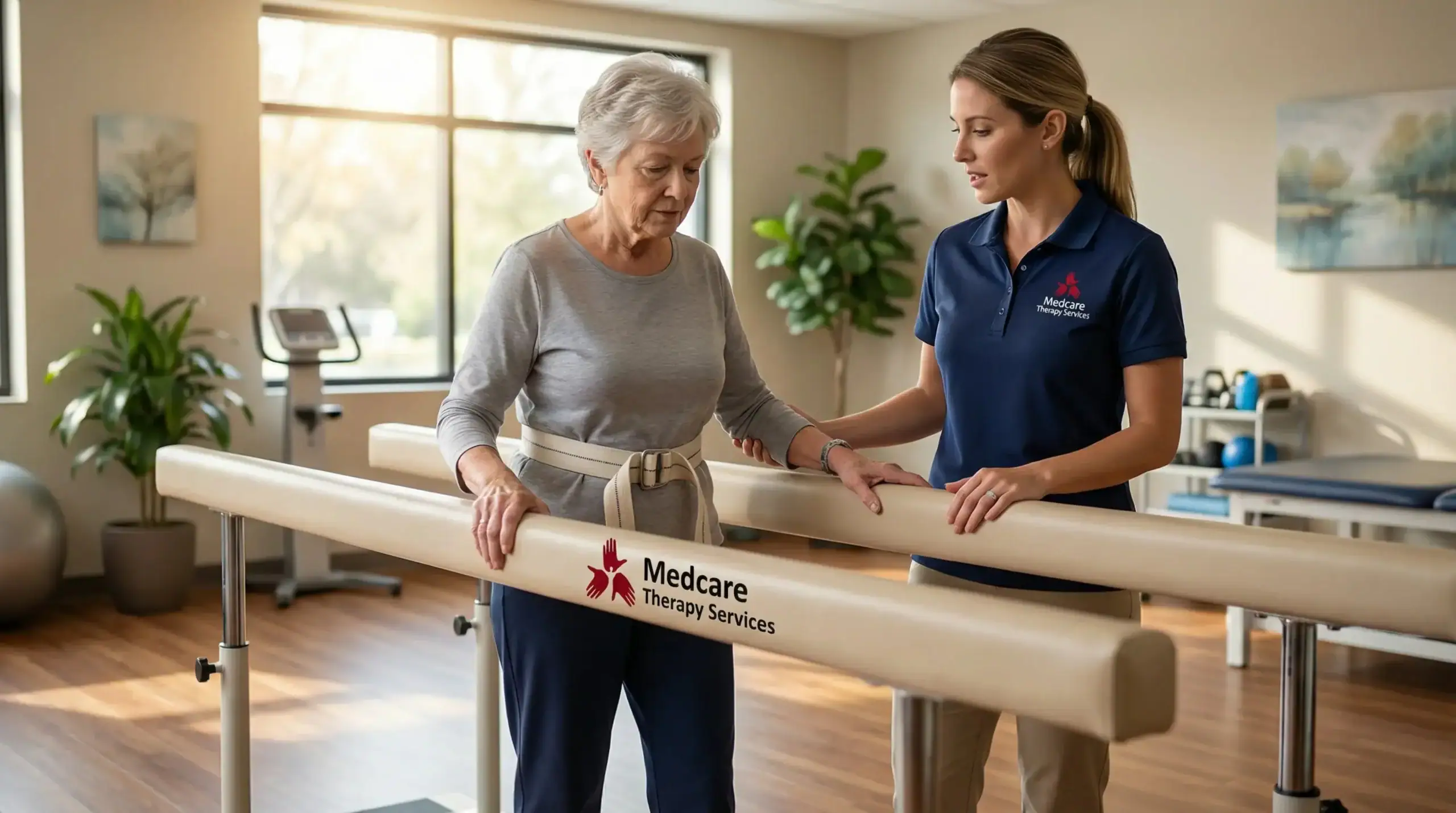
You stop planning your day around what might go wrong. That’s what happens when your balance actually improves.
The stairs don’t feel like a risk anymore. Getting out of the shower becomes routine again, not something you brace for. You move through your home with the kind of confidence you had before that first fall shook everything loose.
Research backs this up. Evidence-based fall prevention programs reduce your fall risk by 30% to 35%. That’s not a small number when you consider what’s at stake. One in four older adults falls every year. Two-thirds of those falls are preventable with the right intervention.
Here’s what you’re really getting: strength training that targets the muscles that keep you upright. Balance exercises designed specifically for seniors that retrain your body’s stability systems. Gait work that corrects how you walk before it becomes a problem. And a home safety assessment that identifies risks you’ve stopped noticing.
You’re not just doing exercises. You’re rebuilding the physical foundation that lets you live without fear.
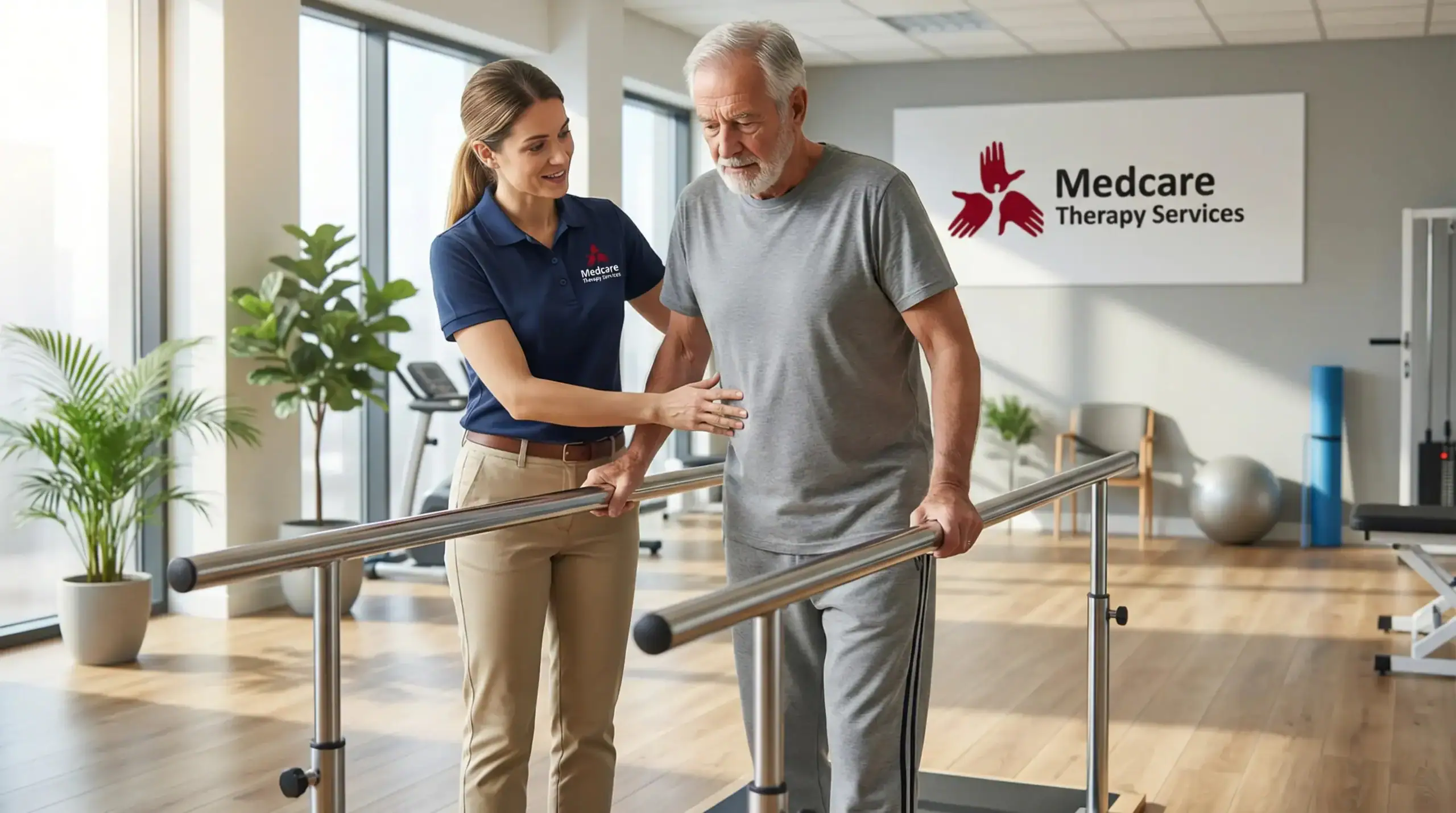
First, we come to your home for a full assessment. We’re looking at how you move, where your balance falters, what medical conditions might be contributing, and what hazards exist in your space. This takes about an hour. You’ll know by the end of it what your specific risk factors are.
Then we build your program. It’s based on what we found, not a template. If your ankles are weak, we target that. If your gait is off, we correct it. If you’ve developed a fear of falling that’s limiting your movement, we address that too. Senior balance exercises get customized to your ability level, so you’re challenged but not overwhelmed.
Sessions happen in your home, usually two to three times per week to start. You’ll do strength work, balance training, and functional movements that mirror real life – getting up from a chair, reaching for something overhead, walking on different surfaces. We also teach you exercises to do between sessions.
As you improve, we adjust. The goal isn’t to keep you in therapy forever. It’s to get you strong enough and stable enough that you can maintain your progress independently. Most people see measurable improvement within four to six weeks.
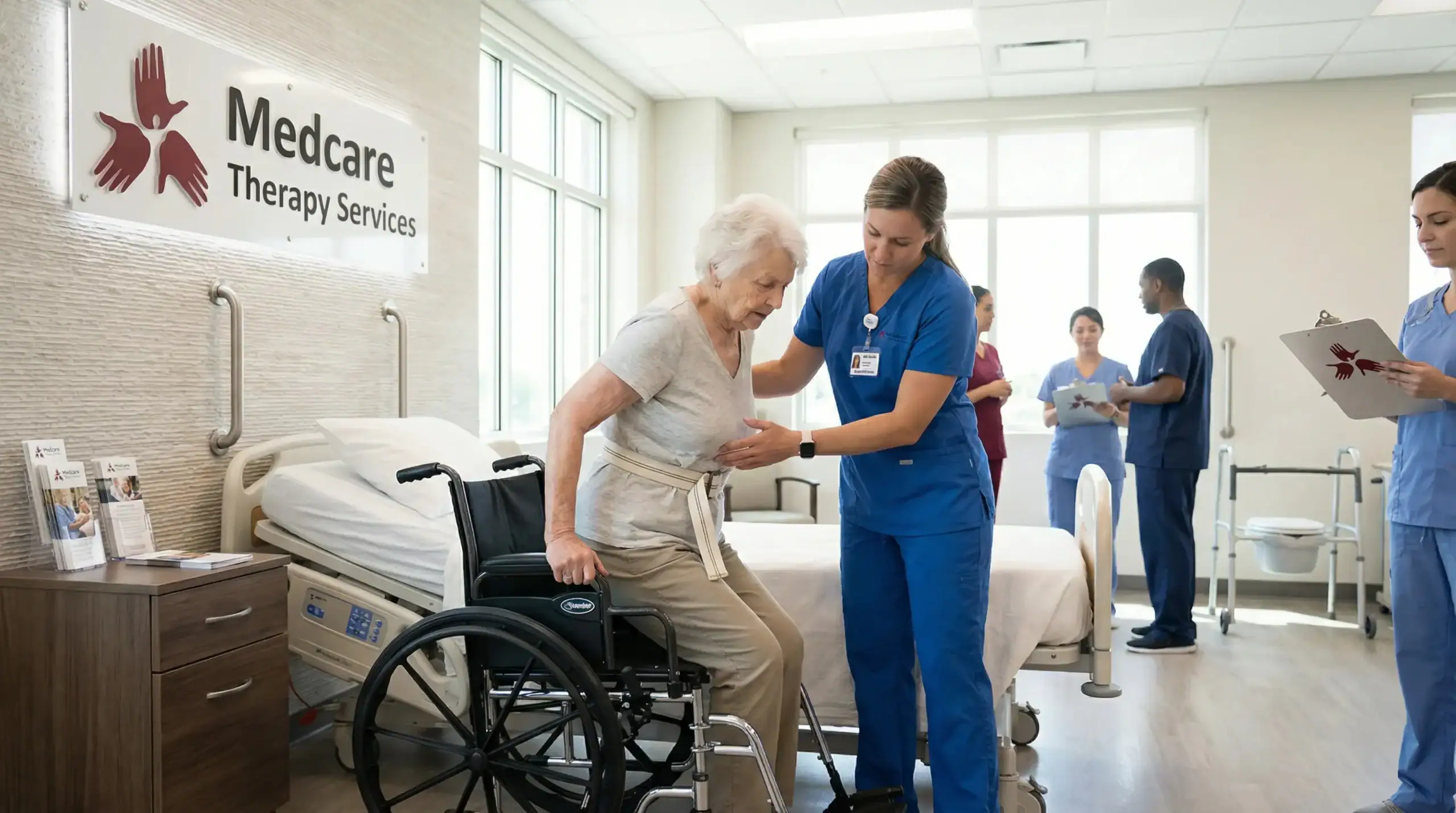
Ready to get started?
Every program includes a comprehensive fall risk assessment. We measure your strength, flexibility, balance, and gait. We review your medications with you, because some prescriptions increase fall risk. We walk through your home and identify hazards – loose rugs, poor lighting, clutter, bathroom setup.
You get a personalized exercise plan that includes balancing exercises proven to work for older adults. We focus on lower body strengthening, because that’s where stability starts. You’ll do exercises that improve your reaction time and your ability to catch yourself if you start to fall.
We also provide education. You’ll learn how to move safely, how to get up if you do fall, and how to modify activities without giving them up entirely. If you need assistive devices like a cane or walker, we’ll assess that and teach you proper use.
In Brightwaters, where many homes are older and have stairs, steps, and varying floor levels, the home safety component is critical. We’ve worked in enough local homes to know what to look for. The median household income here is over $200,000, which often means larger properties with more complex layouts. That creates different risks than a single-level apartment.
You also get access to our therapists between sessions. If something changes or you have a question, you’re not waiting a week to ask it. And if you need coordination with your doctor or other specialists, we handle that communication.
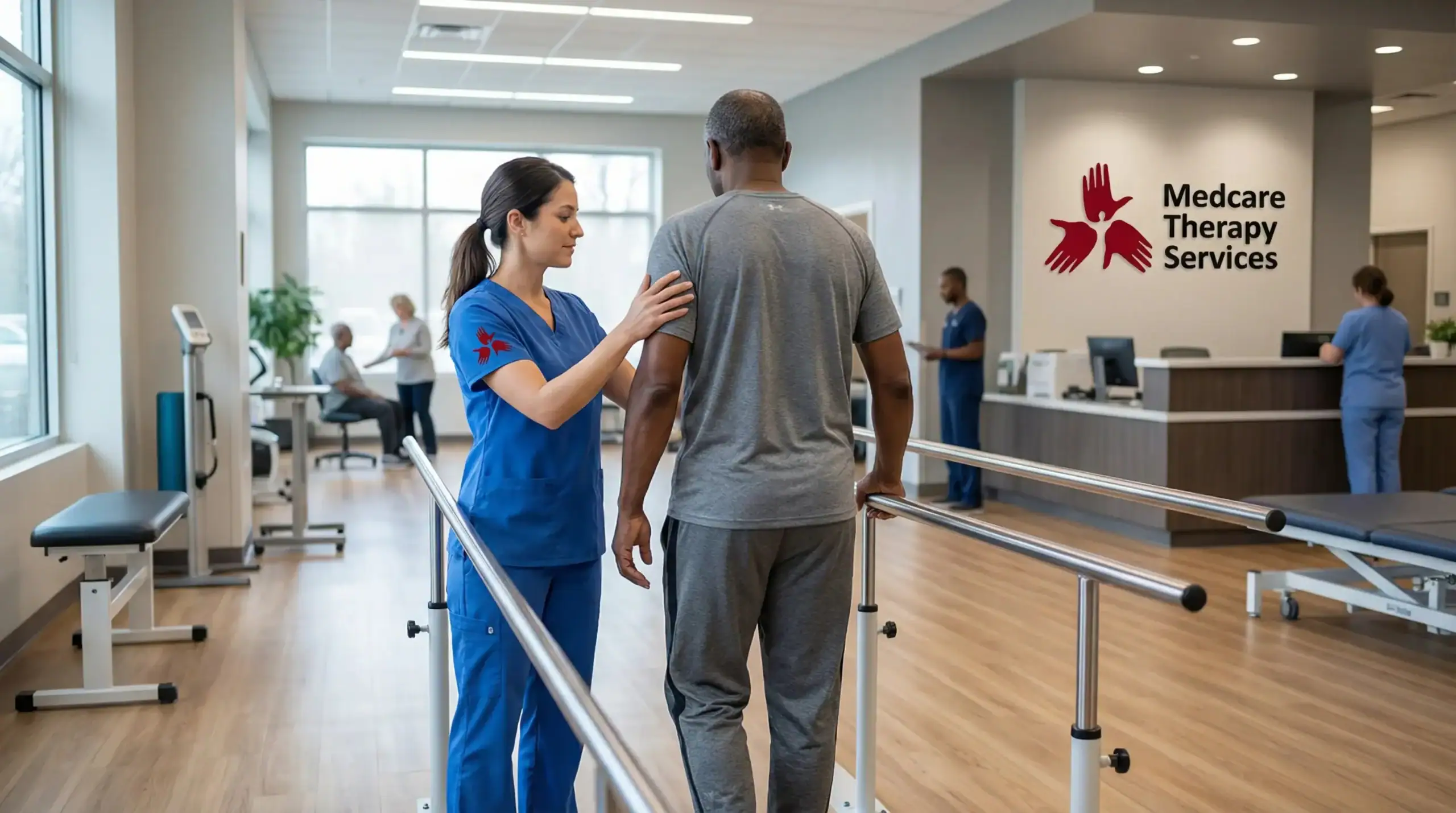
Most people notice a difference within three to four weeks. That’s when the strength work starts translating into better stability during daily activities.
But here’s the reality: improvement isn’t linear. You might feel stronger before you feel more balanced. Or you might notice your confidence improving before your physical abilities catch up. Both matter.
The research shows that consistent balance exercises improve gait, posture, and stability even in adults over 80. We’re not talking about getting you back to how you were at 40. We’re talking about measurable, functional improvement that changes how you move through your day. That happens faster than most people expect, as long as you’re doing the work between sessions.
Yes, if you meet the criteria. Medicare Part B covers physical therapy and occupational therapy when it’s medically necessary and prescribed by your doctor.
Here’s what that means practically: if you’ve had a fall, if you’re at high risk for falling, or if you have a condition that affects your balance or mobility, you likely qualify. Your doctor writes the prescription, we verify your coverage, and we handle the billing.
There’s usually a copay or coinsurance depending on your specific plan and whether you’ve met your deductible. We go over all of that before we start so there are no surprises. Most of our patients in Brightwaters are Medicare beneficiaries, so this is something we deal with every day. If you have a Medicare Advantage plan or supplemental insurance, coverage can be even better.
No. It’s not too late. But the urgency is higher.
After you’ve fallen once, your risk of falling again increases significantly. After multiple falls, that risk compounds. But here’s the important part: as many as two-thirds of falls can be prevented through evidence-based interventions. That doesn’t change based on how many times you’ve already fallen.
What does change is the approach. If you’ve fallen multiple times, we’re looking deeper at underlying causes. Is it medication-related? Is there a neurological component? Are you dealing with severe muscle weakness or a vestibular issue? We coordinate with your doctor to rule out or address medical factors while we work on the physical side.
We also address the psychological component. After multiple falls, many seniors develop a strong fear of falling that limits their movement. That fear is valid, but when it keeps you from moving, you get weaker, which increases fall risk. It’s a cycle we have to break carefully.
We’re working in the environment where you actually live. That matters more than most people realize.
In a clinic, you’re doing exercises on flat, even surfaces with good lighting and no obstacles. That’s useful, but it doesn’t prepare you for your own home. At home, we’re training you on your stairs, in your bathroom, on your floors, around your furniture. We’re addressing the real risks you face every day.
We also see things a clinic therapist never would. The lighting in your hallway that makes it hard to see at night. The rug that bunches up. The way you have to navigate around furniture to get to the bathroom. Those aren’t hypothetical risks. They’re the actual things that will cause your next fall if they’re not addressed.
For people in Brightwaters, where many homes are older with unique layouts, this is especially important. We’ve worked in enough local homes to know what to expect and what to look for.
You’ll do strength training focused on your legs and core. Squats, leg raises, step-ups – movements that build the muscles that keep you upright. These get progressed as you get stronger.
You’ll also do balance-specific exercises. Standing on one foot, weight shifting, reaching in different directions while maintaining stability. These retrain your body’s balance systems and improve your reaction time if you start to tip.
Gait training is another component. We watch how you walk and correct issues with your stride, your foot placement, your posture. Small adjustments in how you walk can significantly reduce fall risk.
And you’ll do functional movements – things that mirror real life. Getting up from a chair without using your hands. Walking while carrying something. Turning around safely. These are the movements that matter in your daily routine, so that’s what we practice.
Everything is adapted to your current ability level. If you’re using a walker, we work with that. If you have arthritis or other conditions that limit certain movements, we modify. The goal is to challenge you without putting you at risk.
Most programs run eight to twelve weeks with two to three sessions per week. But that’s not a rigid timeline. It depends on your starting point, your goals, and how quickly you progress.
Some people improve faster and need fewer sessions. Others have more complex issues that require longer intervention. We’re not trying to keep you in therapy longer than necessary. We’re trying to get you to a point where you can maintain your improvements on your own.
By the end of your program, you’ll have a home exercise routine you can continue independently. You’ll know what to watch for and when to ask for help. And if your condition changes down the road – after a surgery, an illness, or another fall – you can come back for a refresher.
The research shows that ongoing exercise is what maintains the benefits long-term. We give you the tools and the knowledge to keep that going after therapy ends.
Other Services we provide in Brightwaters