
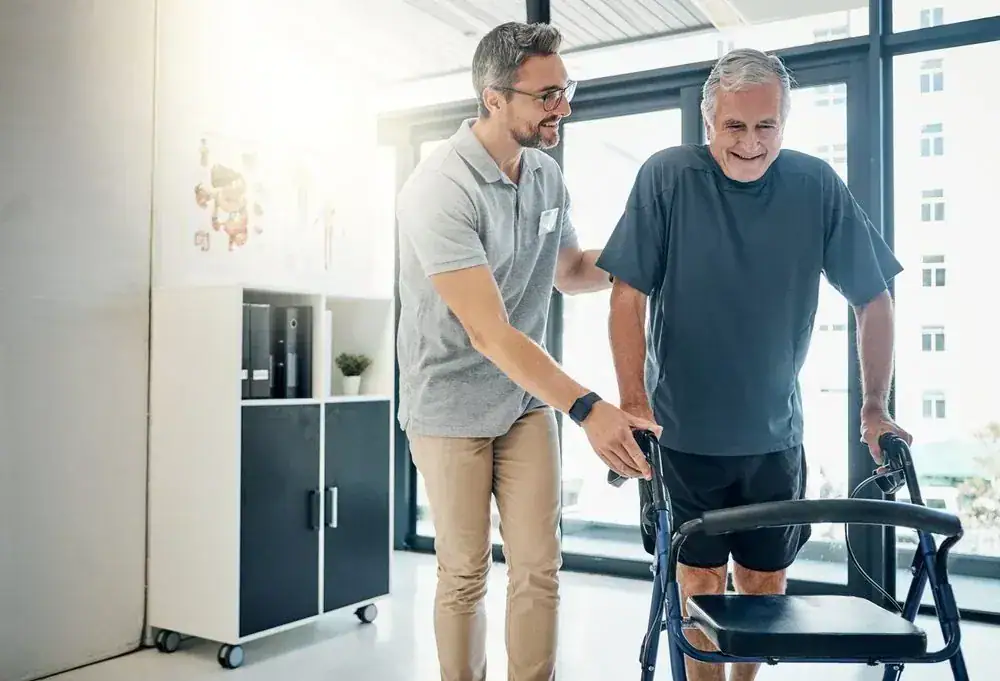
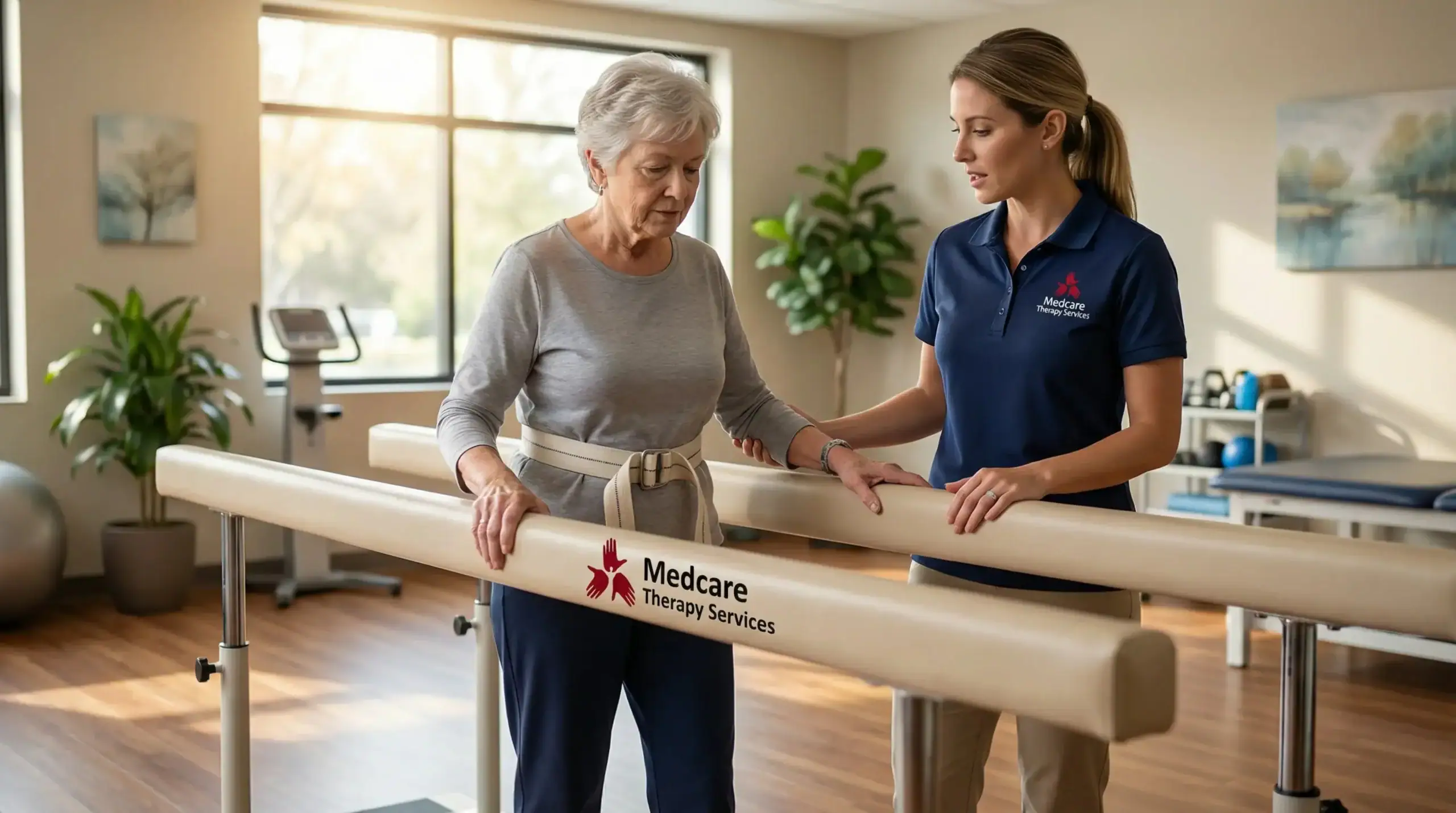
Every 11 seconds, an older adult ends up in the ER because of a fall. You’ve probably felt it—that split-second wobble, the grab for the counter, the moment you wonder if your balance isn’t what it used to be.
Here’s what changes when you address it early. You stop second-guessing every step. You move through your home without mapping out which furniture you might need to catch yourself on. You get up from a chair without bracing for impact.
Physical therapy for balance works because it rebuilds what time and inactivity take away: strength in your legs, stability in your core, and confidence in your movement. The exercises aren’t complicated. They’re targeted. And when done consistently in your own home, they cut your fall risk in half.
That’s not a guarantee you’ll never stumble. It’s proof that your body can relearn how to catch itself before you go down.
We’ve been providing in-home physical therapy across Long Island for over a decade. We work with people who can’t easily get to a clinic—or who just don’t want to. Your home is where you need to feel safe, so that’s where we meet you.
Bethpage and the surrounding Nassau County communities have one of the fastest-growing senior populations in New York. Nearly 39% of households here include someone 65 or older. That’s not a statistic to us—it’s your neighbor, your parent, maybe you.
We’re Medicare-certified, licensed, and we’ve built our reputation on showing up when we say we will and doing the work that actually makes a difference. No runaround. No upselling. Just solid care from therapists who know what they’re doing.
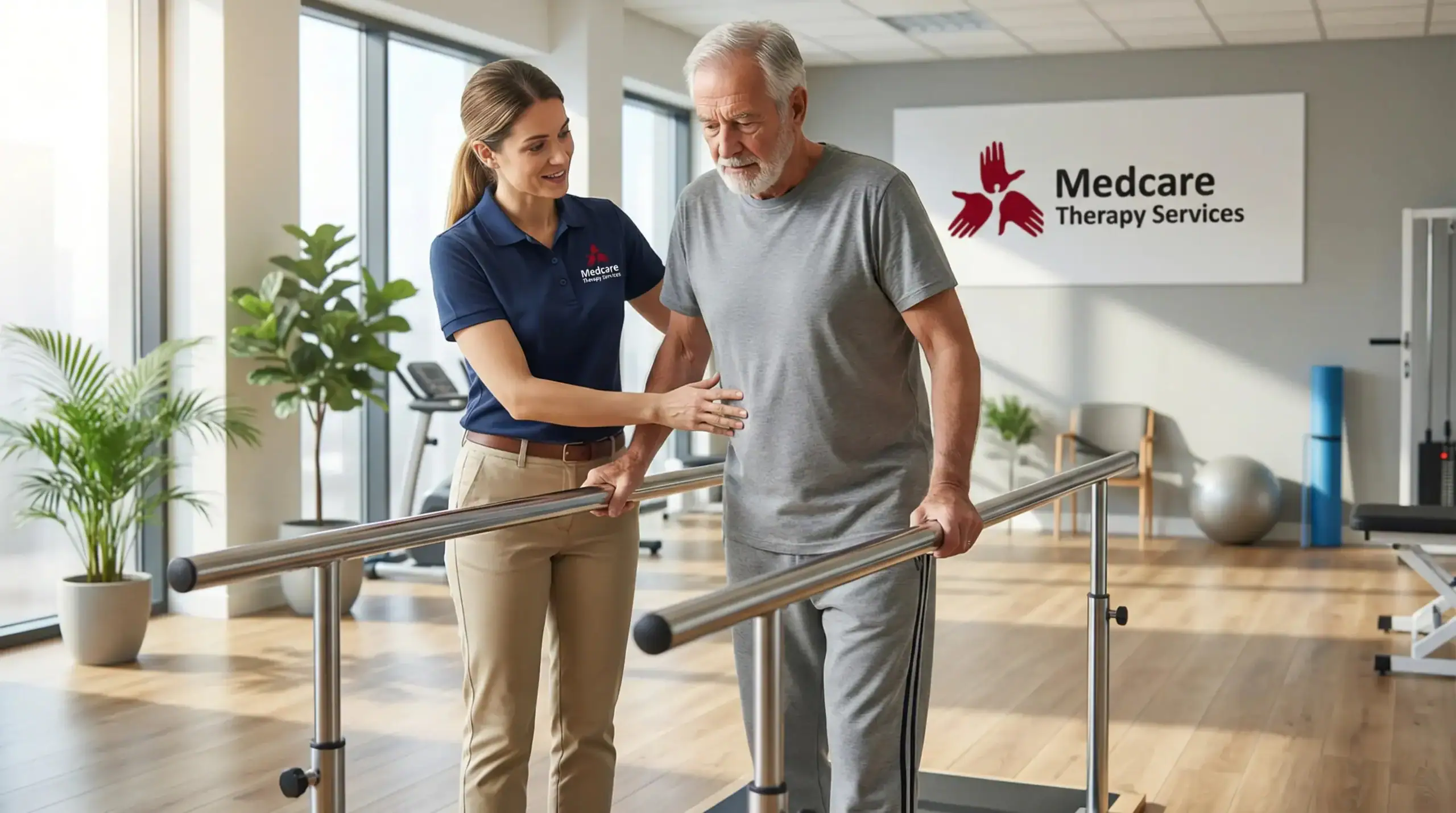
First, we come to your home and do a full fall risk assessment. We’re looking at your strength, your balance, how you move through your space, and where the risks are. Not just in your body—in your environment too. Loose rugs, poor lighting, furniture placement. It all matters.
From there, we build a plan. It’s based on what we found, not a template. You’ll get exercises that match your ability level right now—not where you were five years ago or where you think you should be. These are balance exercises for seniors that you can do at home, often using what you already have: a chair, a counter, a wall.
We guide you through each session and adjust as you improve. Some people need help with strength. Others need work on coordination or reaction time. Most need a combination.
Between visits, you’ll have a home exercise program. It’s simple, written down, and designed to keep you progressing without overdoing it. We check in regularly, track what’s working, and make changes when needed. The goal isn’t perfection—it’s progress you can feel when you stand up, walk to the mailbox, or step into the shower.

Ready to get started?
You’re not just getting a list of exercises. You’re getting a licensed physical therapist who understands elderly fall prevention and knows how to make it work in a real home with real limitations.
Each session includes strength training for your legs and core, balance exercises that challenge your stability in safe ways, and coordination drills that help your body react faster when you start to lose your footing. We also work on flexibility, because tight hips and ankles make it harder to recover from a stumble.
We’ll assess your home for fall hazards and give you specific recommendations. That might mean better lighting in your hallway, removing a rug that slides, or rearranging furniture so you have a clear path. Small changes that make a big difference.
You’ll also get education—what to do if you do fall, how to get up safely, and how to recognize when something’s changing that needs attention. Falls don’t usually come out of nowhere. There are signs. We teach you what to watch for.
And because we accept Medicare and most commercial insurance, this isn’t something you have to pay out of pocket for. If you qualify for home health services, your therapy is likely covered.
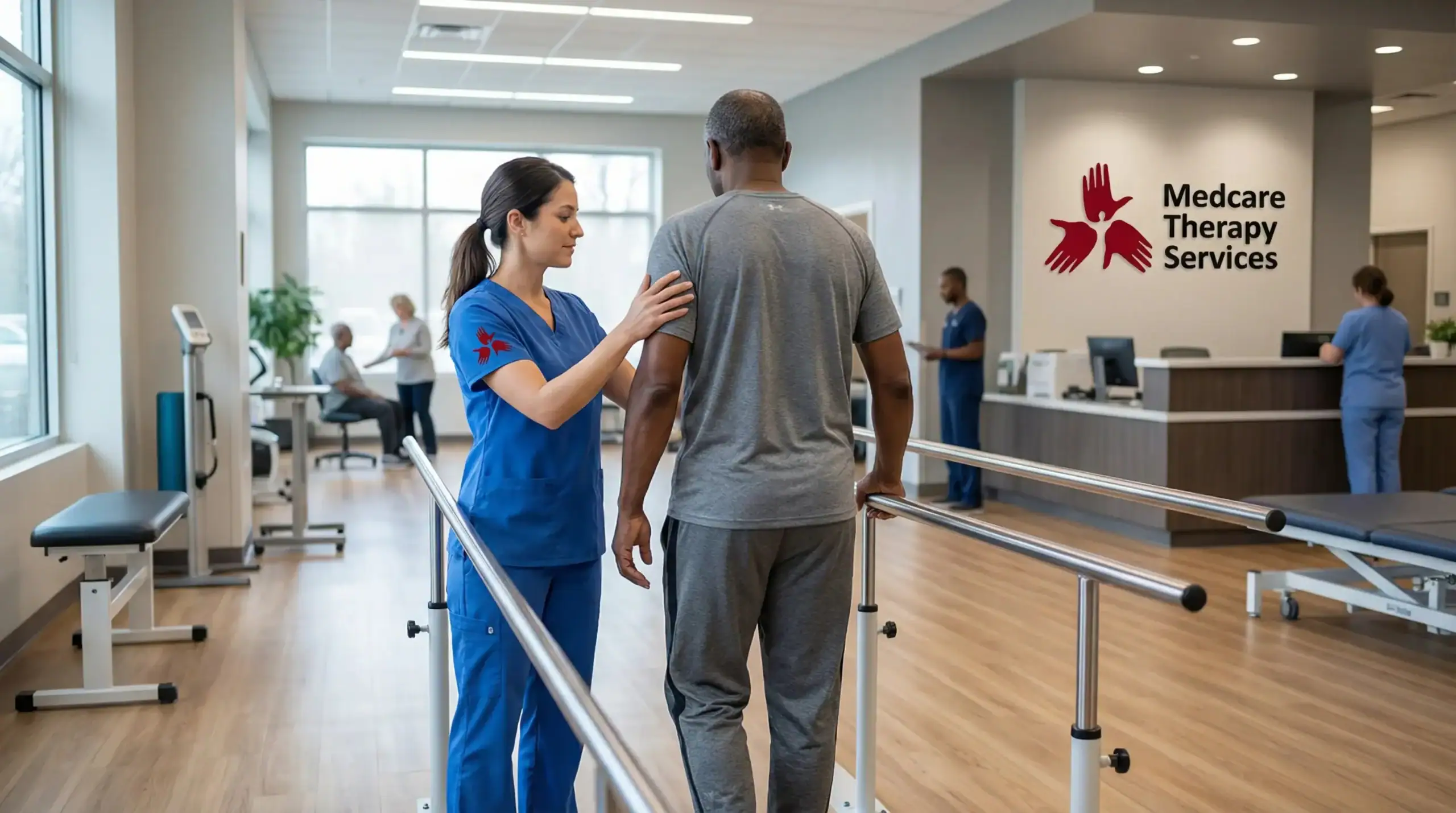
If you’ve fallen in the last year, your risk of falling again just doubled. That’s the clearest sign.
But there are others. Do you hold onto furniture when you walk around your house? Do you feel unsteady when you turn your head or stand up quickly? Have you started avoiding certain activities because you’re afraid you might fall? Those are all red flags.
Physically, we look at leg strength, balance, and how fast you walk. If it takes you longer than 12 seconds to stand up from a chair, walk 10 feet, and sit back down, that’s a clinical indicator of fall risk. Same if you can’t stand on one foot for at least 5 seconds. These aren’t pass-fail tests—they’re just data points that help us understand where you are and what needs work.
The exercises depend on your current ability, but most people start with basic stability work. That might mean standing on one foot while holding a counter, then progressing to doing it without holding on. Or practicing weight shifts—rocking side to side or front to back in a controlled way.
We also use exercises that challenge your balance in different directions. Heel-to-toe walking, standing on foam or an uneven surface, or doing simple tasks while standing on one leg. The goal is to make your body work a little harder to stay upright, which strengthens the systems that keep you balanced.
You won’t need special equipment. Most of what we do uses a sturdy chair, a wall, or a countertop. If you progress to the point where we want to add resistance, we might bring in a resistance band or small weights, but that’s down the road. Early on, your own body weight is enough.
For fall prevention, home therapy is often more effective. Here’s why: we’re training you in the environment where you actually live. The stairs you need to climb are your stairs. The bathroom you need to navigate is your bathroom. We’re not simulating your life—we’re working directly in it.
Clinic-based therapy has its place, but if getting to the clinic is hard, or if you’re skipping sessions because of the effort it takes, you’re not getting consistent care. Consistency is what makes the difference. Research shows that regular exercise can reduce fall risk by up to 50%, but only if you’re actually doing it.
We also catch things a clinic therapist wouldn’t see. How your lighting affects your depth perception at night. Where you’re compensating because of an uneven floor. What obstacles are in your path that you’ve stopped noticing. Those insights matter, and we can address them in real time.
Most people see measurable improvement in 6 to 8 weeks if they’re consistent with their exercises. That doesn’t mean you’re “done” at 8 weeks—it means you’re stronger, steadier, and more confident than when you started.
The length of therapy depends on where you’re starting from and what your goals are. If you’ve had a recent fall and lost a lot of strength, it might take longer. If you’re catching things early and just need some targeted work, it could be shorter.
We typically see patients 2 to 3 times per week at first, then taper down as you improve and become more independent with your home program. Some people continue with monthly check-ins to make sure they’re staying on track. Others graduate and don’t need ongoing care. It’s not a one-size-fits-all timeline.
Yes, if you meet the criteria for home health services. Medicare Part B covers outpatient physical therapy, including fall prevention, as long as it’s medically necessary and prescribed by your doctor.
“Medically necessary” usually means you have a documented fall risk—either you’ve fallen recently, you have a condition that affects your balance, or your doctor has identified you as high-risk. You also need to be homebound, which doesn’t mean you can never leave your house. It means leaving is difficult and requires considerable effort.
We handle the Medicare paperwork and work directly with your physician to make sure everything’s in order. Most commercial insurance plans also cover home-based physical therapy, though the specifics vary by plan. If you’re not sure what your coverage looks like, we can help you figure that out before we start.
First, we teach you how to fall as safely as possible and how to get up if you’re able. That’s part of the program. If you do fall between sessions, you call us right away. We’ll come out, reassess, and figure out what happened. Was it a strength issue? A balance issue? Something environmental?
Falls aren’t failures—they’re information. They tell us what we need to adjust in your program. Maybe we need to add more work on a specific movement. Maybe there’s a hazard in your home we didn’t catch. Maybe you’re progressing faster than your confidence level and need more reassurance.
During a session, you’re not going to fall. We’re right there, and we’re not going to put you in a position where you’re at risk. We push you enough to make progress, but not so much that you’re unsafe. That’s the balance—no pun intended—that comes with experience. We’ve been doing this since 2010, and we know the difference between a healthy challenge and a dangerous one.
Other Services we provide in Bethpage