
You stop second-guessing every step. Getting up from a chair, walking to the mailbox, or moving around your kitchen doesn’t feel risky anymore.
That fear of falling—the one that keeps you from doing things you used to do without thinking—starts to fade. You’re not avoiding stairs or holding onto walls just to feel safe. You’re moving like yourself again.
Physical therapy for balance isn’t about learning to live more carefully. It’s about rebuilding the strength, coordination, and confidence that let you live normally. When your gait improves and your legs feel stable again, independence stops feeling fragile. You’re not wondering if you’ll end up in the hospital or worse—you’re just living your life.
We’ve been serving Long Island families since 2010, with affiliated centers like Speonk Physical Therapy and Physical Therapy Associates of Smithtown backing every program we run. We specialize in bringing licensed physical therapists to your home in Bellport and across Suffolk County.
You’re not driving to appointments or sitting in a waiting room. You’re getting one-on-one care in the place where you actually need to feel steady—your own home. Our therapists are trained in Otago fall prevention protocols, which means the exercises and training you receive are evidence-based, not guesswork.
We accept Medicare and most insurances. Our team manages every detail, from scheduling to billing, so you can focus on getting stronger without the administrative headache.

First, a licensed physical therapist comes to your home in Bellport for an assessment. They watch how you move, test your balance, check your gait, and ask about any falls or close calls you’ve had. This isn’t a quick look—it’s a full evaluation to understand what’s putting you at risk.
From there, they build a personalized program. That might include balance exercises for seniors, strength training for your legs and core, gait restoration work, or coordination drills. Everything is designed around your specific needs, not a generic senior fitness routine.
Sessions happen in your home, usually two to three times a week depending on your plan. Your therapist guides you through each exercise, adjusts as you improve, and tracks your progress over time. You’re not left with a printout and a “good luck”—you’re working with someone who knows what they’re doing and can adapt in real time.
As you get stronger and steadier, the program evolves. The goal is always the same: reduce your fall risk and help you feel confident moving around your own home again.

Ready to get started?
You get a full in-home assessment by a licensed physical therapist who evaluates your balance, strength, gait, and fall risk factors. This isn’t a questionnaire—it’s hands-on testing to see where the real issues are.
Your program includes personalized balancing exercises, lower body strengthening, and gait training tailored to your mobility level. If you’ve had a fall or you’re recovering from an injury, the plan adjusts to meet you where you are. Everything is done in your home, so you’re training in the exact environment where you need to feel stable.
Suffolk County has over 201,000 older adults, and falls are the leading cause of injury-related hospitalizations in this age group. The average hospital stay for a fall injury costs over $34,000, and many people end up in rehab or long-term care afterward. Our programs are built to prevent that outcome.
We follow evidence-based protocols like the Otago fall prevention model, which has been shown to reduce fall rates and improve functional independence. You’re not getting generic senior exercises—you’re getting a program designed to address the specific reasons people fall, delivered by professionals who understand how to make it work in a home setting.

If you’ve fallen in the last year, you need it. Falling once doubles your chance of falling again, and the second fall is usually worse than the first.
But you don’t have to wait for a fall to start. If you’re feeling unsteady on your feet, avoiding certain movements because they feel risky, or holding onto furniture more than you used to, those are signs your balance isn’t what it should be. A lot of people dismiss this as “just getting older,” but that’s not accurate. Balance and strength decline when they’re not maintained, but they can be rebuilt with the right training.
A physical therapist can assess your gait, test your balance, and identify specific risk factors—weak hips, poor coordination, vision issues, medication side effects. Once you know what’s actually causing the instability, you can address it directly instead of just hoping you don’t fall.
Yes, Medicare Part B covers outpatient physical therapy when it’s medically necessary, and that includes in-home services if you have difficulty leaving your home. You’ll need a referral from your doctor, but most primary care physicians are happy to provide one if you’ve had a fall or you’re at risk.
Medicare typically covers 80% of the approved amount after you’ve met your deductible. You’re responsible for the remaining 20%, though some supplemental insurance plans cover that portion. There are annual caps on therapy services, but fall prevention usually falls well within those limits.
We handle the billing and work directly with Medicare, so you’re not filling out forms or chasing reimbursements. If you’re unsure about your coverage, we can verify your benefits before your first session so there are no surprises.
You’re training in the place where you actually need to feel steady. A clinic has flat floors, grab bars, and wide hallways. Your home has stairs, rugs, tight corners, and all the real-world obstacles that make balance harder.
In-home therapy lets your therapist see how you move in your actual environment and adjust your program based on what’s challenging you day to day. If getting out of your specific chair is hard, they work on that. If your bathroom setup feels risky, they address it. You’re not doing generic exercises on gym equipment—you’re building strength and balance for the movements you do every single day.
There’s also the reality that getting to a clinic is difficult for a lot of people. If you’re already unsteady or you don’t drive anymore, the trip itself becomes a barrier. In-home therapy removes that obstacle entirely, which means you’re more likely to stick with the program and actually see results.
Most people see noticeable improvement in six to eight weeks, but the timeline depends on where you’re starting and how consistent you are with the exercises. If you’ve had a recent fall or surgery, it might take a bit longer. If you’re just dealing with general age-related balance decline, you might progress faster.
Sessions typically happen two to three times per week for the first month or two, then taper off as you get stronger and more confident. Your therapist will also give you exercises to do between sessions, which speeds up progress significantly.
The goal isn’t to keep you in therapy forever. It’s to get you stable enough that you can maintain your balance and strength on your own. Some people continue with a maintenance program after the initial phase, but that’s usually once a week or less, just to keep things on track.
No. If anything, you’re exactly who this program is designed for. Multiple falls mean your risk is high, but it also means there are clear patterns a therapist can identify and address.
Every fall has a cause—weak legs, poor balance, slow reaction time, environmental hazards, medication side effects, vision problems. A good assessment will pinpoint what’s actually happening, and a good program will target those specific issues. You’re not too far gone; you just haven’t had the right intervention yet.
The data is clear: evidence-based fall prevention programs reduce fall rates even in people who’ve already fallen multiple times. Physical therapy improves strength, balance, and gait, which are the three biggest factors in preventing future falls. It’s not about being careful or moving less—it’s about rebuilding the physical capacity that keeps you upright and stable.
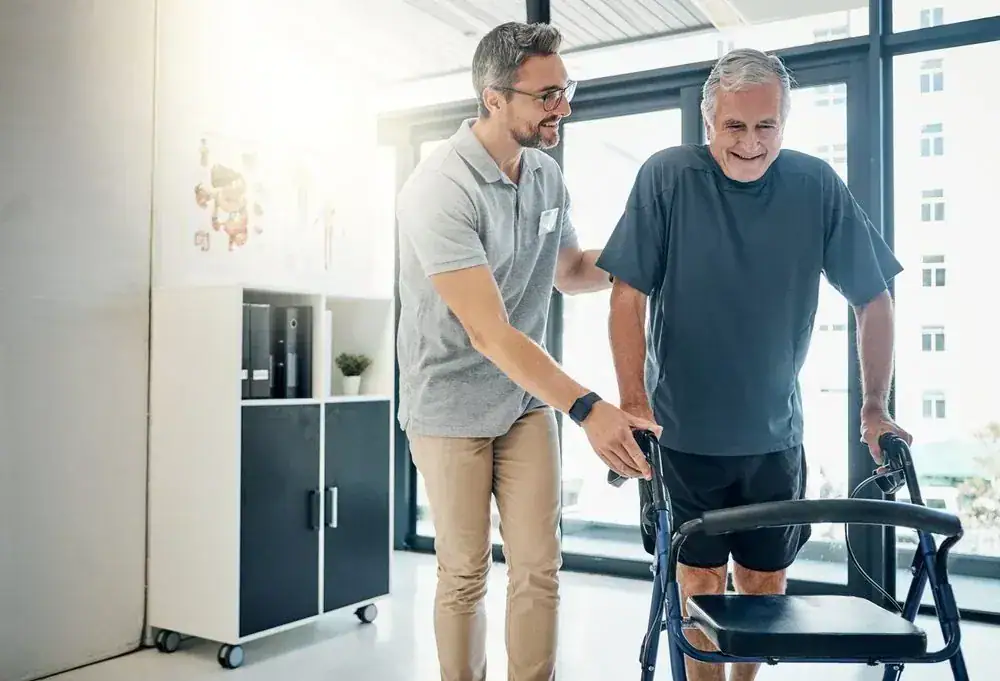
Yes. Using a walker or cane doesn’t mean therapy won’t help—it just means your program will be designed around your current mobility level. The goal is to make you as stable and independent as possible, whether that means eventually walking without assistance or just feeling more confident and secure with the aid you’re already using.
A physical therapist can assess whether you’re using your walker or cane correctly, which a lot of people aren’t. They’ll also work on strengthening the muscles that support your balance and improving your gait so you’re not relying on the device more than you need to.
In some cases, people who start therapy with a walker end up transitioning to a cane, or from a cane to walking independently. In other cases, the assistive device stays, but the person feels steadier and moves more easily. Either way, you’re better off than you were before.
Other Services we provide in Bellport