
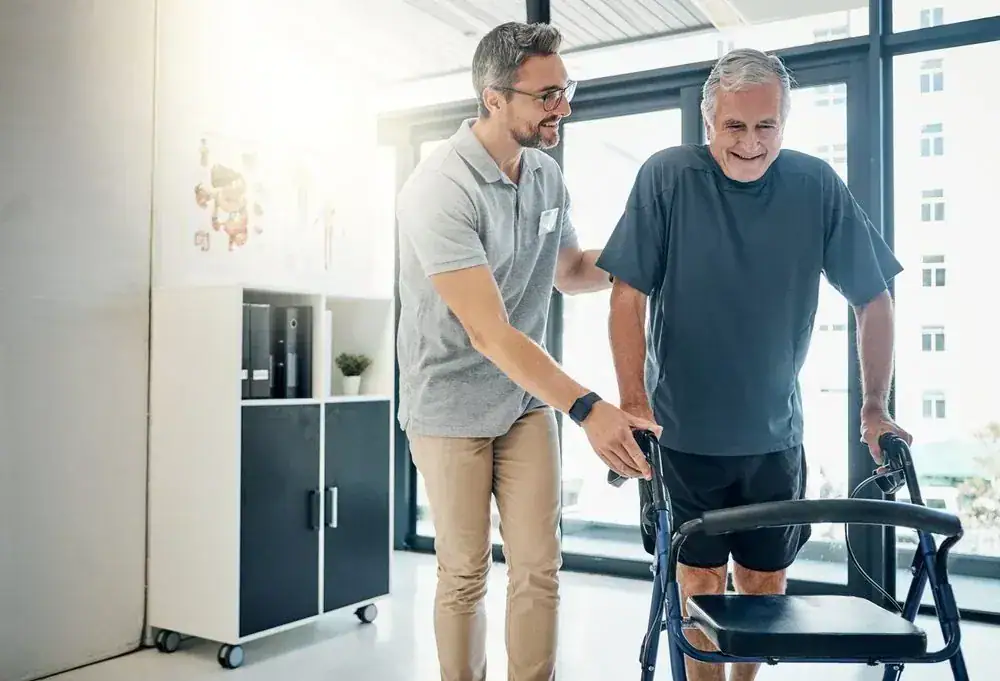
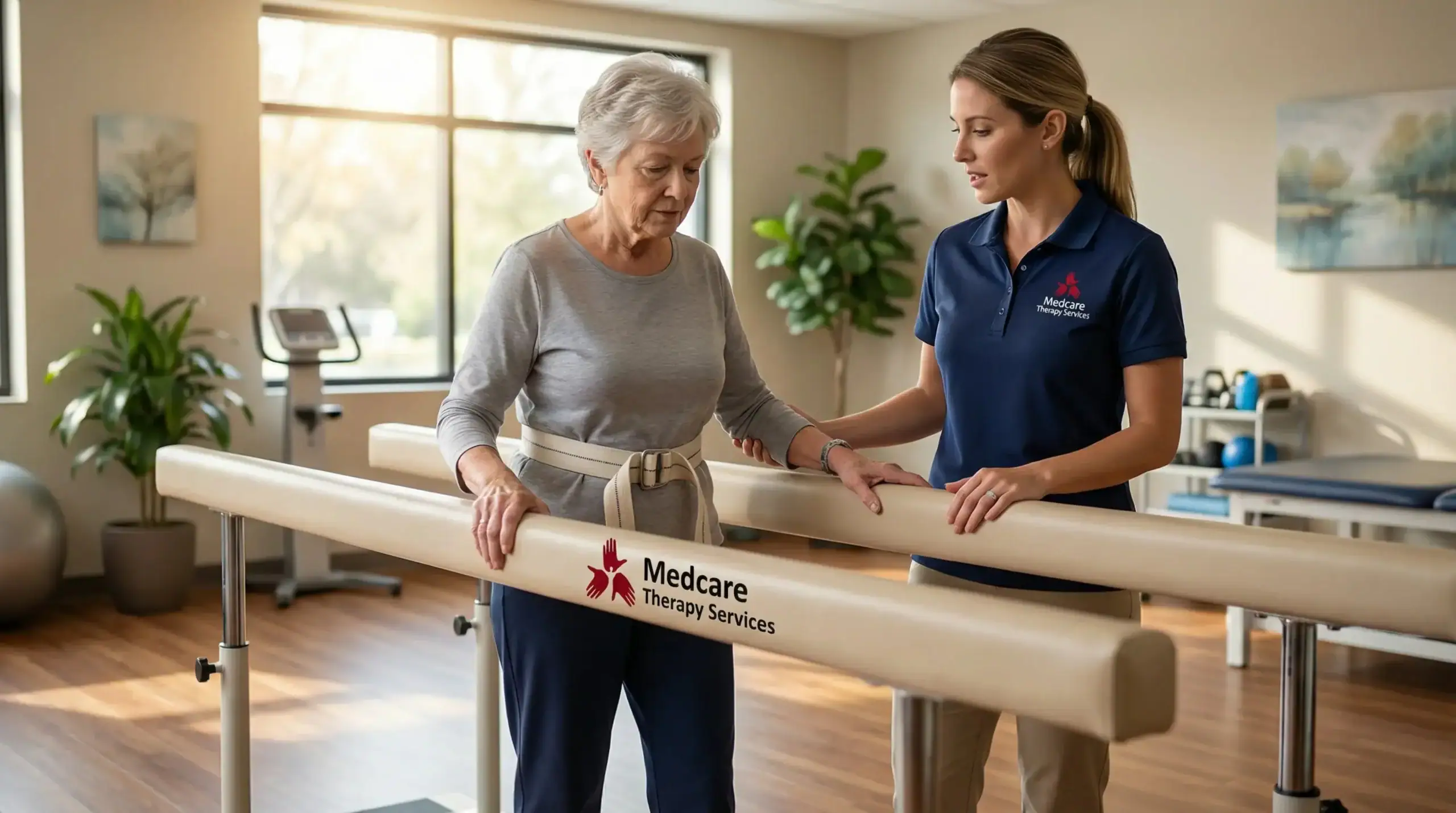
You stop second-guessing every step. That’s what better balance feels like.
When your legs are stronger and your core is engaged, you move through your home without that constant low-level fear. You get up from a chair without bracing yourself. You walk to the mailbox without worrying about uneven pavement. You reach for something on a high shelf because you trust your body to stay stable.
Falls don’t just hurt physically. They shake your confidence. One fall makes you more cautious. Two falls make you avoid activities altogether. That’s when independence starts slipping away, not because you can’t do things, but because you’re afraid to try.
Physical therapy for balance works because it retrains the connection between your brain and your muscles. We don’t just hand you a list of exercises. We assess why you’re unsteady in the first place, then build a program that addresses your specific risk factors. Maybe it’s weak ankles. Maybe it’s reduced sensation in your feet. Maybe it’s medication side effects or vision changes. The program adapts to you.
Research backs this up. Regular balance exercises for seniors can reduce fall risk by up to 50%. That’s not a small improvement. That’s the difference between living independently and needing help with daily tasks.
Medcare Therapy Services has built a reputation across Long Island for one reason: we show up, we listen, and we help people stay independent longer.
We’re not new to this. Our team has worked with seniors throughout Nassau and Suffolk Counties, from Baiting Hollow to Smithtown to Speonk. We understand the specific challenges Long Island seniors face, from navigating older homes with narrow staircases to staying active during harsh winters when sidewalks get slippery.
What sets us apart isn’t fancy equipment or complicated protocols. It’s the fact that we treat fall prevention like the serious medical issue it is. Every 11 seconds, an older adult ends up in the emergency room because of a fall. We’d rather spend an hour with you now than see you in the ER later.
Our Google Business Profiles are verified, our staff credentials are current, and our patient data is secure. Those aren’t marketing points. They’re baseline expectations you should have for any healthcare provider.

First visit is an assessment. Your physical therapist evaluates your gait, your balance, your strength, and your home environment. They’re looking for specific risk factors: how you shift your weight, whether you favor one leg, if you have trouble with depth perception, how quickly you can react if you start to lose balance.
Then we build your program. This isn’t generic senior balance exercises pulled from a handout. It’s targeted work based on what your assessment revealed. Maybe you need ankle strengthening. Maybe you need core activation drills. Maybe you need exercises that improve your reaction time when you start to tip.
You’ll work together with us in the clinic, usually one to two times per week. Between sessions, you’ll have exercises to do at home. These aren’t complicated. They’re safe, effective movements you can do while holding onto a counter or sitting in a chair.
As you get stronger, the exercises progress. What felt challenging in week one becomes easy by week four. That’s when you know it’s working. Your therapist tracks measurable improvements: how long you can stand on one foot, how fast you can walk, how confident you feel during daily activities.
Most people see real improvement within eight to twelve weeks. Some need less time. Some need more. It depends on where you’re starting from and what your goals are.

Ready to get started?
You get a full fall risk assessment that identifies exactly why you’re unsteady. This includes strength testing, balance testing, gait analysis, and a review of your medications and medical history.
You get a personalized exercise program designed around your specific needs. If you have arthritis, we work around it. If you’ve had a stroke, we adapt. If you’re recovering from a hip replacement, we build strength safely.
You get hands-on guidance from a licensed physical therapist who’s trained in elderly fall prevention. They’re there to correct your form, answer your questions, and adjust your program as you improve.
Here’s what matters for Baiting Hollow and the surrounding North Fork area: many of our patients live in older homes with stairs, uneven floors, and small bathrooms. We talk about those realities during treatment. We help you identify hazards in your actual living space, not some generic checklist that doesn’t apply to your life.
Long Island winters are brutal. Ice, snow, and slush create serious fall risks for seniors. We time your treatment to build strength before winter hits, so you’re not stuck inside for four months because you’re afraid to walk to your car.
The average emergency room visit after a fall costs nearly $9,000. A hospital stay costs even more. Our fall prevention program costs a fraction of that, and most insurance plans cover physical therapy for balance.

If you’ve fallen in the past year, you need it. Falling once doubles your chance of falling again. That’s not scare tactics. That’s statistics.
But you don’t have to wait until you fall. If you’re catching yourself on furniture when you walk, if you feel unsteady on stairs, if you avoid certain activities because you don’t trust your balance, those are signs your body needs help.
Other red flags: you take more than four medications (some combinations affect balance), you have numbness in your feet, you’ve noticed your walking speed has slowed down, or you feel dizzy when you stand up. A physical therapist can assess all of these factors and tell you honestly whether you’d benefit from treatment.
Most people wait too long. They think being unsteady is just part of getting older. It’s not. Your balance can improve at any age with the right training.
Online exercises are generic. Physical therapy is specific to your body and your risk factors.
A video can show you how to do a standing leg lift, but it can’t tell you if you’re compensating with your hip, or if your ankle is too weak to support the movement safely, or if you’d be better off starting with seated exercises first. A physical therapist watches how you move and adjusts your program in real time.
Here’s the other piece: accountability and progression. Most people start strong with online exercises, then stop after two weeks. In physical therapy, you have scheduled appointments and a professional tracking your progress. Your exercises get harder as you get stronger. That progression is what creates lasting results.
The research is clear on this. Multi-factor interventions that include professional assessment and personalized programming are significantly more effective than general exercise programs. You’re not just doing balancing exercises. You’re fixing the specific weaknesses that put you at risk.
Most people notice a difference within three to four weeks. Real, measurable improvement usually takes eight to twelve weeks.
That timeline isn’t random. It takes time to build muscle strength, retrain your nervous system, and develop new movement patterns. Your brain needs repetition to create those connections between balance signals and muscle responses.
You’ll have homework between sessions. If you do your home exercises consistently, you’ll see results faster. If you only work on balance during your clinic visits, it’ll take longer.
Some people need ongoing maintenance after their initial program ends. That might mean monthly check-ins or a refresher program once a year. It depends on your overall health and activity level. But the goal is always to give you the tools to maintain your balance independently, not to keep you in therapy forever.
Most Medicare and private insurance plans cover physical therapy for balance when it’s medically necessary. That means you have documented fall risk factors or a history of falls.
Your doctor will need to write a referral in most cases. The referral should specify balance training or fall prevention. Once we receive that, we verify your insurance benefits before your first appointment so you know what to expect for costs.
If you have Medicare, you’ll typically have a copay or coinsurance after you meet your deductible. If you have a Medicare Advantage plan or private insurance, coverage varies by plan. Some cover 100% after your deductible. Some require a copay for each visit.
We handle the insurance verification and billing. You don’t have to figure it out on your own. If you’re not sure about your coverage, call us before your first appointment and we’ll check your benefits.
The cost of prevention is always less than the cost of a fall. Even if you have out-of-pocket expenses for therapy, you’re avoiding a potential $9,000 emergency room bill or a $50,000 hospital stay.
It’s not too late. People who’ve fallen multiple times often see the biggest improvements because they have the most room to gain strength and stability.
Yes, multiple falls mean your risk is higher. But that’s exactly why professional intervention matters. Your physical therapist will dig into why you keep falling. Is it the same situation every time? Are you tripping over things, or losing balance when you turn, or getting dizzy when you stand up?
Each of those scenarios has different causes and different solutions. Tripping might mean you’re not lifting your feet high enough because of weak hip flexors. Losing balance during turns might mean your core isn’t activating properly. Dizziness when standing could be blood pressure related or inner ear related.
We’ve worked with people who’ve fallen five, six, seven times. The common thread isn’t that they’re too far gone. It’s that nobody addressed the underlying cause until they came to us for physical therapy.
Your program might take longer if you’ve lost significant strength or confidence. But improvement is absolutely possible. You just need someone who knows how to rebuild your stability step by step.
No. Prevention works best before the first fall happens.
If you’re in your 60s or 70s and you’re starting to notice balance changes, that’s the ideal time to start. Your strength is easier to maintain than to rebuild. Your confidence is still intact. You can prevent falls instead of recovering from them.
We work with active seniors who want to stay active. Maybe you’re hiking, gardening, traveling, or playing with grandkids. You don’t want balance issues to slow you down. A fall prevention program keeps you doing those activities safely.
We also work with people who have specific risk factors even if they haven’t fallen yet. That includes anyone with neuropathy, Parkinson’s, previous stroke, vision problems, or anyone taking multiple medications that affect balance.
The goal is always the same: keep you independent, confident, and moving. It doesn’t matter if you’ve fallen ten times or zero times. If your balance needs work, we can help.
Other Services we provide in Baiting Hollow