


You’re not looking for temporary relief. You want to walk without worrying about falling. You want to get through your day without joint pain slowing you down. You want to feel confident moving around your own home again.
That’s what physical therapy actually does when it’s done right. It rebuilds strength where you’ve lost it. It retrains balance so you’re not second-guessing every step. It addresses the root cause of your pain instead of just masking symptoms.
Whether you’re recovering from surgery, dealing with chronic pain, or trying to prevent another fall, the goal is the same: get you back to doing what matters. Not in six months. Not eventually. As soon as your body is ready to handle it.
In Dix Hills, where nearly half the population is over 45 and mobility challenges are common, you’re not alone in needing help. But you do need someone who knows how to deliver it without the runaround.
We operate across Long Island, including right here in Dix Hills, with affiliated centers in Smithtown and Speonk. We’re not new to this. We’ve worked with enough patients dealing with fall risks, post-surgical recovery, and chronic pain to know what actually moves the needle.
Every treatment plan is built around you—not a template. You’ll work with the same licensed physical therapist from evaluation through recovery, so there’s no repeating your story or starting over with someone new every visit.
We also offer in-home physical therapy, which matters in a community like Dix Hills where transportation can be a real barrier. If getting to an appointment is harder than the therapy itself, that’s a problem. We handle Medicare, Medicaid, and private insurance, so the billing side doesn’t become another headache.

First, you’ll sit down with a licensed physical therapist for a full evaluation. Not a quick look—an actual assessment of your mobility, strength, balance, and pain points. We need to know what’s limiting you and why before we can fix it.
From there, we build a personalized treatment plan. That might include gait training if walking feels unsteady, balance and proprioceptive training if you’ve had a fall or feel at risk, therapeutic exercise to rebuild strength, or joint pain treatment to address inflammation and stiffness. If you’re recovering from a stroke or dealing with neurological issues, we incorporate neuromuscular re-education and stroke rehabilitation techniques.
You’ll work with the same therapist throughout your care. Sessions can happen at one of our affiliated centers or in your home if that’s easier. We track your progress, adjust the plan as you improve, and keep you informed the whole way. No surprises, no guessing.
The timeline depends on your condition, but most people start seeing real improvement within a few weeks. The goal isn’t just to get you through therapy—it’s to give you the tools to stay strong and mobile after you’re done.

Ready to get started?
Our services cover the full spectrum of physical and occupational rehabilitation. That includes fall prevention programs, which are critical in Dix Hills where the senior population is significant and falls are a leading cause of injury. We also handle pre and post surgery rehabilitation, injury rehabilitation, resistance and strength training, and neurological rehabilitation for conditions like stroke or Parkinson’s.
If you’re dealing with joint pain—whether it’s your knee, hip, shoulder, or back—we use targeted joint pain treatment and therapeutic exercise to reduce inflammation and restore function. For balance issues, we offer balance and proprioceptive training to retrain your body’s sense of position and movement. Gait training helps if your walking pattern has changed due to injury, surgery, or neurological conditions.
We also provide occupational therapy for patients who need help with daily tasks like dressing, cooking, or bathing. And because we know that getting to appointments isn’t always easy, in-home physical therapy is available throughout Dix Hills and surrounding areas.
Everything is designed around what you actually need—not what fits neatly into a one-size-fits-all program. You’re working with a team that understands the local challenges, accepts your insurance, and keeps the process as straightforward as possible.
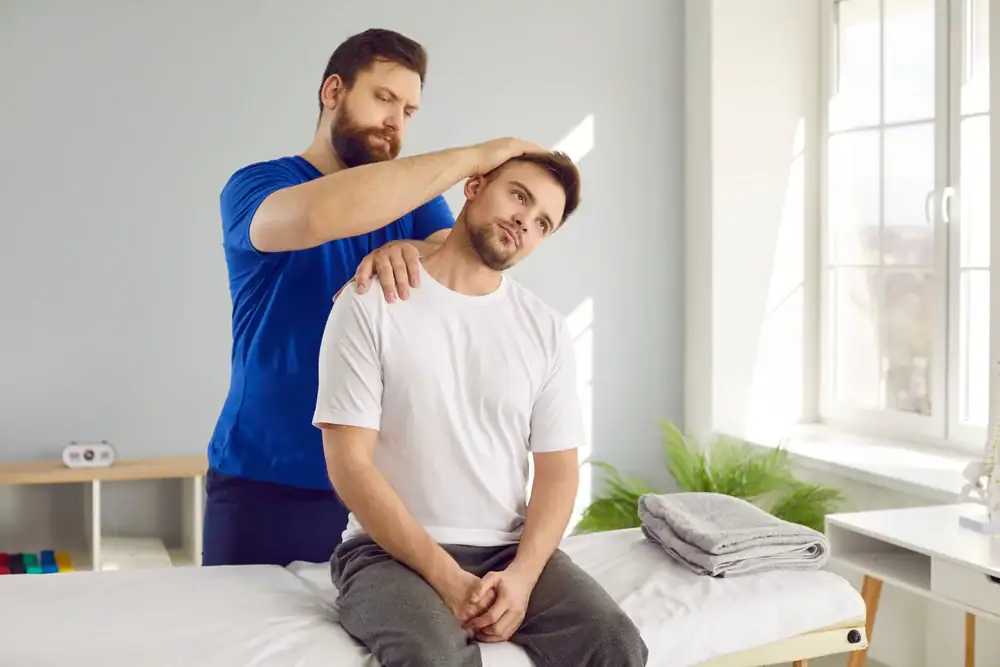
If your pain has lasted more than a few days, is getting worse, or is limiting what you can do, it’s worth getting evaluated. A lot of people wait, hoping things will improve, and they often do—but not always correctly. Your body might compensate in ways that lead to bigger problems down the road.
Physical therapy isn’t just for severe injuries. It’s also for people who feel unsteady on their feet, have trouble getting up from a chair, or notice their balance isn’t what it used to be. In Dix Hills, where falls are a real concern for older adults, catching these issues early makes a huge difference.
The evaluation itself will tell you what’s going on and whether treatment is necessary. If it’s something minor, we’ll tell you. If it’s something that needs attention, we’ll build a plan. Either way, you’ll have clarity instead of guessing.
Yes, Medicare Part B covers physical therapy when it’s medically necessary, which includes most rehabilitation after surgery, injury, or illness. You’ll typically have a copay or coinsurance depending on your plan, but the majority of the cost is covered.
We handle Medicare billing directly, so you’re not stuck managing claims or paperwork. We also work with Medicaid and most private insurance plans. Before you start, we’ll verify your coverage and let you know what to expect in terms of out-of-pocket costs.
If you’re concerned about hitting a coverage cap, we’ll keep you updated on where you stand throughout treatment. Medicare does have annual limits, but most people don’t reach them. And if cost is a barrier, we’ll work with you to figure out a plan that makes sense. The goal is to get you the care you need without financial stress.
The treatment itself is the same—you’re working with a licensed physical therapist either way. The difference is location and convenience. In-home physical therapy makes sense if you have trouble getting to appointments, whether that’s due to mobility limitations, lack of transportation, or just the hassle of scheduling around someone else’s availability.
For some people, being at home is actually better for therapy. We can assess how you move in your own space, identify fall risks in your environment, and teach you exercises using furniture or items you already have. It’s more practical, especially for older adults in Dix Hills who want to stay independent.
Clinic-based therapy has its advantages too—access to specialized equipment, a dedicated space for focused work, and sometimes a little more structure. We’ll recommend what makes the most sense based on your condition and situation. If you start one way and want to switch, that’s fine. Flexibility matters.
It depends on what you’re dealing with. A minor injury or post-surgical recovery might take six to eight weeks. Chronic pain, neurological conditions, or significant mobility issues can take longer—sometimes several months.
Most people come in two to three times per week at the start, then taper down as they improve. You’ll also have exercises to do at home between sessions, which speeds up progress. The more consistent you are, the faster you’ll see results.
We track your progress at every session and adjust the plan as needed. If something isn’t working, we change it. If you’re ahead of schedule, we’ll move forward. You’re not locked into a rigid timeline. The goal is to get you where you need to be as efficiently as possible, then give you the tools to maintain it on your own.
Your first visit is an evaluation. The therapist will ask about your medical history, current symptoms, and what’s been limiting you. Then they’ll assess your movement—how you walk, your range of motion, your strength, and your balance. This usually takes 45 minutes to an hour.
From there, we’ll explain what’s going on, what’s causing your pain or mobility issues, and what the treatment plan will look like. You’ll leave with a clear understanding of the next steps, how long it might take, and what you need to do between sessions.
Some people start light treatment during that first visit—gentle exercises or manual therapy to get things moving. Others just get the evaluation and start active therapy at the second session. Either way, you’re not walking in blind. You’ll know what to expect, and you’ll have a chance to ask questions before committing to anything.
Fall prevention works best before a fall happens. Once you’ve fallen, the risk of falling again goes up significantly—and so does the fear, which can make you move less and get weaker. That’s the cycle we’re trying to break.
Physical therapy for fall prevention focuses on balance training, gait training, and strength building. We assess why you’re unsteady—whether it’s muscle weakness, poor balance, vision issues, or something else—and address it directly. We also look at your home environment and suggest modifications if needed.
In Dix Hills, where a large portion of the population is over 65, falls are one of the most common reasons people lose independence. The earlier you address balance and mobility issues, the better your odds of staying on your feet. You don’t have to wait until something happens. If you feel unsteady or you’ve had a close call, that’s enough reason to get evaluated.
Other Services we provide in Dix Hills