

You’re not looking for temporary relief. You want to sleep through the night without waking up stiff. You want to finish a workout without that nagging tightness in your back or shoulders. You want to pick up your kid, carry groceries, or sit through a meeting without constantly shifting to find a comfortable position.
Cupping therapy works by increasing blood flow to the areas that hurt. That means less inflammation, faster healing, and muscles that actually relax instead of staying locked up. It’s not a magic fix, but it’s one of the most effective tools we have for breaking up tension and getting your body to respond the way it should.
Most people notice a difference right after their first session. The tightness eases. The range of motion improves. And for the first time in a while, movement doesn’t come with that constant background ache.
Medcare Therapy Services has been treating patients across Long Island for years, and we’ve built our reputation on one thing: actually fixing problems instead of just making you feel better for an hour. Our therapists are licensed, trained in modern cupping techniques, and experienced in treating everything from chronic pain to sports injuries.
We’re based in Woodsburgh, NY, and we know the community here. Active families, weekend athletes, people dealing with desk jobs that wreck their necks and shoulders. We see it all, and we treat it with the same approach: evidence-based care, personalized plans, and no unnecessary appointments.
Every session is tracked. Every tool is sterilized. And every treatment plan is built around what you need—not what fills a schedule.
First, we talk. You tell us where it hurts, how long it’s been going on, and what makes it worse. We assess your movement, check your range of motion, and figure out what’s actually causing the problem—not just where you feel it.
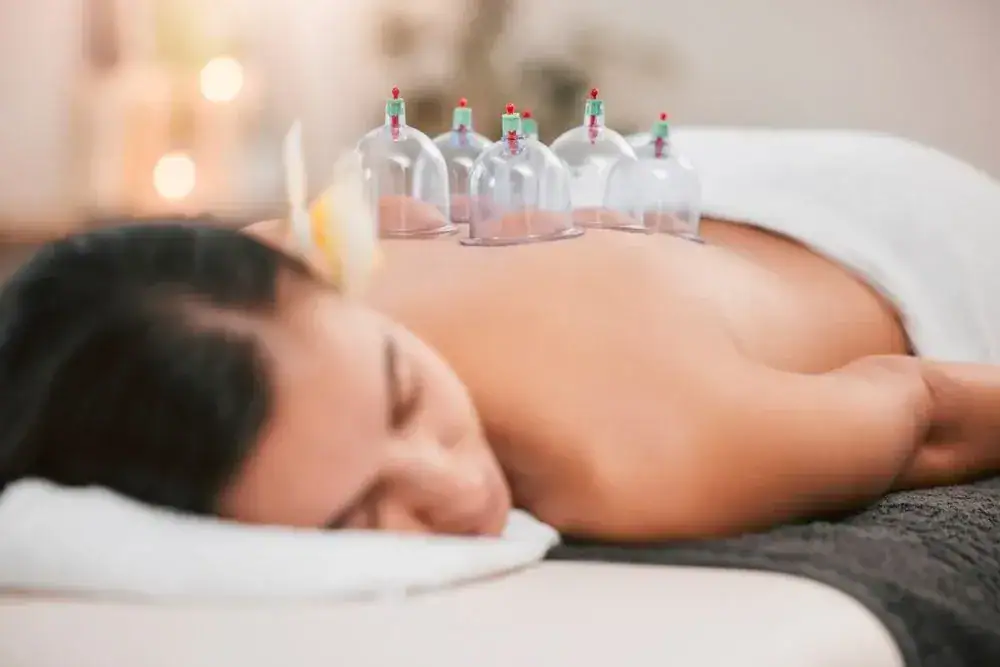
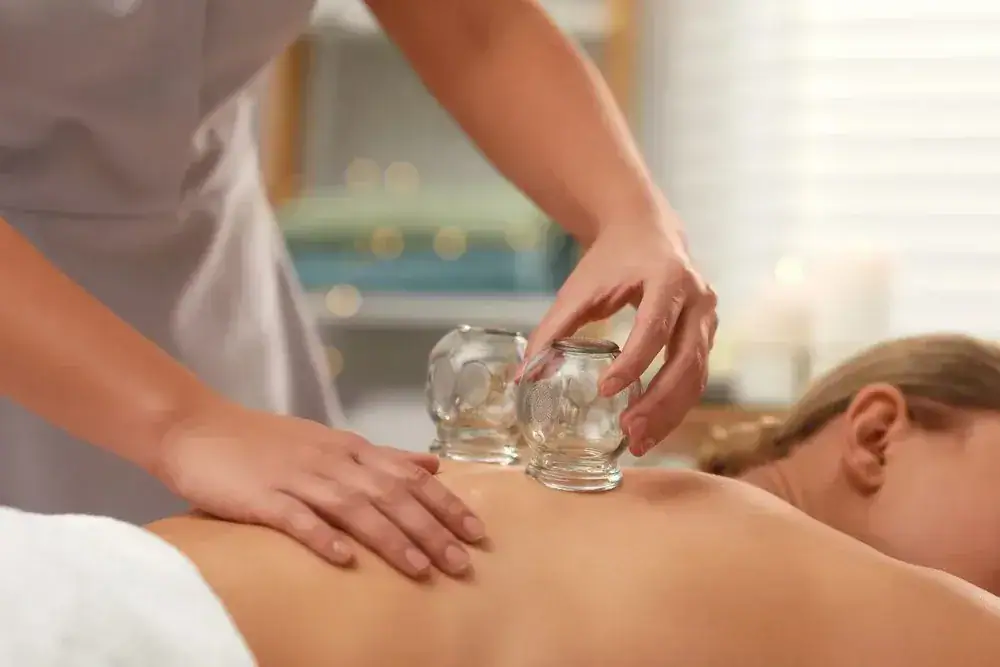
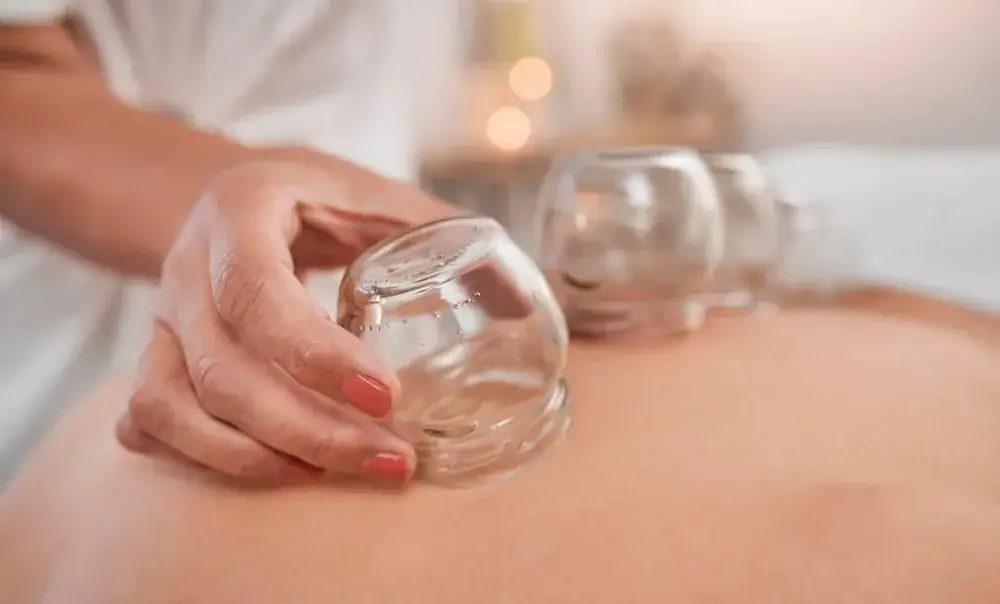
Then we apply the cups. We use both dry cupping and myofascial decompression depending on what your body needs. The cups create suction that pulls blood to the surface, breaks up adhesions in the muscle tissue, and gives your body the signal to start healing. It doesn’t hurt. Most people say it feels like a deep stretch or a strong massage.
You’ll see circular marks afterward. That’s normal—it’s increased blood flow, not bruising. They fade in about a week. And while the marks are there, the pain usually isn’t.
After the session, we give you a plan. That might include exercises, stretches, or follow-up treatments depending on how your body responds. Cupping works best when it’s part of a bigger strategy, not a one-off appointment.
Ready to get started?
If you’re dealing with chronic back pain, neck stiffness, or shoulder tension, cupping can help. It’s especially effective for people who’ve tried other treatments and didn’t get the results they wanted. We see a lot of patients in Woodsburgh, NY who’ve been managing pain for months—or years—and finally get relief after a few sessions.
Athletes use cupping for recovery. Runners with IT band issues, lifters with tight hips, swimmers with shoulder pain. The increased circulation helps muscles recover faster and reduces soreness after hard training sessions. It’s not just about feeling better—it’s about performing better.
People with desk jobs benefit too. Sitting all day creates tension in your neck, traps, and lower back. Cupping releases that tension and improves posture by addressing the muscle imbalances that build up over time. You’ll notice the difference when you’re not constantly rolling your shoulders or stretching your neck every ten minutes.
We also treat headaches, migraines, and tension that starts in the upper back and radiates up. Cupping combined with physical therapy gives your body the tools to heal itself instead of just masking symptoms.
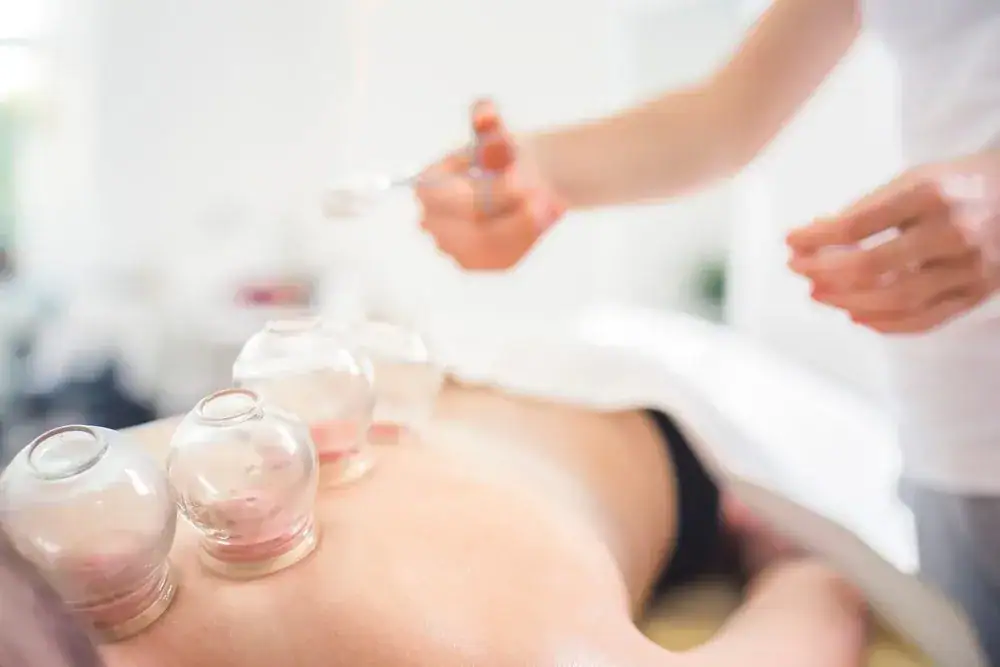
It shouldn’t hurt. When cupping is done correctly by a trained physical therapist, most people describe the sensation as a strong pull or deep pressure—not pain. You might feel tightness while the cups are on, but it’s more of an intense stretch than anything sharp or unbearable.
The suction can feel unusual if it’s your first time, especially in areas where you’re holding a lot of tension. But that discomfort usually fades within the first minute as your muscles start to relax. If something genuinely hurts, you tell us and we adjust the pressure immediately.
After the session, you might feel sore—similar to how you’d feel after a deep tissue massage. That soreness typically goes away within a day or two. The circular marks left behind aren’t painful either. They look more dramatic than they feel, and they’re a sign that blood flow increased to that area, which is exactly what we want.
Most people notice a difference right away. Pain levels drop, range of motion improves, and that constant tightness starts to ease after the first session. But one session isn’t a cure—it’s a starting point.
For acute issues like a pulled muscle or post-workout soreness, you might only need a couple of treatments. For chronic pain that’s been building for months or years, you’ll likely need a series of sessions combined with other physical therapy techniques. We’re not just chasing short-term relief—we’re addressing the root cause so the problem doesn’t keep coming back.
On average, patients see significant improvement within two to four weeks when cupping is part of a complete treatment plan. That includes exercises, movement corrections, and lifestyle adjustments that support long-term healing. The timeline depends on your body, your condition, and how consistently you follow through with the plan we build together.
Cupping is safe when it’s performed by a licensed professional who knows what they’re doing. The biggest “risk” is the circular marks, which are completely normal and fade within a week to ten days. Those marks aren’t bruises in the traditional sense—they’re the result of increased blood flow to the area.
In rare cases, if cups are left on too long or the suction is too strong, you could experience skin irritation or blistering. That’s why training matters. Our therapists know how to adjust pressure, monitor your skin, and remove cups at the right time to avoid any issues.
If you have certain conditions—like a bleeding disorder, active skin infection, or you’re on blood thinners—we’ll talk through whether cupping is appropriate for you. We also avoid cupping over open wounds, sunburned skin, or areas with varicose veins. Safety isn’t something we assume—it’s something we actively manage with every patient, every session.
A spa offers relaxation. We offer treatment. The difference is in the training, the approach, and the outcome.
When you get cupping from a licensed physical therapist, it’s part of a clinical assessment. We’re not just putting cups on sore spots—we’re identifying the root cause of your pain, addressing muscle imbalances, and integrating cupping with other techniques like manual therapy, corrective exercises, and movement education. The goal isn’t to make you feel good for an hour. It’s to fix the problem so you don’t need to keep coming back.
Spa cupping is often done by massage therapists or aestheticians who may have limited training in musculoskeletal conditions. They’re focused on relaxation and general wellness, which is fine if that’s what you’re looking for. But if you’re dealing with chronic pain, a sports injury, or limited mobility, you need someone who understands anatomy, biomechanics, and rehabilitation—not just where to place the cups.
We also follow strict sterilization protocols, track your progress over time, and adjust your treatment plan based on how your body responds. That level of care and accountability doesn’t happen at a spa.
Yes, and it’s one of the most common reasons people come to us. Chronic back and neck pain usually stem from tight muscles, poor posture, or repetitive strain that’s built up over time. Cupping increases blood flow to those areas, reduces inflammation, and helps release the tension that’s been locking up your movement.
For lower back pain, we often use cupping along the paraspinal muscles and around the hips to address tightness that’s pulling your spine out of alignment. For neck pain, we focus on the upper traps, shoulders, and the base of the skull—areas that get overworked from sitting, driving, or staring at screens all day.
But here’s the thing: cupping alone won’t solve chronic pain if the underlying issue isn’t addressed. If your posture is off, if you’re not moving correctly, or if certain muscles are weak and others are compensating, the pain will come back. That’s why we combine cupping with strengthening exercises, mobility work, and education on how to move better in your daily life. The cupping gives you relief. The rest of the plan keeps it from coming back.
Cost depends on whether cupping is part of a physical therapy session or a standalone treatment. In most cases, it’s integrated into your overall therapy plan, which means it’s billed as part of your physical therapy visit—not as a separate service.
If you have insurance that covers physical therapy, there’s a good chance cupping is included under that benefit. We verify your coverage before you start treatment so there are no surprises. Some plans cover it fully, others require a copay, and a few don’t cover alternative therapies at all. We’ll walk you through what your plan allows and what your out-of-pocket cost will be.
If you’re paying out of pocket, we’ll give you a clear price upfront. No hidden fees, no upselling. You’ll know exactly what you’re paying for and why. And because cupping is part of a complete treatment plan—not just a feel-good add-on—you’re investing in real results, not just temporary relief.
Other Services we provide in Woodsburgh