
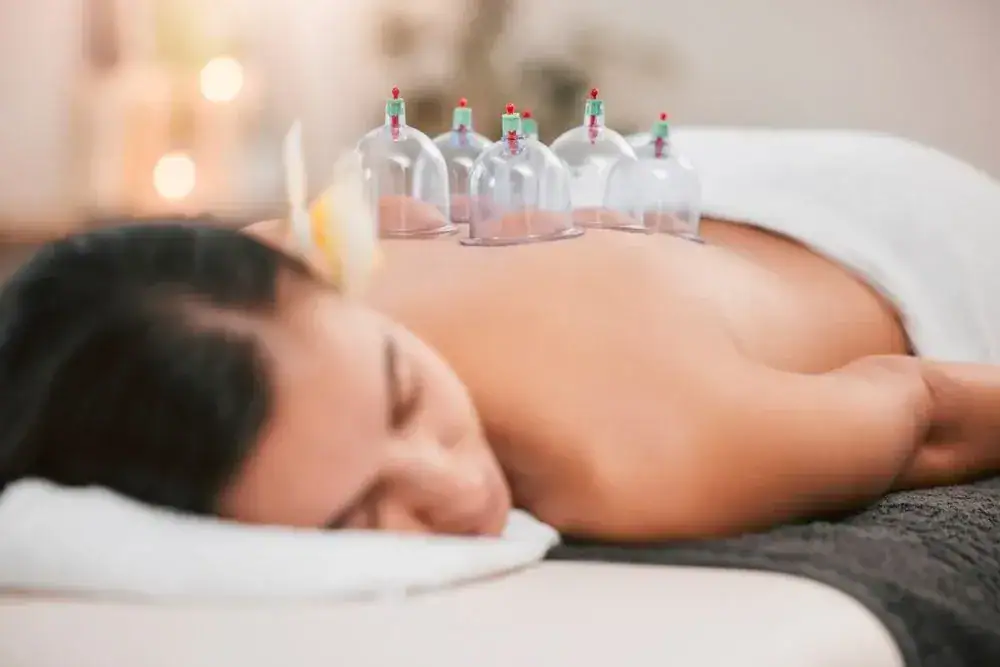

You stop planning your day around what hurts. That’s what happens when chronic neck pain, lower back stiffness, or shoulder tension finally lets up.
Cupping therapy works by increasing blood flow to areas that aren’t getting enough. The suction pulls circulation into tight, overworked muscles and helps your body clear out what’s been sitting there causing inflammation. It’s not a temporary cover-up—it’s giving your tissue what it needs to actually recover.
Most people notice less pain after the first session. Range of motion improves. Muscle tightness releases. You’re not as sore after a workout, and you’re not waking up feeling like you aged ten years overnight.
This isn’t about managing symptoms forever. It’s about addressing why the pain keeps coming back—and giving your body a real chance to reset.
We’ve been treating patients across Long Island since the mid-90s. We’re not new to this, and we’re not experimenting with trends.
Cupping therapy isn’t a standalone gimmick here. It’s part of a broader physical therapy approach that includes manual therapy, movement training, and pain management strategies that actually work. We use it when it makes sense—for muscle tension, chronic pain, post-injury recovery, and circulation issues that don’t respond well to other treatments.
Woodmere families come to us because we don’t oversell or waste time. You get a real evaluation, a clear explanation of what’s going on, and a treatment plan that fits your schedule and your goals. We’ve treated everyone from youth athletes to retirees dealing with arthritis, and we adjust our approach based on what you actually need—not what sounds good on paper.
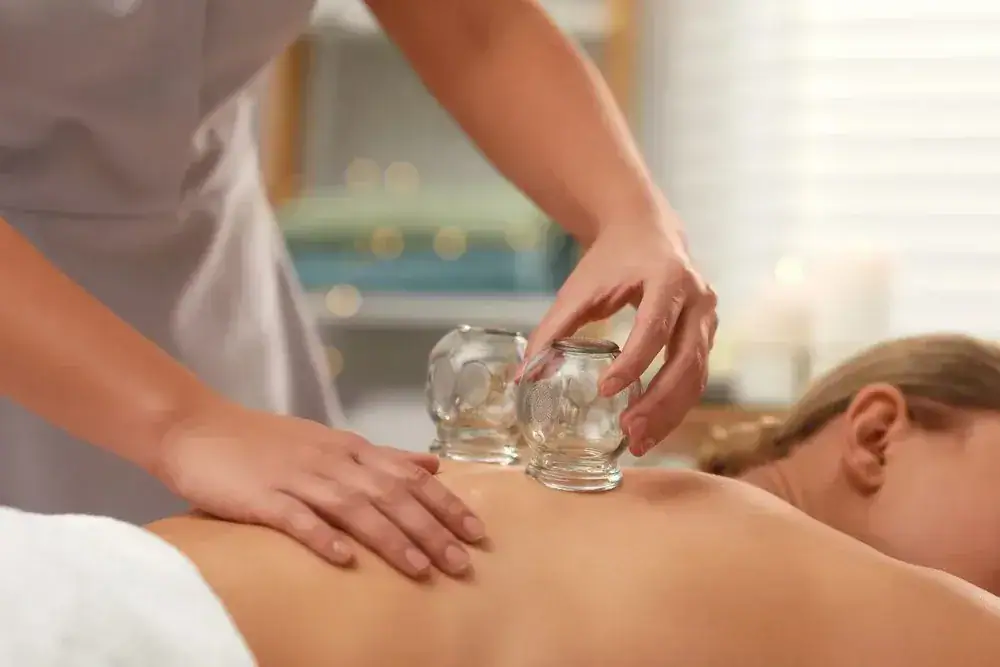
We start with an assessment. You’ll talk through what’s been bothering you—where it hurts, how long it’s been going on, what makes it worse. We’ll test your range of motion and figure out which areas need attention.
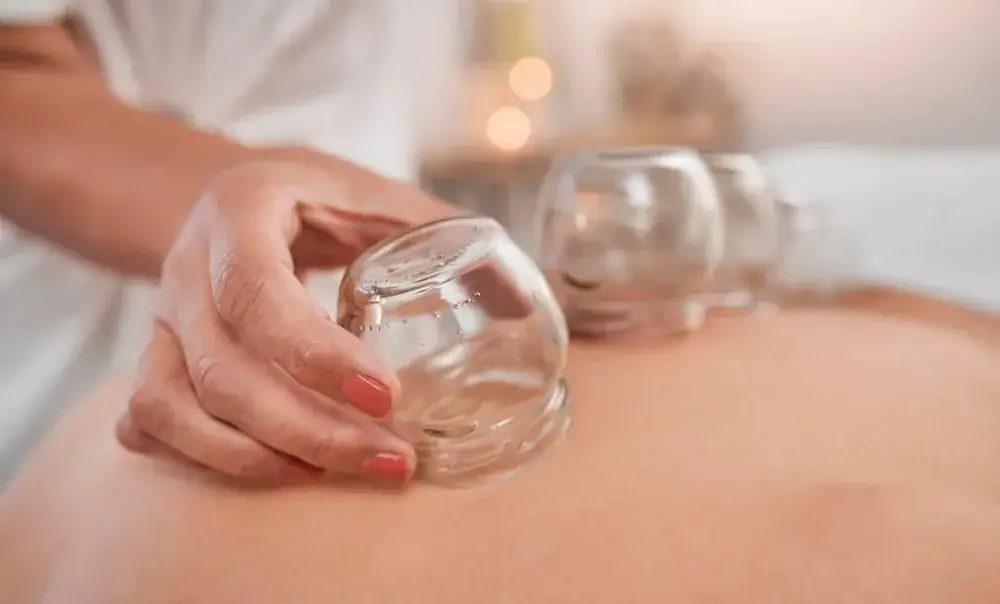
Then we apply the cups. These are smooth, rounded cups that create suction on your skin using either a pump or heat. The suction pulls blood into the area, which helps loosen tight muscles and fascia. You’ll feel a pulling sensation, but it’s not painful—most people say it’s actually relaxing.
We leave the cups on for 5 to 15 minutes depending on the treatment area and your tolerance. Some practitioners use stationary cupping (cups stay in one spot), others use sliding cupping where we move the cups across your skin with oil or lotion. Both work. We choose based on what your body needs that day.
After we remove the cups, you’ll see circular marks where they were placed. These aren’t bruises—they’re caused by the suction drawing blood to the surface. They fade in 3 to 10 days and don’t hurt. Most patients leave feeling looser, less tense, and noticeably less sore within 24 hours.
Ready to get started?
We use cupping therapy to treat chronic neck and back pain, muscle tension from overuse or stress, sports-related soreness, headaches caused by tight shoulders or poor posture, and restricted mobility that’s keeping you from moving the way you used to.
We also use it for patients recovering from injuries who need better circulation to heal faster, people dealing with fibromyalgia or widespread muscle pain, and anyone who’s tried other treatments without much success. It works especially well when combined with physical therapy exercises and manual therapy techniques.
Woodmere has one of the highest concentrations of healthcare workers and professional employees on Long Island. That means long hours, repetitive strain, and stress that shows up in your neck, shoulders, and lower back. Cupping helps address that—not by masking it, but by improving blood flow and releasing the tension that builds up from sitting, standing, or moving the same way all day.
You’re not committing to months of treatment. Some people feel better after two or three sessions. Others use it periodically when pain flares up. We let you decide what makes sense based on how you’re responding.
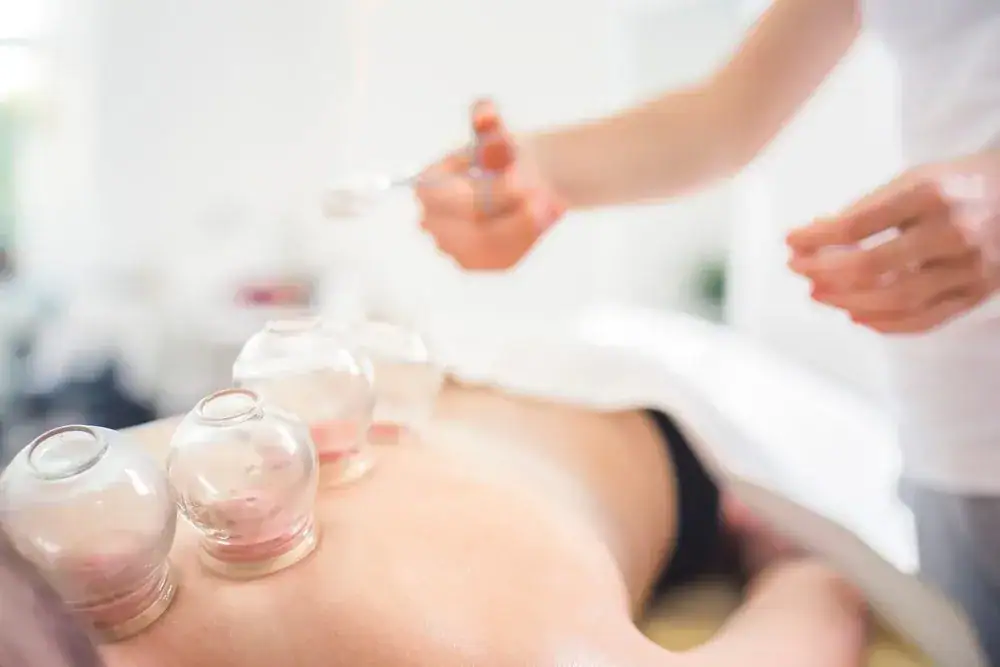
It works, and there’s research to back it up. Studies show cupping therapy reduces chronic neck pain and lower back pain more effectively than standard care alone. It’s also been shown to help with fibromyalgia, tension headaches, and muscle soreness after exercise.
The reason it works comes down to circulation. Chronic pain often develops in areas with poor blood flow—tight muscles, inflamed tissue, or spots where old injuries never fully healed. Cupping increases circulation to those areas, which helps reduce inflammation, clear out metabolic waste, and deliver oxygen and nutrients your tissue needs to repair itself.
That said, it’s not magic. It won’t fix a herniated disc or reverse arthritis. But for muscular pain, tension, and mobility issues, it’s one of the most effective non-invasive treatments available. We use it because it gets results—not because it’s trendy.
Your first session starts with a conversation. We’ll ask about your pain—where it is, how long you’ve had it, what you’ve already tried. Then we’ll do a physical assessment to see how you move and where you’re restricted.
Once we know what we’re dealing with, we’ll apply the cups to the affected areas. You’ll feel suction and a pulling sensation, but it shouldn’t hurt. If it does, we adjust the pressure. Most people say it feels like a deep tissue massage—intense but relieving.
We’ll leave the cups on for 5 to 15 minutes depending on the area and your comfort level. When we remove them, you’ll see circular marks on your skin. They’re not painful and they fade within a week or so. After the session, you might feel a little sore (like after a workout), but most people feel looser and less tense right away. We’ll talk about next steps based on how you respond.
It depends on what we’re treating and how long you’ve been dealing with it. Acute issues—like a pulled muscle or post-workout soreness—often improve after one or two sessions. Chronic pain usually takes longer, but most people notice a difference within three to five treatments.
We don’t lock you into a long-term plan. After your first session, we’ll have a better sense of how your body responds. Some patients come in once a week for a few weeks, then taper off. Others use cupping periodically when pain flares up.
The goal isn’t to keep you coming back forever. It’s to reduce your pain, improve your mobility, and give you tools to manage it on your own. If cupping isn’t helping after a few sessions, we’ll tell you and recommend something else. We’re not here to waste your time or your money.
The marks aren’t painful. They look like circular bruises, but they’re caused by suction pulling blood to the surface—not by tissue damage. You won’t feel them after the cups come off.
How long they last depends on your circulation and how much suction was used. Most marks fade within 3 to 10 days. If your circulation is sluggish or the area was really tight, they might stick around for up to two weeks. As your body gets used to treatment and your circulation improves, the marks usually get lighter and fade faster.
Some people don’t like how they look, especially if they’re on visible areas like the neck or shoulders. If that’s a concern, let us know. We can adjust placement or use lighter suction. But for most patients, the relief outweighs the temporary marks—and they’re a sign that blood flow is increasing in areas that needed it.
Yes. We use cupping widely in sports recovery because it speeds up healing and reduces muscle soreness. It works by increasing blood flow to overworked muscles, which helps clear out lactic acid and other byproducts that cause stiffness and fatigue.
Athletes use it for everything from hamstring strains to shoulder impingements to general soreness after intense training. It’s especially helpful for repetitive strain injuries—things like runner’s knee, tennis elbow, or rotator cuff irritation—where the same muscles are getting overused without enough recovery time.
If you’re dealing with a specific injury, we’ll combine cupping with other physical therapy techniques to address the root cause—not just the symptoms. And if you’re using it for general recovery, it can help you bounce back faster between workouts so you’re not dragging through your next training session. A lot of our active patients in Woodmere use it as part of their regular recovery routine, especially during heavy training cycles.
It depends on your plan and how the treatment is billed. If cupping is part of a physical therapy session and your insurance covers physical therapy, there’s a good chance it’s covered. We bill it as part of your overall treatment, not as a separate add-on service.
That said, every insurance plan is different. Some cover it fully, some cover it partially, and some don’t cover alternative therapies at all. We recommend calling your insurance provider before your first visit to ask whether cupping therapy or manual therapy techniques are included in your benefits.
If it’s not covered, we’ll let you know the cost upfront so there are no surprises. Our goal is to make treatment accessible and transparent—whether you’re using insurance or paying out of pocket. And if cupping isn’t covered but you’d benefit from it, we’ll work with you to figure out a plan that makes sense financially.
Other Services we provide in Woodmere