
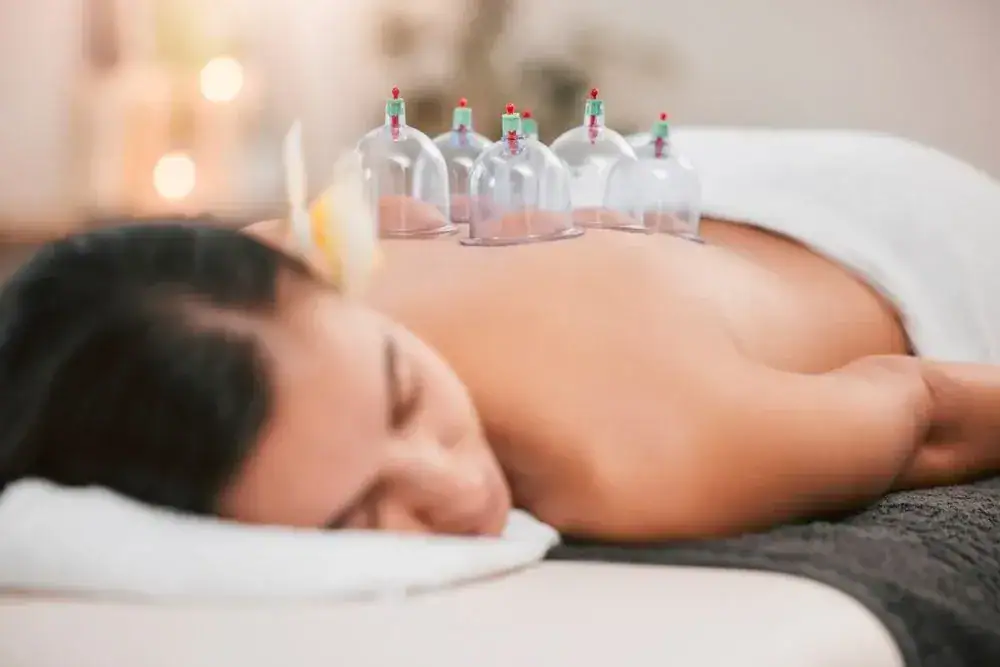

You’re dealing with pain that won’t quit. Back pain that makes getting out of bed harder than it should be. Neck tension that’s been there so long you’ve forgotten what normal feels like. Shoulder stiffness that keeps you from playing with your kids or getting through a workout without wincing.
Cupping therapy works by increasing blood flow to the areas that hurt. The suction pulls your skin up slightly, which encourages your body’s natural healing response. More circulation means less inflammation, less tightness, and often less pain.
It’s not a magic fix. But for a lot of people in Williston Park dealing with chronic pain, muscle tension, or sports injuries, it’s one of the tools that actually makes a difference. Especially when medication isn’t cutting it anymore, or you’re trying to avoid going that route in the first place.
You’re not looking for temporary relief. You want to get back to your routine without constantly managing discomfort. That’s what this is for.
Medcare Therapy Services has been serving Long Island since 2010. We’re a licensed physical therapy practice, and cupping is one of several techniques we use depending on what you need.
We’re not a spa. We’re not selling you a trend. Our physical therapists are trained to assess your condition, figure out what’s causing the problem, and build a treatment plan that actually addresses it. Sometimes that includes cupping. Sometimes it doesn’t.
What matters is that you’re working with professionals who understand musculoskeletal pain, not just someone who took a weekend course. Williston Park and the surrounding Nassau County area have plenty of therapy options, but not all of them integrate evidence-based complementary techniques like cupping into a full physical therapy plan.
First, your physical therapist evaluates your pain, range of motion, and what’s been going on. Cupping isn’t the starting point—it’s part of a bigger plan. If it makes sense for your situation, they’ll explain how it works and what to expect.
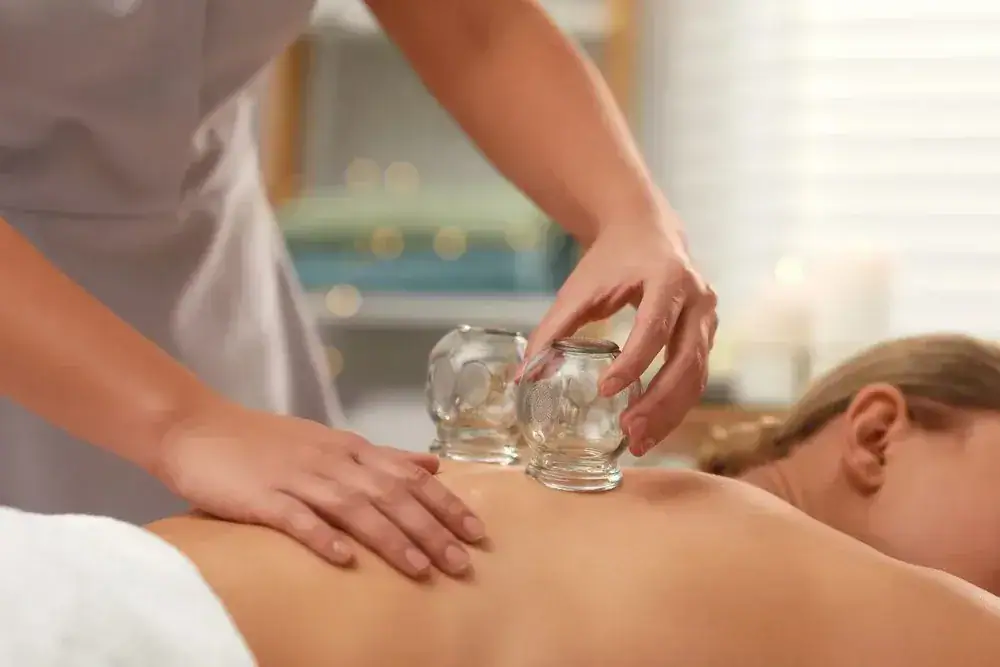
During the session, small cups are placed on your skin, usually over the areas causing you trouble. The therapist creates suction, either manually or with a pump. You’ll feel a pulling sensation, but most people describe it as pressure, not pain. It’s actually pretty tolerable.
The cups stay on for a few minutes while the suction does its job—pulling blood to the surface, loosening tight fascia, and encouraging your muscles to relax. Afterward, you might have circular marks where the cups were. They’re not bruises in the traditional sense, but they can look like them. They fade in a few days.
Cupping is usually combined with other treatments—manual therapy, stretching, strengthening exercises. It’s not a standalone solution. It’s one piece of a treatment plan designed to get you moving better and feeling less pain over time.
Ready to get started?
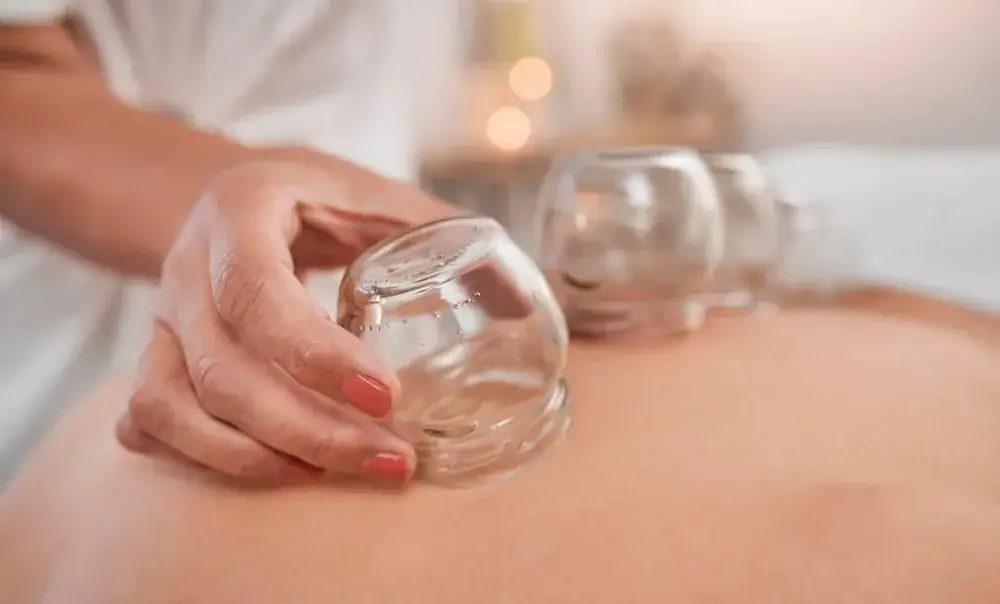
We use dry cupping, which means no needles, no blood, no invasive procedures. Just suction. It’s a low-risk, non-invasive option that fits into a broader physical therapy approach.
In Williston Park and across Nassau County, more people are dealing with chronic pain than ever before. Desk jobs, repetitive stress, aging, sports injuries—it all adds up. The demand for non-medication pain relief options is growing because people are tired of managing symptoms without addressing the root cause.
Cupping helps with muscle relaxation, improved circulation, and pain relief for conditions like back pain, neck pain, shoulder pain, and even headaches. It’s also used by athletes for faster recovery and better performance. If you’re active and dealing with recurring soreness or tightness, this can help you get back to training without constantly being sidelined.
You’re not just getting cupping. You’re getting a full evaluation, a personalized treatment plan, and ongoing adjustments based on how your body responds. That’s the difference between a quick fix and actual progress.
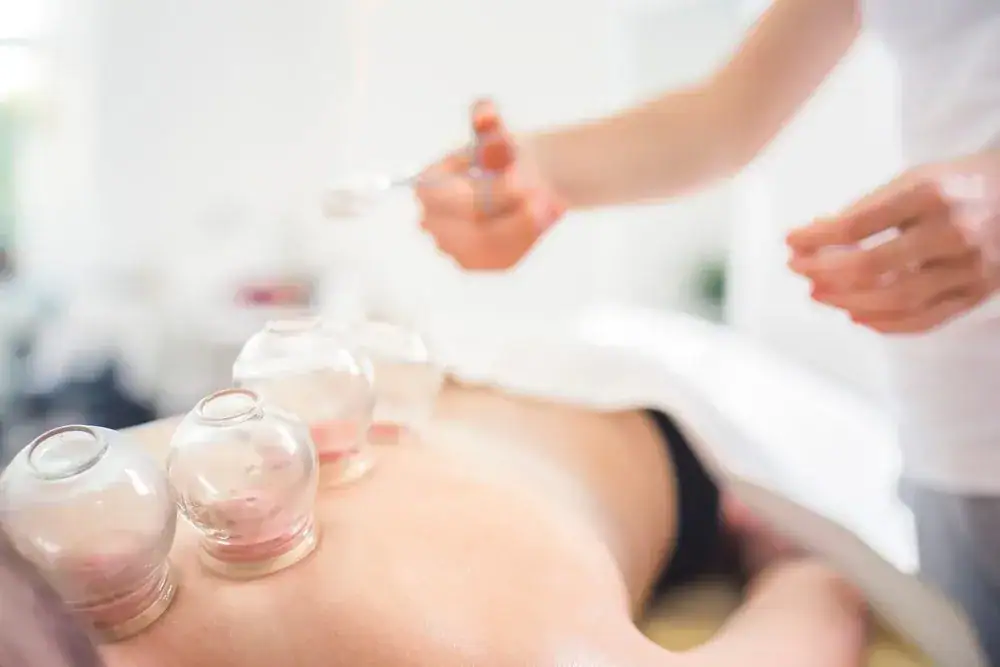
There’s moderate-quality evidence showing that cupping therapy helps with several types of pain, including chronic pain, low back pain, neck pain, and knee osteoarthritis. It’s not a cure-all, but it’s also not just hype.
The way it works is pretty straightforward. The suction increases blood flow to the affected area, which can reduce inflammation and help your muscles relax. For a lot of people dealing with pain that hasn’t responded well to other treatments, cupping offers noticeable relief.
That said, it works best when it’s part of a complete treatment plan. If you’re only doing cupping and ignoring the underlying issues—weak muscles, poor posture, repetitive strain—you’re not going to see lasting results. But when combined with physical therapy, stretching, and strengthening, it can make a real difference in how you feel day to day.
Cupping is generally low-risk when performed by a trained professional. The most common side effect is temporary marks on your skin where the cups were placed. They look like circular bruises and usually fade within a few days to a week.
Some people experience mild soreness in the treated area, similar to what you might feel after a deep tissue massage. That’s normal and typically goes away quickly.
Serious side effects are rare, especially when you’re working with a licensed physical therapist who knows what they’re doing. If you have certain skin conditions, blood disorders, or are on blood thinners, cupping might not be appropriate for you. That’s why we evaluate your health history before starting any treatment. The goal is to help you feel better, not create new problems.
It depends on what you’re dealing with. Some people notice relief after one or two sessions. Others need several weeks of consistent treatment to see significant improvement.
Acute issues—like a recent muscle strain or post-workout soreness—often respond faster. Chronic pain that’s been building for months or years usually takes longer to address because there are more layers to work through.
Your physical therapist will give you a realistic timeline based on your specific condition. We’re not going to string you along with vague promises. If cupping isn’t helping after a reasonable number of sessions, we’ll adjust the plan. The point is to get you better, not to keep you coming back indefinitely without progress.
Yes, and that’s actually how it works best. Cupping isn’t meant to replace physical therapy—it’s meant to enhance it.
Most of our patients receive cupping as part of a broader treatment plan that includes manual therapy, targeted exercises, stretching, and education on movement patterns. Cupping helps relax tight muscles and improve circulation, which makes the other treatments more effective.
For example, if your back pain is partly due to tight fascia and partly due to weak core muscles, cupping can address the tightness while exercises build the strength you need to prevent the problem from coming back. It’s a complementary approach, not an either-or situation. That’s the advantage of working with a physical therapy practice that offers multiple treatment options under one roof.
Cupping is commonly used for back pain, neck pain, shoulder pain, knee pain, and headaches. It’s also helpful for muscle tension caused by stress, repetitive strain from work, and recovery from sports injuries.
In Williston Park and the surrounding Nassau County area, we see a lot of people dealing with chronic pain from desk jobs, arthritis, and age-related stiffness. Cupping can provide relief for these conditions, especially when combined with other physical therapy techniques.
Athletes and active individuals use cupping for faster muscle recovery and to reduce soreness after intense training. If you’re dealing with recurring tightness or limited range of motion that’s affecting your performance, cupping can help you get back to your routine faster. It’s not a miracle treatment, but for the right conditions, it’s an effective tool that fits into a comprehensive care plan.
Massage uses pressure to push into your muscles. Cupping uses suction to pull your skin and tissue upward. Both can relieve tension, but they work in different ways.
Cupping is particularly effective for releasing fascia—the connective tissue that can get tight and restricted, limiting your movement and causing pain. The suction encourages blood flow to areas that might not get much circulation otherwise, which can speed up healing and reduce inflammation.
When performed by a physical therapist, cupping is part of a clinical treatment plan, not just a relaxation technique. Your therapist is targeting specific areas based on your diagnosis and treatment goals. It’s more precise than a general massage, and it’s designed to work alongside other therapies to address the root cause of your pain, not just make you feel good temporarily.
Other Services we provide in Williston Park