
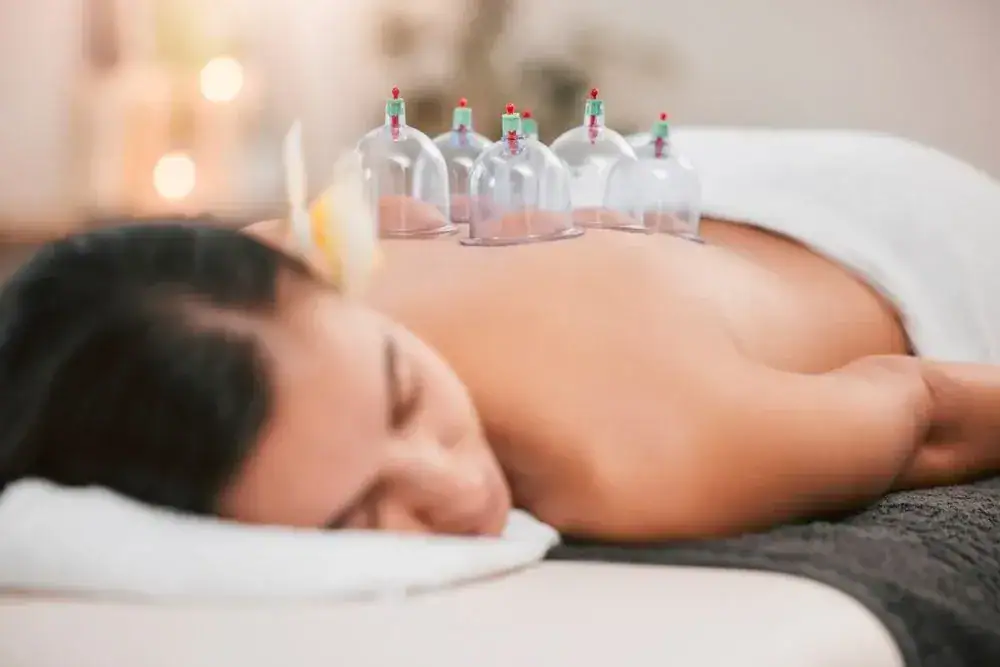

You wake up without that familiar stiffness in your lower back. You reach for something on a high shelf without wincing. You get through your workday without counting down the hours until you can rest.
That’s what cupping therapy does when it’s done right. It increases blood flow to the areas that hurt, helps your muscles relax in ways stretching alone can’t touch, and gives your body the boost it needs to actually heal—not just mask the problem.
Most people notice a difference after their first session. Not a miracle cure, but real improvement. Less pain when you move. Better range of motion. The kind of relief that makes you realize how much you’ve been compensating without even knowing it.
If you’ve been dealing with chronic neck pain, back pain, knee issues, or muscle tightness that won’t quit, cupping therapy offers a low-risk option that works with your body’s natural healing process. No prescriptions. No surgery. Just targeted treatment that addresses what’s actually causing your discomfort.
We’ve been treating patients across Long Island for years at Medcare Therapy Services, with locations in Smithtown and Speonk alongside our West Sayville practice. Every therapist on our team is licensed, trained in evidence-based techniques, and focused on getting you actual results.
We’re not a spa. We’re a physical therapy practice that uses cupping as part of a real treatment plan. That means you’re working with professionals who understand musculoskeletal conditions, not just someone who took a weekend certification course.
West Sayville has a large population of middle-aged and senior adults dealing with age-related pain, post-surgical recovery, and chronic conditions. We see those patients every day. We know what works, what doesn’t, and how to adjust treatment based on what your body is telling us.
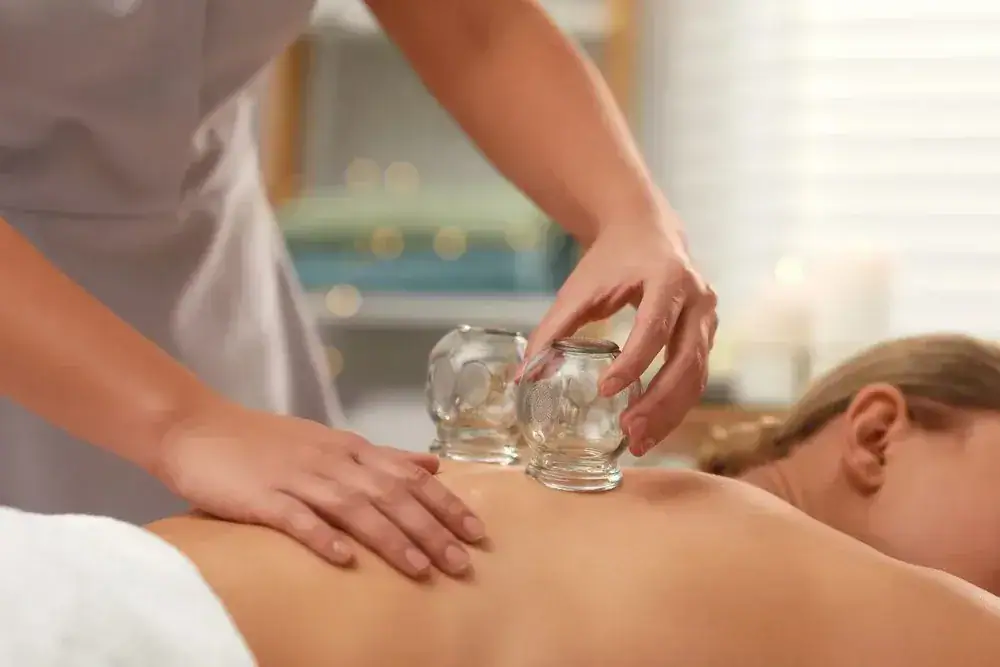
First, your therapist evaluates your pain, your movement patterns, and what’s not working the way it should. This isn’t a one-size-fits-all situation. Where you hurt, how long you’ve hurt, and what caused it all matter.
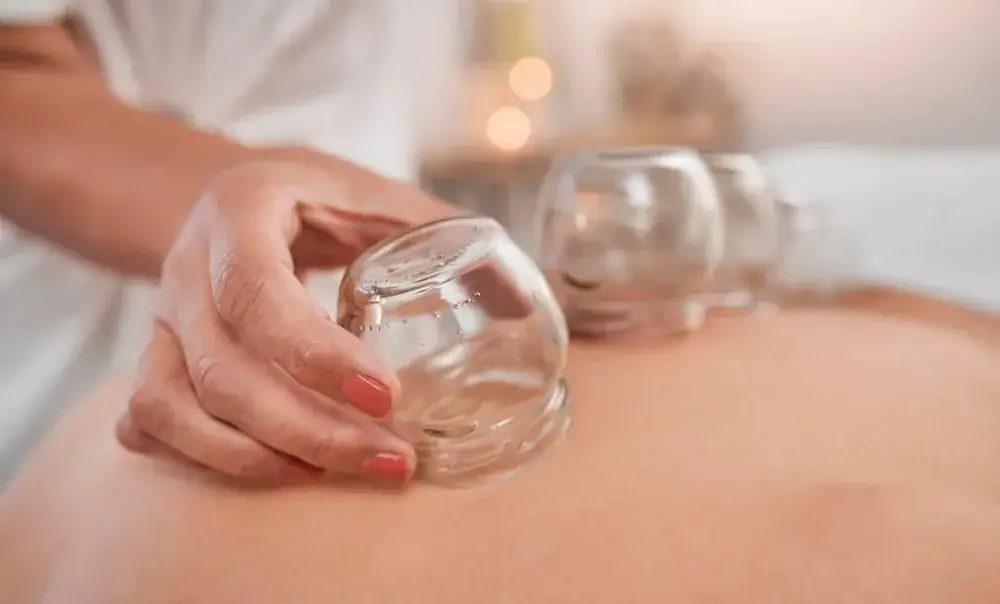
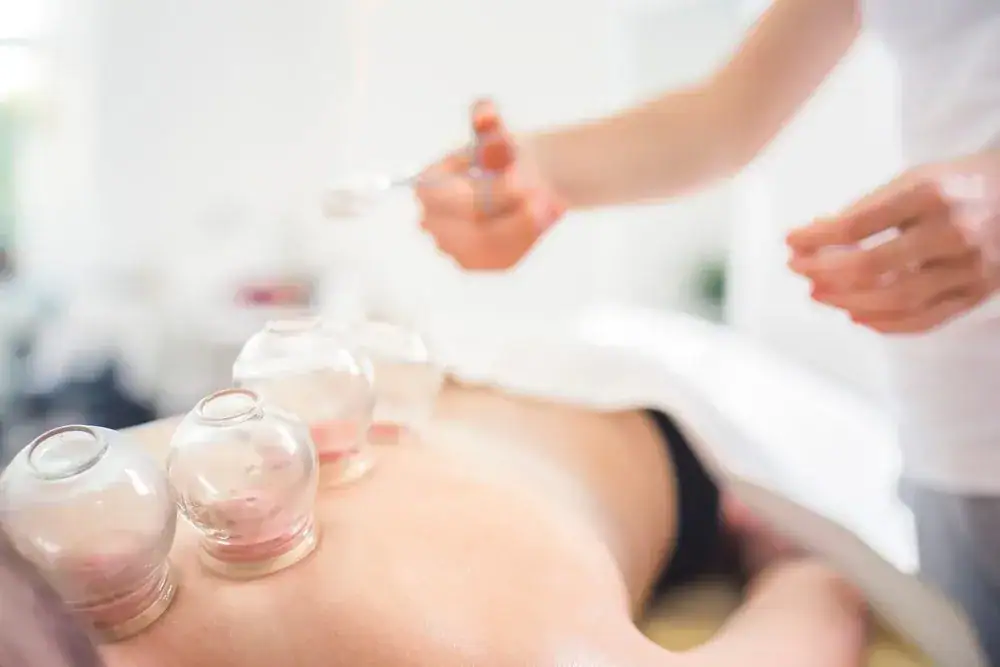
During the cupping session, specialized cups are placed on your skin to create suction. This pulls blood to the surface, increases circulation to damaged tissue, and helps release muscle tension and adhesions that limit your movement. The cups stay on for five to ten minutes—long enough to do the work without overdoing it.
You might see some circular marks afterward. That’s normal. They’re not bruises, and they fade within a few days to a week. What you’ll also notice is how different the area feels—looser, less restricted, often with immediate pain reduction.
Cupping works well on its own, but it’s even more effective when combined with other physical therapy techniques. Depending on what you need, your therapist might integrate manual therapy, stretching, or strengthening exercises to support long-term improvement. The goal isn’t just to feel better for a day or two. It’s to address the root cause so you stay better.
Ready to get started?
Every cupping therapy session at Medcare starts with a proper assessment. You’re not just getting cups slapped on your back. Your therapist identifies the specific areas causing your pain, checks your range of motion, and builds a treatment plan around your actual condition.
The treatment itself is tailored to what you need. Some patients respond better to dry cupping for deep tissue release. Others benefit from a lighter touch focused on lymphatic drainage and circulation. Your therapist adjusts the pressure, placement, and duration based on how your body responds.
In West Sayville, we see a lot of patients dealing with chronic lower back pain, neck stiffness from desk work, knee osteoarthritis, and sports-related injuries. Cupping therapy has proven effective for all of these conditions. Research backs it up, and more importantly, patients feel the difference.
You’ll also get guidance on what to do between sessions—whether that’s specific stretches, activity modifications, or other supportive care. Cupping isn’t a magic fix, but when it’s part of a complete plan, it helps you get back to normal faster and with less reliance on pain medication.
Cupping therapy provides both immediate and longer-term pain relief when used correctly. A single session can reduce pain right away by improving blood flow and relaxing tight muscles. But the real value comes from consistent treatment as part of a broader physical therapy plan.
Research shows that cupping is effective for chronic conditions like lower back pain, neck pain, and knee osteoarthritis—not just for a few hours, but over time. The increased circulation helps damaged tissue heal faster. The release of muscle adhesions and scar tissue improves your range of motion. And the boost in endogenous opioid production in your brain supports better pain control without medication.
That said, if you’re dealing with chronic pain, one session probably won’t solve everything. Most patients see the best results with a series of treatments combined with other therapies like stretching, strengthening, or manual therapy. Your therapist will map out a realistic plan based on your specific condition and how your body responds.
Cupping therapy is most effective for musculoskeletal pain and soft tissue injuries. We regularly treat patients dealing with chronic lower back pain, neck pain, shoulder tightness, knee osteoarthritis, and muscle strains from sports or overuse.
It also works well for post-surgical rehabilitation when you need to improve circulation and reduce swelling in a specific area. Some patients use cupping to manage tension headaches caused by neck and shoulder tightness. Others come in for help with sciatica, plantar fasciitis, or general muscle soreness that won’t go away with rest alone.
Cupping isn’t right for every condition. If you have a skin infection, open wounds, or certain circulatory issues, your therapist will recommend a different approach. But for most pain related to muscles, tendons, and connective tissue, cupping offers a low-risk treatment option with solid evidence behind it. During your evaluation, we’ll tell you honestly whether cupping is a good fit for what you’re dealing with.
A typical cupping session lasts between 30 and 45 minutes, including the initial assessment and treatment. The cups themselves stay on your skin for five to ten minutes per area, depending on what your therapist is targeting and how your tissue responds.
How many sessions you’ll need depends entirely on your condition. If you’re dealing with acute muscle tightness or a recent injury, you might feel significantly better after two or three sessions. Chronic pain that’s been building for months or years usually requires more consistent treatment—often once or twice a week for several weeks, then tapering off as you improve.
Your therapist will give you a realistic timeline after your first visit. We’re not going to string you along with endless appointments, but we’re also not going to promise overnight results. Most patients start noticing real improvement within the first few sessions, and that progress builds as treatment continues. If cupping isn’t helping after a reasonable trial period, we’ll adjust the plan or try a different approach.
Yes, cupping usually leaves circular marks where the cups were placed. These aren’t bruises in the traditional sense—they’re caused by blood being drawn to the surface, which is actually part of how the treatment works. The marks are typically dark red or purple and fade within one to ten days depending on how much suction was used and how your body responds.
Most people don’t find cupping painful. You’ll feel a pulling sensation and some tightness as the suction takes effect, but it shouldn’t hurt. If it does, your therapist can adjust the pressure immediately. Some areas are more sensitive than others, and everyone’s pain tolerance is different, so communication during the session matters.
After treatment, the area might feel a little tender or sore, similar to how your muscles feel after a deep tissue massage. That usually goes away within a day or two. If you have an event coming up where you don’t want visible marks—like a wedding or beach trip—just let your therapist know ahead of time. We can adjust the treatment or focus on areas that won’t be visible.
Cupping therapy is often covered by insurance when it’s performed by a licensed physical therapist as part of a documented treatment plan. Since our therapists are licensed professionals treating specific musculoskeletal conditions, many insurance plans will cover cupping as part of your physical therapy benefits.
Coverage varies depending on your specific plan, your deductible, and whether you need a referral from your primary care doctor. Some plans cover it fully after you meet your deductible. Others require a copay for each visit. A few plans don’t cover complementary therapies at all, even when provided by licensed therapists.
We recommend calling your insurance company before your first visit to ask about coverage for physical therapy services, specifically mentioning cupping or manual therapy techniques. Our team can also help verify your benefits and give you an estimate of what you’ll owe out of pocket. If your insurance doesn’t cover it, we’ll discuss self-pay options so you know exactly what to expect before committing to treatment.
Yes, cupping therapy works well alongside most other treatments. In fact, it’s often more effective when combined with other physical therapy techniques like manual therapy, therapeutic exercise, or stretching programs. Many patients also continue with chiropractic care, massage therapy, or acupuncture while doing cupping—there’s no conflict.
If you’re taking pain medication, cupping won’t interfere with that either. One of the benefits of cupping is that it can help reduce your reliance on medication over time by addressing the underlying muscle tension and circulation issues causing your pain. But you don’t have to stop your current pain management approach to start cupping.
The only time you need to be cautious is if you’re on blood thinners or have a bleeding disorder. Cupping increases blood flow to the surface, so there’s a slightly higher risk of more pronounced marks or bruising. Let your therapist know about any medications or health conditions during your evaluation. We’ll adjust the treatment accordingly or recommend an alternative if cupping isn’t the safest option for your situation.
Other Services we provide in West Sayville