
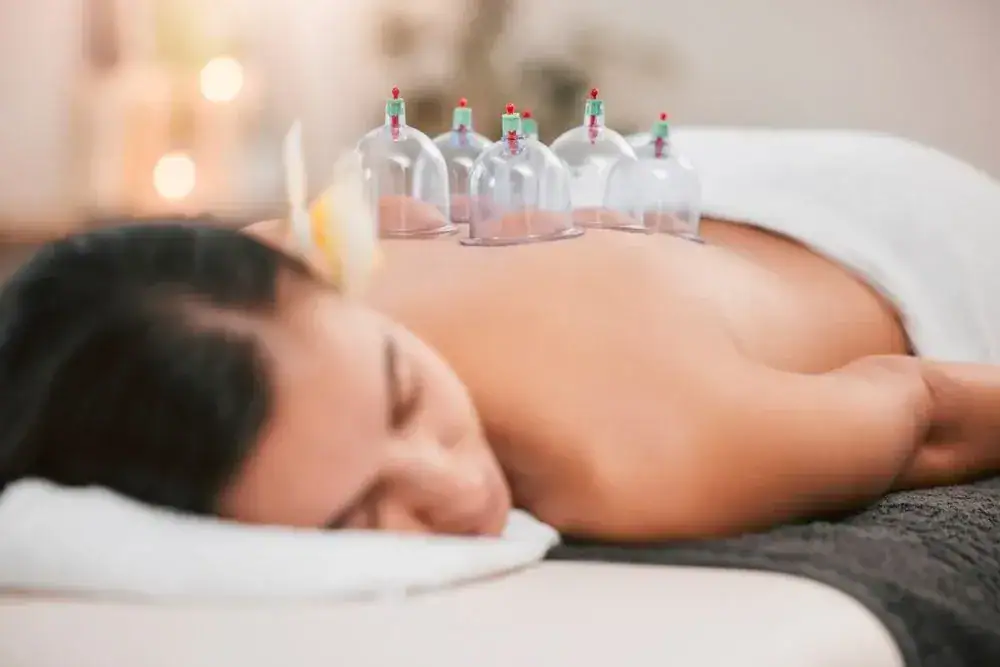

You’ve tried stretching. You’ve tried heat packs. Maybe you’ve even tried ignoring it. But that tightness in your back or that nagging shoulder pain keeps showing up—during your morning walk through Bethpage State Park, when you’re playing with your grandkids, or just trying to sleep through the night.
Cupping therapy works by creating suction on your skin that pulls blood flow to the area. That increased circulation helps loosen muscle fibers, reduce inflammation, and give your body what it needs to actually heal. It’s not a temporary cover-up. It’s your muscles getting the reset they’ve been asking for.
Most people notice less pain after their first session. Some feel looser immediately. Others find that the relief builds over a few treatments as their body starts responding. Either way, you’re not masking the problem—you’re addressing it.
We’ve been serving Long Island communities since 2010, with affiliated centers like Physical Therapy Associates of Smithtown and Speonk Physical Therapy operating even longer. Our therapists are licensed, trained in cupping therapy techniques, and experienced in treating chronic pain, sports injuries, and mobility issues.
We bring cupping therapy to your home in West Hills, NY because we know getting to an appointment isn’t always easy—especially when you’re already dealing with pain. You don’t need to drive to Huntington or deal with parking. You get the same professional care, just without the hassle.
We accept Medicare and most major insurances. Every treatment plan is built around what you’re dealing with, not a one-size-fits-all protocol.
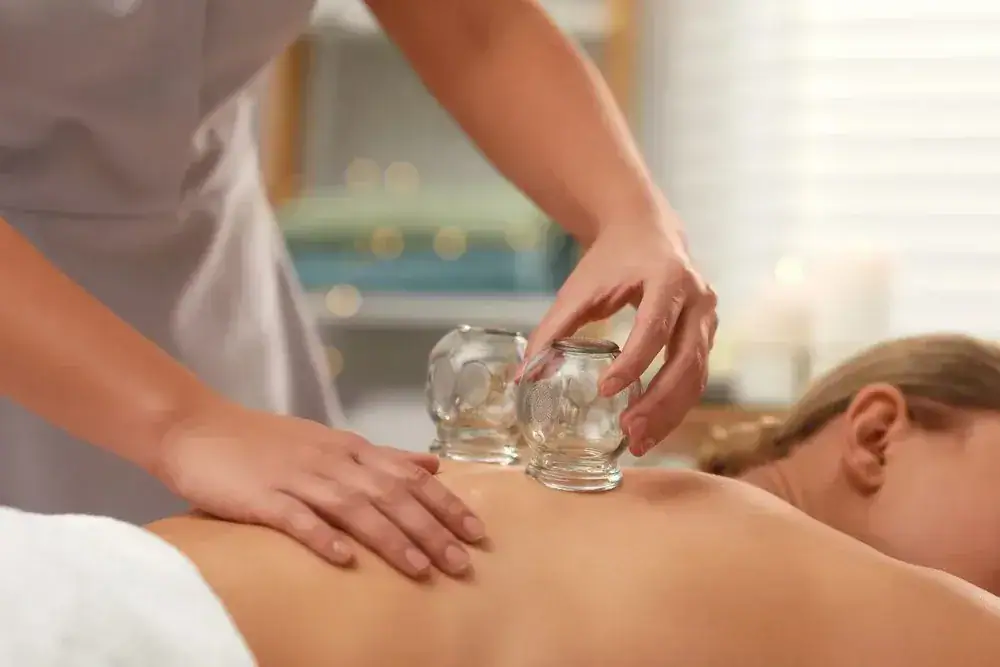
Your therapist starts with an assessment. Where’s the pain? What makes it worse? What have you already tried? This isn’t a formality—it shapes how we approach your treatment.
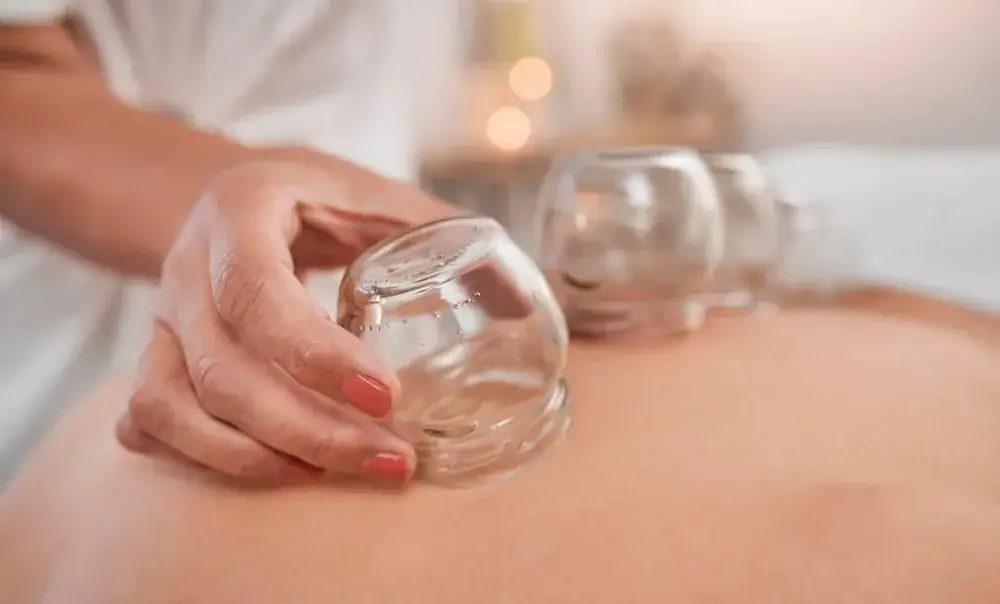
During dry cupping, small cups are placed on your skin, usually on your back, shoulders, neck, or legs. A vacuum is created inside each cup, either manually or with a pump. That suction pulls your skin up slightly and draws blood to the surface. It might feel tight at first, but most people find it surprisingly relaxing once their muscles start to release.
The cups stay on for five to fifteen minutes depending on what your body needs. Some therapists use stationary cupping, where the cups stay in one spot. Others use gliding cupping, moving the cups across your skin to cover more area. You might see circular marks afterward—they’re not bruises, just temporary discoloration from the suction. They fade within a few days.
After your session, you’ll likely feel looser. Your therapist will walk you through what to expect over the next day or two and when to schedule your next appointment if needed.
Ready to get started?
Cupping therapy is effective for chronic low back pain, neck pain, shoulder tension, and knee pain from osteoarthritis. If you’re dealing with myofascial pain—that deep, stubborn muscle tightness—cupping helps release it by improving blood flow and breaking up adhesions in the tissue.
Athletes use cupping therapy to speed up recovery after training or competition. It reduces muscle soreness and improves range of motion, which is why you’ll see it used by runners, golfers, and weekend warriors across Long Island. If you’re active and dealing with recurring tightness or injury, cupping fits into your recovery routine without adding another medication.
For West Hills residents managing chronic conditions, cupping therapy offers a low-risk alternative to more invasive treatments. You’re not dealing with the side effects of long-term pain medication. You’re not scheduling surgery consultations. You’re giving your body a chance to heal naturally, with professional support guiding the process.
We also treat tension headaches, migraines, and stress-related muscle tightness. Many patients find that cupping provides the kind of deep relaxation they used to only get from massage therapy—but with longer-lasting pain relief.
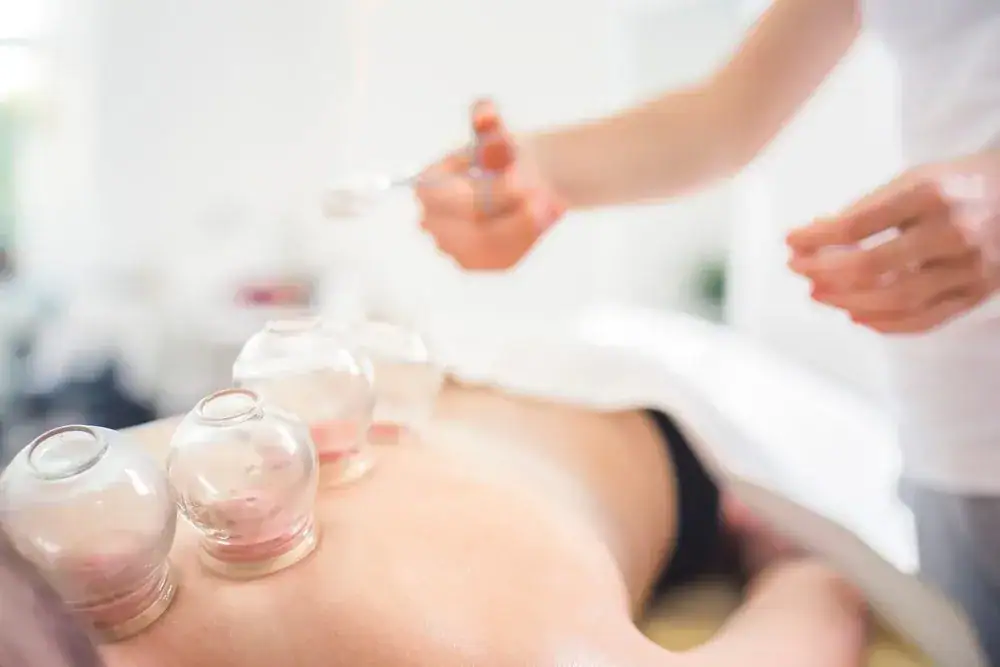
Cupping therapy doesn’t hurt. You’ll feel a tight pulling sensation when the cups are first applied, but it’s not painful. Most people describe it as pressure, similar to a deep tissue massage. Once your muscles start to relax, the sensation usually becomes more comfortable.
The circular marks left behind aren’t bruises. Bruises happen when blood vessels break under the skin. Cupping marks are caused by blood being drawn to the surface, which is part of how the therapy works. They’re temporary and typically fade within three to seven days.
If you have sensitive skin or you’re concerned about visible marks, let your therapist know. They can adjust the suction level or choose areas that are easier to cover with clothing.
Some people feel relief after one session. Others need a few treatments before they notice lasting improvement. It depends on what you’re dealing with, how long you’ve had the pain, and how your body responds.
For acute issues like a recent sports injury or muscle strain, you might only need two to four sessions. For chronic pain that’s been around for months or years—like ongoing low back pain or neck tension—you’ll likely benefit from a longer treatment plan, usually six to eight sessions spread over a few weeks.
Your therapist will give you a clearer timeline after your first appointment. They’ll assess your condition, track your progress, and adjust the plan based on how you’re responding. You’re not locked into anything—you’ll know pretty quickly whether cupping therapy is helping.
Yes, when cupping therapy is provided as part of a physical therapy treatment plan, Medicare and most major insurances cover it. We accept Medicare and work with a range of insurance providers across Suffolk County and Nassau County.
Coverage depends on your specific plan and whether cupping is deemed medically necessary for your condition. We handle the billing and verification process, so you’re not left guessing what’s covered. Before your first session, we’ll confirm your benefits and let you know what to expect in terms of out-of-pocket costs.
If you’re paying out of pocket, we’ll discuss pricing upfront. There are no surprise bills. You’ll know what you’re paying before any treatment starts.
Yes. Cupping therapy is particularly effective for chronic low back pain and neck pain. Clinical studies show that cupping significantly reduces pain levels and improves mobility for people dealing with these conditions long-term.
The suction created by the cups increases blood flow to the affected area, which helps reduce inflammation and relax tight muscle tissue. For many people, chronic pain comes from muscles that are constantly tense and not getting enough circulation. Cupping addresses both of those issues directly.
If your back pain or neck pain is related to poor posture, repetitive strain, or old injuries that never fully healed, cupping therapy can be part of a broader treatment plan. Your therapist might combine it with stretching, strengthening exercises, or other manual therapy techniques depending on what your body needs. You’re not just treating the symptom—you’re working on the underlying cause.
Dry cupping uses suction alone. Cups are placed on your skin, a vacuum is created, and they’re left in place or moved around to increase circulation and release muscle tension. This is the most common type of cupping used in physical therapy settings, and it’s what we provide at Medcare Therapy Services.
Wet cupping involves making small incisions in the skin before applying the cups, allowing a small amount of blood to be drawn out. It’s used in some traditional medicine practices, but it’s not typically part of modern physical therapy treatment in the United States. Dry cupping is safer, less invasive, and backed by more clinical research for pain relief and muscle recovery.
If you’ve heard about cupping therapy and weren’t sure which type you’d be getting, you’ll be receiving dry cupping. It’s effective, low-risk, and doesn’t involve any cutting or bloodletting. Just suction, circulation, and relief.
Yes. We provide in-home cupping therapy throughout West Hills, NY and the surrounding Long Island area. You don’t need to travel to a clinic or therapy center. We bring the equipment and expertise to you.
In-home therapy is especially helpful if you have mobility challenges, transportation limitations, or you simply prefer the comfort and convenience of your own space. You’re not sitting in a waiting room. You’re not rushing to make an appointment time. Your therapist comes to you, sets up, and provides the same professional care you’d receive in a clinical setting.
We serve patients across Suffolk County and Nassau County, and we work around your schedule. If you’re managing chronic pain or recovering from an injury and want cupping therapy without the added stress of leaving home, this is how we make that happen.
Other Services we provide in West Hills