
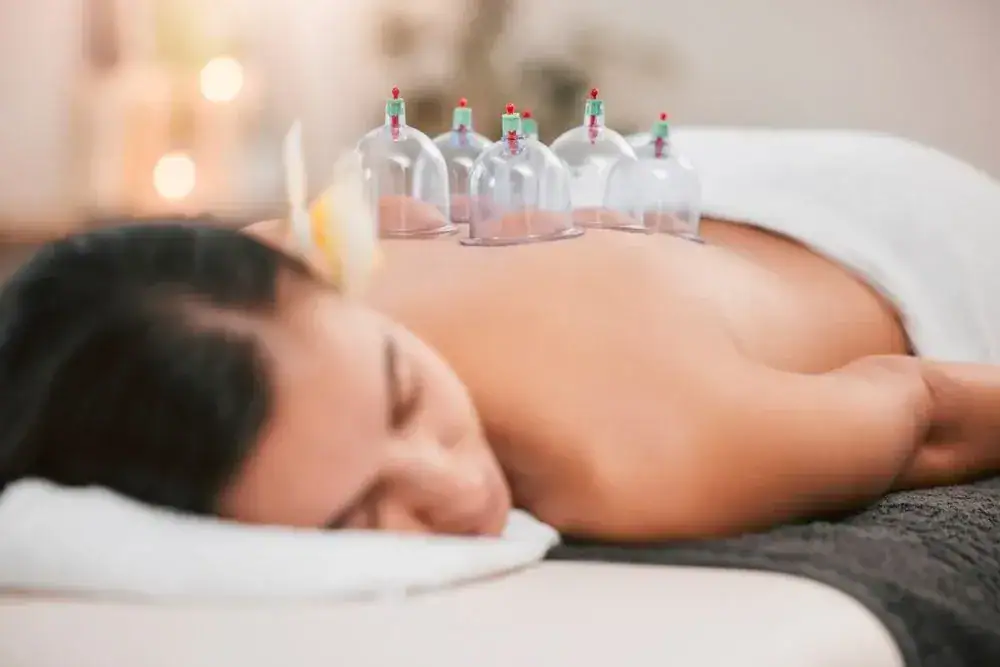

You’re dealing with back pain that won’t quit, muscle tension that limits what you can do, or chronic discomfort that’s become part of your daily routine. Cupping therapy addresses those issues by increasing blood flow to the affected area and releasing tight, overworked muscles.
Most people notice relief within 24 to 72 hours after their first session. That’s not a cure-all promise—it’s what clinical research on dry cupping has consistently shown for conditions like chronic low back pain and muscle tension.
The suction created during treatment draws blood toward the skin’s surface, which helps reduce local stiffness and supports your body’s natural healing process. When combined with physical therapy, cupping can enhance mobility, decrease pain levels, and help you get back to the activities that matter. You’re not masking symptoms—you’re addressing the underlying muscle and circulation issues that contribute to ongoing discomfort.
We’ve provided in-home physical therapy across Long Island for over a decade. Our therapists are licensed, our processes are secure, and our focus is on treating you like someone we actually know—not a case number.
We accept Medicare and most commercial insurance plans, which matters when you’re trying to figure out if treatment is even affordable. Our team comes to your home in Water Mill, so you’re not dealing with transportation, waiting rooms, or rearranging your entire day around an appointment.
Water Mill residents deal with the same musculoskeletal issues seen across the Hamptons—active lifestyles, aging-related pain, and the need for accessible care that doesn’t require a 30-minute drive. We’ve built our practice around making effective therapy convenient, and cupping is one more tool that fits into that model.
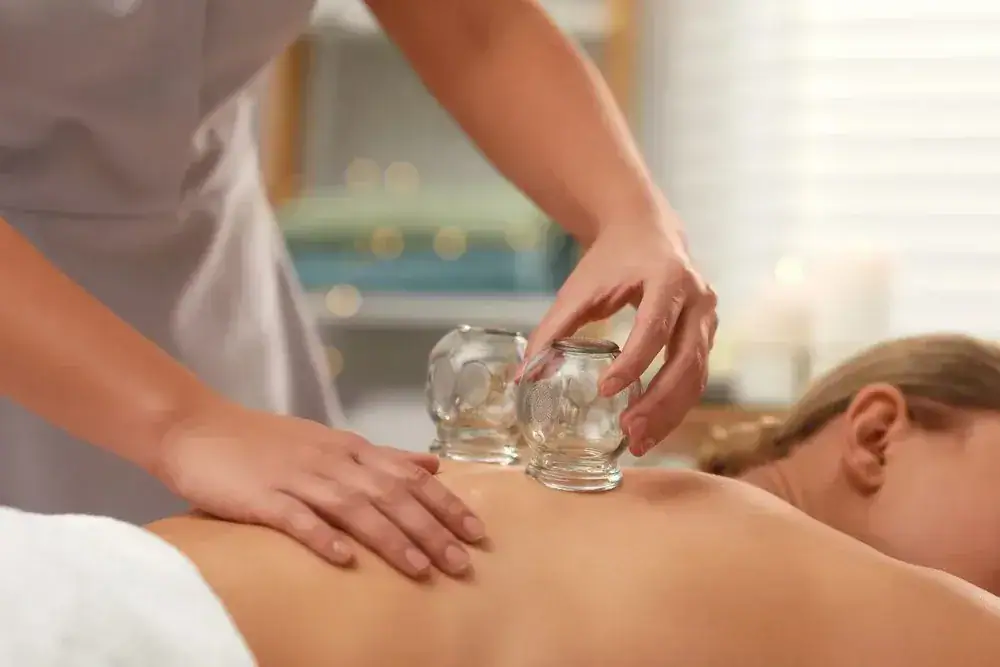
Your therapist arrives at your home with everything needed for the session. You’ll start with a brief assessment—where the pain is, how long you’ve had it, what makes it better or worse. This isn’t a formality; it determines where cups are placed and how much suction is appropriate for your condition.
During dry cupping, small cups are applied to your skin, creating suction that draws blood to the surface. You’ll feel pulling and tightness, but it shouldn’t be painful. Cups stay in place for 5 to 15 minutes depending on the treatment area and your tolerance. Some people find it relaxing; others just notice the unusual sensation.
After the cups are removed, you may see circular marks on your skin. Those typically fade within a few days to a week. Your therapist will explain what to expect for soreness, hydration, and any activity modifications. If cupping is part of a broader physical therapy plan, you’ll also work on exercises or stretches that support long-term improvement.
Most patients start with one or two sessions per week. Frequency depends on your condition, insurance coverage, and how your body responds. Some people get significant relief after a few treatments; others use cupping as ongoing maintenance alongside other therapies.
Ready to get started?
Cupping therapy through our practice isn’t a standalone spa treatment—it’s integrated into a clinical physical therapy plan. That means your therapist evaluates your condition, determines if cupping is appropriate, and combines it with other interventions like manual therapy, strengthening exercises, or mobility work.
You’re getting treatment from a licensed physical therapist who understands musculoskeletal conditions, not someone who took a weekend certification course. The difference matters when you’re dealing with chronic low back pain, neck tension, knee osteoarthritis, or post-injury recovery.
In Water Mill and across the Hamptons, many residents are active well into their 60s and 70s—golfing, gardening, walking the beach. Musculoskeletal pain affects nearly 47% of the general population, and about 39-45% of those people have long-lasting issues that need professional care. Cupping helps manage that pain without adding another prescription to your routine.
Because we come to your home, you’re not limited by mobility issues or transportation. Sessions are scheduled around your availability, and insurance verification is handled upfront so you know what’s covered. If cupping isn’t the right fit for your condition, your therapist will tell you—and recommend what is.
Yes, but with context. Clinical studies have shown that cupping is more effective than sham therapy for reducing pain and improving function in people with persistent non-specific low back pain. A single session can provide short-term pain relief, and multiple sessions over several weeks tend to produce better results.
That said, cupping works best when it’s part of a broader treatment plan. If your back pain is caused by weak core muscles, poor posture, or limited mobility, cupping alone won’t fix those underlying issues. It can reduce muscle tension and improve blood flow, which helps you feel better and move more comfortably—but you’ll still need exercises and movement strategies to address the root cause.
Most people notice some relief within 24 to 72 hours after treatment. How long that relief lasts depends on your condition, activity level, and whether you’re doing anything else to support recovery. If you’ve tried other treatments without success, cupping is worth considering—but it’s not a miracle cure.
It depends on how the treatment is billed. When cupping is provided as part of a physical therapy plan by a licensed therapist, it’s often covered under your existing benefits. We accept Medicare and most commercial insurance plans, and we verify coverage before starting treatment so you know what to expect.
Insurance companies typically cover cupping when it’s medically necessary and integrated into a documented therapy plan—not as a standalone wellness service. That means your therapist needs to show that cupping is addressing a specific condition like chronic pain, muscle tension, or limited mobility.
Co-pays, deductibles, and coverage limits vary by plan. Some policies cover a set number of physical therapy visits per year, and cupping would count toward that total. We handle the verification process upfront and can explain your out-of-pocket costs before your first session. If coverage is denied, we’ll let you know and discuss other options.
Your therapist will start by asking about your pain—where it is, how long you’ve had it, what makes it worse. This assessment determines whether cupping is appropriate and where cups should be placed. You’ll also discuss any medical conditions, medications, or skin sensitivities that might affect treatment.
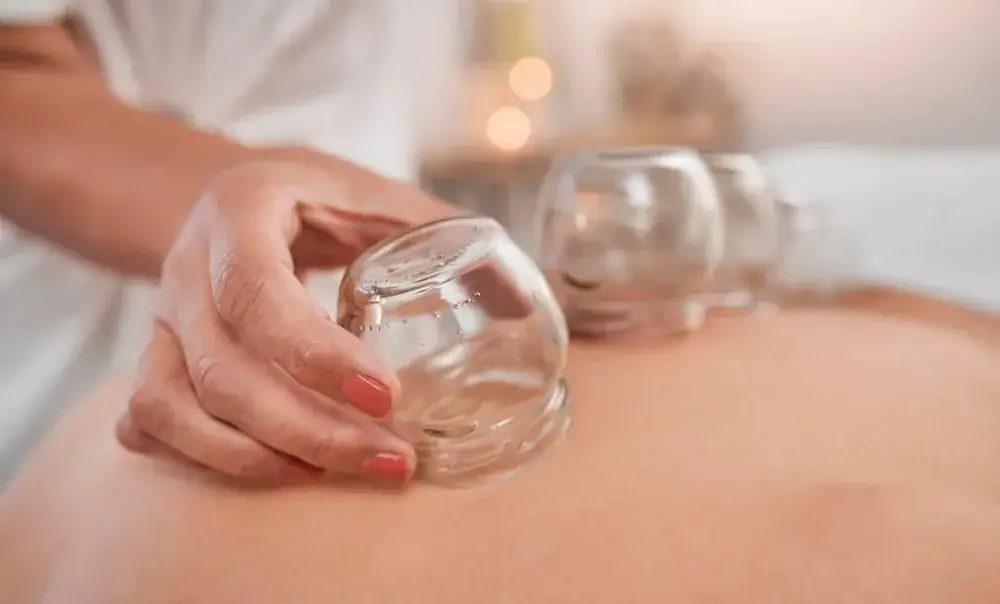
During the session, small cups are applied to your skin using suction. You’ll feel a pulling sensation and tightness, but it shouldn’t hurt. If it does, your therapist adjusts the pressure. Cups stay in place for 5 to 15 minutes, and you can relax or talk during that time. Some people find it calming; others just notice the unusual feeling.
After the cups are removed, you’ll see circular marks on your skin. These aren’t bruises—they’re caused by blood being drawn to the surface. The marks typically fade within a few days to a week. You might feel sore for a day or two afterward, similar to post-workout muscle soreness. Your therapist will explain what to expect and answer any questions before leaving.
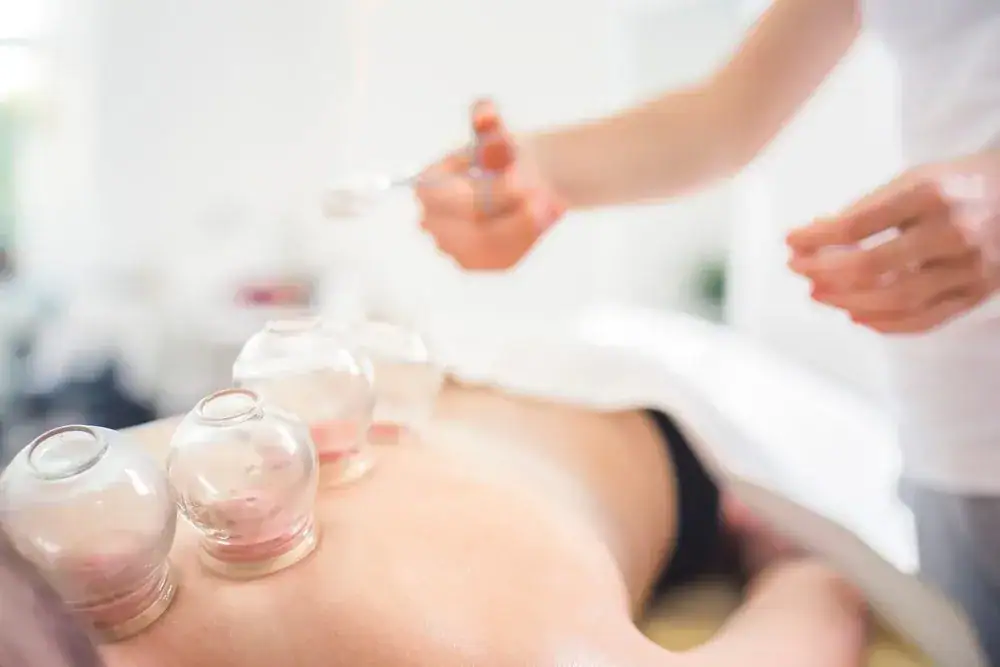
Dry cupping uses suction alone—no needles, no incisions, no blood removal. Cups are placed on your skin, and a vacuum is created either by heating the air inside the cup or using a manual pump. The suction pulls your skin and underlying tissue upward, increasing blood flow and releasing muscle tension.
Wet cupping, by contrast, involves making small cuts in the skin before applying the cups, which draws out a small amount of blood. It’s used in some traditional medicine practices but isn’t what we’re offering here. Dry cupping is non-invasive, low-risk, and supported by clinical research for conditions like chronic pain and muscle tightness.
Fire cupping is another variation where a flame is used to create suction inside a glass cup. It’s effective but requires more skill and carries a slight burn risk if not done correctly. Most modern therapists use pump-based cups, which allow for precise pressure control and are safer for in-home treatment. The therapeutic effect is the same—improved circulation, reduced muscle tension, and pain relief.
Yes. Research shows cupping may be effective for neck pain, knee osteoarthritis, muscle recovery after exercise, and certain types of chronic headaches. It’s also used to reduce muscle soreness and improve range of motion in people recovering from injuries or dealing with long-term musculoskeletal issues.
The mechanism is similar across conditions—cupping increases blood flow to the treated area, which helps reduce inflammation and supports tissue healing. For knee osteoarthritis, cupping combined with physical therapy can improve mobility and decrease pain levels. For neck tension, it helps release tight muscles that contribute to stiffness and headaches.
That said, cupping isn’t appropriate for every condition. It won’t help with nerve-related pain like sciatica unless muscle tension is a contributing factor. It’s not a treatment for infections, fractures, or systemic diseases. Your therapist will assess whether cupping makes sense for your specific situation and recommend other interventions if it doesn’t. The goal is to use what works—not to force a treatment that isn’t the right fit.
Most people start noticing relief after one or two sessions, but lasting improvement usually takes several weeks of consistent treatment. If you’re dealing with acute muscle tension or soreness, you might get significant relief quickly. Chronic conditions like long-term back pain or osteoarthritis typically require ongoing sessions—often once or twice a week for four to six weeks.
Your therapist will adjust the treatment plan based on how you respond. Some people reach a point where they only need cupping occasionally for maintenance. Others benefit from regular sessions combined with exercises and other physical therapy techniques.
Insurance coverage also plays a role in how many sessions you can have. Medicare and most commercial plans cover a set number of physical therapy visits per year, and cupping counts toward that total. We’ll work with you to maximize your benefits and make sure you’re getting the most effective treatment within your coverage limits. If you’re paying out of pocket, your therapist can help you decide on a realistic frequency that fits your budget and goals.
Other Services we provide in Water Mill