
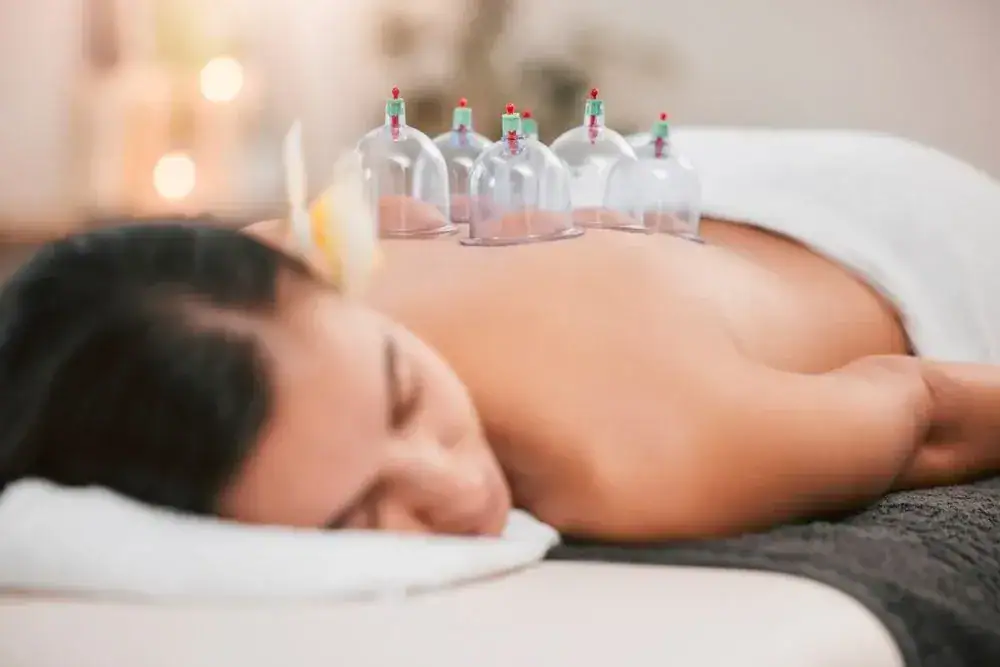

You move differently when your back doesn’t lock up every morning. You sleep better when your neck isn’t throbbing. You show up for the people and activities you care about instead of canceling because you’re too stiff or sore.
Cupping therapy works by creating suction on your skin to increase blood flow, release tight fascia, and reduce inflammation in the muscles underneath. It’s not a temporary fix that wears off in an hour. Most people notice less pain and better range of motion after their first session, and those results build with consistent treatment.
This isn’t about masking symptoms. It’s about addressing the restriction, the tension, and the poor circulation that’s been causing the problem in the first place. When your muscles can move the way they’re supposed to, everything else gets easier.
We’ve been treating patients across Long Island for years, and our Wantagh location serves residents throughout Nassau County who are tired of being told to “just rest” or “take something for it.” Our physical therapists are trained in cupping therapy and use it as part of a broader treatment plan—not as a gimmick.
We don’t hand you off to an assistant or rush you through a 10-minute session. You work with the same licensed therapist who evaluates your condition, explains what’s happening, and adjusts your treatment based on how you’re responding. That consistency matters when you’re dealing with chronic pain or recovering from an injury.
Wantagh residents deal with the same things everyone else does—long commutes, desk jobs, weekend warrior injuries, and the wear and tear that comes with staying active past 40. We see it every day, and we know how to treat it.
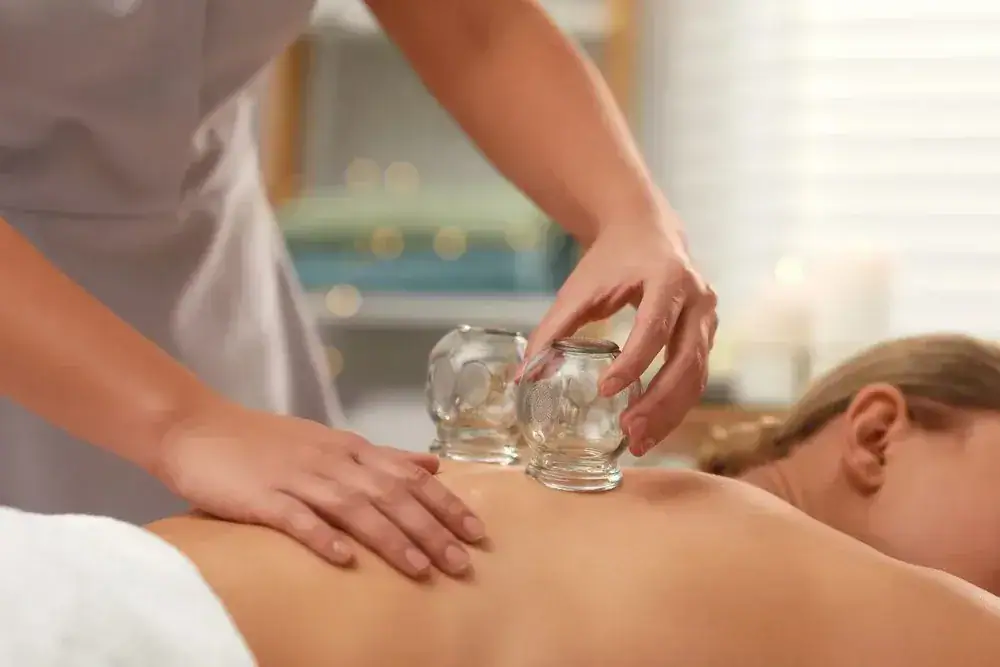
Your first visit starts with an evaluation. We ask about your pain, your history, and what you’ve already tried. Then we assess your movement, check for restrictions, and figure out where the problem is actually coming from—not just where it hurts.
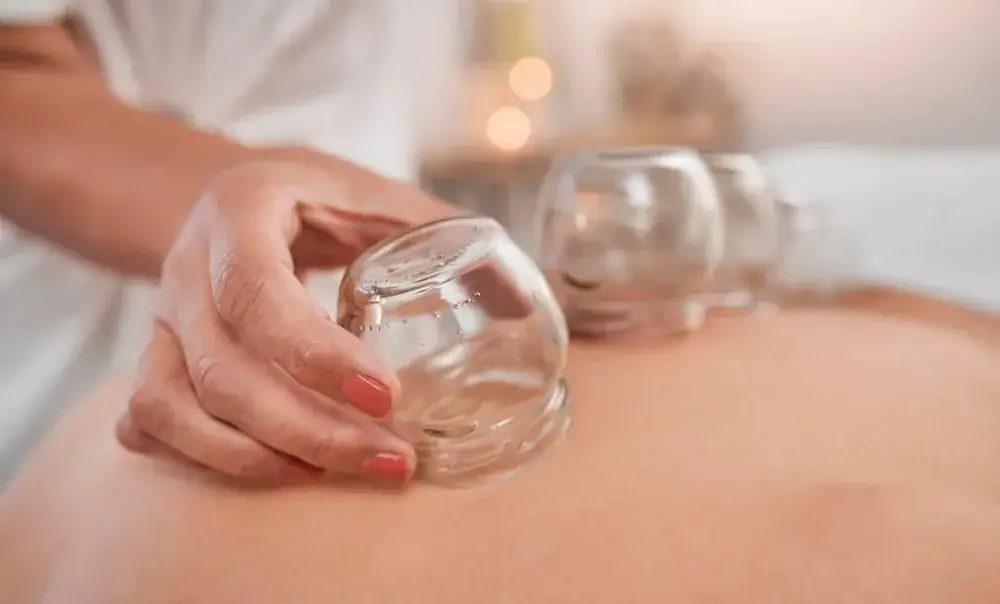
During the cupping session, we place specialized cups on your skin over the affected area. The suction pulls tissue upward, which increases blood flow and creates space for tight muscles and fascia to release. Some therapists use stationary cups; others glide them across your skin depending on what your body needs. The process takes about 10 to 20 minutes depending on the treatment area.
You might see circular marks afterward. Those aren’t bruises—they’re a sign of increased circulation and usually fade within a few days. Most people feel looser and less sore right away, though some tenderness is normal as your body adjusts.
We’ll talk about how often you should come back based on your condition. Some people need weekly sessions at first, others come in every few weeks for maintenance. It depends on what’s going on and how your body responds.
Ready to get started?
Cupping therapy at Medcare isn’t a standalone service. It’s part of a physical therapy plan that might also include manual therapy, stretching, strengthening exercises, or other techniques depending on what you need. We use dry cupping, which means no needles or incisions—just suction.
The treatment works for a range of conditions. Back pain, neck pain, shoulder tightness, knee pain, and headaches all respond well to cupping when it’s done correctly. Athletes use it for muscle recovery after intense training. People with arthritis use it to reduce stiffness. Office workers use it to undo the damage from sitting hunched over a computer all day.
In Wantagh and the surrounding areas, we see a lot of repetitive strain injuries, postural issues, and chronic pain that’s been ignored for too long. Cupping helps because it targets the soft tissue restrictions that other treatments miss. It’s not a cure-all, but it’s effective when combined with the right movement strategies and hands-on therapy.
You’ll know what to expect before we start, and you’ll leave with a clear plan for what comes next. No guessing, no upselling, no pressure.
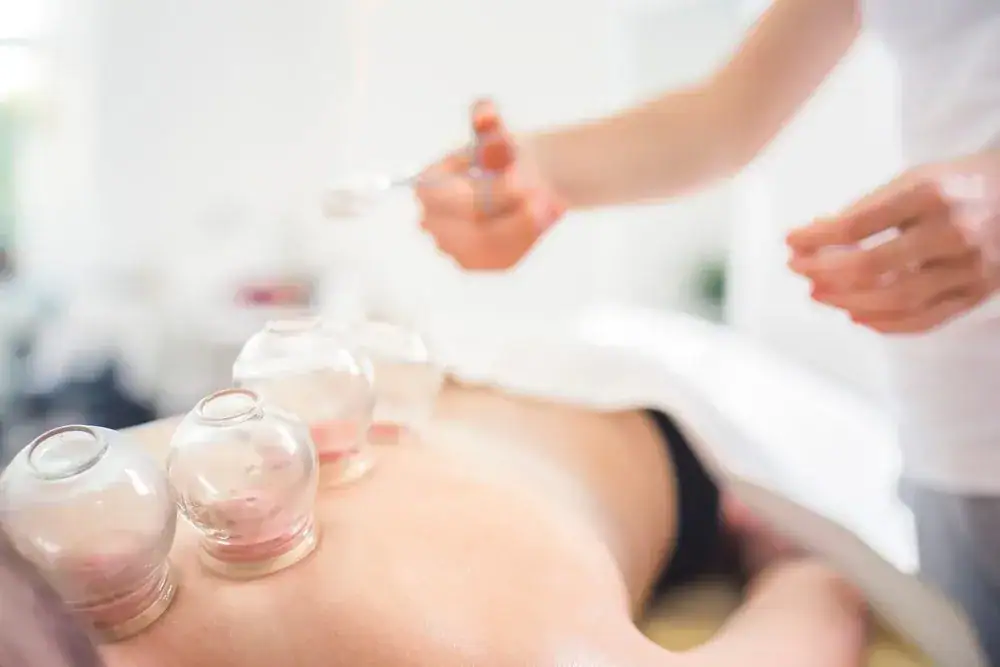
Yes, but it works best when it’s part of a broader treatment plan. Cupping increases blood flow to the muscles in your back, which helps reduce inflammation and release tension in the fascia. That’s the connective tissue that wraps around your muscles and can get tight or restricted over time.
If your back pain is caused by muscle tightness, poor posture, or overuse, cupping can make a noticeable difference. Most people feel less stiffness and more mobility after a few sessions. But if there’s an underlying issue like a herniated disc or nerve compression, cupping alone won’t fix it—you’ll need a full evaluation to figure out what’s really going on.
We use cupping alongside other techniques like manual therapy and corrective exercises to address the root cause, not just the symptoms. That’s how you get lasting relief instead of a temporary break from the pain.
Usually three to seven days, depending on how much suction was used and how your body responds. The marks look like circular bruises, but they’re not actually bruises. They’re caused by increased blood flow to the area, which is part of how the treatment works.
Some people’s marks fade in a couple of days. Others take a full week. It varies based on your circulation, your skin type, and how tight the muscles were to begin with. The marks don’t hurt—they’re just visible.
If you have an event coming up where you don’t want marks showing, let us know before the session. We can adjust the intensity or focus on areas that won’t be visible. But for most people, the marks aren’t a big deal and they’re a sign that the treatment is working.
It depends on your plan and how the treatment is billed. Cupping therapy is often included as part of a physical therapy session, which means it’s covered under your PT benefits if you have them. We bill it as part of your overall treatment, not as a separate add-on.
You’ll want to check with your insurance provider to confirm your coverage and find out if you need a referral or prior authorization. Some plans cover physical therapy with a copay, others require you to meet a deductible first. We can help you figure out what your plan covers before you start treatment.
If you’re paying out of pocket, we’ll give you a clear breakdown of costs upfront. No surprises, no hidden fees. You’ll know exactly what you’re paying for and why.
Absolutely. A lot of athletes use cupping to speed up recovery after hard workouts or competitions. The suction increases circulation, which helps flush out metabolic waste and deliver fresh oxygen and nutrients to tired muscles. That means less soreness and faster bounce-back between training sessions.
Cupping also helps release muscle tightness and improve range of motion, which is critical if you’re dealing with repetitive strain or overuse injuries. Runners, swimmers, weightlifters, and weekend warriors all benefit from it when it’s used correctly.
We work with plenty of active people in Wantagh who use cupping as part of their recovery routine. It’s not a replacement for rest or proper training, but it’s a solid tool to keep your body moving well and reduce the risk of injury. If you’re training hard and your muscles aren’t recovering the way they used to, cupping might be worth trying.
Dry cupping uses suction only—no needles, no blood, no incisions. The cups create a vacuum on your skin that pulls tissue upward to increase circulation and release tension. It’s non-invasive, low-risk, and doesn’t require any downtime.
Wet cupping, which is less common in the U.S., involves making small cuts in the skin and using suction to draw out a small amount of blood. That’s not what we do at Medcare. We stick with dry cupping because it’s effective, safe, and doesn’t come with the same risks or recovery concerns.
Some therapists also use fire cupping, where a flame is briefly placed inside the cup to create suction. We use modern suction cups with a pump instead, which gives us more control over the pressure and makes the process more comfortable for you. The results are the same—you just don’t have to worry about fire near your skin.
Most people notice a difference right away. You might feel looser, less tight, or like you can move more freely than you could before the session. That’s because cupping releases fascial restrictions and increases blood flow immediately.
Some people feel a little sore or tender for a day or two after their first session, especially if the muscles were really tight to begin with. That’s normal and usually goes away quickly. By the second or third session, your body adapts and the soreness is minimal.
Long-term results build over time. If you’re dealing with chronic pain or a long-standing issue, you’ll probably need multiple sessions to see lasting improvement. But even after one session, you should have a pretty good sense of whether cupping is helping. If it’s working, you’ll know. If it’s not, we’ll adjust your treatment plan and try something else.
Other Services we provide in Wantagh