
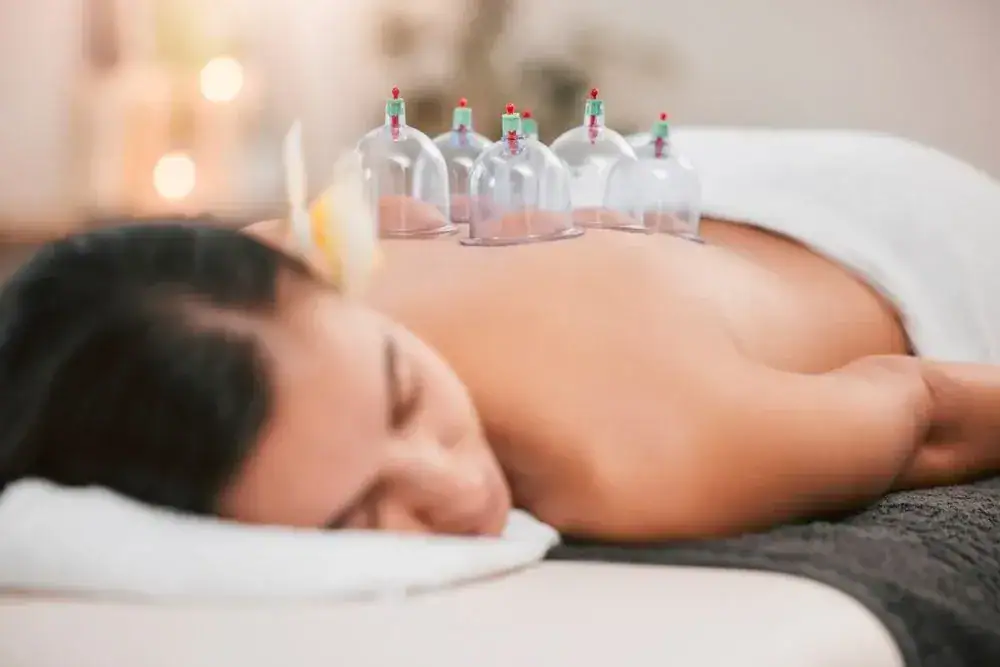

Chronic back pain changes how you move through your day. You compensate, you avoid certain movements, you plan your activities around what won’t hurt. Cupping therapy addresses that tension at the source by increasing blood flow to tight, painful areas and encouraging your muscle fibers to release.
The suction creates space between tissue layers that have been compressed for months or years. That decompression—sometimes called myofascial decompression—lets fresh blood reach areas that have been starved of circulation. More blood means more oxygen, faster healing, and genuine muscle relaxation that lasts beyond the session.
Most people notice improved range of motion within the first few treatments. Neck pain that kept you from checking blind spots. Shoulder stiffness that made reaching overhead painful. Lower back tension that turned every morning into a slow, careful process. Cupping doesn’t mask these problems—it helps your body address them naturally while you’re working with a licensed physical therapist who understands how everything connects.
We’ve been providing in-home physical therapy across Long Island for over a decade. That matters in Wainscott, where the median age is 61 and getting to appointments isn’t always simple or comfortable when you’re already dealing with pain.
Our physical therapists are licensed, Medicare-certified, and trained in cupping techniques that complement traditional physical therapy. We accept Medicare and nearly all commercial insurance plans, which means you’re not choosing between effective care and affordable care. You’re getting both, in your own home, from professionals who’ve built their reputation on outcomes—not sales pitches.
Your therapist starts with an assessment. Where’s the pain? When does it flare up? What movements are you avoiding? This isn’t a standard script—it’s a conversation that shapes your treatment plan.
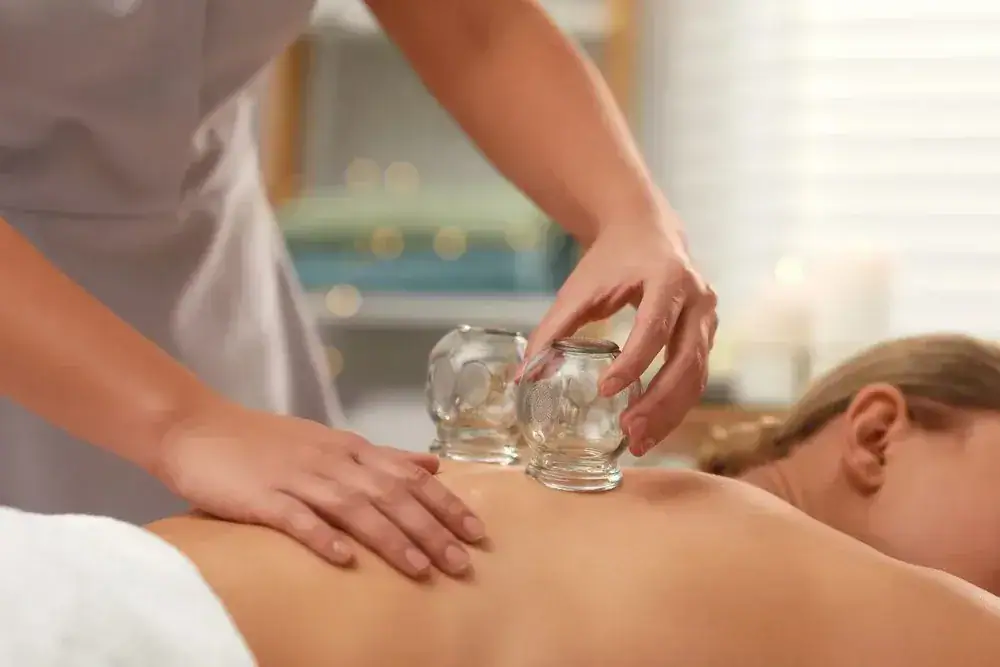
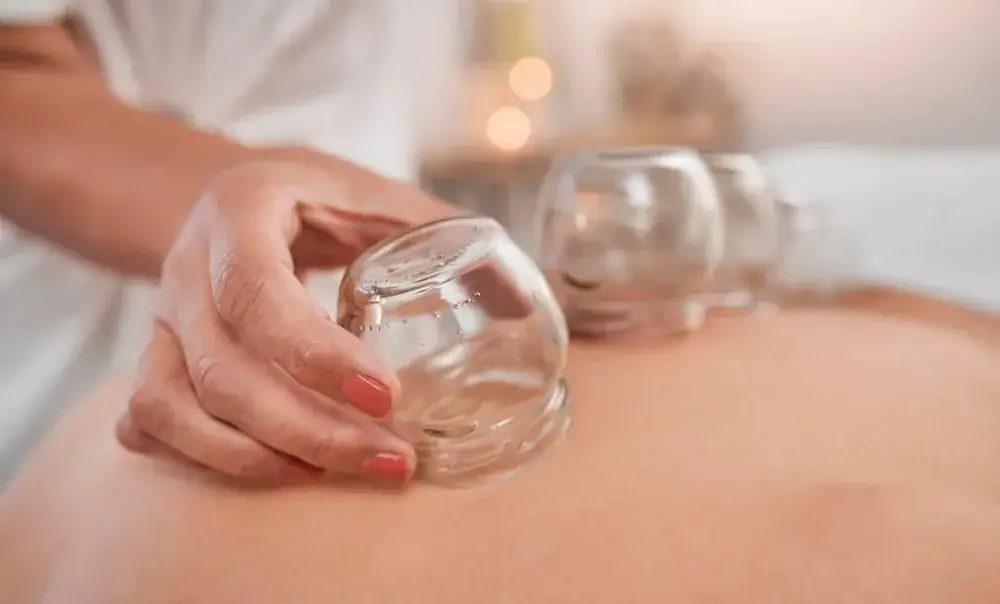
During cupping, your therapist places specialized cups on targeted areas. The suction pulls tissue upward, creating negative pressure that’s the opposite of deep tissue massage. Instead of pressing down into tight muscles, cupping lifts and separates tissue layers. You’ll feel the pull, but most people describe it as a relief rather than discomfort.
Sessions typically last 30 to 45 minutes. The cups might stay in place, or your therapist might move them across your skin to address larger muscle groups. Afterward, you might see circular marks where the cups were—that’s normal and fades within a few days. What lasts longer is the reduction in muscle tightness and pain.
Cupping works best as part of a broader physical therapy plan. Your therapist will likely combine it with stretching, strengthening exercises, and other techniques that address your specific condition. It’s not a one-time fix. It’s a tool that helps you make consistent progress toward moving better and hurting less.
Ready to get started?
Cupping therapy is particularly effective for chronic conditions that haven’t responded well to other treatments. Lower back pain that’s been nagging you for months. Neck and shoulder tension from years of poor posture or repetitive strain. Knee pain that makes stairs a problem. Hip stiffness that limits how far you can walk comfortably.
In Wainscott, where over 40% of insured residents are over 64, age-related musculoskeletal issues are common. Arthritis. Reduced mobility. Muscle weakness that makes balance harder. Cupping doesn’t reverse aging, but it does improve blood circulation to affected areas, which supports your body’s natural healing processes and helps you maintain independence longer.
We use dry cupping, which means no needles and no incisions. The therapy is low-risk when performed by trained professionals, and side effects are minimal—usually just temporary skin discoloration where the cups were placed. Because our therapists come to your home, you’re not dealing with the hassle of driving to appointments or sitting in waiting rooms when you’re already uncomfortable.
Medicare covers physical therapy services, including cupping when it’s part of your treatment plan. We handle the billing and work directly with your insurance, so you’re not navigating claims paperwork on top of managing your pain.
Recent research shows it does. A 2024 meta-analysis reviewed 72 trials involving over 5,700 participants and found that cupping provided measurable pain relief for chronic conditions, particularly lower back pain, neck pain, and knee osteoarthritis. The relief often lasted for weeks after treatment.
Cupping works by increasing blood circulation to painful areas and reducing muscle tension. When your muscles are chronically tight, they restrict blood flow, which slows healing and perpetuates pain. The suction from cupping pulls blood to the surface, encourages muscle fibers to relax, and creates space between tissue layers that have been compressed. That’s not placebo—that’s measurable improvement in range of motion and pain levels.
We use cupping as one tool among many. It’s most effective when combined with targeted exercises, stretching, and other hands-on techniques that address the root cause of your pain, not just the symptoms.
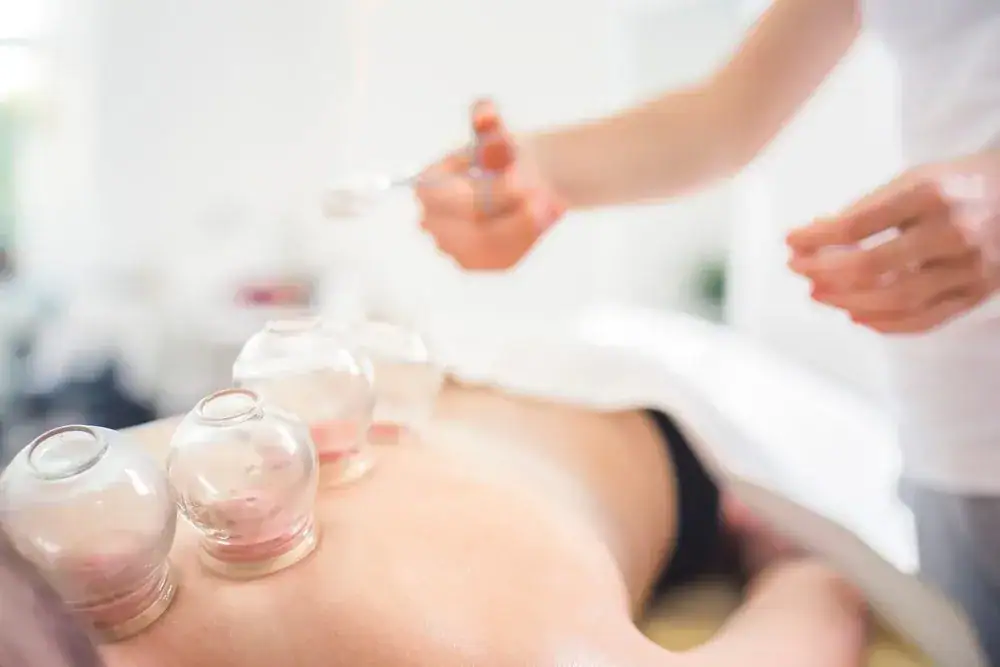
Yes, usually. The suction creates circular marks where the cups were placed, and they can range from light pink to deep purple depending on how much tension and restricted blood flow was in that area. These marks aren’t bruises in the traditional sense—they’re a result of bringing stagnant blood to the surface.
The marks typically fade within three to seven days. They don’t hurt, and most people forget about them once they notice how much better their muscles feel. If you’re concerned about visible marks for an upcoming event, let your therapist know. They can adjust the suction intensity or focus on areas that won’t be visible.
Some people see darker marks during their first session and lighter marks as they continue treatment. That’s often a sign that circulation is improving and there’s less stagnant blood pooling in those areas.
Cupping therapy is covered when it’s part of a physical therapy treatment plan and performed by a licensed physical therapist. Medicare covers physical therapy services, and cupping falls under that umbrella when it’s medically necessary for your condition.
We accept Medicare and nearly all commercial insurance plans. Before your first session, we verify your coverage and explain what your out-of-pocket costs will be, if any. Most patients with Medicare pay little to nothing for in-home physical therapy, including cupping.
Insurance companies want to see that the treatment is helping. That’s why we document your progress, track improvements in pain and mobility, and adjust your treatment plan based on results. If cupping isn’t working for you, we’ll try something else. The goal is always measurable improvement, not just providing a service for the sake of billing.
Cupping is a technique we use within physical therapy—it’s not separate from it. Traditional physical therapy often involves exercises, stretches, manual manipulation, and modalities like heat or ice. Cupping adds another option for addressing muscle tension and restricted blood flow.
The main difference is the mechanism. Most hands-on therapy involves pressing into tissue—massage, trigger point release, joint mobilization. Cupping does the opposite by creating negative pressure that lifts tissue away from underlying structures. That lifting action can reach areas that are hard to access with traditional massage and can be more comfortable for people who find deep pressure painful.
We use cupping when it makes sense for your specific condition. Some sessions might include it, others might not. It’s one tool in our larger toolkit, and we know when to use which tool based on what your body needs that day.
That depends entirely on your condition, how long you’ve had it, and how your body responds. Acute muscle strain might improve significantly in two to four sessions. Chronic pain that’s been building for years usually requires more—often eight to twelve sessions as part of a comprehensive physical therapy plan.
Most people notice some improvement after the first or second session, but lasting change takes consistency. Your muscles didn’t get tight overnight, and they won’t stay relaxed after one treatment. Cupping helps create the conditions for healing, but your body still needs time to rebuild tissue, improve circulation, and establish new movement patterns.
We reassess your progress regularly and adjust the treatment plan based on what’s working. If you’re not seeing improvement within a reasonable timeframe, we’ll try a different approach. The goal is always forward progress, and sometimes that means changing tactics.
You can buy cupping kits online, but that doesn’t mean you should use them without guidance. Cupping is low-risk when done correctly by someone who understands anatomy, contraindications, and proper technique. When done incorrectly, you can cause skin damage, worsen existing conditions, or waste time treating the wrong areas entirely.
A licensed physical therapist knows where to place cups based on your specific pain patterns and movement limitations. We understand how much suction to use, how long to leave cups in place, and when cupping isn’t appropriate—like if you’re on blood thinners, have certain skin conditions, or have inflammation that needs a different approach first.
If cost is a concern, talk to us about your insurance coverage. Most people are surprised to learn that professional, in-home physical therapy with cupping is covered by their plan. You’re not saving money by doing it yourself if you’re not getting results or if you’re risking injury.
Other Services we provide in Wainscott