
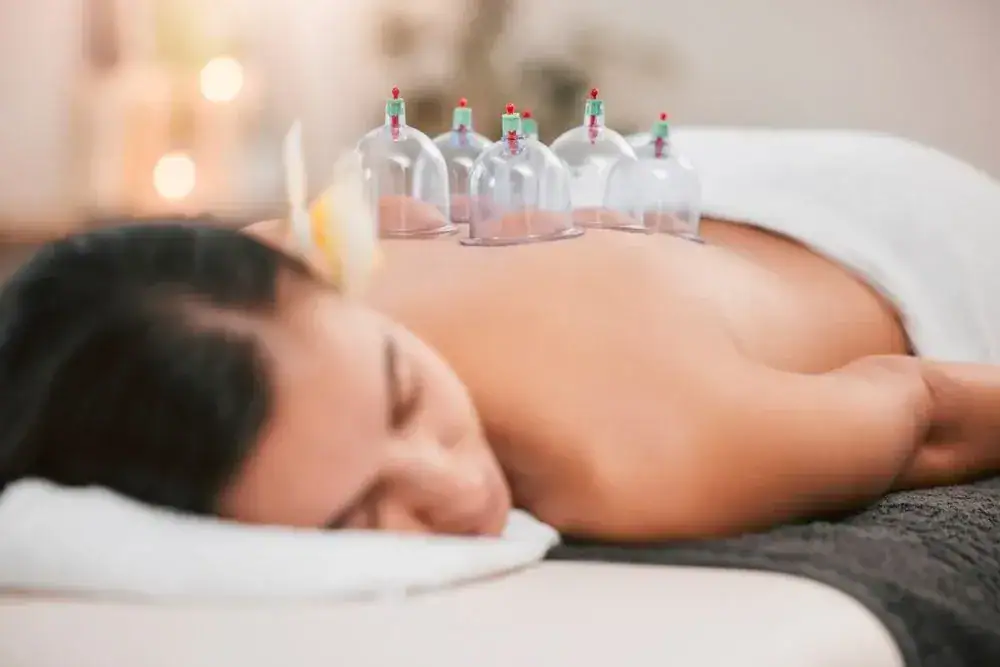

You’re dealing with pain that won’t quit. Back stiffness that makes mornings miserable. Neck tension from hours at a desk. Shoulders that ache after a round of golf or a workout you used to handle easily.
Cupping therapy works by creating suction on your skin that pulls fresh blood and oxygen into tight, overworked tissue. That increased circulation helps break down adhesions, reduce inflammation, and speed up your body’s natural healing process. You’re not masking the problem—you’re addressing what’s causing it.
Most people notice less pain and better range of motion after just one session. Over time, the benefits build. Your muscles stay looser. Movement feels easier. You’re not constantly managing discomfort or planning your day around what hurts.
This isn’t about temporary relief. It’s about giving your body what it needs to function the way it should—so you can get back to doing what matters without constantly thinking about pain.
We’ve been treating patients across Long Island for years, with a focus on personalized care that fits your specific condition—not a one-size-fits-all protocol. Our therapists are licensed professionals who evaluate your pain, your movement patterns, and your goals before recommending any treatment.
We know Upper Brookville residents value quality and convenience. You don’t want to drive into Manhattan for specialized care, and you shouldn’t have to. Our approach combines evidence-based techniques like cupping therapy with hands-on physical therapy to give you real results close to home.
Every treatment plan is built around you. We’re not rushing you through appointments or handing you a generic exercise sheet. You get one-on-one attention from someone who understands what’s not working—and how to fix it.
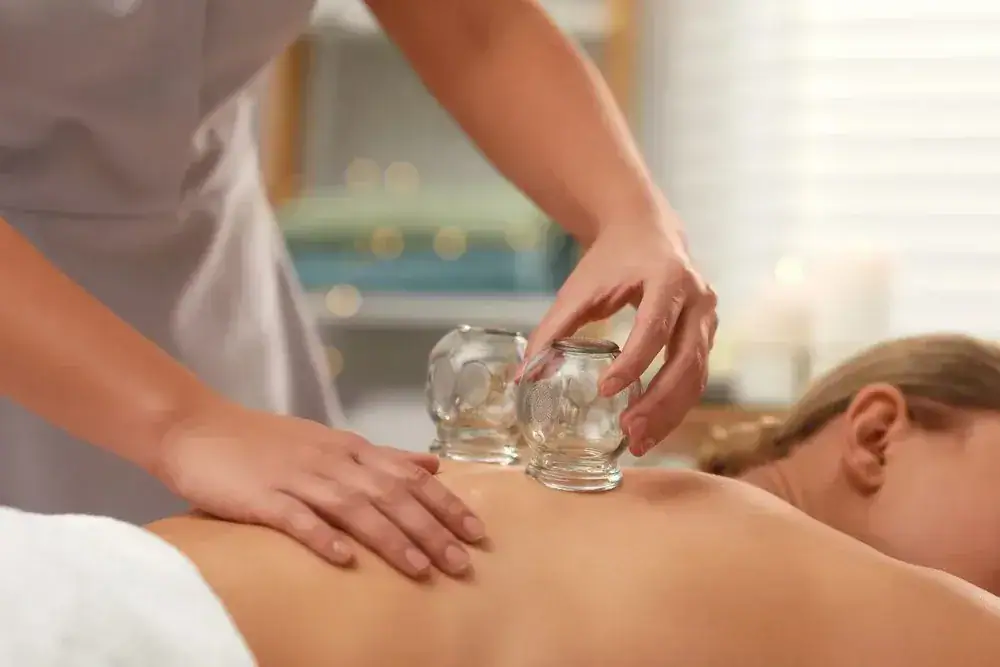
Your first visit starts with an evaluation. We ask about your pain—where it is, how long you’ve had it, what makes it worse. We assess your range of motion, check your posture, and look at how your muscles are functioning. This tells us whether cupping therapy is right for you and how to integrate it into a broader treatment plan.
During the session, we place specialized cups on the affected areas. The suction gently lifts your skin and underlying tissue, which increases blood flow and helps release muscle tension. Some people feel immediate relief. Others notice the difference over the next day or two as inflammation decreases and mobility improves.
Dry cupping is what we use most often—it’s effective, low-risk, and works well alongside manual therapy and targeted exercises. Depending on your condition, we might combine it with massage, stretching, or strengthening work to address the root cause of your pain.
Sessions typically last 30 to 60 minutes. You might see light circular marks on your skin afterward—that’s normal and fades within a few days. Most patients feel looser and less sore right away, with continued improvement as treatment progresses.
Ready to get started?
Cupping therapy at Medcare isn’t a standalone gimmick. It’s part of a complete physical therapy approach designed to reduce pain, improve function, and help you move better long-term.
You’re getting treatment from licensed therapists who understand musculoskeletal conditions—not someone who took a weekend course. We use cupping for chronic back pain, neck stiffness, shoulder tension, knee discomfort, and muscle tightness from overuse or injury. It’s particularly effective for conditions like osteoarthritis, myofascial pain, and sports-related strains.
In Upper Brookville, where residents tend to stay active well into their 50s, 60s, and beyond, maintaining mobility matters. Whether you’re managing age-related stiffness or recovering from an injury, cupping therapy helps by improving local blood flow and reducing muscle tightness that limits movement. Research shows it’s effective for short-term pain relief and works even better when combined with other therapies.
You also get a treatment plan that evolves with your progress. We’re not locking you into endless sessions. The goal is to get you feeling better, then give you the tools to stay that way—whether that’s through continued therapy, home exercises, or periodic maintenance visits.
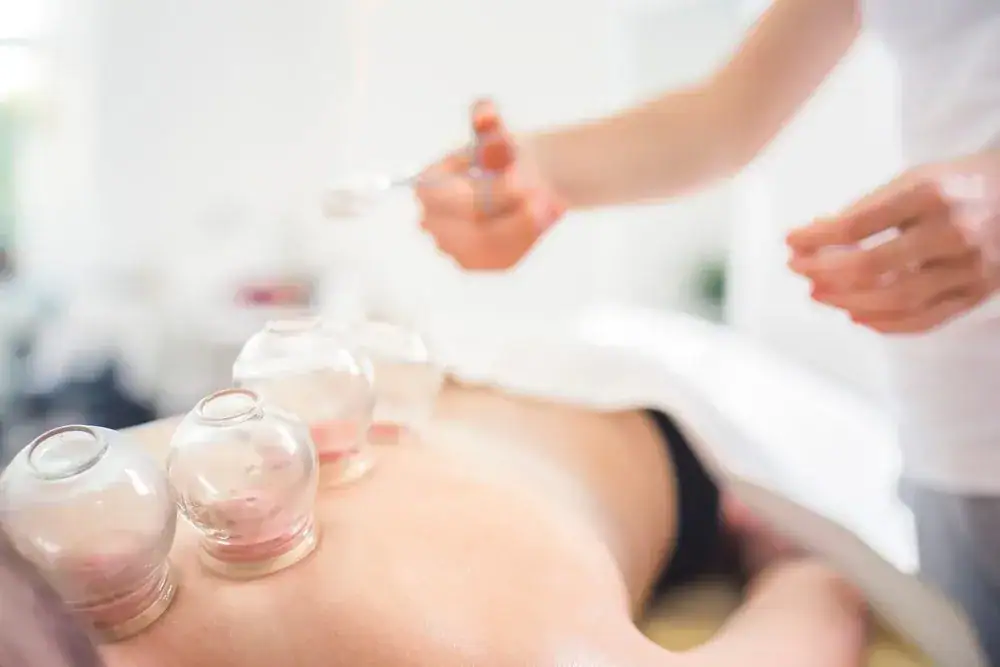
Yes—and there’s research to back it up. Studies show that cupping therapy can reduce pain intensity and improve function in people dealing with chronic low back pain, especially when combined with physical therapy or other treatments.
Here’s why it works: chronic back pain often comes from tight muscles, poor circulation, and inflammation in the affected area. Cupping increases blood flow to those tissues, which helps reduce muscle tension and promotes healing. It also creates a decompression effect that can relieve pressure on nerves and fascia.
Most people feel some relief after the first session, but the best results come from a series of treatments paired with targeted exercises and manual therapy. If your back pain is from a muscle strain, overuse, or degenerative changes like arthritis, cupping can be a helpful part of your recovery plan. It’s not a cure-all, but it’s a proven tool that works—especially when you’re trying to avoid relying on pain medications or more invasive options.
Dry cupping uses suction alone to lift the skin and increase blood flow to the treatment area. It’s non-invasive, low-risk, and what most physical therapists use for pain relief and muscle recovery. The cups stay in place for several minutes, and you might feel a tight pulling sensation—but it’s not painful.
Wet cupping involves making small incisions in the skin before applying the cups, which draws out a small amount of blood. It’s more common in traditional medicine practices and isn’t typically part of physical therapy treatment in the U.S. Most clinics, including ours, focus exclusively on dry cupping because it’s effective, safe, and doesn’t require any skin puncture.
Both methods are based on the same principle—using suction to improve circulation and reduce muscle tension. But dry cupping is what you’ll experience here, and it’s what the research supports for treating musculoskeletal pain, stiffness, and sports injuries. You get the benefits without any added risk or recovery time.
You’ll likely see circular marks where the cups were placed, but they’re not bruises in the traditional sense. They’re caused by increased blood flow to the area and usually range from light pink to dark red, depending on how much tension or stagnation was in the tissue.
These marks are temporary and typically fade within three to seven days. They don’t hurt—most people forget they’re even there. If you have an event coming up where you’d prefer not to have visible marks, just let your therapist know and we can adjust the treatment or placement.
The marks are actually a sign that the therapy is working. Areas with more discoloration often indicate spots where circulation was restricted or muscles were especially tight. As you continue treatment and your body responds, the marks tend to become lighter because your tissue is healthier and blood flow has improved. It’s a normal part of the process and nothing to worry about.
It depends on what you’re treating and how your body responds. Some people feel significant relief after one or two sessions, especially if they’re dealing with acute muscle tightness or a recent strain. Others with chronic pain or long-term stiffness benefit from a series of treatments over several weeks.
During your evaluation, we’ll give you a realistic timeline based on your condition. For something like a pulled muscle or post-workout soreness, you might only need a few sessions. For chronic issues like ongoing back pain, knee osteoarthritis, or neck tension from years of desk work, you’ll likely see the best results with consistent treatment combined with physical therapy exercises.
We’re not interested in dragging out your care. The goal is to get you feeling better and functioning well—then teach you how to maintain that progress on your own. Some patients come back periodically for maintenance when they feel tightness creeping back in, but most don’t need ongoing weekly sessions once they’ve addressed the underlying issue.
It depends on your plan and how the treatment is billed. When cupping is part of a physical therapy session—which is how we use it—it’s often covered under your PT benefits. Insurance typically doesn’t cover cupping as a standalone service, but when it’s integrated into a treatment plan for a diagnosed condition like chronic pain or a musculoskeletal injury, many plans will cover it.
We recommend calling your insurance provider before your first visit to confirm your physical therapy coverage and ask whether manual therapy techniques like cupping are included. Our team can also help verify your benefits and explain what to expect in terms of copays or out-of-pocket costs.
Even if cupping itself isn’t explicitly listed, it’s usually billed as part of the overall therapy session—so if your plan covers PT, you’re likely covered. We’ll work with you to make sure you understand your benefits and aren’t surprised by any costs. Transparency matters, especially when you’re already dealing with pain and just want to get better.
Absolutely. Athletes use cupping therapy to speed up recovery, reduce muscle soreness, and improve range of motion after intense training or competition. It’s particularly effective for treating strains, sprains, and overuse injuries in areas like the shoulders, hamstrings, calves, and lower back.
The suction from cupping increases circulation to damaged tissue, which helps clear out metabolic waste and bring in fresh oxygen and nutrients your muscles need to repair. It also helps release fascial restrictions and muscle knots that develop from repetitive movement or compensation patterns. Many athletes notice they can move more freely and with less discomfort after just one session.
If you’re dealing with a specific injury—like a pulled hamstring or rotator cuff strain—cupping works well alongside targeted strengthening and mobility exercises. It’s not a replacement for rehab, but it’s a powerful tool that can get you back to your sport faster and with less risk of re-injury. Even if you’re not a competitive athlete, the same principles apply. Whether you’re golfing, playing tennis, or just trying to stay active without constant soreness, cupping therapy can help you recover better and perform at your best.
Other Services we provide in Upper Brookville