
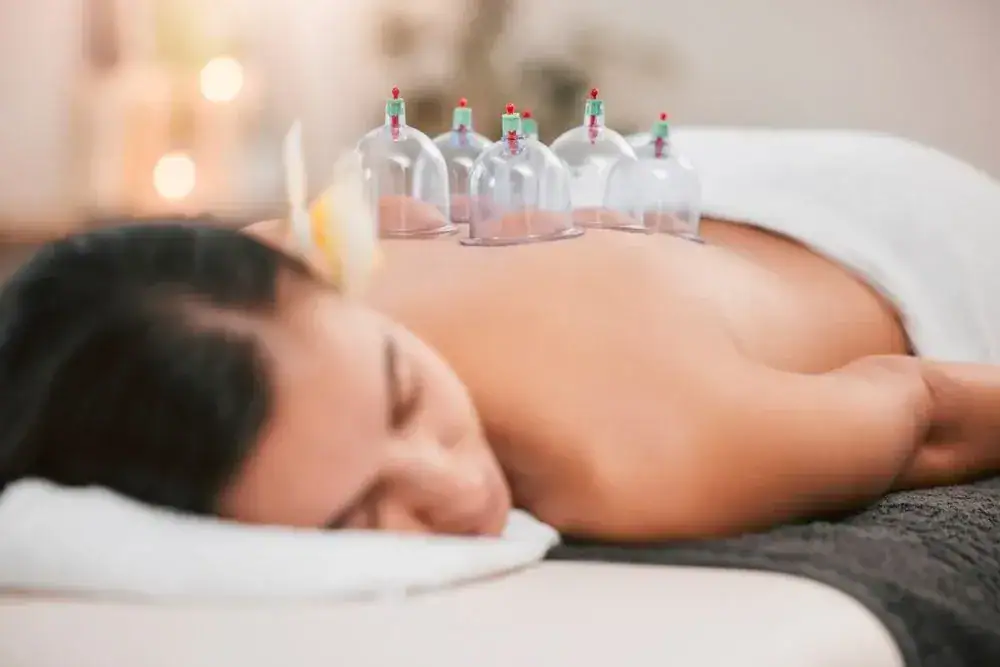

You’ve been dealing with back pain that won’t quit. Or neck tension that makes turning your head a conscious decision. Maybe it’s knee pain that’s changed how you move through your day.
Cupping therapy works by improving blood flow to areas that have been tight for too long. The suction draws fresh circulation to muscles and fascia, encouraging them to release tension they’ve been holding. You’re not just masking pain—you’re addressing why it keeps coming back.
Most patients notice improved range of motion within the first few sessions. That stiffness you feel getting out of bed starts to ease. Movements that used to hurt become manageable again. And because we bring this treatment to your University Gardens home, you’re not aggravating the problem by sitting in a car or waiting room before you even start.
This isn’t about temporary relief. It’s about restoring movement patterns your body has been compensating around for months or years.
Medcare Therapy Services has been providing home-based physical therapy across Long Island for over a decade. We’re not new to University Gardens or to cupping therapy as a treatment modality.
Our therapists are licensed professionals who accept Medicare and most commercial insurance. Every treatment plan is built around what your body needs, not what fits a standard protocol. We verify credentials, manage access to patient information carefully, and maintain the kind of operational standards that keep your care consistent and your data secure.
University Gardens has a growing population of residents who need therapy but can’t easily leave home. We built our service model specifically for that reality. You get the same quality of care you’d receive in a clinic, just without the barriers that make it harder to show up consistently.
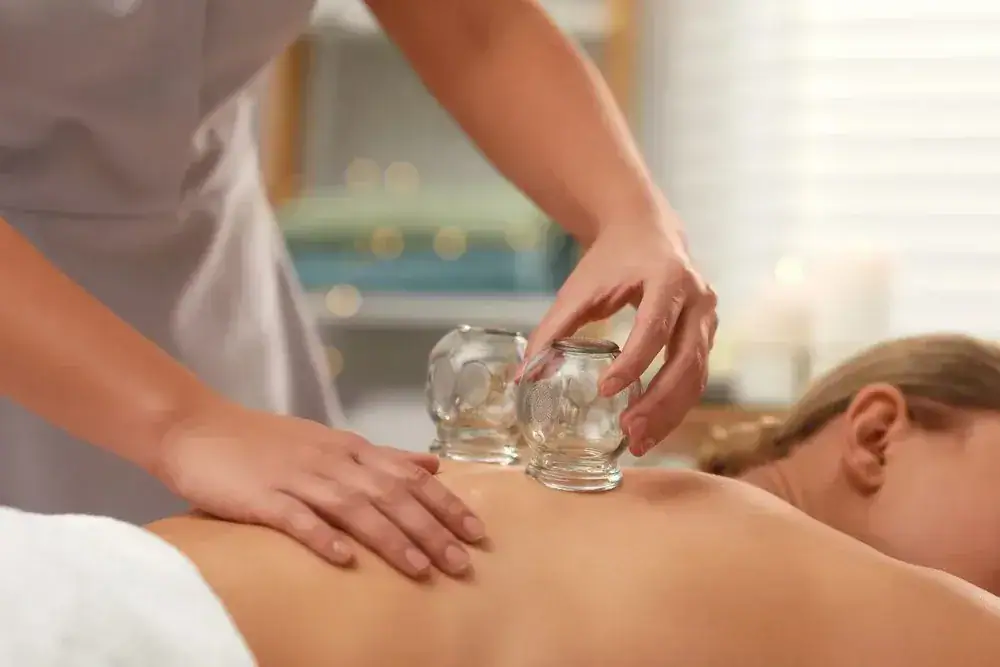
Your therapist arrives at your University Gardens home with everything needed for the session. First visit includes an evaluation—range of motion, pain levels, what movements are limited, and where you’re compensating.
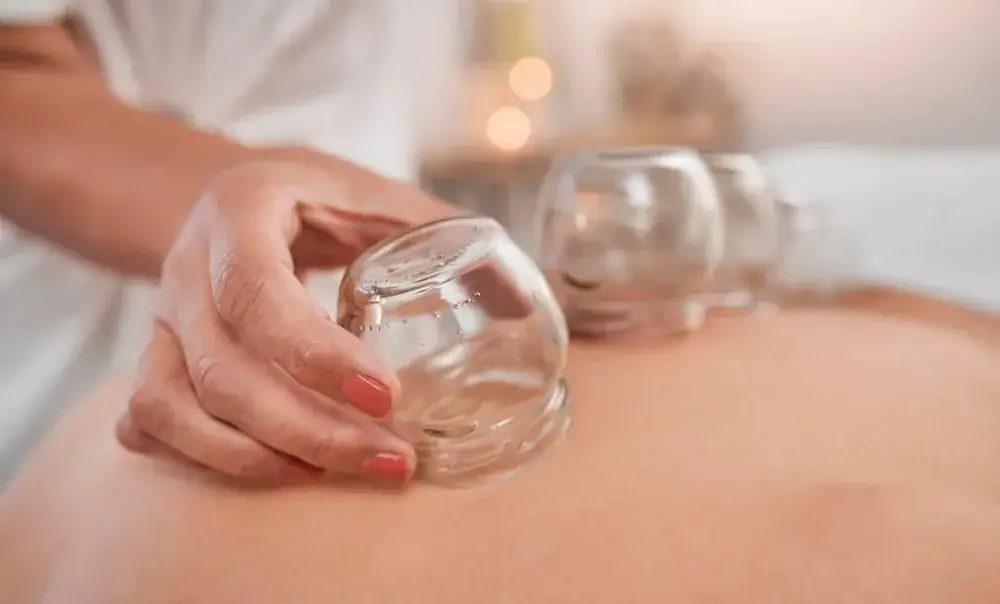
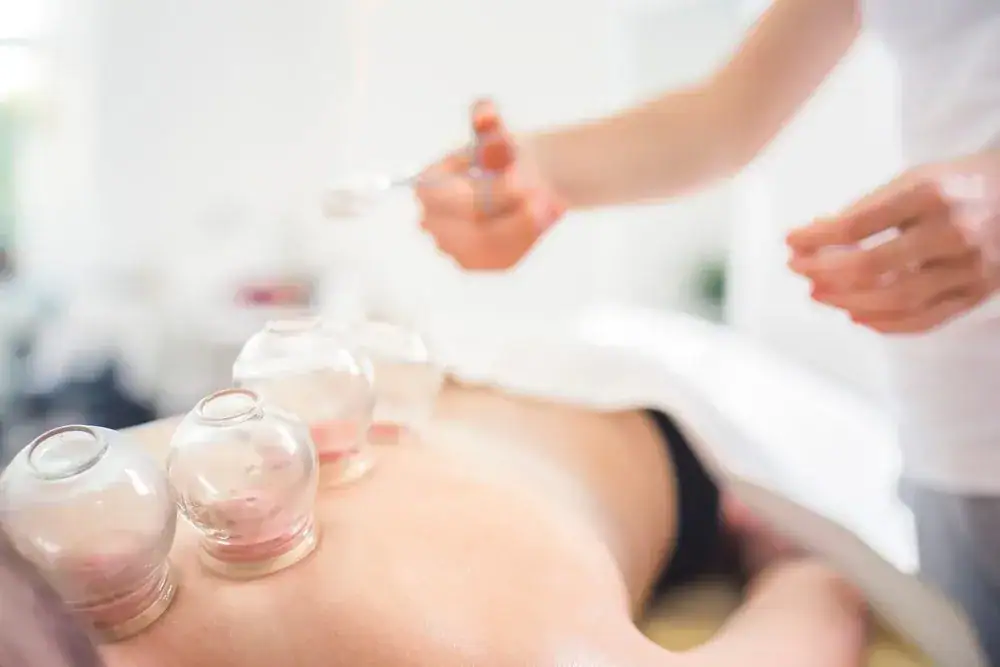
Cupping itself involves placing specialized cups on your skin to create suction. This can be done with dry cupping (suction only) or as part of a broader physical therapy session. The suction pulls blood to the surface, which helps release fascial restrictions and allows muscles to move more freely. You’ll see circular marks afterward—that’s normal and fades within a few days.
Sessions typically last 45-60 minutes. Cupping is often combined with other physical therapy techniques like manual therapy, stretching, or targeted exercises. Your therapist adjusts pressure and placement based on how your tissue responds.
Most treatment plans run 6-8 weeks, with frequency depending on your condition. Some patients come twice a week initially, then taper as pain decreases and movement improves. We’re tracking progress the whole time—not just how you feel, but what you can do that you couldn’t before.
Ready to get started?
Every session includes a licensed physical therapist who brings cupping equipment, assessment tools, and a treatment plan specific to your condition. You’re not getting cupping in isolation—it’s integrated with physical therapy techniques that address your full movement pattern.
We treat chronic low back pain, neck pain, knee osteoarthritis, muscle tightness from injury, and restricted mobility that’s keeping you from normal activities. University Gardens has a significant population managing these exact issues, often without easy access to consistent care.
Medicare covers our outpatient physical therapy services when medically necessary. We also accept most commercial insurance plans. Your therapist handles documentation and communicates with your physician as needed.
You’re getting evidence-based treatment delivered by professionals who’ve been doing this for years. Cupping has moderate-quality evidence supporting its use for musculoskeletal pain, and when combined with traditional physical therapy, outcomes improve. This isn’t alternative medicine—it’s a proven modality we use to enhance what your body can already do when given the right support.
Yes, but it works best as part of a broader treatment plan. Cupping improves blood flow to areas with restricted movement and helps release fascial tension that contributes to pain. Research shows moderate-quality evidence supporting cupping for chronic low back pain, particularly when combined with physical therapy.
What you’re really getting is improved tissue mobility. When fascia and muscles have been tight for months, they develop restrictions that limit how you move. Cupping addresses that by drawing circulation to the area and encouraging tissue to glide properly again.
Most patients notice reduced pain within 3-4 sessions, but the bigger change is in movement quality. You start bending without bracing. Reaching without compensation. That’s what makes the relief last beyond the session itself.
You’ll have circular marks where the cups were placed, but they’re not bruises in the traditional sense. The suction draws blood to the surface, which leaves discoloration that typically fades in 3-7 days. Darker marks usually indicate areas with more stagnation or restriction.
These marks don’t hurt. Some patients feel tenderness in treated areas for a day or two, similar to post-workout soreness, but it’s not painful. If you’re concerned about visible marks, let your therapist know—they can adjust placement to avoid areas that would be exposed.
The marks are actually useful feedback. They show your therapist where tissue is responding and help guide treatment in future sessions. As your condition improves, marks often become lighter because circulation is already better in those areas.
Yes, when cupping is performed by a licensed physical therapist as part of a Medicare-covered outpatient therapy plan. Medicare doesn’t cover cupping as a standalone service, but it does cover physical therapy that includes cupping as a treatment modality.
Your therapist will document medical necessity and communicate with your physician to ensure coverage. Most patients in University Gardens using our services have Medicare or Medicare Advantage plans, and we handle the authorization process.
We also accept most commercial insurance plans. Coverage varies by plan, so we verify benefits before starting treatment. What matters is that you’re getting skilled therapy from licensed professionals, delivered in your home, with the same standards you’d expect in a clinical setting.
Cupping uses suction to pull tissue up, while massage pushes tissue down. That difference matters when you’re dealing with deep fascial restrictions or areas that are too sensitive for direct pressure. The suction creates space between tissue layers, which helps restore the glide that’s been lost.
Physical therapy addresses movement patterns, strength, and function. Cupping is one tool within that larger framework. Your therapist might use cupping to release a tight area, then follow with exercises that retrain how you move through that range.
It’s particularly effective for areas that haven’t responded to other treatments. When manual therapy or stretching isn’t getting the job done, cupping can access restrictions from a different angle. You’re not choosing between cupping and physical therapy—you’re getting both, applied strategically based on what your tissue needs.
Most patients notice some improvement in pain or mobility within 2-3 sessions. But sustainable results—the kind that change how you move day-to-day—usually take 6-8 weeks of consistent treatment.
Initial relief often comes from reduced muscle tension and improved blood flow. That can happen quickly. The deeper work is retraining movement patterns so your body stops compensating in ways that recreate the problem. That takes longer.
Your therapist tracks progress at every session. We’re looking at range of motion, pain levels during specific movements, and what activities you can do that were limited before. If you’re not improving within the first few weeks, we adjust the approach. This isn’t about doing the same thing for months and hoping it works—it’s about responding to what your body shows us.
That’s exactly why we built our service this way. If getting to a clinic is difficult—whether due to mobility limitations, transportation issues, or pain that’s worse after sitting in a car—home-based therapy removes those barriers.
We serve University Gardens specifically because many residents need consistent therapy but can’t easily access it. Your therapist brings everything required for a full session. You get the same quality of care, same documentation, same communication with your physician, just without the trip.
Home-based therapy also means we see how you move in your actual environment. We can address the specific movements that are difficult in your daily routine—getting in and out of your chair, navigating your stairs, reaching into cabinets. That context makes treatment more relevant and results more applicable to your real life.
Other Services we provide in University Gardens