


You’re not looking for temporary relief. You want to move without wincing, sleep without waking up stiff, and get through your day without that constant ache reminding you something’s wrong.
Cupping therapy works by increasing blood flow to tight, painful areas. The suction pulls fresh oxygen and nutrients into muscles that have been starved of circulation, while helping your body clear out the metabolic waste that builds up in chronic pain spots. That’s why people often feel immediate relief after their first session.
The circular marks you might see after treatment aren’t bruises. They’re evidence of stagnant blood being drawn to the surface where your body can process it. Most people describe the sensation during treatment as a tight pull, not pain. And what comes after is what matters: reduced muscle tension, better range of motion, and the kind of pain relief that actually lets you get back to normal activities.
This isn’t about masking symptoms. It’s about addressing the root cause of muscle pain and restricted movement so you can function the way you’re supposed to.
We’ve been providing home-based physical therapy across Long Island since 2010. We bring licensed therapists directly to your door in Uniondale and throughout Nassau County because we know that getting to a clinic isn’t always realistic when you’re already dealing with pain or mobility issues.
Our therapists are Medicare-certified and trained in evidence-based techniques including cupping therapy, manual therapy, and therapeutic exercise. We accept Medicare and most commercial insurance, and we handle the paperwork so you don’t have to.
What sets us apart in the Uniondale area is simple: we show up, we listen, and we create treatment plans based on what’s actually wrong, not a one-size-fits-all protocol. You get the same quality care you’d receive in a clinic, but in the environment where you’re most comfortable.
Your first session starts with an assessment. Your therapist will ask about your pain history, what movements make it worse, and what you’ve already tried. They’ll also check your range of motion and identify exactly where the problem areas are.
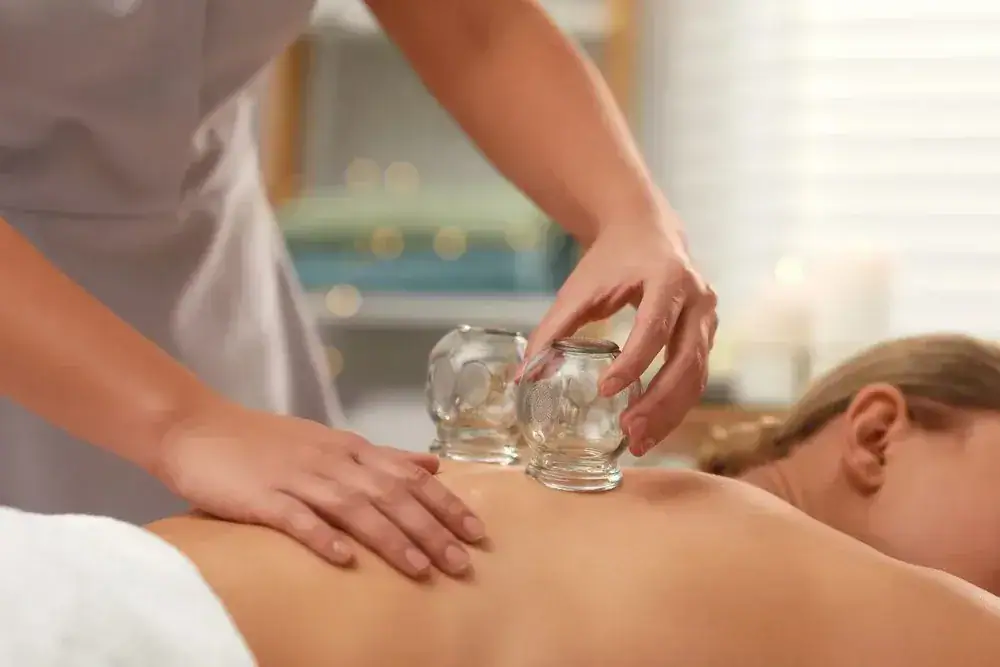
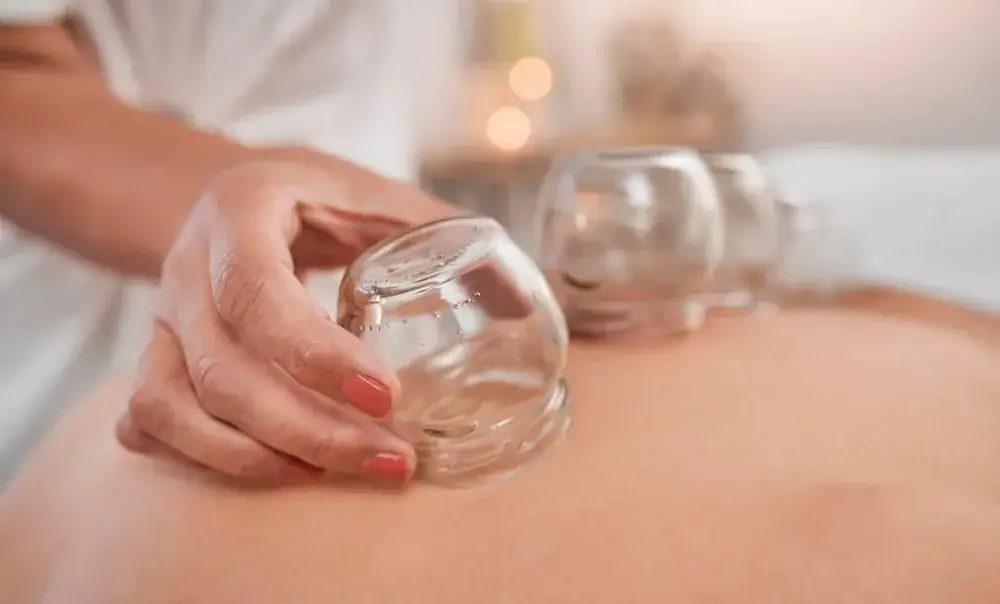
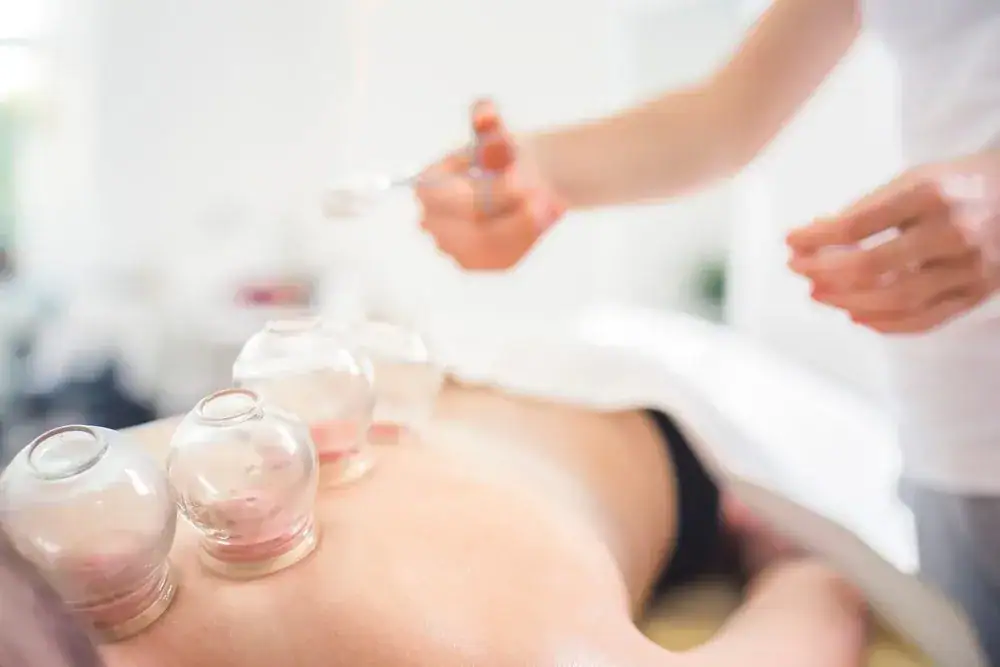
During cupping therapy, your therapist places specialized cups on your skin, typically on your back, shoulders, neck, or legs depending on where you’re experiencing pain. The cups create suction that pulls tissue upward, increasing blood flow to the area. Some therapists use stationary cups that stay in place for several minutes. Others use a technique called gliding cupping, where they move the cups across your skin after applying oil.
Most sessions last between 15 and 30 minutes, though cupping is often combined with other physical therapy techniques for better results. You might feel tightness or pulling during treatment, but it shouldn’t hurt. Afterward, you’ll likely see circular marks on your skin that fade within a few days to a week.
Your therapist will give you specific guidance on what to do between sessions, whether that’s stretching, icing, or modifying certain activities. The goal is progressive improvement, not just temporary relief after each appointment.
Ready to get started?
When you schedule cupping therapy with us in Uniondale, you’re getting more than just the cups. You’re getting a complete physical therapy evaluation, a personalized treatment plan, and ongoing adjustments based on how your body responds.
Many of our Uniondale patients deal with chronic lower back pain, shoulder tension from desk work, or lingering injuries that never fully healed. Long Island’s active community means we also see a lot of runners, gym-goers, and weekend athletes dealing with overuse injuries and muscle soreness that won’t quit.
Your treatment plan might include dry cupping for deep tissue work, manual therapy to address joint restrictions, and targeted exercises to strengthen weak areas. Everything happens in your home, which means no commute, no waiting room, and no trying to drive yourself home after treatment when you’re sore.
We work with your schedule. Early morning before work, midday, or evening appointments are all possible. And because we accept Medicare and most insurance plans common in Nassau County, the financial side is usually more straightforward than you’d expect. Your therapist can verify your coverage before your first visit so there are no surprises.
Cupping has been used in Traditional Chinese Medicine for thousands of years, but Western research has caught up. Multiple peer-reviewed studies show that cupping therapy provides measurable pain relief for people with chronic musculoskeletal pain, often more effectively than conventional treatments alone.
The mechanism isn’t mysterious. Cupping increases local blood circulation, which brings oxygen and nutrients to damaged tissue while helping remove inflammatory byproducts. This accelerates healing and reduces pain signals. One study documented a runner with over a year of iliotibial band pain who became symptom-free after just two cupping sessions.
That said, cupping works best as part of a complete physical therapy approach. When combined with manual therapy, corrective exercises, and movement education, the results are significantly better than cupping alone. It’s a tool, not a miracle cure, but it’s a tool with real clinical evidence behind it.
Yes, most people get circular marks where the cups were placed. They look like bruises but they’re not. Bruises happen when blood vessels break due to trauma. Cupping marks appear when suction draws stagnant blood and metabolic waste to the surface.
The marks are usually dark red or purple immediately after treatment, then fade to brown and yellow before disappearing completely. Most people see them fade within three to seven days, though it can take up to two weeks depending on how much stagnation was in the tissue.
If you have an event coming up where you’ll be showing your back or shoulders, mention it to your therapist. They can adjust the intensity or placement of cups. But most people don’t mind the marks once they understand they’re a sign the treatment is working, not damage being done.
Cupping therapy is covered when it’s performed by a licensed physical therapist as part of a documented treatment plan for a medical condition. Since our therapists are Medicare-certified and licensed in New York, cupping sessions are typically covered under your physical therapy benefits.
Medicare Part B covers outpatient physical therapy when it’s medically necessary and prescribed by a doctor. Most commercial insurance plans in New York follow similar guidelines. The key is that cupping needs to be part of a broader physical therapy treatment plan, not a standalone spa service.
Before your first appointment, your therapist will verify your specific coverage. They’ll confirm your benefits, any copays or deductibles, and how many sessions your plan allows. This happens upfront so you know exactly what to expect financially before treatment starts.
Cupping feels like a strong pulling or tugging sensation on your skin, not sharp pain. When the cup is first applied, you’ll feel the suction as it draws your skin and tissue upward. Some areas that are especially tight or painful might feel more intense, but your therapist adjusts the pressure based on your feedback.
Most people describe it as a “good hurt,” similar to a deep tissue massage. The sensation is strongest in the first minute or two, then your body adjusts and it becomes more comfortable. If the pressure ever feels like too much, your therapist can release some suction immediately.
After the cups are removed, the treated area often feels warm and relaxed. Some people feel immediate relief from pain or tightness. Others feel a bit sore for a day or two before noticing improvement. Your therapist will explain what to expect based on your specific condition and how your tissue responds during the first session.
It depends entirely on what you’re treating and how long you’ve had the problem. Acute injuries or recent muscle strain might respond in two to four sessions. Chronic pain that’s been building for months or years typically requires more, often six to twelve sessions for lasting improvement.
Your therapist will give you a realistic timeline after your initial evaluation. They’ll consider factors like the severity of your condition, how well your tissue responds to treatment, and whether you’re doing the recommended exercises between sessions. Some people feel significant relief after their first appointment. Others need several sessions before they notice a real difference.
The goal isn’t to keep you in therapy forever. It’s to get you functional again and teach you how to maintain the improvements on your own. Your therapist will track your progress at each visit and adjust the treatment plan based on what’s working. If you’re not seeing measurable improvement within a reasonable timeframe, they’ll reassess and try a different approach.
Yes, and in most cases you should. Cupping works well alongside other physical therapy techniques like manual therapy, therapeutic exercise, and stretching programs. Many of our patients in Uniondale are also seeing chiropractors, doing acupuncture, or taking medication for pain management.
Let your therapist know everything you’re currently doing for your condition. They need to understand the full picture to create a treatment plan that complements your other care rather than conflicting with it. For example, if you’re taking blood thinners, that affects how your therapist approaches cupping to minimize marking.
The most effective approach is usually integrated care. Cupping addresses muscle tension and circulation. Exercise builds strength and stability. Manual therapy improves joint mobility. When these work together under a coordinated plan, you get better results faster than relying on any single treatment alone.
Other Services we provide in Uniondale