
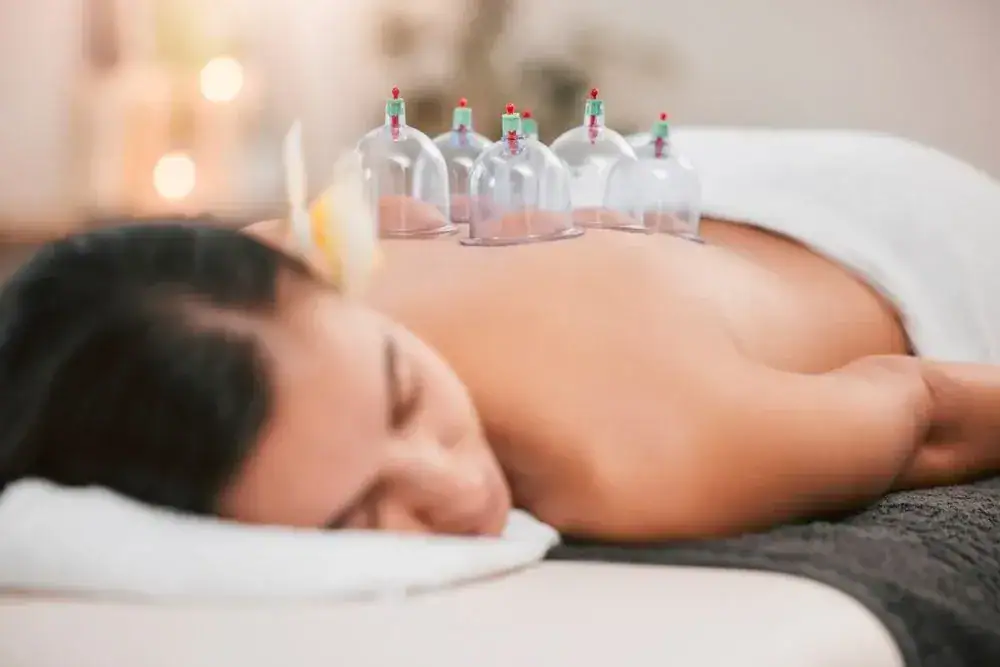

You’re not looking for temporary relief that wears off in an hour. You want to move without wincing, sleep through the night, and get back to your routine without constantly managing discomfort.
Cupping therapy works by improving blood flow to tight, painful areas. That increased circulation helps reduce inflammation, relax muscle tension, and speed up tissue healing. It’s not magic—it’s mechanical decompression that gives your body what it needs to recover.
Most people notice immediate relief after their first session. That stiffness in your neck, the knot in your shoulder, the ache in your lower back—it starts to ease. Range of motion improves. You can turn your head, reach overhead, or bend forward without bracing for pain.
This isn’t about chasing a trend. Cupping has been used for thousands of years, and recent research involving over 5,700 participants shows it significantly reduces both acute and chronic pain. Athletes use it because it works. You can too.
We’ve been helping people in the Stony Brook area recover from pain, injury, and limited mobility for years. We’re not a franchise or a rotating door of therapists—we’re a locally trusted practice that takes the time to understand what’s actually going on with your body.
Our team includes licensed physical therapists trained in cupping techniques, myofascial decompression, and integrative pain management. We don’t just apply cups and set a timer. We assess your movement, identify restrictions, and build a treatment plan that fits your goals.
Stony Brook is home to students, athletes, healthcare workers, and active professionals—people who can’t afford to be sidelined by pain. We get it. That’s why we focus on fast, effective relief combined with long-term strategies to keep you moving well.
Your first visit starts with a conversation. We ask about your pain—where it is, how long you’ve had it, what makes it worse. Then we assess your movement and identify the areas that need attention.
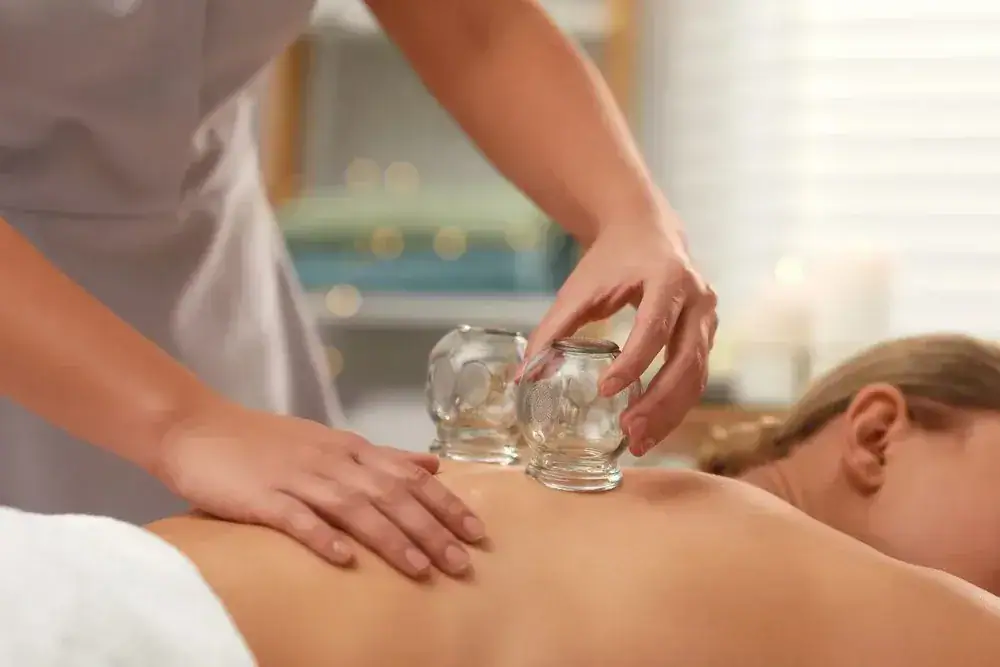
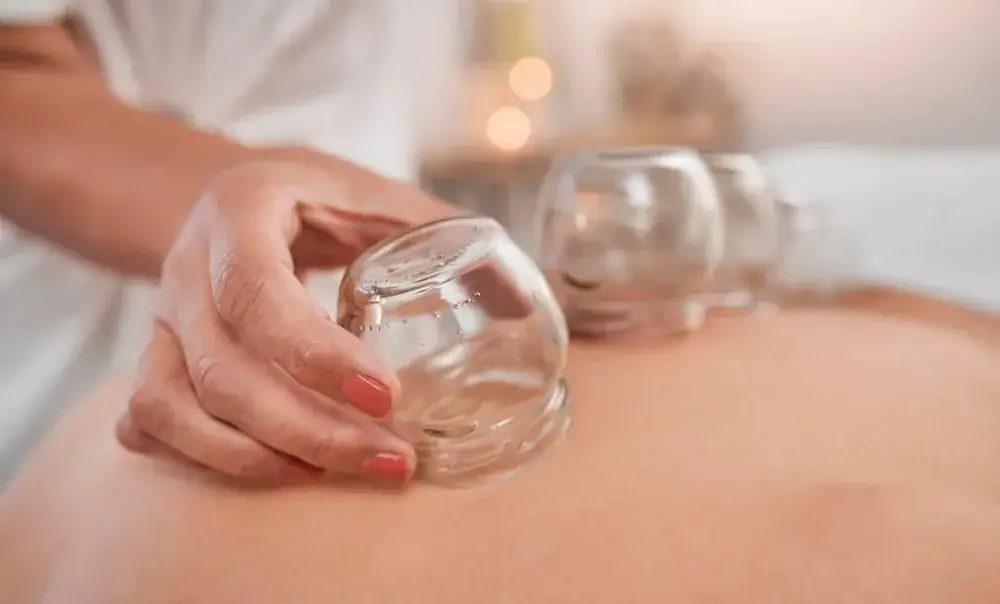
During the cupping session, we place specialized cups on your skin over the affected muscles. The cups create suction, which lifts the tissue and increases blood flow to the area. This isn’t painful—most people describe it as a pulling sensation that actually feels relieving.
We might use stationary cupping, where cups stay in place for several minutes, or dynamic cupping, where we move the cups along your muscles to release deeper tension. Some sessions combine cupping with stretching or manual therapy to maximize results.
Each session typically lasts 30 to 45 minutes. You might see some temporary circular marks on your skin afterward—that’s normal and fades within a few days. Most people feel looser and less sore immediately, with continued improvement over the next 24 to 48 hours.
Depending on your condition, we might recommend a series of sessions. Chronic pain usually responds best to consistent treatment over two to eight weeks, combined with movement exercises that keep the benefits going.
Ready to get started?
Cupping works well for a range of pain conditions—especially the ones that don’t respond to rest or over-the-counter medication. We use it to treat chronic low back pain, neck stiffness, shoulder tension, and knee discomfort. It’s also effective for headaches caused by muscle tightness and post-workout soreness that lingers too long.
If you’re a student athlete at Stony Brook University dealing with repetitive strain or recovery delays, cupping can help reduce lactic acid buildup and improve tissue healing between training sessions. Desk workers and healthcare professionals dealing with postural pain also see strong results—cupping helps reverse the effects of prolonged sitting or standing.
We treat a lot of people who’ve tried physical therapy before but didn’t get the relief they expected. Adding cupping to a treatment plan often makes the difference. It enhances the effects of stretching, strengthening, and manual therapy by addressing restrictions at the tissue level.
This isn’t a standalone fix. We combine cupping with movement education, corrective exercises, and hands-on therapy to give you lasting results. You’re not just getting temporary relief—you’re building a foundation for better function and less pain long-term.
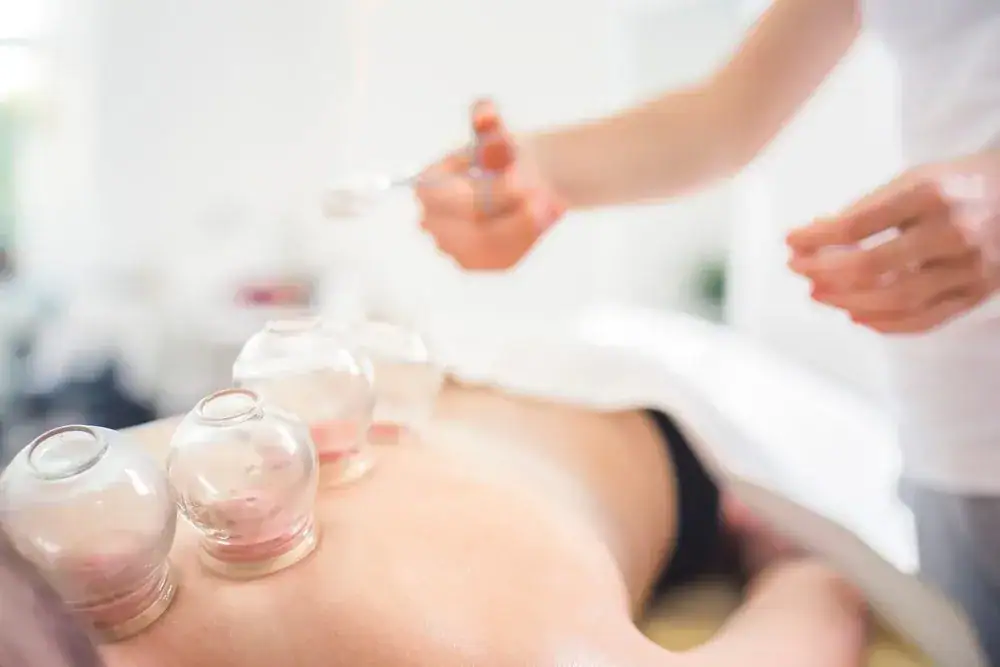
Yes, and the research backs it up. A comprehensive review of 72 clinical trials involving over 5,700 participants found that cupping therapy significantly reduces both acute and chronic pain. The evidence is strongest for conditions like low back pain, neck pain, and musculoskeletal discomfort.
Cupping works by increasing blood flow to painful areas, which helps reduce inflammation and promote tissue healing. It also creates a mechanical lift in the tissue that releases fascial restrictions and muscle tension. That’s why people often feel immediate relief after a session.
The effects are most noticeable in the first two to eight weeks of treatment. Some people need maintenance sessions to keep pain under control long-term, especially if the underlying issue involves posture, repetitive movement, or chronic conditions like arthritis. It’s not a cure-all, but it’s a proven tool that works when applied correctly.
Cupping is safe when performed by a trained professional like a licensed physical therapist. The suction created by the cups is controlled and adjusted based on your tolerance and tissue response. Most people find it comfortable—even relieving.
You will likely see circular marks on your skin after treatment. These aren’t bruises in the traditional sense—they’re caused by increased blood flow and the release of stagnant fluid in the tissue. The marks are temporary and usually fade within three to seven days.
Some people experience mild soreness in the treated area for a day or two, similar to what you’d feel after a deep tissue massage. Serious side effects are rare. We take time to explain what to expect and adjust the treatment if anything feels uncomfortable. If you have certain skin conditions, blood clotting disorders, or are pregnant, we’ll discuss whether cupping is appropriate for you.
Cupping is a technique we use within physical therapy—it’s not a replacement for it. Think of it as another tool that helps us address pain and movement restrictions more effectively.
Traditional physical therapy focuses on stretching, strengthening, manual therapy, and movement re-education. Cupping adds a myofascial decompression element that targets tissue restrictions in a way hands alone can’t. The suction lifts tissue away from underlying structures, which can release adhesions and improve mobility faster.
We often combine cupping with other treatments in the same session. For example, we might use cupping to release tight muscles in your upper back, then follow it with exercises that reinforce better posture and movement patterns. That integrated approach gives you better results than cupping or exercise alone. It’s about using the right tools at the right time to help you recover.
It depends on what we’re treating and how long you’ve been dealing with pain. Acute issues—like a recent muscle strain or post-workout soreness—often improve within one to three sessions. Chronic pain typically requires more consistent treatment, usually over four to eight weeks.
Most people notice some relief after their first session, but lasting improvement comes from addressing the root cause, not just the symptoms. That’s why we build a plan that includes cupping, movement work, and strategies to prevent the pain from coming back.
We’ll reassess your progress regularly and adjust the treatment as needed. Some people continue with occasional maintenance sessions to manage flare-ups or support high activity levels. Others graduate after a few weeks once their pain is under control and they’ve built strength and mobility. We’re not interested in keeping you in treatment longer than necessary—we want you functional and independent.
Absolutely. Cupping has become a go-to recovery tool for athletes at every level, from college competitors to Olympic medalists. It helps reduce muscle soreness, improve circulation, and speed up recovery between training sessions or competitions.
Athletes deal with repetitive strain, lactic acid buildup, and soft tissue restrictions that limit performance. Cupping addresses those issues by increasing blood flow to fatigued muscles and releasing tension that affects movement quality. It’s completely drug-free, so there’s no concern about violating any athletic regulations.
We work with a lot of student athletes from Stony Brook University who use cupping as part of their recovery routine. Whether you’re dealing with a nagging injury, preparing for a big event, or just trying to train harder without breaking down, cupping can give you an edge. We combine it with targeted strengthening and mobility work so you’re not just recovering—you’re getting stronger and more resilient.
In most cases, yes—if cupping is part of a physical therapy treatment plan. Insurance companies typically cover cupping when it’s performed by a licensed physical therapist and billed under physical therapy services. We handle the documentation and coding to make sure your treatment is covered.
Coverage varies depending on your specific plan, deductible, and whether you’ve met your out-of-pocket maximum. We recommend calling your insurance provider before your first visit to confirm your benefits. Our team can also verify coverage for you and explain what to expect in terms of co-pays or out-of-pocket costs.
If you don’t have insurance or prefer to pay out of pocket, we offer transparent pricing and can discuss payment options. The goal is to make effective treatment accessible without surprise bills or confusion. We’ll walk you through the financial side upfront so you can focus on getting better.
Other Services we provide in Stony Brook University