
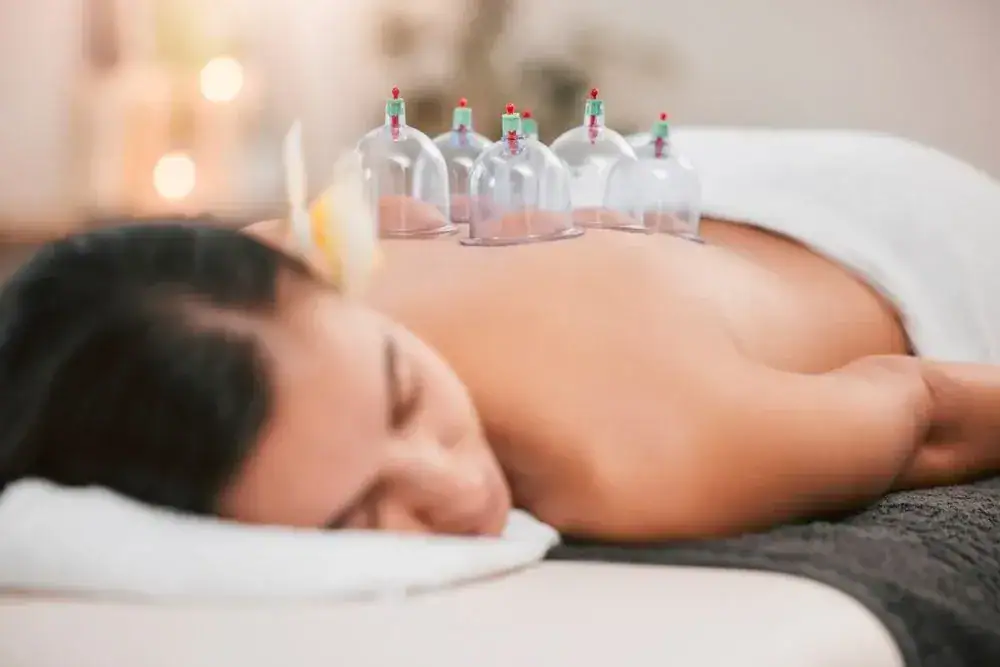

You’ve tried the usual options. Maybe you’ve been on pain meds longer than you wanted. Maybe physical therapy helped some, but the tightness keeps coming back. Cupping therapy works differently—it increases blood flow to areas that need it, loosens tissue that’s been stuck, and gives your body what it needs to actually heal.
The suction pulls fresh oxygen into tight muscles and stiff joints. That means less pain when you get out of bed, less stiffness when you reach overhead, and fewer days where your back decides what you can and can’t do. Most people notice a difference after the first session—not a miracle, just real improvement.
This isn’t about masking symptoms. It’s about addressing why you’re hurting in the first place. When soft tissue gets restricted, everything around it compensates. Cupping helps restore mobility so your body can move the way it’s supposed to. You get lasting relief, not just a few good hours.
We’ve been treating Long Island residents since 2010. We bring licensed physical therapists and occupational therapists directly to your home in Stewart Manor, so you don’t have to deal with traffic on the Meadowbrook or find parking in Garden City just to get treatment.
Our team knows cupping therapy inside and out. We combine it with physical therapy techniques to get you better results than either approach alone. Every therapist is licensed, insured, and trained in proper cupping methods—both dry cupping and myofascial decompression.
We accept Medicare and most major insurance plans. Our verification process is tight, our patient data is secure, and our communication is straightforward. You’ll know what to expect before your first appointment, and you’ll have direct access to your therapist throughout your care.
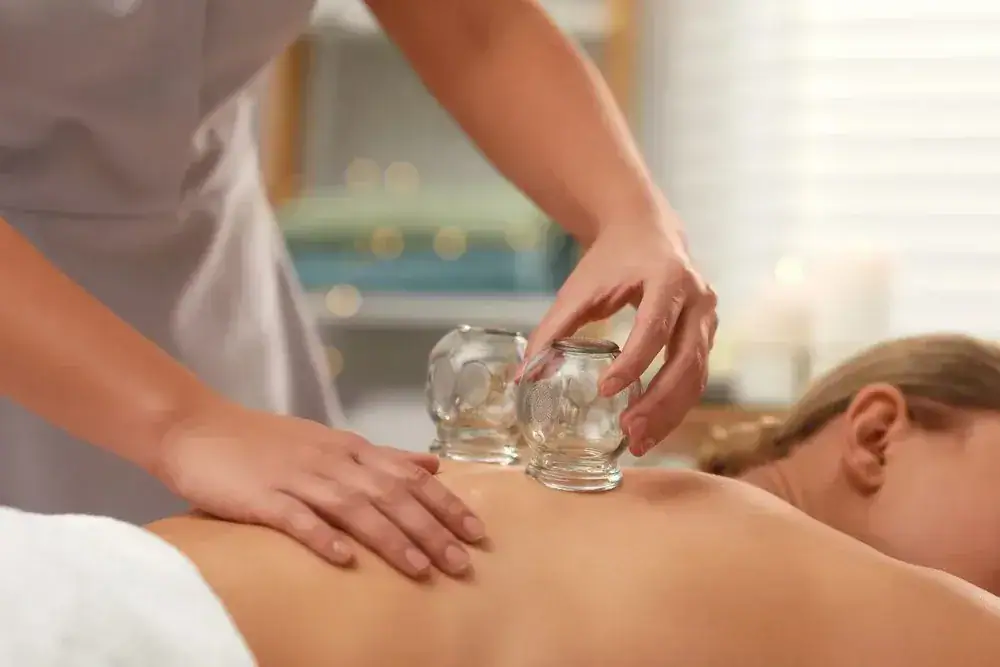
Your first session starts with an evaluation. We ask about your pain, check your range of motion, and figure out which areas need attention. If you’ve got chronic low back pain, neck stiffness, or knee problems, we map out exactly where the restriction is.
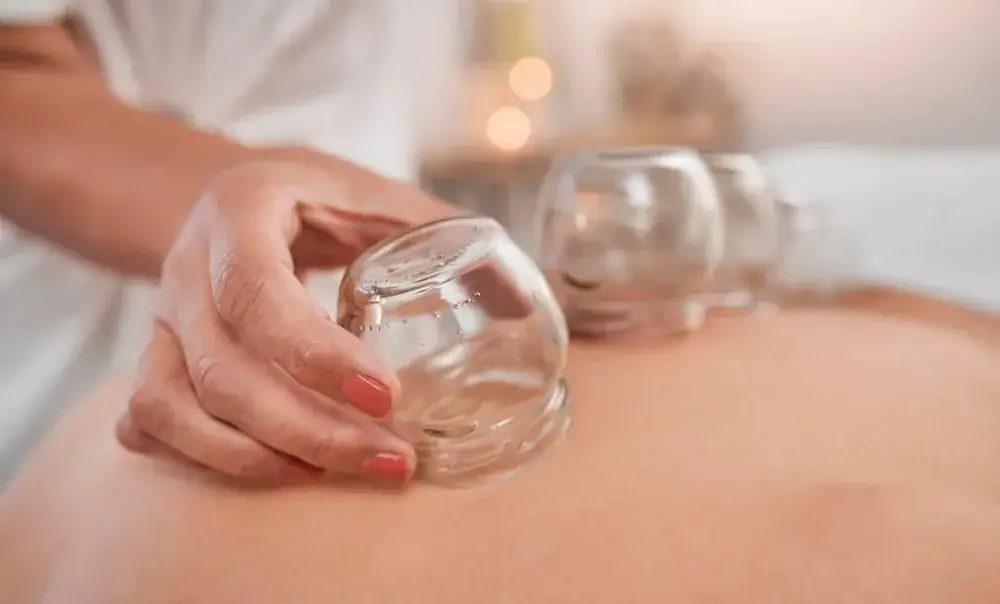
Then comes the cupping. We place specialized cups on your skin—usually silicone or glass—and create suction that pulls tissue upward. You’ll feel pressure, but it shouldn’t hurt. The cups stay on for 5 to 15 minutes depending on what we’re treating. Some of our therapists leave them stationary; others glide them across muscle groups to release broader areas.
After we remove the cups, we often follow up with stretching or manual therapy. This combination gives you better results than cupping alone. You might see circular marks on your skin afterward—that’s normal and fades within a few days. Most people feel looser immediately and notice pain reduction within 24 hours.
We build a treatment plan based on your specific condition. Some people need weekly sessions for a month. Others come in twice and feel good enough to maintain on their own. We adjust as you improve, and we’re always available if something changes.
Ready to get started?
Cupping works well for chronic low back pain, neck and shoulder tension, and knee osteoarthritis—all common issues for Stewart Manor residents, especially if you’re sitting at a desk all day or dealing with the physical demands of aging. We also treat headaches, carpal tunnel symptoms, and muscle stiffness that limits your daily routine.
Research backs this up. Studies show cupping reduces pain intensity and improves function for people with musculoskeletal disorders. It’s not a replacement for physical therapy—it’s an enhancement. When you combine cupping with targeted exercises and manual therapy, you get faster recovery and longer-lasting relief.
Long Island has a high percentage of adults dealing with chronic pain, and many are looking for options beyond medication. Cupping gives you that option. It’s safe, non-invasive, and effective when performed by licensed professionals who understand anatomy and therapeutic technique.
You’ll receive a personalized plan that fits your schedule and your goals. Sessions happen in your home, so there’s no need to rearrange your day or ask someone to drive you. We bring everything we need, and we work around your routine—not the other way around.
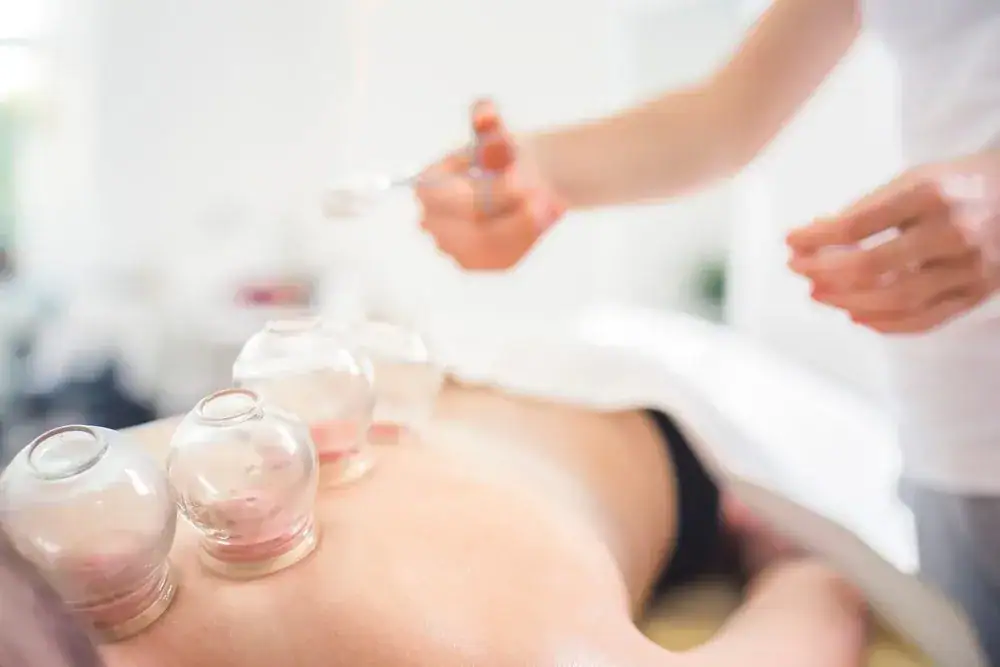
Yes, and there’s research to support it. Multiple studies show that cupping therapy reduces pain intensity for conditions like chronic low back pain, neck pain, and knee osteoarthritis. The suction increases local blood flow, which brings oxygen and nutrients to damaged tissue while helping remove metabolic waste that contributes to inflammation.
Here’s what that means for you: less muscle tightness, better range of motion, and reduced pain that lasts beyond the session itself. Most people notice improvement after one or two treatments, though chronic conditions usually require a series of sessions for sustained results.
Cupping isn’t magic, and it won’t fix structural problems like herniated discs or torn ligaments. But for soft tissue pain, muscle tension, and restricted mobility, it’s one of the most effective tools we have. When combined with physical therapy exercises and proper movement patterns, the results tend to stick.
Dry cupping is what most people think of when they hear “cupping therapy.” It uses suction alone—no needles, no incisions, nothing invasive. We place cups on your skin, create a vacuum, and let the suction do the work. It’s safe, comfortable, and effective for muscle pain and stiffness.
Wet cupping involves small incisions and bloodletting, which we don’t offer. It’s used in some traditional medicine practices, but dry cupping gives you the therapeutic benefits without any cutting or bleeding. There’s also fire cupping, where a flame creates the suction, but we use modern pump-based or silicone cups for better control and safety.
Myofascial decompression is a term some therapists use for dry cupping combined with movement. Instead of leaving cups stationary, we might have you move your arm or leg while the cups are on, which helps release deeper fascial restrictions. It’s particularly useful for shoulder pain, hip tightness, and areas where scar tissue has built up over time.
You’ll likely see circular marks where the cups were placed, but they’re not bruises in the traditional sense. Bruises happen when blood vessels break due to trauma. Cupping marks appear because suction draws blood to the surface, which can leave discoloration that ranges from light pink to deep purple depending on how restricted the tissue was.
These marks don’t hurt. They fade within three to seven days for most people, sometimes sooner. If your tissue is really tight or you haven’t had cupping before, the marks might be darker initially. That’s actually a sign the therapy is working—it means we’re increasing circulation to an area that needed it.
Some people don’t want visible marks, especially if they have an event coming up. We can adjust the suction intensity or choose different placement areas to minimize discoloration. Just let us know your concerns before we start, and we’ll modify the treatment accordingly.
Most sessions run 45 to 60 minutes. That includes the initial assessment, cupping application, treatment time, and any follow-up stretching or manual therapy. The cups themselves usually stay on for 5 to 15 minutes per area, depending on what we’re treating and how your tissue responds.
Your first session takes a bit longer because we’re evaluating your condition, discussing your pain history, and building a treatment plan. Follow-up sessions are more streamlined since we already know what works for you. If you’re combining cupping with physical therapy exercises, we might extend the session to make sure you’re doing movements correctly.
Because we come to your home in Stewart Manor, there’s no travel time eating into your day. We arrive at your scheduled time, set up quickly, and get to work. You’re not sitting in a waiting room or rushing to make it across town before the office closes. The whole process is designed to fit your life, not disrupt it.
Cupping therapy is often covered when it’s part of a physical therapy treatment plan, which is how we structure it at Medcare Therapy Services. Medicare covers outpatient physical therapy, and many private insurance plans do as well. Since cupping is a therapeutic technique we use during PT sessions, it typically falls under that coverage.
We accept Medicare and most major insurance plans. Before your first session, we verify your benefits and let you know what your out-of-pocket cost will be—if any. There are no surprises, and we handle the billing directly with your insurance company.
If you’re paying out of pocket, we provide clear pricing upfront. Even without insurance, many people find cupping therapy more cost-effective than ongoing medication, repeated injections, or other pain management approaches that add up over time. You’re investing in treatment that addresses the root cause, not just temporary relief.
Absolutely. While low back pain is one of the most common reasons people try cupping, it’s effective for a wide range of musculoskeletal conditions. We treat neck and shoulder pain, tension headaches, knee pain from osteoarthritis, carpal tunnel symptoms, and general muscle stiffness that limits your movement.
Cupping also helps with recovery after injury or surgery. If you’ve been through physical therapy and still have residual tightness or restricted range of motion, cupping can help release that tissue and restore normal movement patterns. Athletes use it for muscle recovery, but you don’t have to be an athlete to benefit—it works just as well for everyday aches and chronic tension.
Some research suggests cupping may help with conditions like rheumatoid arthritis, hypertension, and even asthma, though the evidence is stronger for pain-related issues. We focus on what we know works: reducing muscle tension, improving blood flow, and helping you move without pain. If you’re dealing with something specific, we’ll tell you honestly whether cupping is likely to help or if another approach makes more sense.
Other Services we provide in Stewart Manor