
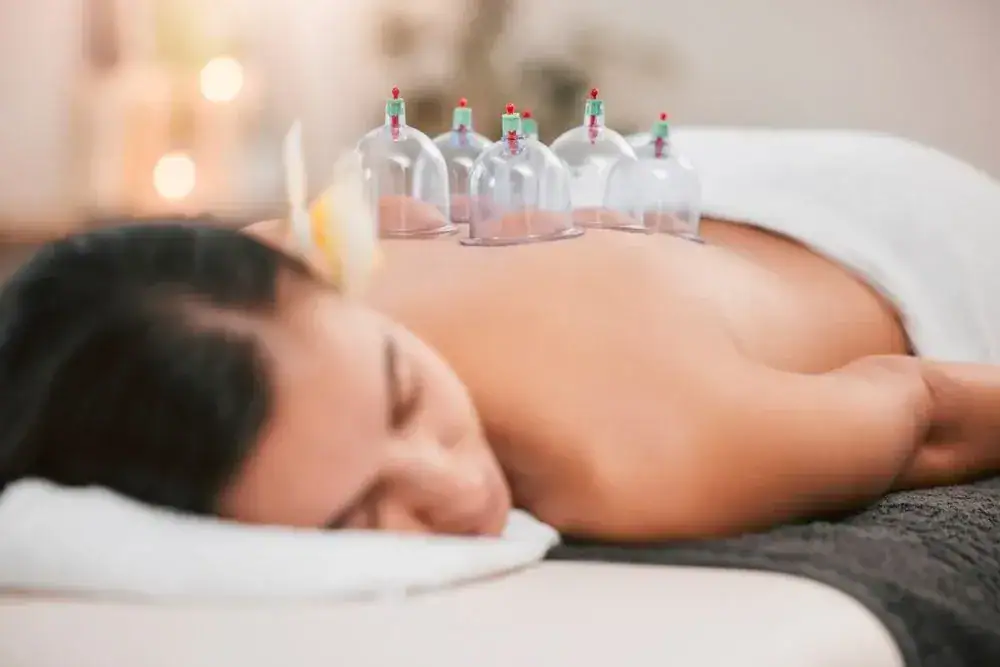

You wake up without that familiar stiffness in your lower back. You reach for something on a high shelf without wincing. You get through your workday without counting down the hours until you can lie down.
That’s what happens when cupping therapy works the way it should. The technique increases blood flow to areas that have been tight or inflamed for months, sometimes years. Fresh oxygen and nutrients reach muscles that haven’t been getting what they need. Waste products like lactic acid get cleared out faster, so you’re not dealing with the same lingering soreness after activity.
The decompression effect releases tension in a way that feels different from massage or stretching. Patients describe it as a pulling sensation that somehow gets to the root of the problem. Your range of motion improves because the tissues aren’t fighting you anymore. Movement becomes easier, not something you have to brace yourself for.
Research backs this up. Studies show cupping provides better long-term pain reduction than medication alone, especially for chronic low back pain and neck pain. One session can provide immediate relief, but the real benefit builds when it’s part of a consistent physical therapy plan that addresses why the pain started in the first place.
We’ve served Long Island communities like St. James for over a decade. We’re not a new clinic trying to figure things out. We’ve treated thousands of patients dealing with the same chronic pain, limited mobility, and frustration with treatments that didn’t work.
Our physical therapists integrate cupping into personalized treatment plans because we’ve seen what it does when combined with the right exercises and movement education. We don’t just put cups on your back and call it done. We’re looking at why you’re in pain and building a plan that actually addresses it.
St. James residents know the challenge of finding quality care without driving all over Long Island. Many of our patients have tried other PT offices, chiropractors, even acupuncture, before finding relief here. What makes the difference isn’t just the technique—it’s the attention to your specific situation and the follow-through that comes from a team that’s been doing this work for years.
Your first session starts with an evaluation. We need to understand where your pain is, how long you’ve had it, and what you’ve already tried. This isn’t a standard intake form—we’re listening for details that tell us what approach will work best for you.
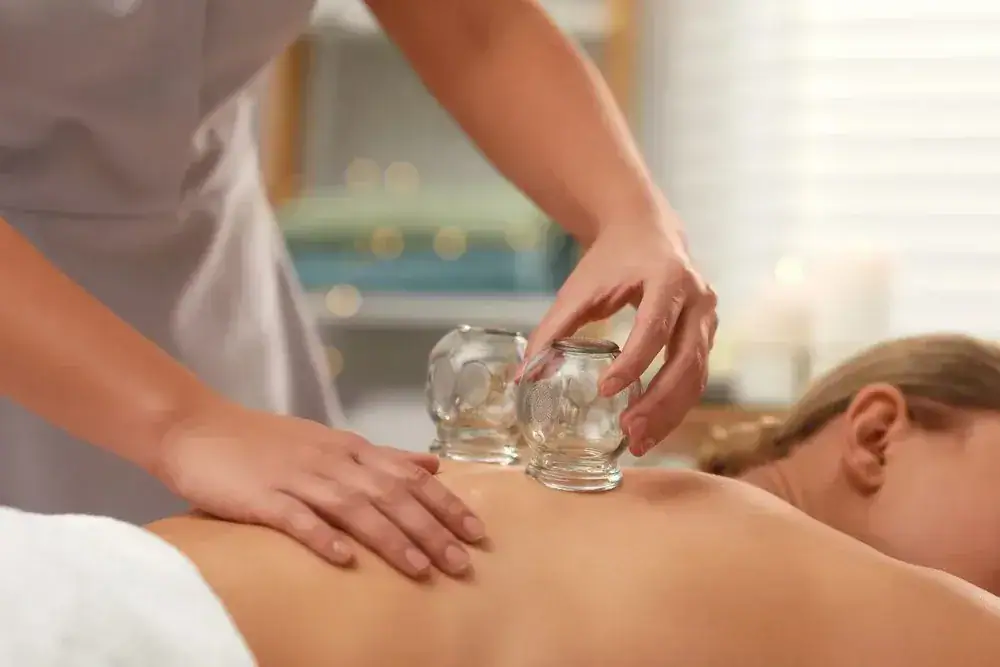
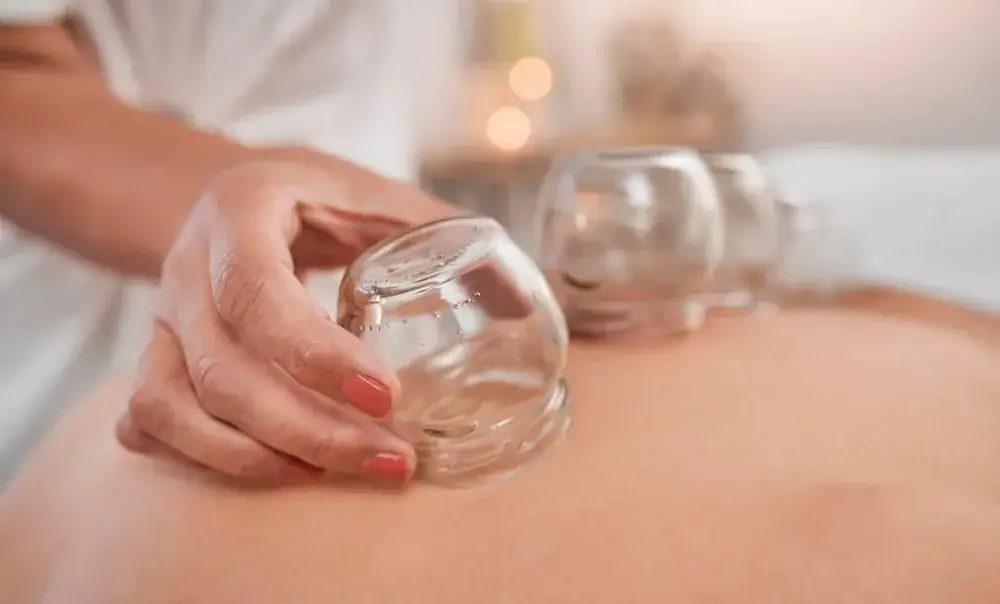
During dry cupping, we place specialized cups on targeted areas of your body. These create suction that lifts the skin and underlying tissue slightly. You’ll feel a pulling sensation, but it shouldn’t hurt. Most people find it surprisingly comfortable once they get past the initial unfamiliarity.
The cups stay in place for several minutes while they do their work. Blood flow increases to the area. Tight fascia and muscle tissue start to release. Some of our therapists use a technique called dynamic cupping, where cups are moved across the skin to address larger muscle groups or improve mobility in specific joints.
After we remove the cups, you’ll likely see circular marks where they were placed. These aren’t bruises—they’re a result of increased circulation and typically fade within a few days. Many patients feel immediate relief and notice they can move more freely right after treatment.
The real results come when cupping is part of a broader physical therapy plan. We’ll combine it with exercises designed to strengthen weak areas, improve your movement patterns, and prevent the pain from coming back. That’s how you get lasting improvement instead of temporary relief.
Ready to get started?
Cupping therapy at our clinic isn’t a standalone service—it’s integrated into your physical therapy treatment plan. That means you’re getting the combined benefit of multiple approaches working together, not just one technique in isolation.
You’ll receive a thorough evaluation before any treatment starts. We identify which areas need attention and determine whether cupping is the right fit for your specific condition. For many St. James residents dealing with chronic low back pain, neck tension, or shoulder tightness, it’s highly effective. For others, we might recommend different techniques or a combination approach.
The treatment itself is performed by our licensed physical therapists who’ve received specialized training in cupping techniques. We use professional-grade equipment and follow strict safety protocols. You’re not getting a spa treatment—you’re getting clinical therapy designed to produce measurable improvements in pain and function.
Between sessions, you’ll have exercises and movement strategies to practice at home. This is critical. Cupping helps release tension and improve circulation, but lasting change requires retraining how your body moves and strengthening the areas that have been compensating for your pain.
St. James has a significant population dealing with arthritis, chronic pain, and mobility limitations that come with aging. About 60% of adults over 55 have received physical therapy at some point, and many are looking for non-pharmaceutical options that actually work. Cupping offers that option when it’s done right—as part of a complete plan, not as a quick fix.
Yes, and there’s clinical evidence to support it. Research shows cupping is more effective than medication alone for chronic low back pain, particularly when combined with appropriate exercise and physical therapy. The key word there is “combined.”
Cupping works by increasing blood flow to tight, inflamed tissues and creating a decompression effect that releases muscle tension. For chronic pain, this addresses two major problems: poor circulation to the affected area and sustained muscle tightness that keeps the pain cycle going. Studies have found that even a single session can provide immediate pain relief, though the best long-term outcomes happen when it’s part of a consistent treatment plan.
That said, cupping isn’t magic. If your back pain is caused by a structural issue, poor movement patterns, or weak core muscles, cupping alone won’t fix it. But when we use it as part of a broader approach—addressing the root cause, strengthening weak areas, and retraining movement—it becomes a powerful tool for reducing pain and improving function.
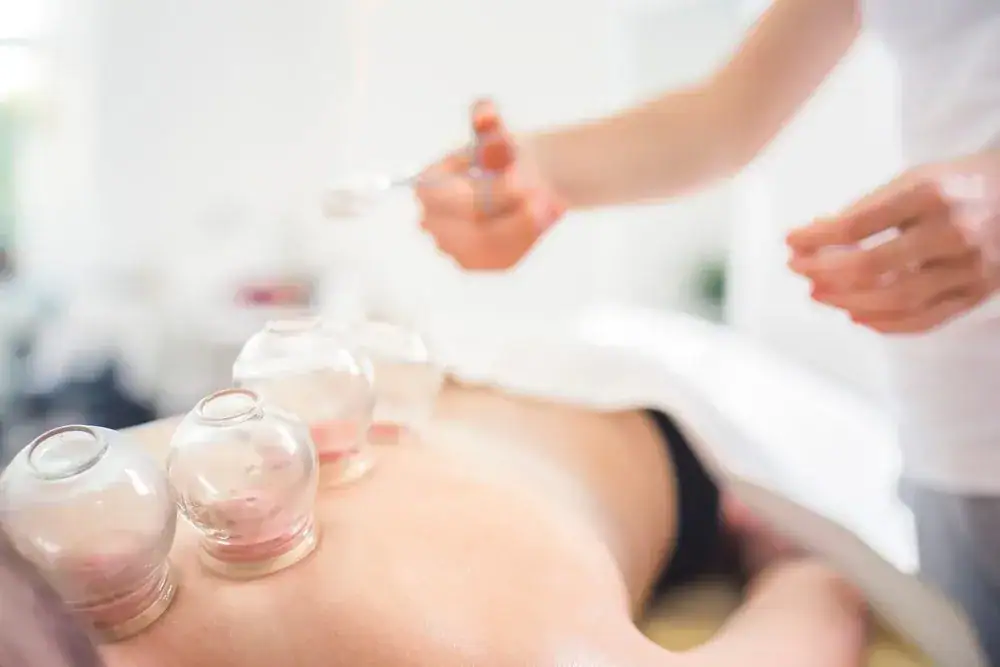
Dry cupping is what most people think of when they hear “cupping therapy.” It uses suction alone—no needles, no incisions, nothing invasive. The cups create negative pressure that lifts the skin and underlying tissue, increasing blood flow and releasing tension. This is the type we most commonly use in our physical therapy practice.
Wet cupping involves making small incisions in the skin before applying the cups, allowing some blood to be drawn out. This is less common in Western physical therapy practices and typically requires different training and licensing. It’s more often used in traditional Chinese medicine contexts.
Fire cupping uses a flame to create suction inside the cup before placing it on the skin. The flame consumes oxygen, creating a vacuum. It’s effective but requires careful technique. Many modern practitioners use pump-based cups instead because they offer more control over the amount of suction and are easier to adjust during treatment.
At our clinic, we primarily use dry cupping with professional-grade equipment that allows precise control. Your physical therapist will determine the right amount of suction and placement based on your specific condition. There’s no one-size-fits-all approach—it’s adjusted to what your body needs.
The circular marks typically fade within three to seven days, though this varies from person to person. They’re not bruises in the traditional sense—they’re a result of increased blood flow and the release of stagnant blood and metabolic waste from the tissue.
The color and intensity of the marks can actually tell us something about what’s happening in that area. Darker marks often appear where there’s more stagnation or tension. Lighter marks might indicate better circulation or less severe tissue restriction. As you continue treatment and the area improves, the marks often become lighter and fade faster.
Some people worry about the appearance, especially if they have an event coming up or wear clothing that might expose the treated area. That’s worth mentioning during your evaluation. We can adjust placement or timing of treatment accordingly. The marks don’t hurt—most patients forget about them after the first day or two—but we understand the cosmetic concern.
It’s also worth knowing that the presence of marks doesn’t determine whether the treatment worked. Some people mark heavily, others barely at all, and both can experience significant pain relief and improved mobility. The marks are a side effect of the technique, not a measure of its effectiveness.
Cupping is generally very safe when performed by a trained professional like our licensed physical therapists. The most common side effect is the temporary marks we just discussed. Some people experience mild soreness in the treated area for a day or two, similar to what you might feel after a deep tissue massage.
There are some situations where cupping isn’t appropriate. If you’re on blood thinners, have a bleeding disorder, or have certain skin conditions, we’ll need to evaluate whether it’s safe for you. Pregnant women should discuss it with their healthcare provider first. People with active infections or open wounds in the treatment area should wait until those heal.
The risk of complications is low when the treatment is done correctly. Burns from fire cupping are possible if technique is poor, which is why many practitioners have moved to pump-based systems. Skin irritation can occur if cups are left in place too long or suction is too strong, but our experienced therapists know how to avoid this.
At our clinic, safety is built into our process. We verify your medical history, check for contraindications, and monitor your response throughout treatment. Our physical therapists have specific training in cupping techniques and understand how to integrate them safely into your overall care plan. You’re not getting treatment from someone who took a weekend workshop—you’re working with licensed professionals who do this every day.
Many patients notice some improvement after the first session—less pain, easier movement, reduced tightness. But one session isn’t going to solve chronic pain that’s been building for months or years. Real, lasting improvement typically requires multiple sessions as part of a complete physical therapy plan.
The exact number depends on your specific condition, how long you’ve had the problem, and how your body responds to treatment. Someone with acute muscle tension from overuse might see significant improvement in three to four sessions. Someone dealing with chronic low back pain that’s been present for years might need ongoing treatment over several weeks or months, combined with exercises and other therapeutic techniques.
This is why the initial evaluation matters so much. We’re not just treating symptoms—we’re looking at the underlying cause and building a plan that addresses it. Cupping might be part of every session, or we might use it strategically at certain points in your treatment. The goal isn’t to keep you coming back forever; it’s to get you to a point where you can manage your pain and maintain your mobility without ongoing intervention.
Most patients start with one to two sessions per week, then space them out as they improve. We’re constantly reassessing whether what we’re doing is working and adjusting the plan accordingly. If you’re not seeing progress, we change the approach. If you’re improving faster than expected, we adjust the frequency. The timeline is based on your response, not a predetermined schedule.
In most cases, yes. Cupping works well alongside other physical therapy techniques, chiropractic care, massage, and even medications you might be taking for pain management. The key is making sure all your providers know what you’re doing so they can coordinate care effectively.
If you’re currently seeing a chiropractor or getting regular massages, let us know during your evaluation. We can time your cupping sessions to complement those treatments rather than overlap in ways that might cause excessive tissue stress. If you’re taking anti-inflammatory medications or pain relievers, that’s fine—cupping doesn’t interfere with those, and many patients find they need less medication as their pain improves.
Some treatments do require more careful coordination. If you’re receiving injections for pain management, we’ll want to know the timing and location so we’re not applying cups to recently injected areas. If you’re in active physical therapy for a different issue, we’ll communicate with that provider to make sure our approaches align.
The goal is integrated care that addresses your pain from multiple angles without creating conflicts or redundancy. Many St. James residents come to us already working with other providers, and we’re used to being part of a larger care team. What matters most is that everyone involved knows the full picture of what you’re doing and why, so you get the best possible outcome without wasting time or money on treatments that don’t work well together.
Other Services we provide in St. James