


You sleep through the night without waking up to reposition. Your neck doesn’t scream at you after a day at your desk. You can reach for something on a high shelf without that sharp catch in your shoulder.
That’s what happens when muscle tension releases and blood flow improves. Cupping therapy uses controlled suction to lift tissue, separate adhesions, and bring oxygen-rich blood to areas that have been tight and starved for circulation. The result isn’t just temporary relief—it’s improved range of motion, reduced inflammation, and muscles that finally relax.
Most people notice a difference after the first session. Not a cure, but a shift. Less guarding. More movement. The kind of progress that makes physical therapy exercises actually doable instead of something you push through while gritting your teeth.
We’ve been treating patients across Long Island for years, with a location right here in Springs, NY. Our team includes licensed physical therapists who integrate cupping into broader treatment plans—not as a standalone gimmick, but as one tool among many.
Springs residents deal with the same issues you’d expect from a mix of desk jobs, manual labor, and an active outdoor lifestyle. Lower back pain from long commutes. Neck tension from computer work. Shoulder problems from repetitive motion. We see it daily and treat it with a combination of hands-on techniques, targeted exercises, and modalities like dry cupping when it makes sense for your specific condition.
Your records stay secure. Your treatment plan gets updated based on how you’re actually responding. And if cupping isn’t the right fit, we’ll tell you.
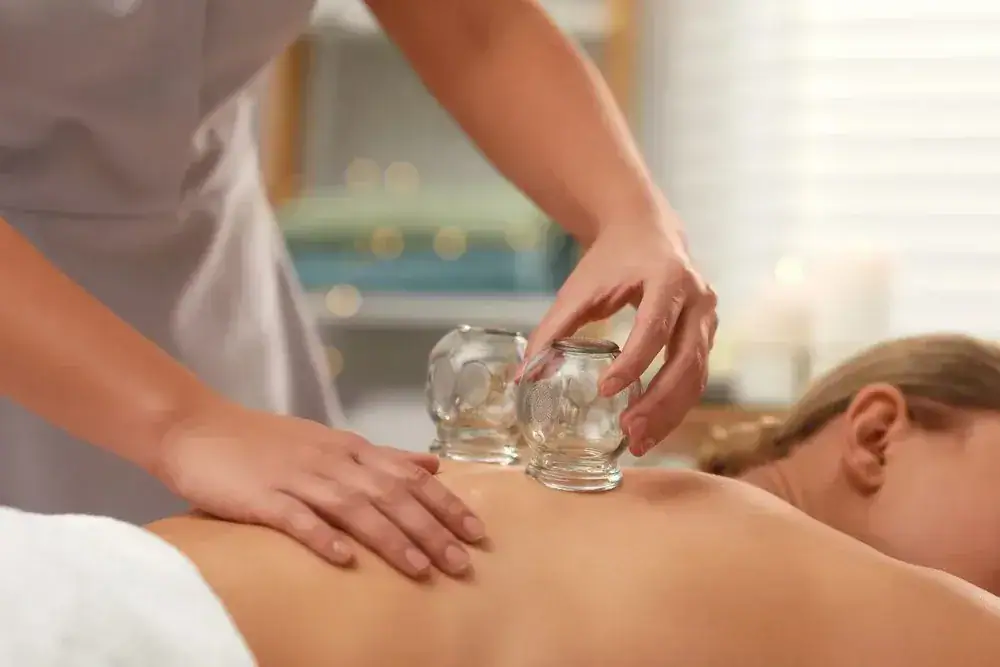
Your therapist starts with an assessment. They ask where it hurts, what makes it worse, and what you’ve already tried. They test your range of motion and feel for areas of restriction or tenderness.
Then they place cups on targeted areas—usually your back, shoulders, or neck. The suction pulls tissue upward, creating space between muscle layers and increasing blood flow to the area. It’s not painful. Most people describe it as a tight pulling sensation that actually feels good once you relax into it.
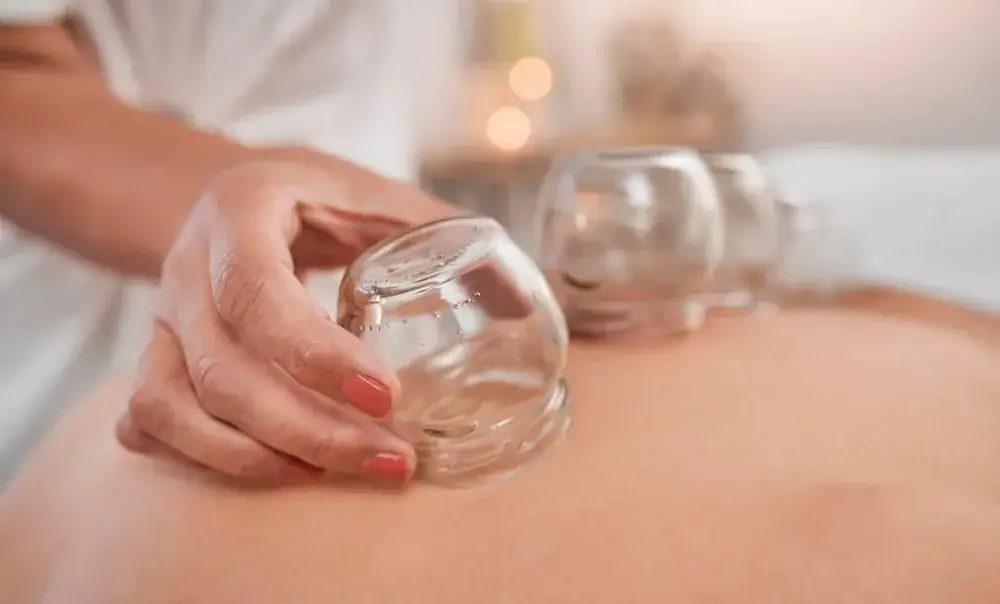
The cups stay on for 5 to 15 minutes depending on the technique. Dry cupping uses stationary cups. Sometimes we use massage cupping, where we move the cups across your skin with oil to release broader areas of tension.
Afterward, you’ll see circular marks where the cups were. They’re not bruises—they’re a sign of increased circulation bringing stagnant blood to the surface. The marks fade within a few days to a week.
Your therapist will likely combine cupping with other treatments during the same visit: manual therapy, stretching, strengthening exercises. The goal is to address your pain from multiple angles so you get lasting results, not just temporary relief.
Ready to get started?
Cupping works best for musculoskeletal pain—the kind that comes from tight muscles, poor posture, repetitive strain, or old injuries that never fully healed. If you’ve been dealing with chronic low back pain, neck stiffness, or shoulder tension that limits your movement, this is worth trying.
It’s especially effective when combined with physical therapy. Springs, NY has a mix of office workers dealing with tech neck and manual laborers with overuse injuries. Both groups respond well to cupping because it addresses the root cause: restricted blood flow and fascial adhesions that keep muscles locked up.
Athletes use cupping for recovery. It helps reduce soreness after hard training and speeds up healing from minor strains. You don’t need to be an elite competitor to benefit—if you’re active and dealing with recurring tightness or limited flexibility, cupping can help you move better.
The treatment isn’t right for everyone. If you have certain skin conditions, take blood thinners, or are pregnant, your therapist will discuss alternatives. But for most people dealing with chronic muscle pain, it’s a low-risk option with solid evidence behind it. Research shows meaningful short-term improvements in pain intensity and disability, particularly for conditions like chronic neck pain and low back pain.
Yes, but it’s not magic. Research shows cupping produces clinically meaningful short-term reductions in pain and disability for chronic low back pain. A meta-analysis of randomized trials found that patients reported lower pain intensity scores after cupping compared to standard care alone.
Here’s what that means in practice: if you’ve been dealing with persistent lower back tightness that limits your ability to sit comfortably or bend without discomfort, cupping can help release that tension and improve your mobility. The suction increases blood flow to tight muscles and helps separate fascial layers that have adhered together from chronic tension or old injuries.
The key word is “short-term.” Cupping gives you a window of relief and improved movement, which makes it easier to do the strengthening and mobility work that creates long-term change. That’s why we use it as part of a broader treatment plan, not as a standalone fix. You get the immediate relief that makes rehab exercises actually doable, then you build on that progress with consistent treatment.
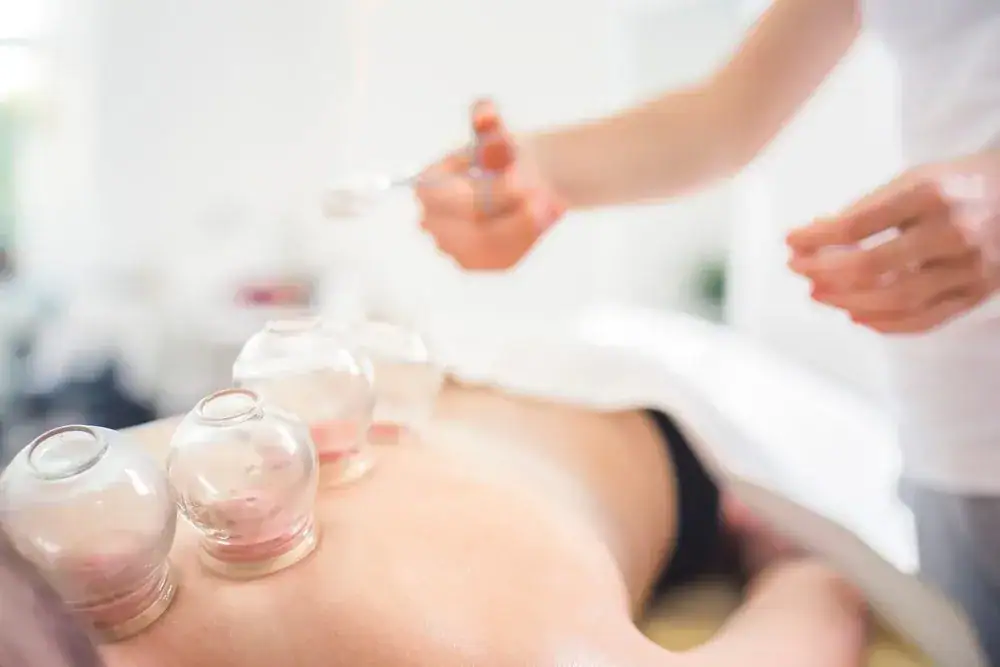
Dry cupping uses suction alone—no needles, no incisions, nothing invasive. The therapist places cups on your skin and creates negative pressure, either with a pump or by heating the air inside the cup. The suction pulls tissue upward and holds it there for several minutes.
Wet cupping involves making small incisions and drawing out a small amount of blood. That’s not what we do at Medcare. Our dry cupping approach is non-invasive, low-risk, and effective for musculoskeletal pain.
Some therapists also use massage cupping, where they apply oil to your skin and move the cups around instead of leaving them stationary. This technique covers more area and works well for releasing broader patterns of tension across your back or shoulders. Your therapist will choose the approach based on your specific condition and what they find during your assessment.
The circular marks last anywhere from three days to a week, sometimes up to ten days if the suction was strong or the area was particularly congested. They’re not bruises in the traditional sense—they’re a result of increased circulation bringing stagnant blood and metabolic waste to the surface.
The marks don’t hurt. You might have some tenderness in the treated area for a day or two, similar to the feeling after a deep tissue massage, but the marks themselves are painless. They fade gradually, starting bright red or purple and lightening to yellow-brown before disappearing completely.
If you have an event where you’ll be wearing something that shows your back or shoulders, plan accordingly. But most people find the relief worth the temporary appearance. The marks are actually a sign that the treatment is working—areas with darker marks usually had more restriction and stagnant circulation. As you continue treatment, the marks typically get lighter because your circulation improves.
Absolutely. Cupping works best when integrated with other physical therapy techniques. Most sessions at Medcare include a combination of manual therapy, therapeutic exercise, and modalities like cupping—all designed to address your specific condition from multiple angles.
If you’re already in physical therapy for a chronic pain condition, adding cupping can help you get better results from your exercises. When muscles are tight and restricted, it’s hard to perform rehab movements with proper form. Cupping releases that tension first, which means you can actually engage the right muscles during your exercises instead of compensating with already-overworked areas.
Your therapist will coordinate everything. They’ll assess how you’re responding to treatment and adjust the plan as needed. Some sessions might include more hands-on work, others might focus on strengthening, and cupping gets used strategically when muscle tension or restricted mobility is limiting your progress. The goal is always the same: get you moving better and feeling better as efficiently as possible.
Most people notice some improvement after the first session—less tightness, easier movement, reduced pain when performing activities that usually aggravate their condition. But one session won’t fix a chronic problem.
For ongoing issues like persistent neck pain or chronic low back pain, expect a series of treatments over several weeks. We typically recommend cupping as part of your regular physical therapy visits, which might be two to three times per week initially, then tapering down as you improve.
The exact number depends on how long you’ve had the problem, how severe it is, and how well you respond to treatment. Someone with acute muscle strain from overexertion might only need a few sessions. Someone with years of chronic tension and postural dysfunction will need more time to retrain movement patterns and build lasting change. We’ll give you a realistic timeline based on your initial assessment and track your progress at each visit so you know whether the treatment is working.
Usually, yes—when it’s provided as part of a physical therapy treatment plan. Insurance companies typically cover cupping under your physical therapy benefits because it’s considered a manual therapy technique, similar to soft tissue mobilization or myofascial release.
Coverage depends on your specific plan, your remaining visits for the year, and whether you’ve met your deductible. Our front desk staff can verify your benefits before you start treatment so you know what to expect for out-of-pocket costs.
What matters more than the cost is whether the treatment is actually appropriate for your condition. We won’t use cupping just because it’s covered—we’ll use it if it makes clinical sense based on your assessment and treatment goals. Some conditions respond better to other techniques, and we’ll tell you that upfront rather than running up your insurance visits with treatments that aren’t moving the needle on your pain and function.
Other Services we provide in Springs