
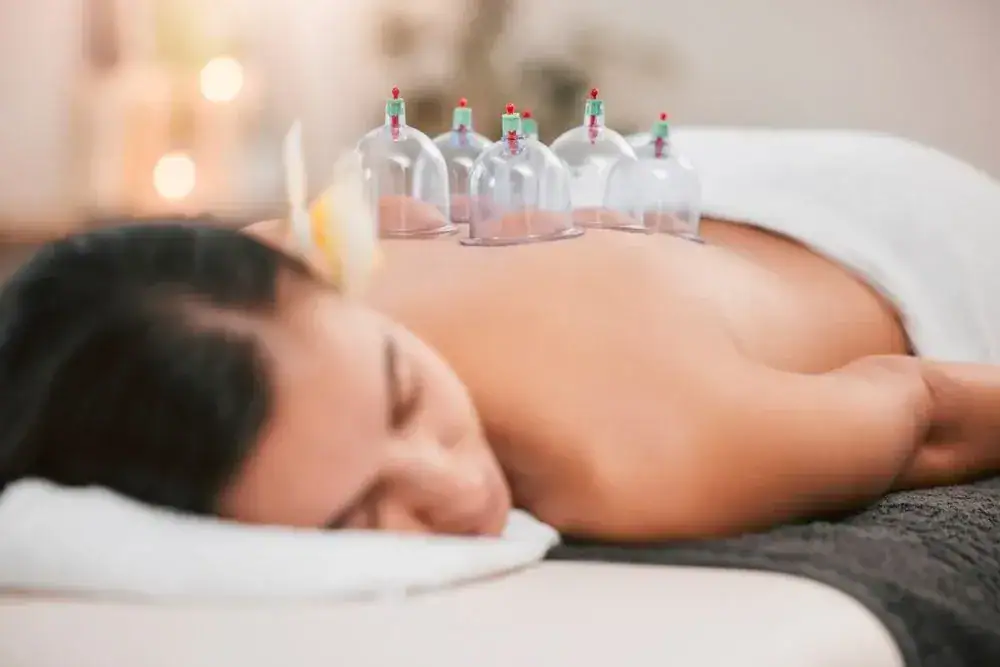

You’ve tried stretching. You’ve tried rest. The tightness in your back or neck keeps coming back, limiting how you move and what you can do comfortably.
Cupping therapy works by increasing blood circulation to tight, painful areas. That improved blood flow helps your muscles release tension, reduces inflammation, and speeds up your body’s natural healing process. You’re not masking the problem—you’re addressing what’s causing it.
Most people notice less stiffness and better mobility after just a few sessions. If bending, reaching, or twisting has become uncomfortable, cupping combined with physical therapy can help you regain that freedom without leaning on medications or invasive procedures.
We’ve been serving Long Island since 2010. Our therapists are licensed, trained in evidence-based techniques, and experienced in integrating cupping therapy into personalized treatment plans.
We don’t rush appointments or use cookie-cutter protocols. Every session is built around what’s happening in your body and what you’re trying to get back to doing. Southampton residents trust us because we show up consistently, communicate clearly, and follow through on what we say we’ll do.
Our affiliated centers—Physical Therapy Associates of Smithtown and Speonk Physical Therapy—have been part of this community for over two decades. We manage our practice with the same care we bring to patient treatment: secure, transparent, and focused on long-term relationships.
Your first visit starts with an assessment. We’ll ask about your pain, your movement limitations, and what treatments you’ve already tried. This helps us understand whether cupping therapy is a good fit and how to customize your plan.
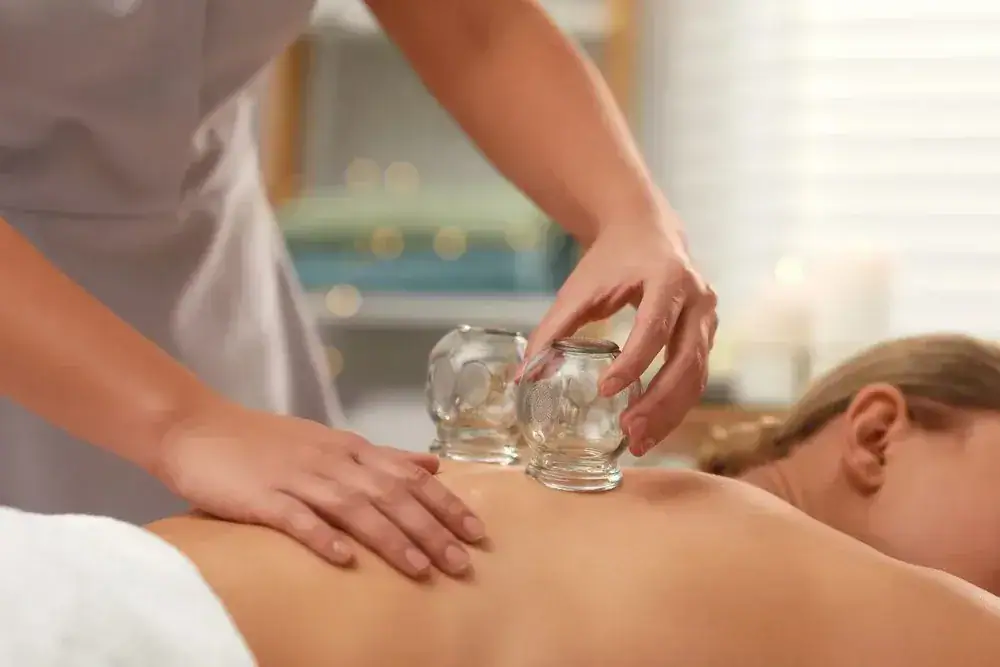
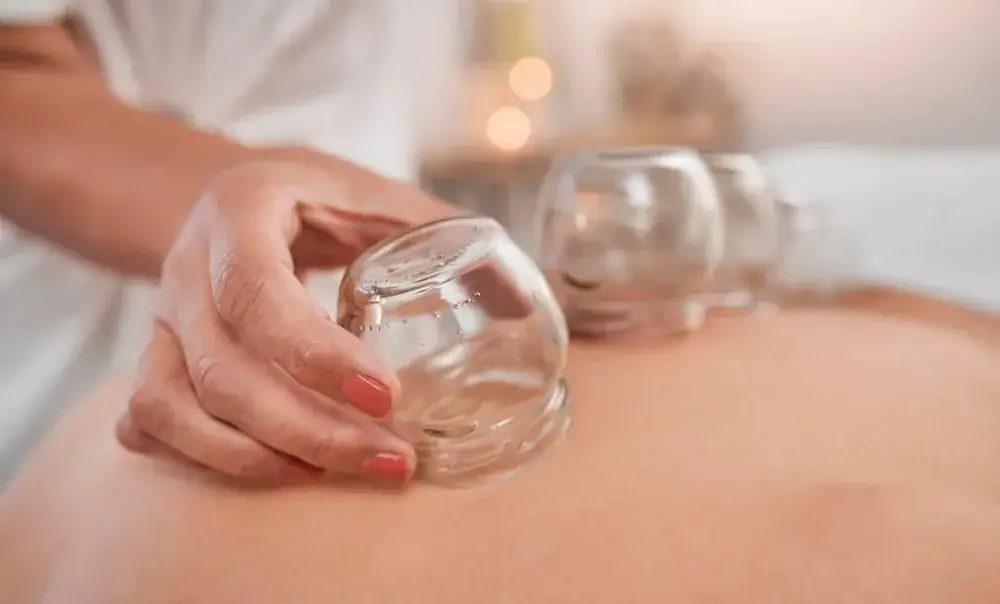
During the session, your physical therapist places specialized cups on targeted areas of your body. Dry cupping—the method we most commonly use—creates suction that gently lifts the skin and underlying tissue. This increases blood flow, loosens tight fascia, and helps reduce muscle tension. Most people find it surprisingly relaxing.
Sessions typically last 15 to 30 minutes, depending on the treatment area. You might see some circular marks afterward—that’s normal and fades within a few days. We often combine cupping with manual therapy, stretching, or strengthening exercises to maximize results and improve your overall function.
You’ll leave with a clear understanding of what we did, why we did it, and what to expect as your body responds.
Ready to get started?
Cupping therapy isn’t a standalone fix. It works best when integrated into a broader physical therapy plan that addresses your specific condition—whether that’s chronic low back pain, neck stiffness, knee discomfort, or limited shoulder mobility.
Southampton residents dealing with active lifestyles, sports injuries, or age-related joint issues benefit from cupping’s ability to improve circulation and reduce muscle tightness. We see a lot of people who’ve hit a plateau with traditional therapy or who want to avoid long-term reliance on anti-inflammatory medications.
Each treatment plan includes hands-on manual therapy, targeted exercises, and education on how to maintain progress at home. You’re not just getting temporary relief—you’re building strength, flexibility, and resilience so the pain doesn’t keep coming back.
We also coordinate with your other providers if needed. If you’re already working with a physician, chiropractor, or massage therapist, we’ll make sure everyone’s on the same page about your care.
Yes, and the research backs it up. Moderate-quality evidence supports cupping therapy for reducing chronic pain, including low back pain, neck pain, and knee osteoarthritis. It’s not a miracle cure, but it’s a legitimate tool when used correctly.
Cupping increases blood circulation to painful areas, which helps reduce inflammation and muscle tension. That improved blood flow also supports your body’s natural healing process by delivering oxygen and nutrients to damaged tissue. Most people notice less stiffness and better movement after a few sessions.
The key is using cupping as part of a complete treatment plan. On its own, it provides temporary relief. Combined with physical therapy, strengthening exercises, and manual techniques, it helps address the root cause of your pain and keeps it from coming back.
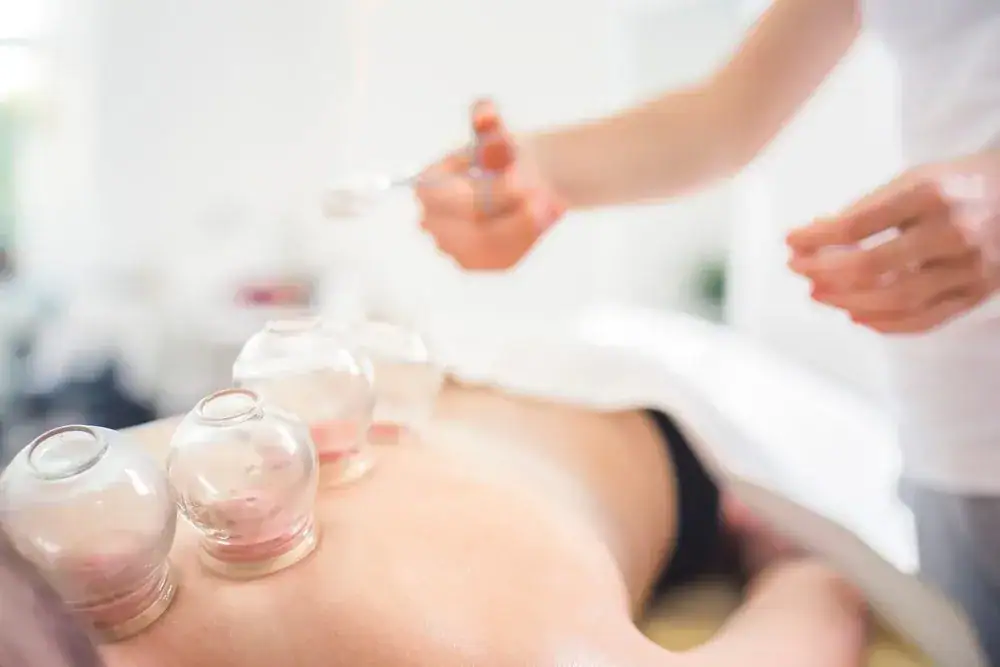
Dry cupping is what we use at Medcare, and it’s the most common method in the United States. It involves placing cups on your skin to create suction, which lifts the tissue and increases blood flow. No incisions, no blood—just controlled suction that helps release tight muscles and fascia.
Wet cupping involves making small cuts in the skin before applying the cups, allowing a small amount of blood to be drawn out. It’s more invasive and less commonly practiced in physical therapy settings. Most patients prefer dry cupping because it’s noninvasive, low-risk, and still delivers strong therapeutic benefits.
Both methods have historical roots in traditional medicine, but dry cupping aligns better with modern physical therapy practices. It’s safer, more comfortable, and easier to integrate with other treatments like manual therapy and exercise-based rehabilitation.
You’ll likely see circular marks where the cups were placed, but they’re not bruises in the traditional sense. The suction pulls blood to the surface, leaving temporary discoloration that usually fades within three to seven days. The marks don’t hurt—they’re just visible.
Some people have more noticeable marks than others, depending on skin sensitivity and how much tension was in the treated area. If you have an event coming up where you’ll be showing skin, let your therapist know. We can adjust placement or timing accordingly.
The marks are actually a sign that the therapy is working. They indicate increased circulation and the release of stagnant blood and fluids from tight tissue. Most patients stop worrying about them once they feel how much better they move afterward.
It depends on what you’re dealing with and how long you’ve had the problem. Acute muscle tightness or minor strain might respond in two to four sessions. Chronic pain conditions like long-term back or neck issues usually require six to eight sessions, sometimes more.
We’ll give you a realistic timeline during your initial assessment. Some people feel immediate relief after the first session—less tightness, better range of motion. Others need a few treatments before they notice significant change. Consistency matters more than intensity.
Cupping works best when combined with physical therapy exercises and lifestyle adjustments. If you’re only doing cupping without addressing movement patterns, strength imbalances, or daily habits that contribute to your pain, the relief won’t last. We build treatment plans that give you both short-term relief and long-term improvement.
It depends on your insurance plan and how the treatment is billed. When cupping is part of a physical therapy session—which is how we use it at Medcare—it’s often covered under your physical therapy benefits. We bill it as part of your overall treatment, not as a separate service.
You’ll want to check with your insurance provider about your specific coverage, copays, and any visit limits. We can provide the necessary documentation and codes to help you understand what’s covered before you start treatment.
If you’re paying out of pocket, we’ll give you clear pricing upfront. No surprises, no hidden fees. Many patients find that even without insurance coverage, the cost is reasonable compared to ongoing medication expenses or other alternative therapies. We’re happy to discuss payment options during your first visit.
Yes. Athletes use cupping therapy to speed recovery, reduce muscle soreness, and improve flexibility. It’s particularly effective for treating tight hamstrings, shoulder stiffness, IT band issues, and post-workout muscle fatigue.
The increased blood flow from cupping helps flush out metabolic waste and deliver fresh oxygen to tired muscles. That speeds up recovery time between training sessions and helps prevent overuse injuries. Many athletes also find that cupping improves their range of motion, which translates to better performance and lower injury risk.
We work with weekend warriors, high school athletes, and active adults in Southampton who want to stay in the game without constant pain or setbacks. Cupping is just one tool—we also focus on strengthening weak areas, correcting movement patterns, and building resilience so your body can handle the demands you’re putting on it.
Other Services we provide in Southampton