
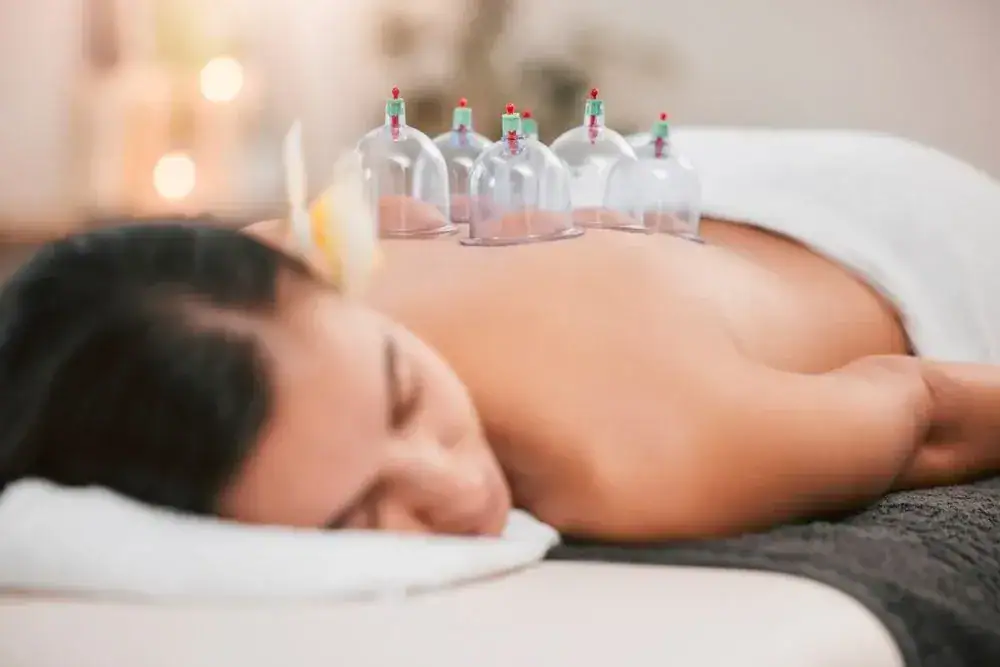

You’re not looking for temporary relief that wears off by dinner. You want to bend down without bracing yourself. You want to sleep through the night without waking up stiff. You want to get back to your routine without planning your day around what hurts.
Cupping therapy increases blood flow to tight, painful areas. That means more oxygen reaching your muscles and faster removal of the waste products that cause soreness and inflammation. The suction created by the cups lifts your skin and fascia, releasing tension that’s been locked in for weeks or months.
Most people feel looser after the first session. Some notice less pain within a day or two. The effects build as your body gets the circulation and recovery it’s been missing. You’re not masking the problem—you’re giving your tissue what it needs to actually heal.
We’ve been treating patients across Long Island since 2010. We accept Medicare and most commercial insurance, so you’re not paying out of pocket for care that should be covered.
Our therapists are licensed professionals trained in cupping therapy, manual therapy, and physical rehabilitation. We don’t rush you through a 15-minute session and send you on your way. Every treatment is personalized based on where you hurt, how long it’s been going on, and what’s actually causing it.
South Valley Stream has one of the highest median household incomes on Long Island, and residents here expect quality care from people who know what they’re doing. We’ve built our reputation on transparency, results, and treating every patient like they’re family—not a number on a schedule.
Your first visit starts with a conversation. We ask where it hurts, what makes it worse, and what you’ve already tried. Then we assess your range of motion, muscle tightness, and any areas of restricted fascia that might be contributing to your pain.
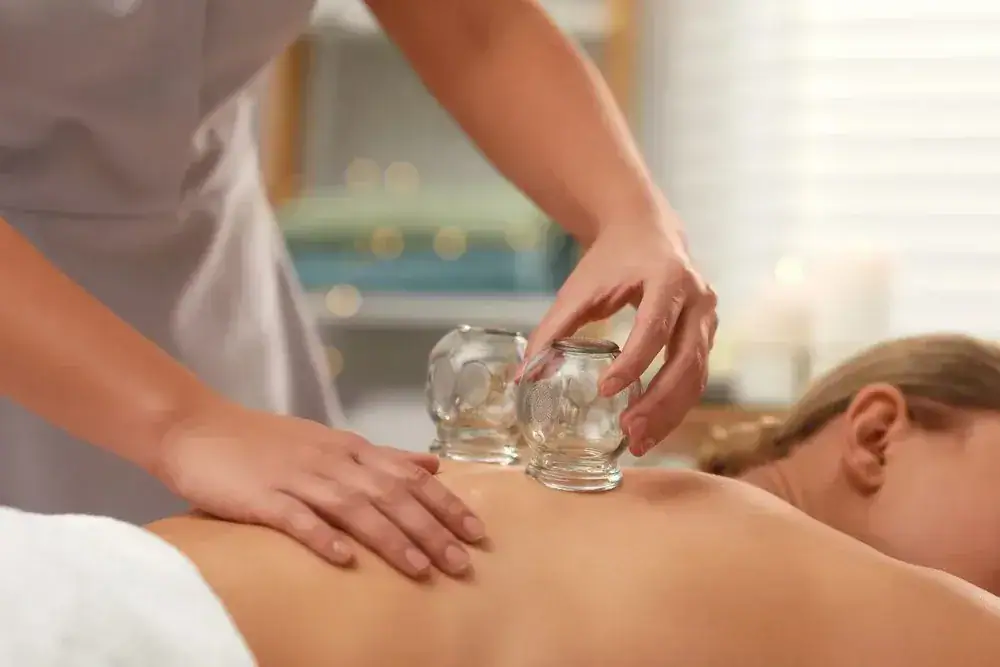
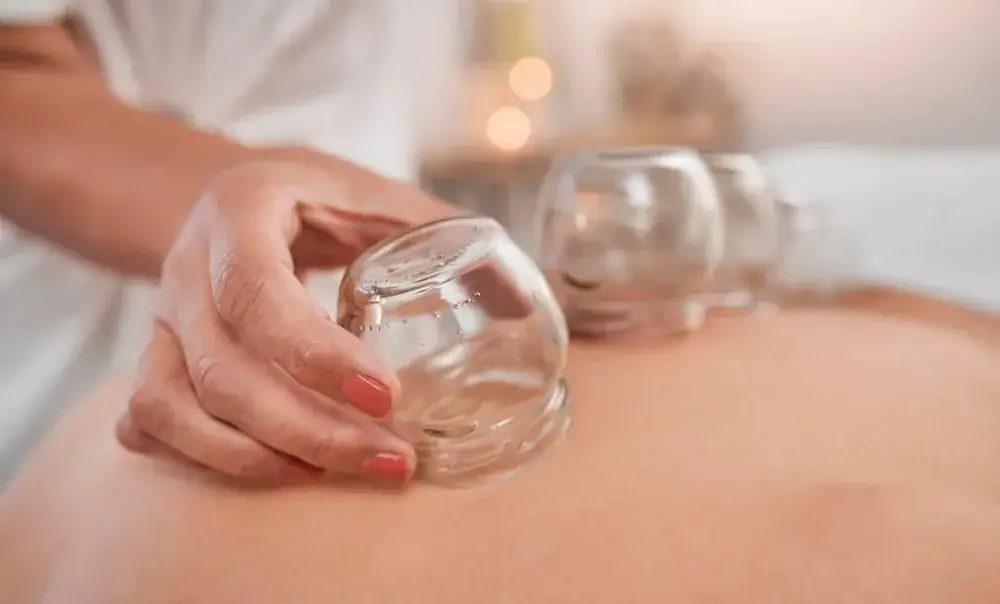
During the session, we place cups on targeted areas—usually your back, shoulders, neck, or legs depending on your symptoms. The cups create suction that lifts the skin and underlying tissue. This isn’t painful. Most people say it feels like a deep stretch or a strong massage.
We use dry cupping, which means no needles and no incisions. The cups stay in place for several minutes while they work to increase circulation and release tight fascia. You might see circular marks afterward—they’re not bruises, they’re a sign of increased blood flow. They fade within a few days.
After your session, we’ll talk about what to expect. Some people feel immediate relief. Others notice gradual improvement over the next day or two as inflammation decreases and mobility improves. We’ll also discuss how many sessions you’ll likely need based on your condition and how your body responds.
Ready to get started?
Cupping works especially well for chronic low back pain, neck pain, and muscle tension that won’t quit. If you’ve been dealing with stiffness, limited range of motion, or pain that flares up after sitting at your desk all day, this is worth trying.
We also use cupping for knee osteoarthritis, post-workout muscle soreness, and fascia restrictions that develop after injuries or surgeries. Many of our patients in South Valley Stream work office jobs—management, finance, administrative roles—and they come in with tight shoulders, tension headaches, and lower back pain from sitting too much. Cupping helps release that built-up tension and restore normal movement.
Research supports what we see in practice. Studies show cupping decreases pain levels, improves blood circulation, and helps with conditions like chronic pain and muscle tightness. It’s not a miracle cure, but it’s a proven tool that works when combined with the right approach.
You’re not locked into one type of treatment. We often combine cupping with manual therapy or physical therapy exercises to speed up your recovery. The goal is to get you feeling better and keep you that way—not to book you for endless appointments.
Yes, and there’s clinical evidence to back it up. Studies show that cupping therapy reduces pain levels in people dealing with chronic low back pain, neck pain, and knee osteoarthritis. It works by increasing blood flow to painful areas, which delivers oxygen and nutrients while removing metabolic waste that contributes to inflammation and soreness.
The suction from the cups also lifts and separates layers of fascia—the connective tissue that wraps around your muscles. When fascia gets tight or restricted, it limits your movement and causes pain. Cupping mechanically releases that tension, which is why many people feel looser and less stiff after a session.
It’s not a replacement for all pain management, but it’s a low-risk option that doesn’t involve medication. Most patients notice improvement within a few sessions, especially when cupping is combined with physical therapy or manual therapy techniques.
Your first session starts with an evaluation. We’ll ask about your pain—where it is, how long you’ve had it, what makes it better or worse. Then we’ll check your range of motion and feel for areas of muscle tightness or fascia restriction.
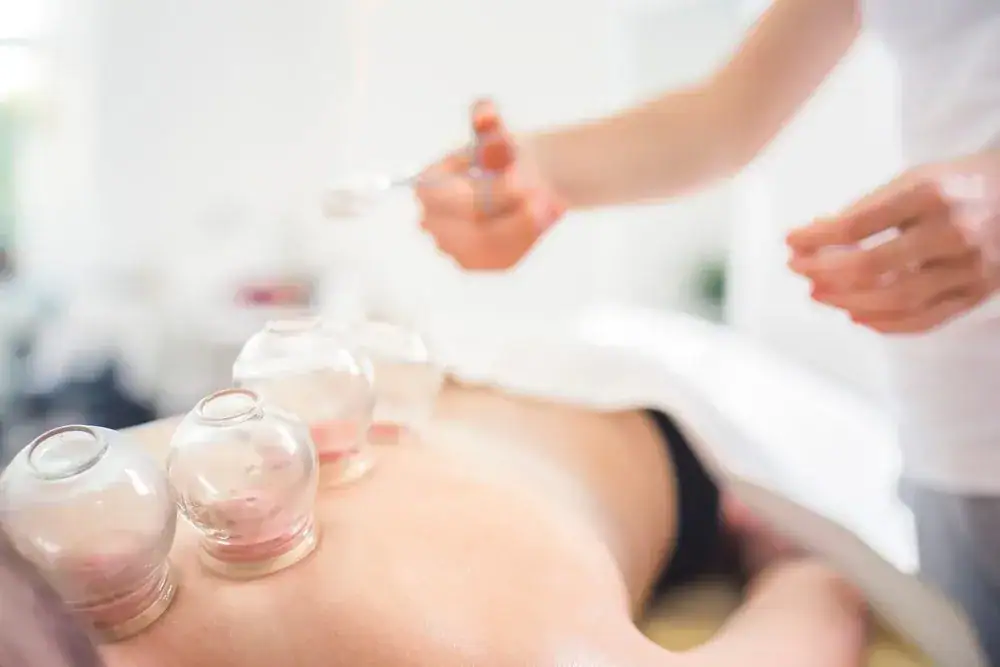
During the treatment, we place cups on the areas that need work. The cups create suction that lifts your skin and tissue. It’s not painful—most people describe it as a deep pulling sensation, similar to a firm massage. The cups stay on for several minutes while they increase circulation and release tension.
You’ll likely see circular marks where the cups were placed. These aren’t bruises—they’re a result of increased blood flow to the area. They typically fade within three to five days. Some people feel immediate relief after their first session. Others notice gradual improvement over the next day or two as inflammation decreases.
It depends on your plan and how the treatment is billed. We accept Medicare and most commercial insurance plans. When cupping is performed as part of a physical therapy session, it’s often covered under your therapy benefits.
We recommend calling your insurance provider before your first visit to confirm your coverage. Ask specifically about physical therapy services and whether manual therapy techniques like cupping are included. Most plans cover a certain number of therapy visits per year.
If you have a high deductible or limited coverage, we’ll discuss your options upfront. You shouldn’t have to guess what you’ll owe. We handle the billing and work directly with your insurance so you’re not stuck dealing with confusing paperwork or surprise charges.
It depends on what you’re treating and how long you’ve been dealing with it. Acute muscle soreness or tension might improve in one to three sessions. Chronic pain that’s been going on for months or years usually takes longer—often six to eight sessions before you see significant, lasting improvement.
We don’t book you for a set number of visits upfront. After your first session, we’ll assess how your body responds and give you a realistic estimate. Some people feel better quickly and only need occasional maintenance sessions. Others need more consistent treatment to break the cycle of pain and tightness.
The goal is to get you better, not to keep you coming back indefinitely. If cupping isn’t helping after a few sessions, we’ll adjust your treatment plan or recommend a different approach. You should see progress—if you’re not, something needs to change.
Cupping is low-risk when performed by a trained professional. The most common side effect is temporary circular marks where the cups were placed. These look like bruises but aren’t painful and usually fade within a few days.
Some people feel a little sore or tender in the treated areas for a day or two after their session, similar to how you might feel after a deep tissue massage. This is normal and typically means the therapy is working—your muscles are releasing tension and your body is responding.
Cupping isn’t recommended if you have certain skin conditions, open wounds, or bleeding disorders. We’ll go over your medical history during your first visit to make sure it’s safe for you. Serious side effects are rare, especially with dry cupping, which doesn’t involve needles or breaking the skin.
Yes, and that’s often the most effective approach. Cupping works well alongside manual therapy, therapeutic exercises, and other physical therapy techniques. For example, we might use cupping to release tight fascia in your lower back, then follow up with stretches and strengthening exercises to improve your stability and prevent the pain from coming back.
Combining treatments addresses both the immediate symptoms and the underlying cause. Cupping increases blood flow and releases muscle tension. Physical therapy exercises improve your strength, flexibility, and movement patterns so you’re not constantly re-injuring the same areas.
We customize your treatment plan based on what your body needs. If you’re recovering from an injury, dealing with chronic pain, or trying to improve your mobility, a combination approach usually gets you better results faster than relying on just one technique.
Other Services we provide in South Valley Stream