
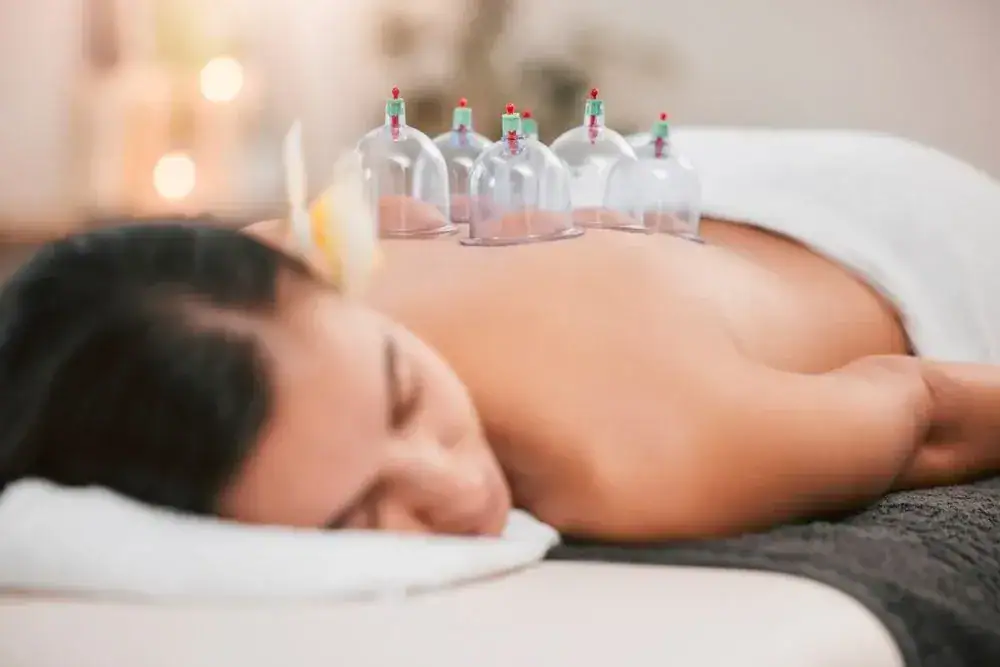

You’re dealing with pain that limits what you can do. Maybe it’s your back locking up when you bend down, your shoulder screaming when you reach overhead, or that constant neck tension that never seems to go away. You’ve tried rest, heat, ice, maybe even medication that barely touches it.
Cupping therapy works by increasing blood flow to painful areas, which helps reduce inflammation and speeds up your body’s natural healing. The suction created by the cups lifts tissue, releases fascial restrictions, and allows fresh oxygen and nutrients to reach muscles that have been tight for too long.
What you get is decreased muscle tension, better range of motion, and the ability to move through your day without constantly managing pain. Most people notice looser muscles after the first session. The circular marks fade in a few days, but the relief tends to stick around longer.
This isn’t about masking symptoms. It’s about addressing the muscle tightness and restricted blood flow that’s been keeping you stuck in the pain cycle.
We’ve been serving South Huntington, NY and the surrounding Long Island communities with physical therapy that focuses on getting you functional again. Our therapists are licensed professionals who use cupping as part of comprehensive treatment plans, not as a standalone quick fix.
We manage multiple locations across the area, and we’ve built our reputation on transparent care and real results. You’re not walking into a mill where you’re handed off to whoever’s available. Your treatment plan is personalized, your questions get answered, and your progress gets tracked.
South Huntington residents deal with the same issues we see across Long Island: back pain from long commutes, shoulder problems from desk work, knee pain from weekend warrior activities. We know the lifestyle factors at play here, and we build treatment around your actual life, not a textbook protocol.
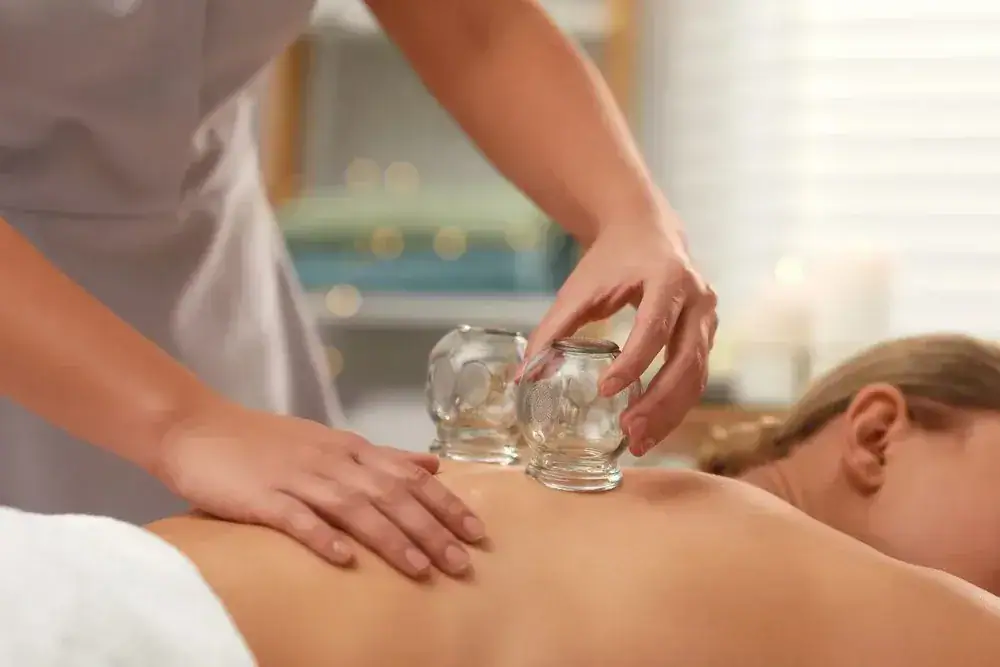
Your first visit starts with an evaluation. We need to understand what’s causing your pain, how long you’ve had it, and what movements make it worse. This isn’t a five-minute chat. We’re looking at your range of motion, testing muscle strength, and figuring out if cupping is the right fit for your specific issue.
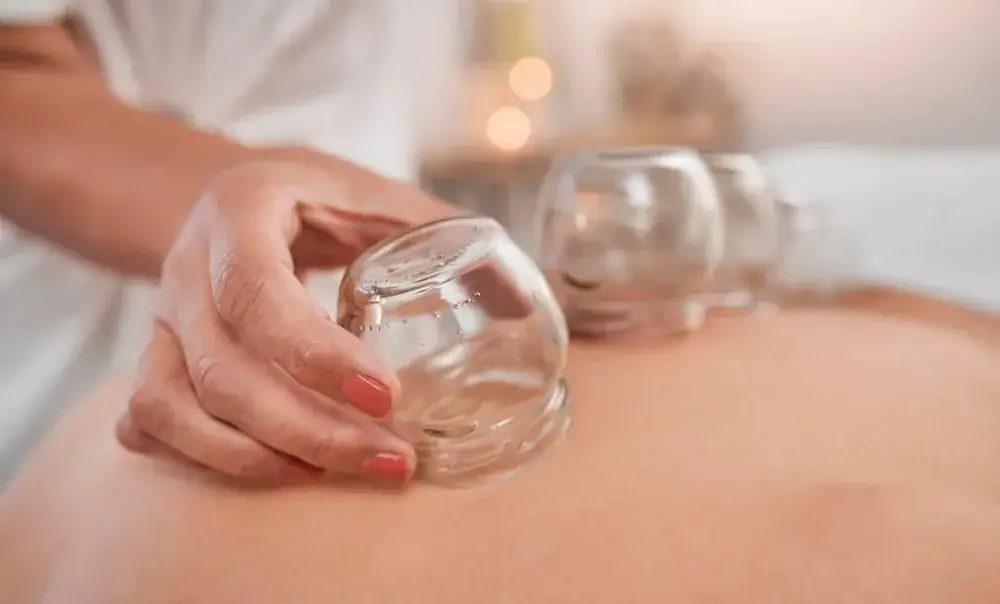
During the cupping session, we place specialized cups on targeted areas of your body. The cups create suction that lifts your skin and the tissue beneath it. This isn’t painful. Most people describe it as a pulling sensation that actually feels good on tight muscles. We typically leave cups in place for five to fifteen minutes, depending on what we’re treating.
Some sessions use stationary cups. Others involve moving the cups across your skin while maintaining suction, which is particularly effective for releasing larger muscle groups. We often combine cupping with other physical therapy techniques like stretching, strengthening exercises, or manual therapy to maximize your results.
You’ll see circular marks where the cups were placed. They look like bruises but they’re not. They’re caused by increased blood flow to the area and they fade within two to three days. These marks are actually a sign the treatment is working.
Ready to get started?
Cupping therapy at our clinic isn’t a standalone treatment. It’s integrated into your physical therapy plan to prepare your muscles for the exercises and movements that create lasting change. Think of it as creating the optimal environment for your body to actually respond to rehabilitation.
In South Huntington, we see a lot of chronic pain cases tied to repetitive stress and poor movement patterns. Cupping helps break up fascial adhesions and scar tissue that develop from these patterns. When combined with corrective exercises and neuromuscular re-education, you’re not just getting temporary relief. You’re retraining your body to move better.
We also use cupping for athletic recovery. If you’re training for a race, playing recreational sports, or just trying to stay active without constant soreness, cupping helps clear lactic acid faster and reduces muscle fatigue. Several professional athletes use this technique for exactly that reason.
Your treatment plan might include dry cupping, myofascial decompression with movement, or dynamic cupping combined with specific stretches. The approach depends on your condition, your goals, and how your body responds. We adjust as we go based on what’s actually working for you.
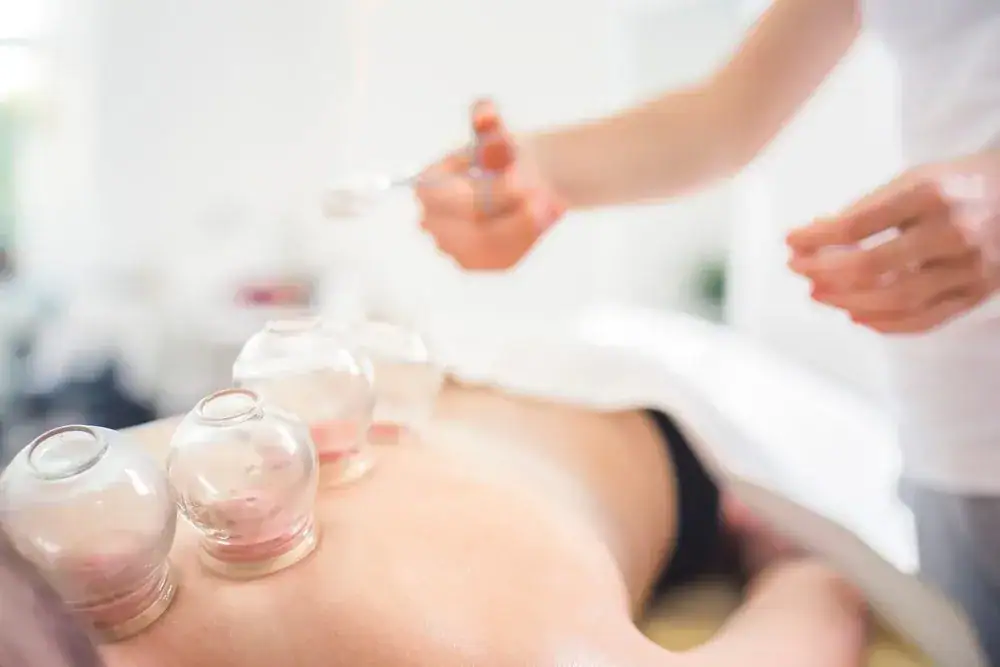
Research shows cupping therapy creates measurable physiological changes beyond placebo. Studies demonstrate it increases local blood flow, reduces muscle tension, and modifies pain thresholds through your nervous system. The mechanism involves both peripheral effects at the tissue level and central nervous system changes in how your brain processes pain signals.
Clinical reviews confirm moderate-quality evidence supporting cupping for chronic pain conditions including low back pain, neck pain, and knee osteoarthritis. That doesn’t mean it works for everyone or every condition, but the effects are real and measurable.
What matters more than studies is whether it helps your specific problem. Most people notice decreased muscle tightness and improved range of motion within the first few sessions. If you’re not seeing changes after three to four treatments, we reassess and adjust your plan. We’re not interested in continuing something that isn’t producing results for you.
Massage uses compression to work on muscles, pushing tissue down and applying pressure. Cupping does the opposite. It uses suction to lift tissue up and create space between layers of fascia, muscle, and skin. This lifting action targets restrictions that compression sometimes can’t reach effectively.
The suction from cupping also creates a stronger increase in local blood flow compared to massage alone. This brings more oxygen and nutrients to the area while helping remove metabolic waste products that contribute to soreness and inflammation. For fascial restrictions and deep muscle tightness, this approach often produces faster results.
That said, cupping and massage aren’t competing treatments. We often use both in the same session because they complement each other. Cupping prepares the tissue, massage works it, and together they create better outcomes than either technique alone. The goal isn’t to pick one over the other but to use whatever combination gets you functional again.
Cupping works best for musculoskeletal pain and muscle tension issues. We see the strongest results with chronic back pain, neck pain, shoulder tightness, and knee pain related to soft tissue restrictions. It’s also effective for tension headaches caused by tight neck and upper back muscles.
Athletes use cupping for recovery and performance. If you’re dealing with delayed onset muscle soreness after workouts, tight IT bands, or chronic muscle fatigue, cupping helps speed recovery and reduce soreness. It’s particularly useful for runners, weightlifters, and anyone doing repetitive training.
Conditions involving fascial restrictions respond well. This includes issues like limited shoulder mobility from adhesions, restricted hip movement, or areas with old scar tissue that’s affecting your range of motion. Cupping creates space in these restricted areas and allows for better movement patterns.
What cupping doesn’t treat effectively: acute injuries like fresh sprains or strains, bone or joint problems, nerve compression issues, or systemic conditions. If your pain is coming from a herniated disc, arthritis, or nerve damage, cupping might provide some symptom relief but it won’t address the underlying cause. We’re clear about what cupping can and can’t do during your evaluation.
The marks are not bruises and they’re not harmful. They’re caused by increased blood flow and the movement of stagnant fluids to the surface of your skin. When the cups create suction, they’re pulling fresh blood into areas that may have had restricted circulation. This shows up as circular discoloration that typically ranges from light pink to dark purple.
The color and intensity of the marks often indicate how much restriction or stagnation was in that area. Darker marks usually appear where there’s more muscle tightness or reduced blood flow. As your tissue health improves with repeated treatments, the marks often become lighter because there’s less stagnation to clear.
These marks fade on their own within two to seven days depending on your circulation and the intensity of treatment. They don’t hurt. You can go about your normal activities with them. Some people prefer to schedule cupping when they won’t be wearing clothing that exposes the treated areas, but that’s purely cosmetic.
If you’re concerned about the marks for an upcoming event, let us know. We can adjust the suction intensity or treat areas that won’t be visible. The treatment still works with lighter suction, it just may take a few more sessions to achieve the same results.
Most people notice some improvement in muscle tightness and mobility after the first session. But one session isn’t going to resolve chronic pain you’ve had for months or years. Realistic expectations: you’re looking at six to eight sessions over several weeks for significant, lasting improvement in chronic conditions.
Acute issues respond faster. If you tweaked your back last week or you’re dealing with post-workout soreness, you might get substantial relief in two to three sessions. Chronic problems with fascial restrictions, long-term muscle imbalances, or old injuries take longer because we’re working to change tissue quality and movement patterns that have been established for a long time.
Frequency matters. Starting with twice-weekly sessions produces better results than spacing them out too far initially. Once you’re improving, we reduce frequency to weekly, then move to maintenance sessions as needed. Some people come back monthly to stay ahead of tightness, others only return when specific issues flare up.
Your response depends on factors we can’t fully predict: how long you’ve had the problem, your overall health, whether you’re doing the exercises we assign between sessions, and how much stress or repetitive strain you’re putting on the area in your daily life. We track your progress and adjust the plan if you’re not improving at the rate we’d expect.
Cupping is typically covered when it’s part of your physical therapy treatment plan and performed by a licensed physical therapist. Most insurance plans that cover physical therapy will cover cupping as a treatment modality within your PT sessions. It’s not billed separately as a standalone service.
Your coverage depends on your specific plan, deductible, and whether you’ve met it for the year. We verify your insurance benefits before you start treatment so you know what to expect. If you have a copay for physical therapy visits, that applies to sessions that include cupping. There aren’t additional fees for the cupping itself.
For patients paying out-of-pocket or those with high-deductible plans, we provide transparent pricing upfront. You’re paying for the physical therapy session, which includes evaluation, treatment techniques like cupping, exercise instruction, and progress tracking. We don’t inflate prices for specific techniques.
If you’re unsure about your coverage, call your insurance company and ask if physical therapy is covered and whether there are limitations on treatment modalities. Most plans don’t restrict specific techniques as long as they’re performed by a licensed therapist and medically necessary for your condition. We handle the documentation and billing to support medical necessity.
Other Services we provide in South Huntington