
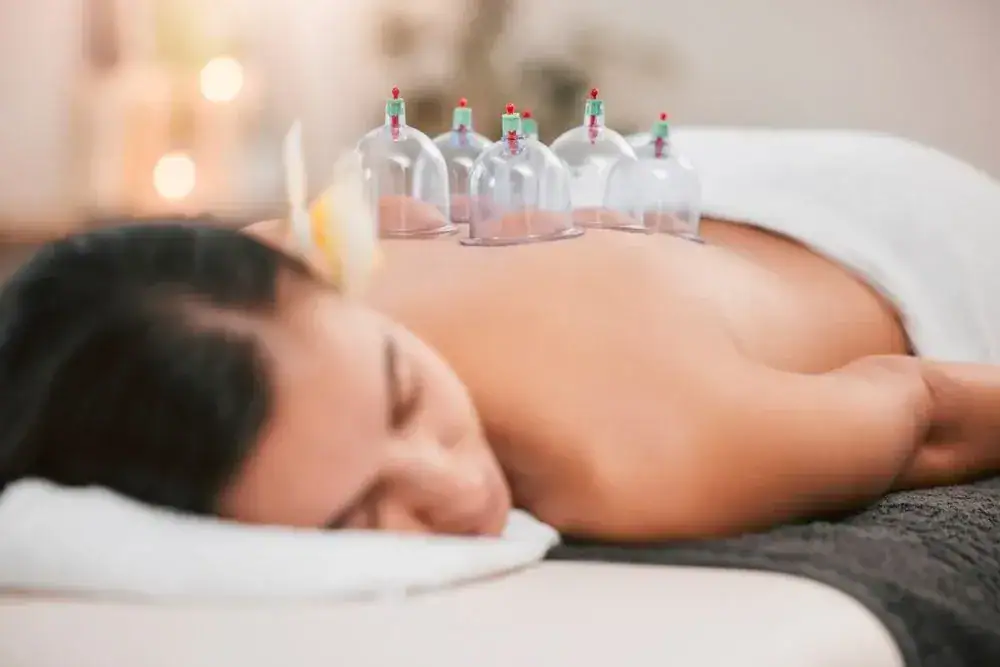

Your back’s been tight for months. Your neck won’t turn like it used to. You’ve tried stretching, heat pads, maybe even a few pills you’d rather not take long-term.
Cupping therapy works by creating suction on your skin that pulls blood flow to the area, loosens fascia, and gives your muscles room to relax. It’s not a miracle cure, but it’s effective for reducing pain, improving range of motion, and helping you feel less restricted in your daily movement.
Most people notice relief after the first session. Some need a few. Either way, you’re not masking the problem—you’re addressing tension at the source. That’s the difference between feeling better for an hour and actually getting your body back.
We’ve been serving Sag Harbor, NY and the surrounding Hamptons communities for years through our affiliated locations, including Physical Therapy Associates of Smithtown and Speonk. We’re not a franchise or a rotating door of therapists—we’re a locally rooted practice that takes your care seriously.
Every profile is verified. Every treatment plan is personalized. Every patient gets direct communication with their therapist, not a call center. We manage our digital presence the same way we manage your treatment: carefully, transparently, and with accountability.
Sag Harbor’s population skews older, more active, and more informed. You’re not looking for gimmicks. You want results, professionalism, and someone who actually listens. That’s what we do.
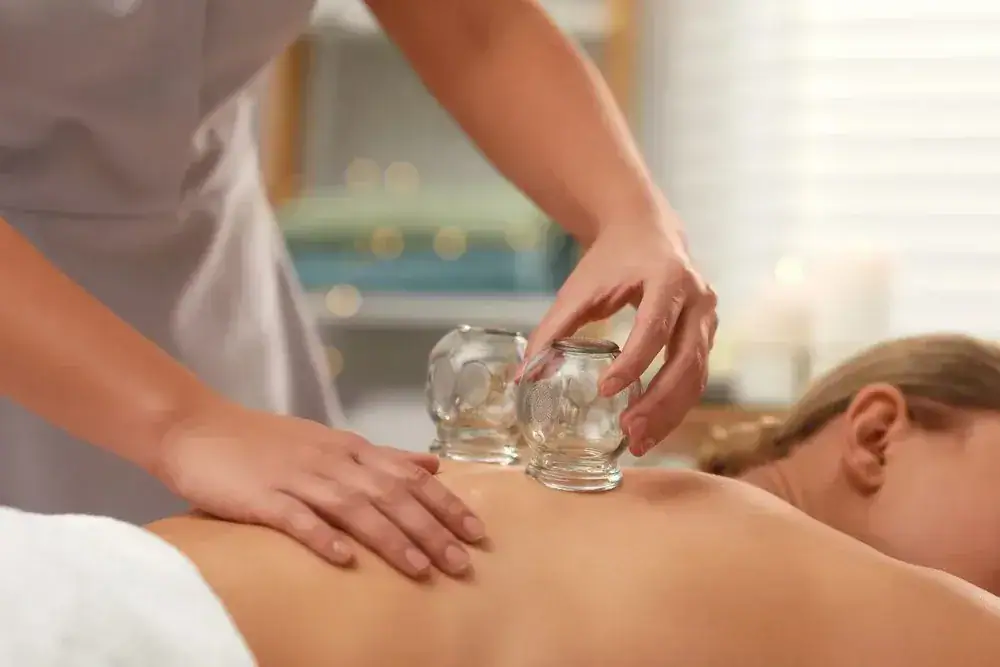
First, we talk. You tell us where it hurts, how long it’s been going on, and what you’ve already tried. We assess your range of motion, check for tightness, and figure out whether cupping makes sense for your situation.
If it does, we apply cups to the affected areas using suction. You’ll feel a pulling sensation—not painful, just different. The cups stay on for several minutes while they draw blood to the surface and release tension in the muscle and fascia underneath.
Afterward, you might see circular marks on your skin. They’re not bruises—they’re a sign of increased circulation. They fade in a few days. Most people feel looser right away. Some feel sore for a day or two, like after a deep massage, then notice the improvement.
We often combine cupping with other physical therapy techniques—manual therapy, stretching, strengthening exercises—depending on what your body needs. It’s not a standalone fix. It’s part of a bigger plan to get you moving better and feeling stronger.
Ready to get started?
Cupping therapy at Medcare isn’t a spa treatment. It’s a clinical tool we use alongside physical therapy to treat muscle tension, chronic pain, sports injuries, and post-surgical recovery. You’re getting a licensed therapist who knows anatomy, not someone who took a weekend course.
In Sag Harbor and the broader Hamptons area, we see a lot of active older adults dealing with joint pain, stiffness, and mobility issues. We also treat younger patients recovering from sports injuries or dealing with postural strain from desk work. Cupping helps both groups by improving blood flow, reducing inflammation, and giving tight tissues room to heal.
Sessions typically last 30 to 60 minutes depending on your treatment plan. We accept Medicare and most major insurance plans, which matters in a community where many residents are 65 or older. You’re not paying out of pocket for something experimental—you’re using a covered service that’s backed by research and integrated into your overall care.
If you can’t make it to our office, we offer home-based therapy for patients with mobility limitations. That’s especially helpful for post-surgical patients or anyone dealing with severe pain that makes travel difficult.
Yes, but it’s not magic. Cupping therapy has moderate-quality evidence supporting its use for chronic low back pain and neck pain. It works by increasing blood flow to the area, which helps reduce inflammation and muscle tightness.
Most people feel some relief after the first session, but lasting results usually come from combining cupping with other treatments like manual therapy, strengthening exercises, and posture correction. If your back pain is caused by tight muscles or fascia, cupping can help. If it’s a structural issue like a herniated disc, cupping might provide temporary relief but won’t fix the underlying problem.
We assess your specific situation before recommending cupping. If we don’t think it’ll help, we’ll tell you. You’re not here to waste time or money on something that won’t move the needle.
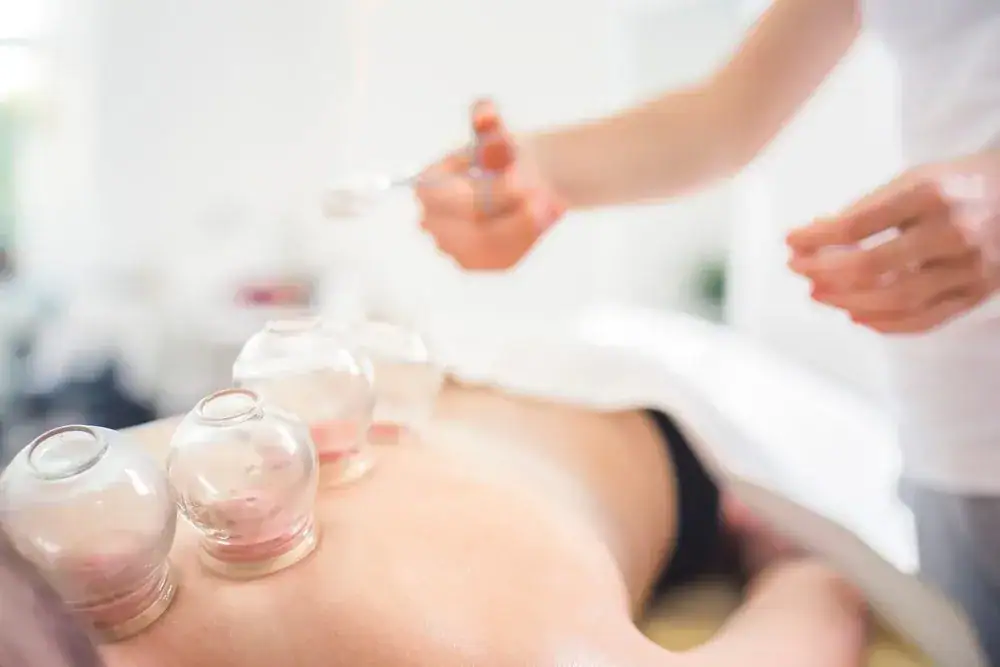
Dry cupping uses suction only—no needles, no incisions, nothing invasive. The cups create negative pressure on your skin, pulling blood to the surface and loosening the tissue underneath. It’s the most common type and the one we use most often in physical therapy settings.
Wet cupping involves making small cuts in the skin to draw out blood, and it’s more common in traditional medicine practices. We don’t offer wet cupping—it’s not necessary for the musculoskeletal issues we treat, and dry cupping is safer with fewer risks.
There’s also something called dynamic cupping, where the therapist moves the cups across your skin instead of leaving them stationary. We use this technique sometimes for larger muscle groups or when we’re trying to release fascia along a broader area. It depends on what your body needs.
You’ll likely have circular marks where the cups were placed, but they’re not bruises in the traditional sense. They’re caused by increased blood flow to the area, and they usually range from light pink to dark purple depending on how much tension was in the tissue.
The marks typically fade within three to seven days. They don’t hurt, and they’re not a sign of damage—they’re actually a sign the therapy is working. If you’re concerned about visible marks for an event or something, let us know ahead of time and we can adjust the intensity.
Some people don’t mark at all, especially if they’re well-hydrated and have good circulation. Others mark more easily. It varies person to person and doesn’t affect the results.
It depends on what we’re treating and how long you’ve been dealing with it. Acute injuries or muscle tightness might respond in one to three sessions. Chronic pain that’s been building for months or years usually takes longer—sometimes six to eight sessions combined with other therapies.
We don’t lock you into a package or make you commit upfront. After your first session, we’ll have a better idea of how your body responds and can give you a realistic timeline. Some people feel significant relief right away and only need occasional maintenance. Others need consistent treatment over several weeks.
The goal isn’t to keep you coming back forever. It’s to get you functional, teach you how to maintain the improvements, and send you on your way. If cupping isn’t helping after a few sessions, we’ll try something else.
If it’s provided by a licensed physical therapist as part of your treatment plan, yes—cupping is typically covered under your physical therapy benefits. That includes Medicare, which is important for many of our patients in Sag Harbor.
We bill cupping as part of your physical therapy session, not as a separate service. You’ll pay whatever your normal copay or coinsurance is for PT. We verify your coverage before you start treatment so there are no surprises.
If you’re paying out of pocket, sessions usually range from $75 to $150 depending on length and complexity. But most people don’t need to—if you have PT benefits, cupping falls under that umbrella when it’s used to treat a diagnosed condition like chronic pain, sports injury, or post-surgical recovery.
Both. Cupping is effective for sports injuries like muscle strains, IT band tightness, rotator cuff issues, and recovery from overuse injuries. It helps by improving circulation, reducing muscle tension, and speeding up the healing process in damaged tissue.
A lot of athletes use cupping as part of their recovery routine—you’ve probably seen the circular marks on Olympic swimmers and professional athletes. It’s not just for show. When you’re dealing with tight muscles, limited range of motion, or inflammation from training, cupping can help you recover faster and get back to activity sooner.
We also use it for non-athletes dealing with everyday injuries—lifting something wrong, sleeping in a bad position, repetitive strain from work. If the issue involves muscle tension or restricted movement, cupping is worth trying. We’ll combine it with strengthening and mobility work so you’re not just treating symptoms—you’re fixing the underlying weakness or imbalance that caused the injury in the first place.
Other Services we provide in Sag Harbor