
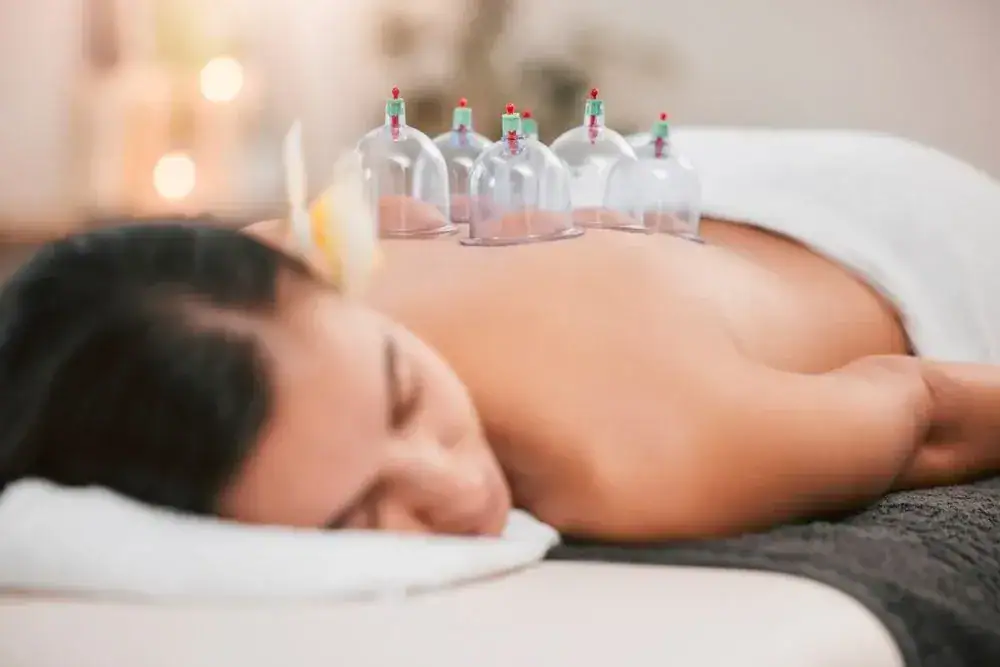
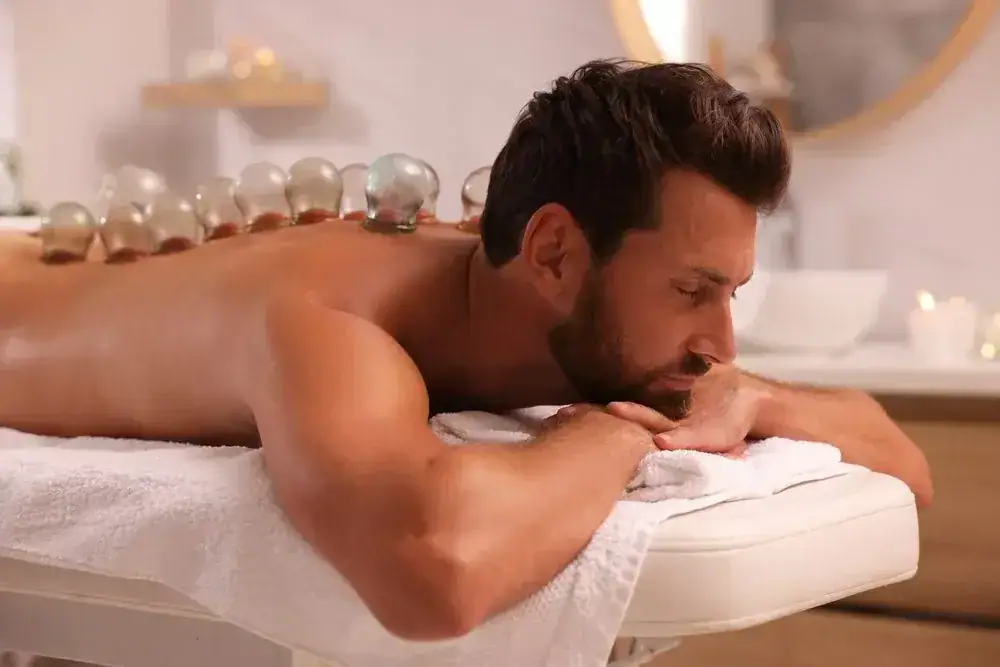
You’re dealing with chronic back pain, neck stiffness, or knee problems that limit what you can do. Maybe you’ve tried medications that only mask symptoms temporarily. Or physical therapy that helped for a week, then wore off.
Cupping therapy works differently. It increases blood flow to tight, painful areas and releases muscle tension at the source. Clinical studies show it reduces pain and improves function better than standard care alone, especially for persistent low back pain and osteoarthritis.
Most patients notice improvement within hours of their first session. The effects build over time as circulation improves and inflammation decreases. You’re not just managing pain anymore – you’re addressing why it keeps coming back.
When cupping is combined with movement therapy, the results last longer. Your muscles relax, your range of motion increases, and daily activities become easier without constantly thinking about what hurts.
We’ve provided home-based physical therapy across Long Island for over a decade. Our therapists are licensed, trained in cupping techniques, and focused on getting you real results – not just temporary relief.
We accept Medicare and most commercial insurance, which matters when you’re already dealing with medical costs. Our team manages every detail of verification and coverage so you can focus on recovery.
Saddle Rock residents choose us because we come to you. No driving when you’re in pain. No waiting rooms. Just professional care in your own home, where you’re most comfortable and can immediately apply what you learn to your daily routine.
Your first session starts with an evaluation. We assess your pain, movement limitations, and what’s not working with your current treatment. This takes about 15-20 minutes and helps us build a plan specific to your condition.
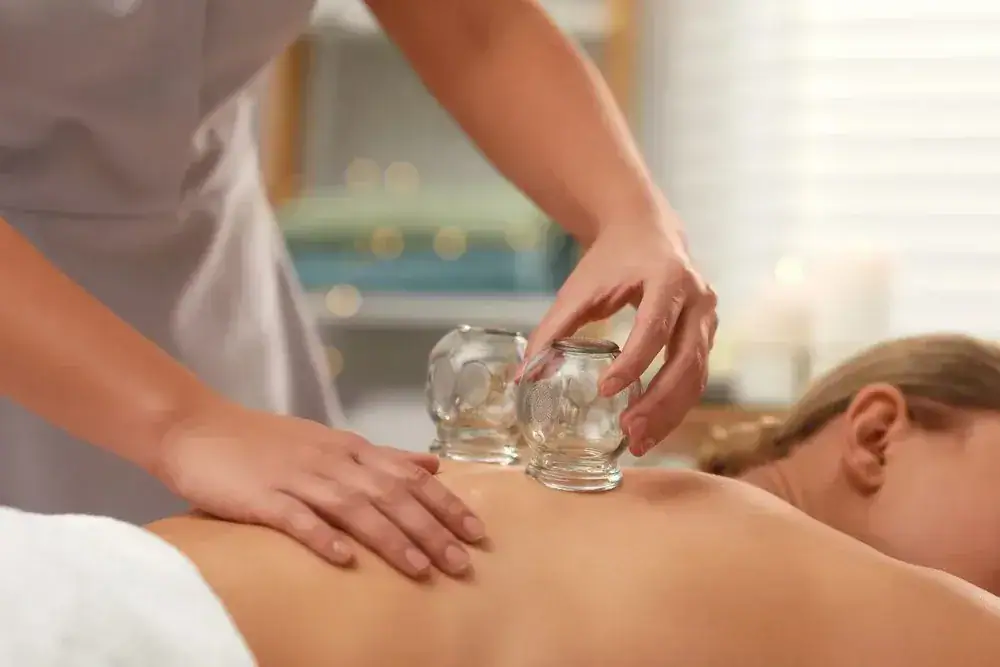
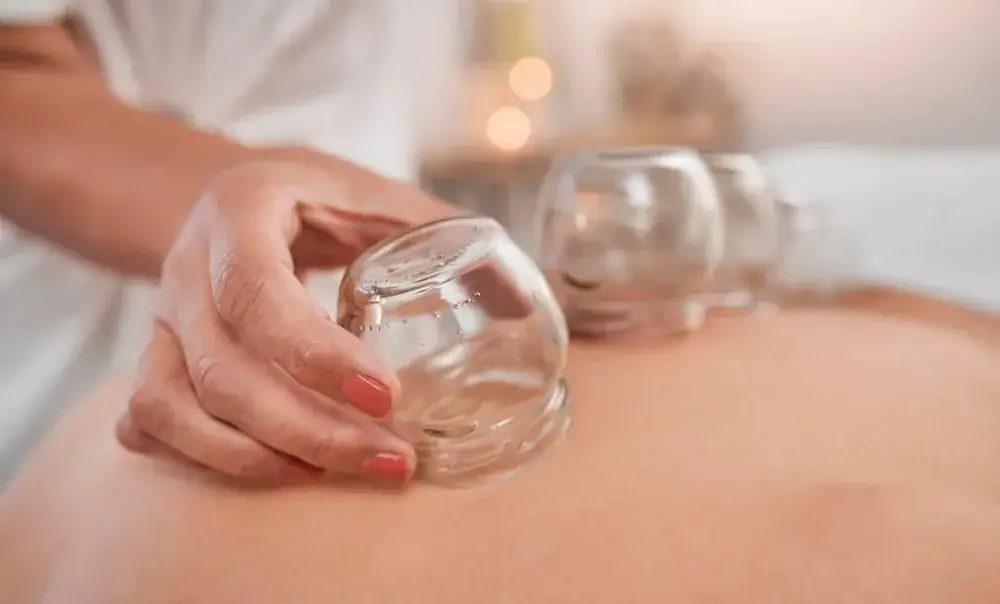
During cupping, we place specialized cups on targeted areas to create suction. This draws blood to the surface, releases fascial restrictions, and reduces muscle guarding. Dry cupping doesn’t involve needles or incisions – just controlled suction that feels like a deep tissue massage.
Each session lasts 30-45 minutes. The cups stay in place for 5-15 minutes depending on your tolerance and treatment goals. You might see circular marks afterward – that’s normal and fades within a few days.
We combine cupping with active movement exercises. While your muscles are relaxed from treatment, we guide you through specific movements that retrain pain-free patterns. This combination produces better outcomes than cupping alone.
Most patients need 4-8 sessions to see lasting improvement. We track your progress each visit and adjust the treatment as you improve. You’ll receive a home exercise plan to maintain results between sessions.
Ready to get started?
Cupping therapy works particularly well for chronic low back pain, neck pain, and knee osteoarthritis – conditions with strong research supporting its effectiveness. If you’ve been dealing with pain for months or years, this is worth considering.
We also treat muscle tightness from repetitive strain, sports injuries, and post-surgical stiffness. Many Saddle Rock residents come to us after desk work or long commutes to Manhattan have created persistent tension that won’t release with stretching alone.
The treatment fits naturally into comprehensive physical therapy. We’re not just doing cupping and sending you home. You’re getting a full evaluation, manual therapy techniques, therapeutic exercise, and education about preventing future problems.
Home-based treatment means we see how you actually move in your environment. We can address the chair you sit in, how you get in and out of your car, or which movements trigger your pain during normal activities. That context makes treatment more effective than what’s possible in a clinic setting.
Sessions are covered by Medicare and most insurance plans when medically necessary. We handle the paperwork and verification process, so you know what’s covered before we start.
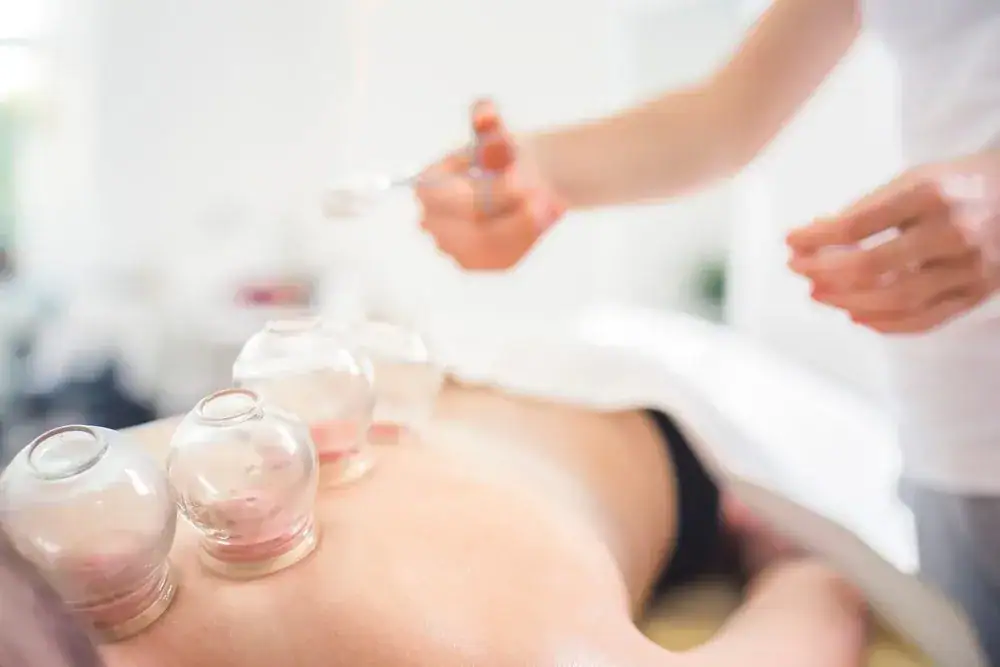
Yes, and the research backs it up. Multiple clinical studies show cupping significantly reduces pain and improves function for chronic low back pain, with effects lasting weeks after treatment ends.
The mechanism is straightforward. Cupping increases local blood flow, reduces muscle tension, and appears to interrupt pain signals through what researchers call “inhibitory pain modulation.” When combined with physical therapy exercises, patients report better outcomes than medication or usual care alone.
You’ll likely see some improvement within the first few sessions, but lasting relief typically requires 4-8 treatments. The key is pairing cupping with active movement – using that window of reduced pain to retrain how you move and address the underlying dysfunction causing your symptoms.
Cupping is a manual therapy technique we use within physical therapy – it’s not a replacement for it. Think of it as another tool that makes the rest of your treatment more effective.
Standard physical therapy includes exercise, stretching, and hands-on techniques to improve movement and reduce pain. Cupping enhances this by releasing deep muscle tension that’s hard to address through exercise alone. It creates a window where muscles are more relaxed and blood flow is increased, making it easier to restore normal movement patterns.
We use dry cupping, which means no needles or incisions. The suction mobilizes tissue, reduces inflammation, and decreases protective muscle guarding. Then we immediately follow with targeted exercises while your muscles are receptive to change. That combination produces better results than either approach alone.
When cupping is part of a physical therapy treatment plan, Medicare and most commercial insurance plans cover it. The key is medical necessity – your doctor or therapist documents that cupping addresses a specific diagnosis like chronic pain or limited mobility.
We accept Medicare and nearly all commercial insurance. Before your first session, we verify your coverage and let you know what’s covered, what your copay will be, and how many sessions your plan authorizes. No surprises.
If you’re paying out of pocket, we provide clear pricing upfront. Many patients find that a few focused sessions with cupping produce better long-term results than months of other treatments, making it cost-effective even without insurance coverage.
The circular marks typically fade within 3-7 days, sometimes up to two weeks depending on how much tension and stagnation was in the tissue. Darker marks usually indicate areas with more restricted blood flow or chronic tightness.
These aren’t bruises in the traditional sense. The suction draws blood to the surface and can cause small capillaries to expand, creating discoloration. It doesn’t hurt and isn’t a sign of damage – it’s actually part of the therapeutic effect as fresh blood flow helps heal the area.
If you have an event where visible marks would be a concern, let us know. We can adjust cup placement to areas that won’t show, reduce suction intensity, or time your sessions so marks fade before your event. The treatment still works effectively with these modifications.
Yes, home-based treatment is actually our specialty. We bring everything needed directly to your home in Saddle Rock – cups, treatment table if needed, and any other equipment for your full physical therapy session.
Home treatment eliminates the barrier of driving when you’re in pain. It also lets us see how you move in your actual environment, which makes treatment more relevant. We can address the specific chairs, stairs, or activities that trigger your symptoms.
Sessions are scheduled at times that work for you, and we coordinate with your physician to ensure the treatment plan aligns with your overall care. Most patients find home therapy more convenient and just as effective as clinic-based treatment – sometimes more so because they can immediately practice what they learn in the space where they’ll actually use it.
The strongest evidence supports cupping for chronic low back pain, neck pain, knee osteoarthritis, and persistent musculoskeletal conditions. If you’ve had pain for more than three months that hasn’t fully resolved with other treatments, cupping is worth considering.
We also see good results with muscle tightness from repetitive strain, tension headaches with a muscular component, and limited range of motion from fascial restrictions. Athletes use it for recovery and injury prevention, though the research is still developing in that area.
Cupping works less well for nerve-related pain, acute injuries in the first 48 hours, or conditions where increased blood flow could cause problems. During your evaluation, we’ll determine if cupping is appropriate for your specific condition or if other physical therapy techniques would be more effective. Not every patient needs cupping, and we won’t use it just because it’s available – only when it’s the right tool for your situation.
Other Services we provide in Saddle Rock