
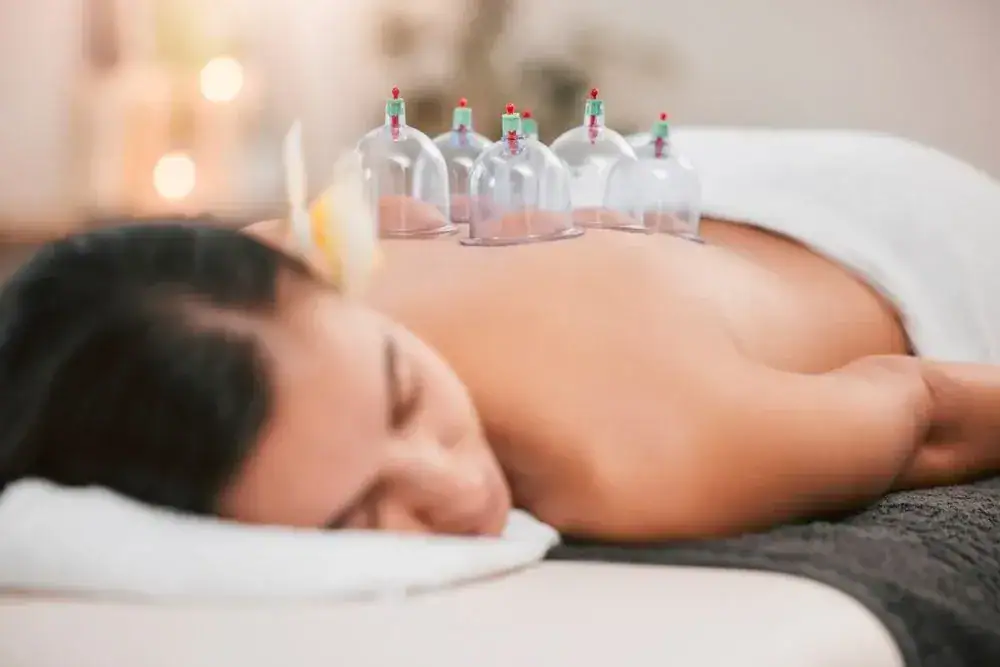

You’re tired of waking up stiff. Tired of that nagging back pain that won’t quit. Tired of avoiding activities you used to enjoy because you know you’ll pay for it later.
Cupping therapy addresses pain at the source by increasing blood flow to tight, overworked muscles and releasing trapped tension. The suction draws fresh blood to the area, helping your body heal itself naturally. You’re not masking symptoms—you’re giving your muscles what they need to recover.
Most people notice improved range of motion after just one session. That doesn’t mean the problem disappears overnight, but it does mean you can start moving with less pain and more confidence. Whether it’s chronic lower back pain, neck stiffness, or sports-related muscle strain, dry cupping works alongside your body’s natural healing process to get you back to normal.
We’ve been serving Ronkonkoma and the greater Long Island community for years through our affiliated centers, including Physical Therapy Associates of Smithtown and Speonk. We’re not a corporate chain that rotates therapists every few months.
Our team includes licensed physical therapists trained in modern cupping techniques, and we integrate this therapy into comprehensive treatment plans. You’re not just getting cupping—you’re getting a full evaluation, a clear plan, and follow-through that actually helps.
We treat each patient like family because in a community like Ronkonkoma, reputation matters. Our digital profiles are verified, our staff is consistent, and our approach is straightforward: figure out what’s wrong, explain it clearly, and fix it without the runaround.
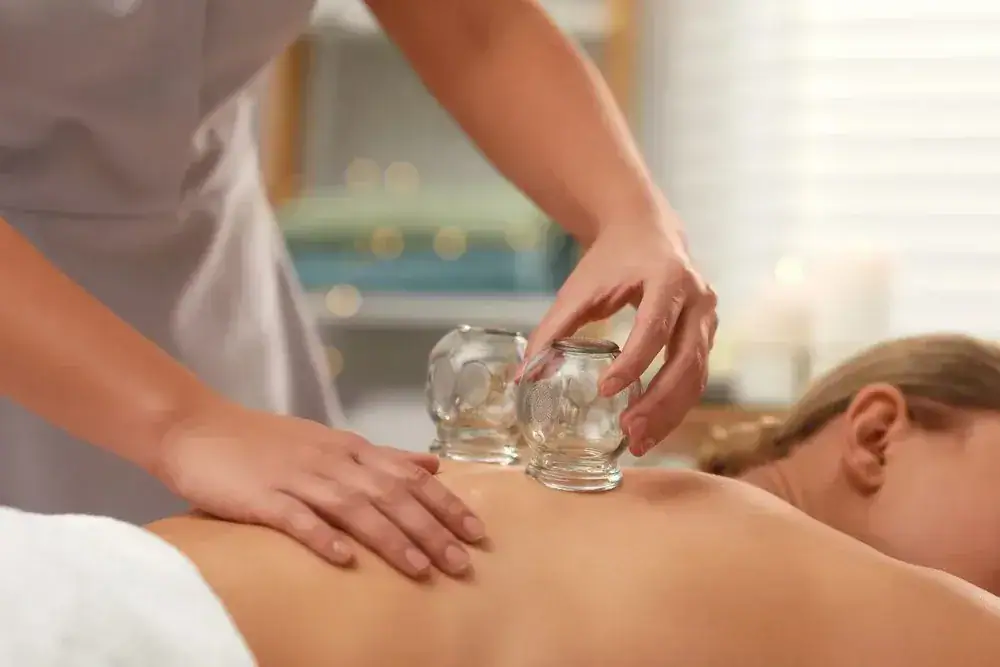
First, your therapist evaluates your pain points and mobility. This isn’t a one-size-fits-all treatment. We need to know where you hurt, how long it’s been going on, and what’s making it worse.
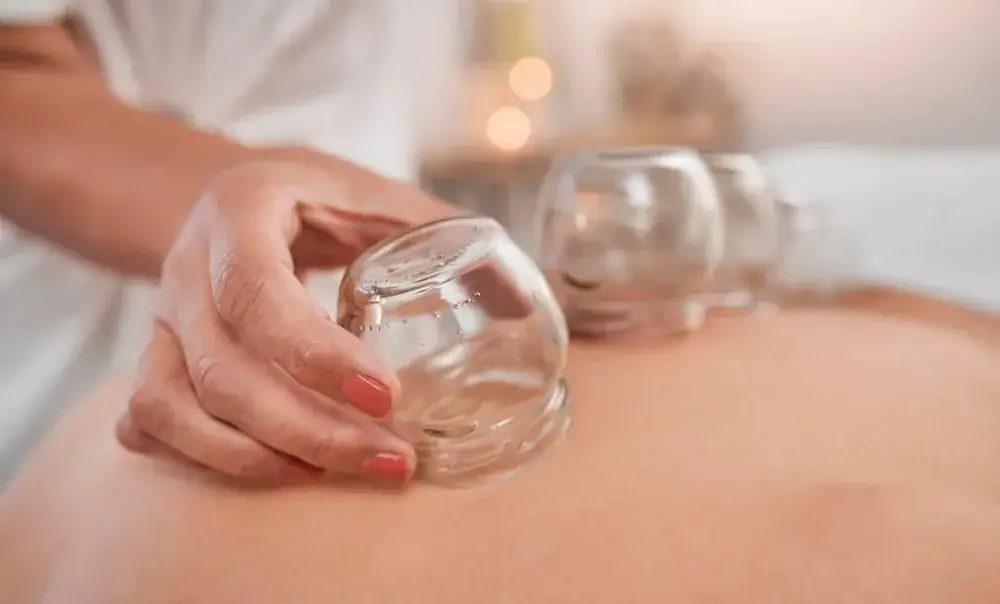
Then we apply specialized cups to targeted areas using suction. You’ll feel tightness as the cup pulls your skin slightly upward, but it shouldn’t hurt. The suction increases blood flow and encourages muscle fibers to loosen and relax. Sessions typically last 15 to 30 minutes depending on the treatment area.
After the cups are removed, you might see circular marks on your skin. That’s normal—it’s not a bruise in the traditional sense, just increased blood flow to the surface. Those marks fade within a few days to a week.
Most patients feel some relief immediately, though you might feel slightly sore afterward as your muscles adjust. We usually recommend cupping as part of a broader physical therapy plan, not as a standalone fix. That means you’re also getting exercises, stretches, and guidance to prevent the pain from coming back.
Ready to get started?
When you come in for cupping therapy at Medcare, you’re getting more than just cups on your back. You’re getting a full musculoskeletal evaluation, a licensed physical therapist who knows how to integrate cupping with other proven techniques, and a treatment plan that makes sense for your specific condition.
Ronkonkoma and Long Island residents deal with a lot of the same issues: desk jobs that wreck your neck and shoulders, weekend warrior injuries, age-related stiffness, and chronic pain that’s been ignored too long. We see it every day. Cupping works especially well for chronic back pain, neck pain, shoulder tightness, and sports-related muscle strains—all common in our area.
You’ll also get clear communication about what to expect. We’ll tell you how many sessions you might need, what insurance covers, and what you should be doing at home between visits. No surprises, no upselling, no vague timelines. Just honest answers and a plan that fits your schedule and your life.
Yes, and there’s clinical evidence to back it up. Multiple studies show that cupping therapy significantly reduces chronic back pain and improves range of motion when used as part of a physical therapy plan.
Here’s why it works: chronic back pain often comes from tight, overworked muscles that aren’t getting enough blood flow. Cupping increases circulation to those areas, which helps reduce inflammation and encourages your muscles to relax. It’s not a miracle cure, but it’s a proven tool that works alongside stretching, strengthening, and other therapies.
Most people notice some improvement after the first session, but lasting relief usually takes a few weeks of consistent treatment. If you’ve been dealing with back pain for months or years, one session won’t undo all that damage. But it will give you a clear sense of whether this approach is right for you.
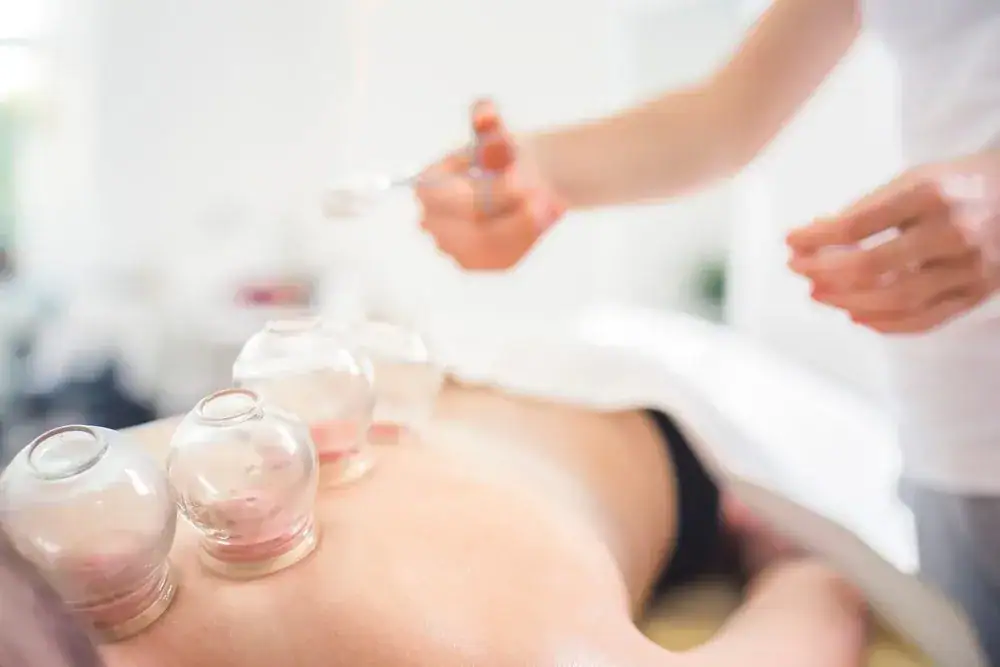
Dry cupping is what most physical therapists use, and it’s what we offer at Medcare. It uses suction alone—no needles, no incisions, no blood. The cups create a vacuum that pulls your skin and underlying tissue upward, increasing blood flow and releasing muscle tension.
Wet cupping, by comparison, involves small incisions and is more common in traditional Chinese medicine settings. It’s not typically part of modern physical therapy practice in the U.S., and it’s not something we do here.
There’s also something called dynamic cupping, where the therapist moves the cups across your skin while the suction is active. This can be helpful for larger muscle groups or areas where you need broader coverage. We’ll use whichever technique makes the most sense for your condition—it’s all about what gets you the best result.
You’ll likely see circular marks where the cups were placed, but they’re not bruises in the traditional sense. They’re caused by increased blood flow to the surface of your skin, and they usually fade within three to seven days.
Some people’s marks are darker than others depending on skin tone, how tight the muscles were, and how much suction was used. If you have an event coming up where you’ll be in a bathing suit or sleeveless shirt, just let your therapist know ahead of time. We can adjust placement or timing.
The marks don’t hurt. You might feel a little sore afterward, similar to how you’d feel after a deep tissue massage, but you shouldn’t have significant discomfort. If you do, that’s a sign to tell your therapist so we can adjust the treatment.
It depends on what we’re treating and how long you’ve been dealing with it. Acute injuries—like a recent muscle strain from overdoing it at the gym—might respond in just a few sessions. Chronic conditions like long-term neck pain or lower back stiffness usually take longer.
Most patients start with one or two sessions per week for a few weeks, then taper off as symptoms improve. We’ll evaluate your progress after each session and adjust the plan as needed. If cupping isn’t helping after three or four sessions, we’ll try something else. There’s no point dragging out a treatment that isn’t working.
Insurance often covers cupping when it’s part of a physical therapy plan, so cost doesn’t usually dictate how many sessions you get. It’s more about what your body needs and how quickly you’re improving. We’ll give you a realistic timeline after your initial evaluation.
Absolutely. Professional athletes use cupping therapy for muscle recovery, and it’s become a standard tool in sports medicine. If you’ve strained a hamstring, pulled a shoulder muscle, or tweaked your back playing weekend softball, cupping can speed up recovery by increasing blood flow and reducing muscle tightness.
The key is timing. Cupping works best after the initial inflammation has gone down—usually a day or two after the injury. If you’re still in the acute phase where everything’s swollen and painful, we’ll start with other treatments first and add cupping once your body is ready for it.
We also use cupping preventatively for people who are active and want to avoid injury. Keeping your muscles loose and well-circulated reduces your risk of strains and overuse injuries. If you’re training for something or just trying to stay active without constant setbacks, regular cupping sessions can help keep you on track.
In most cases, yes—when it’s part of a physical therapy treatment plan. Insurance companies typically cover cupping the same way they cover other physical therapy modalities like ultrasound or electrical stimulation. It’s considered a complementary treatment, not a standalone service.
We accept most major insurance plans, including Medicare and private insurance. About 65% of our patients use private insurance, and 22% use Medicare. Before your first session, we’ll verify your coverage and let you know what your out-of-pocket cost will be. No surprises.
If you’re paying out of pocket, we’ll give you a clear price upfront. But for most Ronkonkoma residents, insurance handles the bulk of the cost as long as cupping is part of a documented treatment plan for a covered condition like chronic pain, injury recovery, or mobility issues.
Other Services we provide in Ronkonkoma