
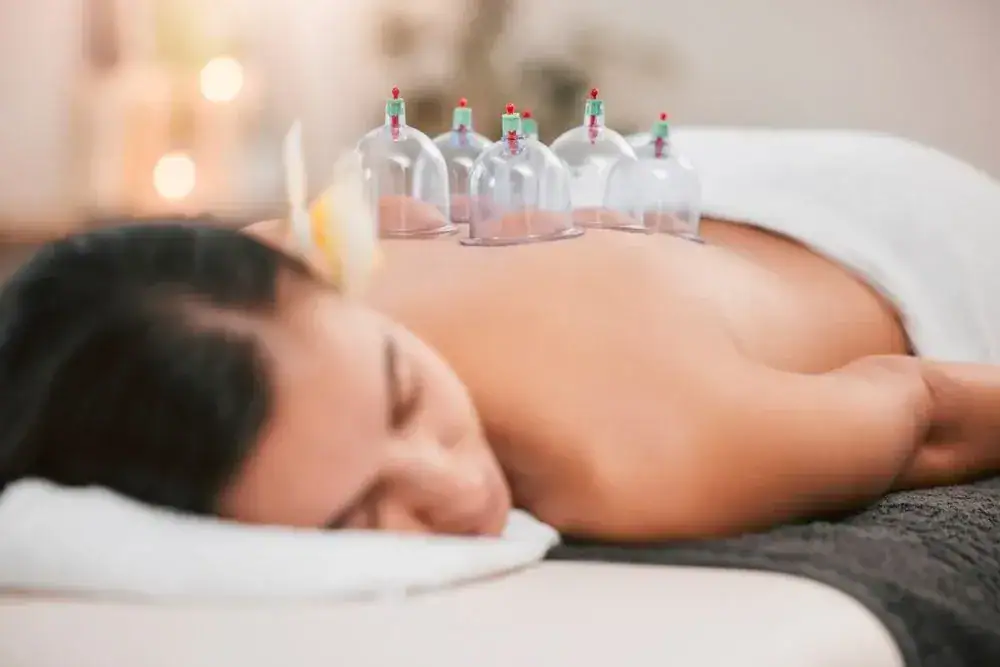

You wake up without that familiar ache in your lower back. You reach for something on a high shelf without wincing. You move through your day without constantly adjusting your position to find comfort.
That’s what cupping therapy does when it’s done right. The suction pulls blood flow to areas that have been tight and starved of circulation for months or years. Muscles that have been locked up start to release. Inflammation that’s been sitting in your joints begins to clear out.
Most people feel a difference after the first session. Not a temporary numbing—actual relief. The kind where you realize you haven’t thought about your neck pain in hours, not because you’re distracted, but because it’s genuinely better.
Dry cupping works because it addresses what’s happening under the surface. Tight fascia, restricted blood flow, muscle adhesions—these are the things keeping you stuck in a pain cycle. Cupping targets them directly, without drugs, without invasive procedures, and without you having to drive anywhere for treatment.
We’ve been treating patients across Long Island for over a decade. We’re not a new clinic trying to figure things out—we’re licensed physical therapists who specialize in bringing care directly to your home in Ridge and throughout Suffolk County.
We know what it’s like when getting to a clinic feels impossible. Maybe you’re recovering from surgery. Maybe your mobility is limited. Maybe you just don’t have reliable transportation or someone to drive you twice a week.
That’s why we come to you. We accept Medicare and most commercial insurance, and we treat you like family—not because it sounds nice, but because that’s how we’ve built our reputation since day one. You get the same quality care you’d receive in a clinic, but in your own space, on your schedule, with a therapist who actually remembers your name and your goals.
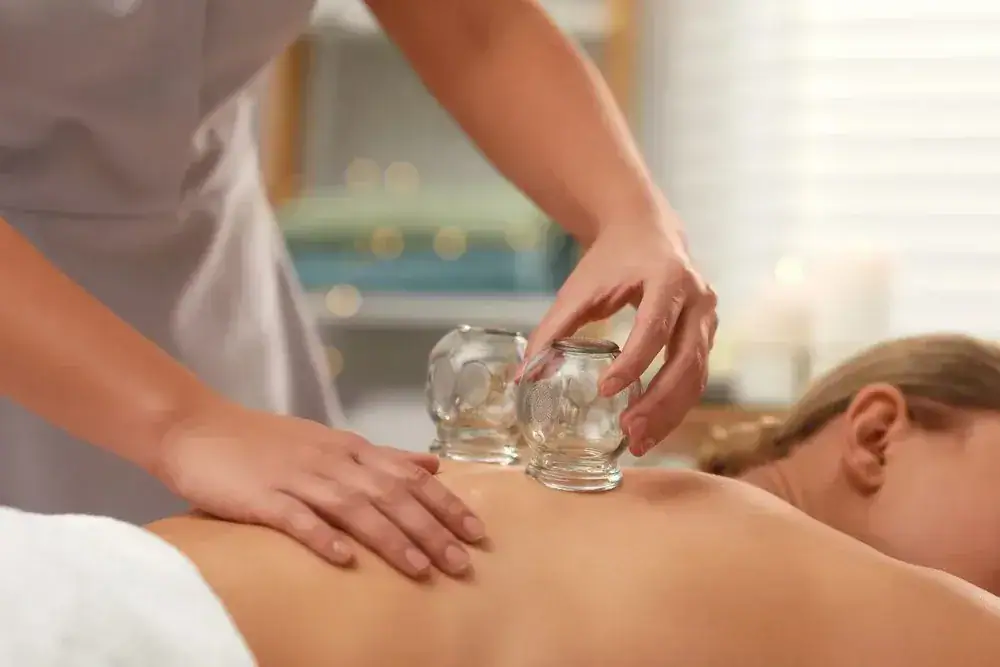
Your therapist arrives at your home with everything needed for your session. No setup required from you. We start with a conversation about where you’re feeling pain, what movements are difficult, and what you’ve already tried.
Then we assess the area. We’re looking at muscle tension, range of motion, and how your body is compensating for pain. This tells us where to place the cups and how much suction to use.
During dry cupping, we apply cups to specific points on your back, shoulders, neck, or other problem areas. The suction draws blood to the surface, which increases circulation and helps release tight tissue. You’ll feel a pulling sensation—not painful, but definitely noticeable. Most people find it oddly satisfying.
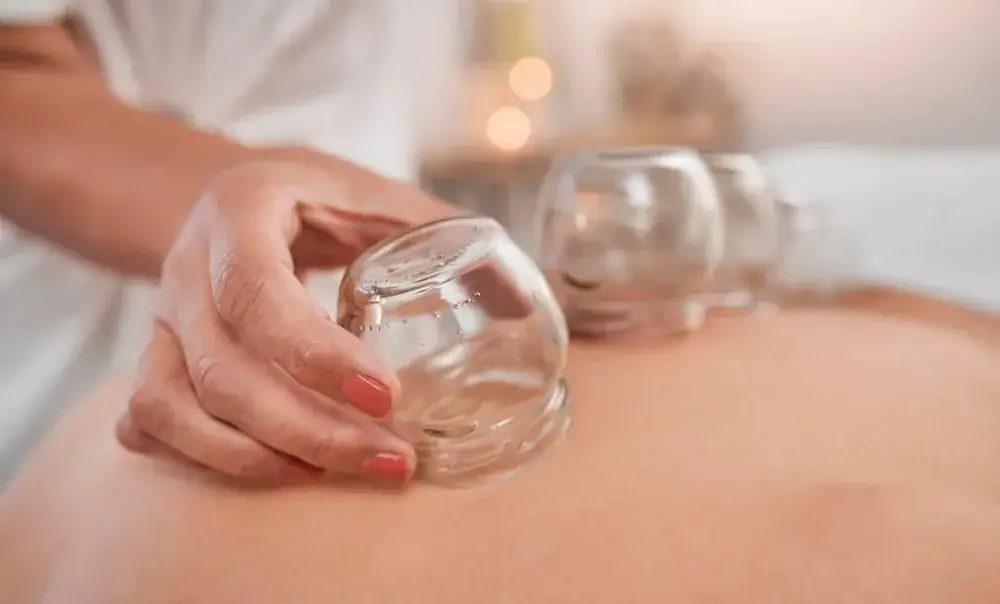
We leave the cups in place for several minutes, sometimes moving them across your skin to target a larger area. Afterward, you might see circular marks where the cups were. These aren’t bruises—they’re a sign of increased blood flow, and they fade within a few days.
The whole session takes about 30 to 45 minutes. Many people feel looser immediately. Others notice the biggest improvement over the next day or two as inflammation continues to decrease and muscles stay relaxed.
Ready to get started?
Cupping therapy isn’t a luxury spa treatment. It’s a clinical tool that we use to treat chronic pain, muscle tension, and restricted mobility. When you book a session with us in Ridge, you’re getting evidence-based care from a licensed professional who knows how to integrate cupping into a broader treatment plan.
You’re also getting convenience that most Suffolk County residents don’t have access to. We bring the equipment, the expertise, and the treatment to your home. No fighting traffic on Route 25. No waiting in a lobby. No trying to find parking near a clinic.
Ridge has a significant population of older adults and people managing long-term conditions. That means a lot of folks here are dealing with arthritis, post-surgical recovery, or chronic back and neck pain. Cupping helps with all of these because it addresses the root cause—poor circulation and tight, restricted tissue.
We accept Medicare, which covers outpatient physical therapy when it’s medically necessary. We also work with most commercial insurance plans. That means you’re not paying out of pocket for relief. You’re using benefits you already have, but getting them delivered in a way that actually fits your life.
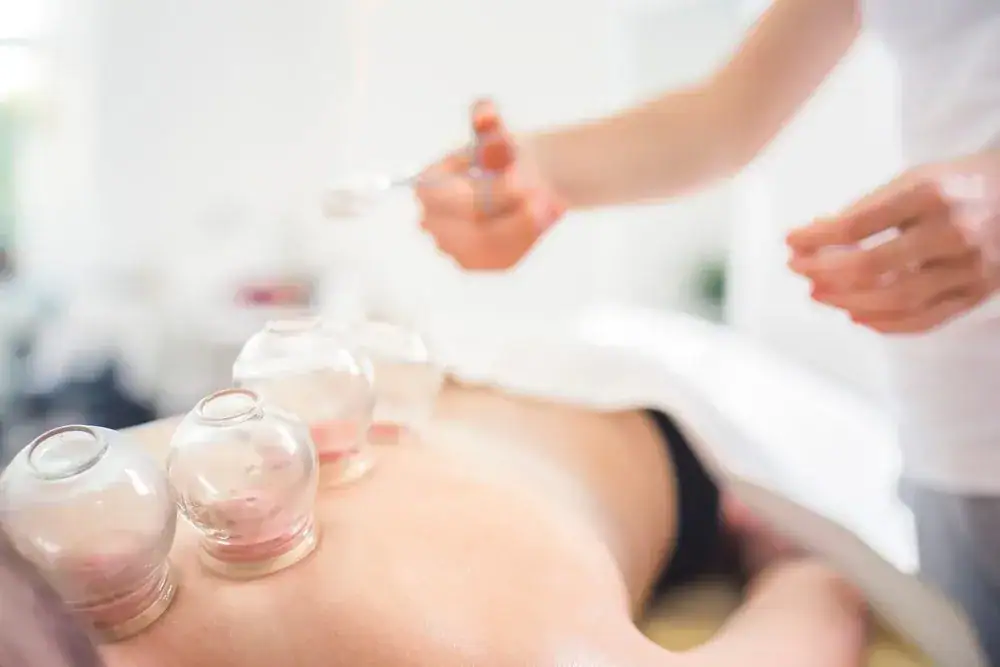
Cupping works, but not the way a painkiller works. It doesn’t mask the pain—it changes what’s causing it. When you have chronic pain, especially in your back, neck, or shoulders, it’s usually because muscles are tight, fascia is restricted, and blood flow to that area is poor. Cupping increases circulation and releases tension in the tissue, which gives your body a chance to heal.
Most people feel some relief right after their first session. But the real results come with consistency. If you’ve been dealing with pain for months or years, one session isn’t going to undo all of that. We usually recommend a series of treatments, combined with other physical therapy techniques, to get lasting results.
The difference between cupping and just taking ibuprofen is that cupping actually addresses the problem. You’re not covering up the pain—you’re improving the function of the tissue so the pain doesn’t keep coming back.
You’ll likely see circular marks where the cups were placed, but they’re not bruises in the traditional sense. Bruises happen when blood vessels break. Cupping marks happen because blood is drawn to the surface of your skin. It looks dramatic, but it’s not painful and it’s not a sign of injury.
The marks usually fade within three to seven days, depending on how much suction was used and how your body responds. Some people’s marks disappear in two days. Others take a full week. If you’re concerned about how they look, let your therapist know before the session—we can adjust the suction level.
These marks are actually a good sign. They show that blood flow increased in that area, which is exactly what we want. If you’re someone who’s self-conscious about visible marks, just plan your sessions around times when you won’t be wearing anything that shows your back or shoulders.
Yes, when cupping is part of a physical therapy treatment plan and performed by a licensed therapist, it’s typically covered under your outpatient physical therapy benefits. Medicare covers it. Most commercial insurance plans cover it. You’re not paying extra for cupping as an add-on—it’s included in your therapy session.
The key is that it has to be medically necessary. If you’re dealing with chronic pain, recovering from an injury, or managing a condition that limits your mobility, that qualifies. We handle the documentation and billing, so you don’t have to figure out the paperwork.
We accept Medicare and nearly all commercial insurances. Before your first session, we verify your coverage so you know exactly what to expect. No surprises. No hidden fees. Just straightforward care that uses the benefits you already have.
Dry cupping is what most people in the U.S. receive, and it’s what we use at Medcare. It involves placing cups on your skin and creating suction—nothing else. There’s no cutting, no bleeding, and no needles. It’s non-invasive and safe for almost everyone.
Wet cupping, which is more common in other parts of the world, involves making small incisions in the skin before applying the cups. The suction draws out a small amount of blood. It’s a different technique with different goals, and it’s not something we offer or recommend for most patients.
Dry cupping is effective for pain relief, muscle relaxation, and improving circulation. It’s also well-tolerated and has minimal side effects. If you’re looking for a straightforward, evidence-based treatment that fits into a physical therapy plan, dry cupping is the right choice.
Cupping has been shown to help with a range of conditions, including arthritis, low back pain, neck pain, shoulder pain, and knee pain. It’s particularly effective when your pain is related to muscle tension, stiffness, or poor circulation. If your joints are inflamed or your muscles are constantly tight, cupping can reduce that inflammation and help your body move more freely.
That said, cupping isn’t a cure-all. It’s one tool in a larger treatment plan. We don’t just show up and put cups on you. We assess your condition, figure out what’s contributing to your pain, and use cupping alongside other physical therapy techniques to get you real results.
If you’re dealing with arthritis in your knees or chronic tightness in your lower back, cupping can absolutely help. But the best way to know if it’s right for you is to talk to one of our therapists. We’ll give you an honest answer based on your specific situation—not a sales pitch.
Because getting to a clinic is often harder than the treatment itself. If you’re already dealing with pain or limited mobility, the last thing you need is to navigate traffic, find parking, sit in a waiting room, and then drive home afterward. Home-based therapy removes all of that.
You get the same quality care, the same licensed therapists, and the same clinical techniques—just without the hassle. Your session happens in your own space, where you’re comfortable and relaxed. There’s no rushing. No feeling like you’re being shuffled through an appointment. Just focused, one-on-one care.
For a lot of Ridge residents, especially older adults or people recovering from surgery, leaving the house isn’t just inconvenient—it’s genuinely difficult. We’ve been serving Long Island since 2010 because we understand that. You shouldn’t have to choose between getting treatment and dealing with the stress of getting there. With us, you don’t have to.
Other Services we provide in Ridge