
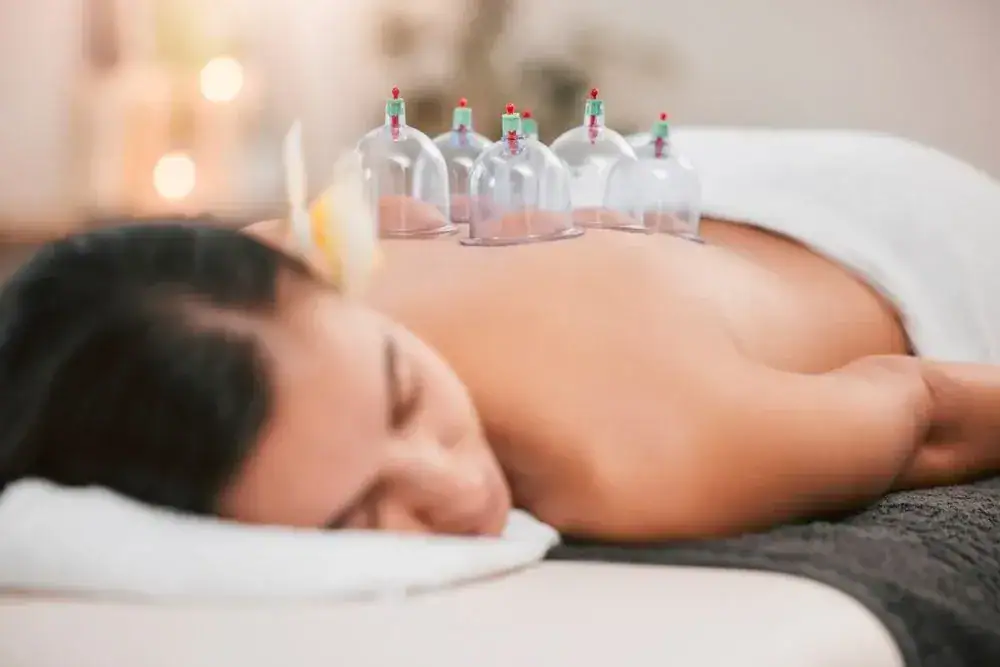

You’ve tried the usual route. Primary care doctor, maybe an orthopedic specialist, physical therapy at a clinic, medications that barely touch it. The pain in your back, neck, or shoulders is still there every morning.
Cupping therapy works by increasing blood flow to the exact areas that hurt. When our physical therapists place cups on your skin, they create suction that pulls fresh blood into tight, painful tissue. That improved circulation helps your body actually heal instead of just masking symptoms.
Most people notice less muscle tightness after the first session. Over several treatments, you typically see better range of motion, reduced stiffness, and the kind of pain relief that lets you get back to normal activities. Not because we’re making bold promises, but because better blood flow and reduced muscle tension produce measurable results.
The difference with cupping is that it addresses what’s happening under the surface. Tight muscles restrict blood flow, which slows healing and creates more pain. Cupping reverses that cycle.
Medcare Therapy Services has provided home-based physical therapy across Long Island for over a decade. We work with people who find it difficult to get to a clinic, whether that’s due to pain, mobility issues, or just the reality of living in Port Jefferson Station without easy transportation.
Our therapists are licensed, our services are Medicare-covered, and we accept nearly all commercial insurance. We’re affiliated with established practices like Physical Therapy Associates of Smithtown and Speonk Physical Therapy, so you’re getting the same quality care you’d receive in a clinical setting.
The reason we focus on home visits is simple: some people can’t make it to appointments, and their pain doesn’t get better just because getting to a clinic is hard. You shouldn’t have to choose between access and quality.
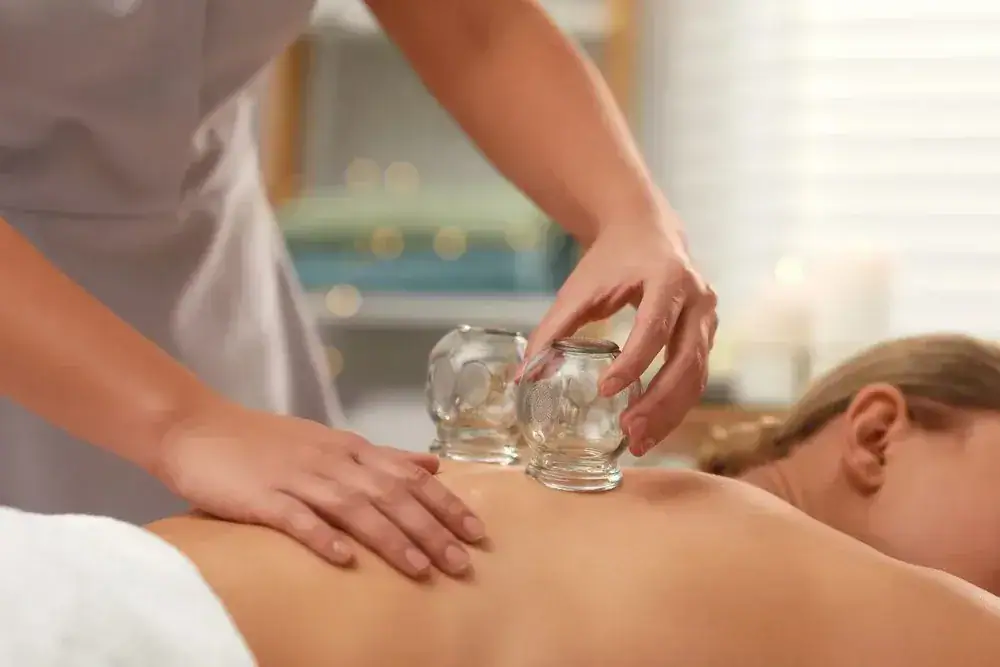
One of our licensed physical therapists comes to your home at a scheduled time. They’ll start by asking about your pain: where it is, how long you’ve had it, what makes it worse, and what you’ve already tried.
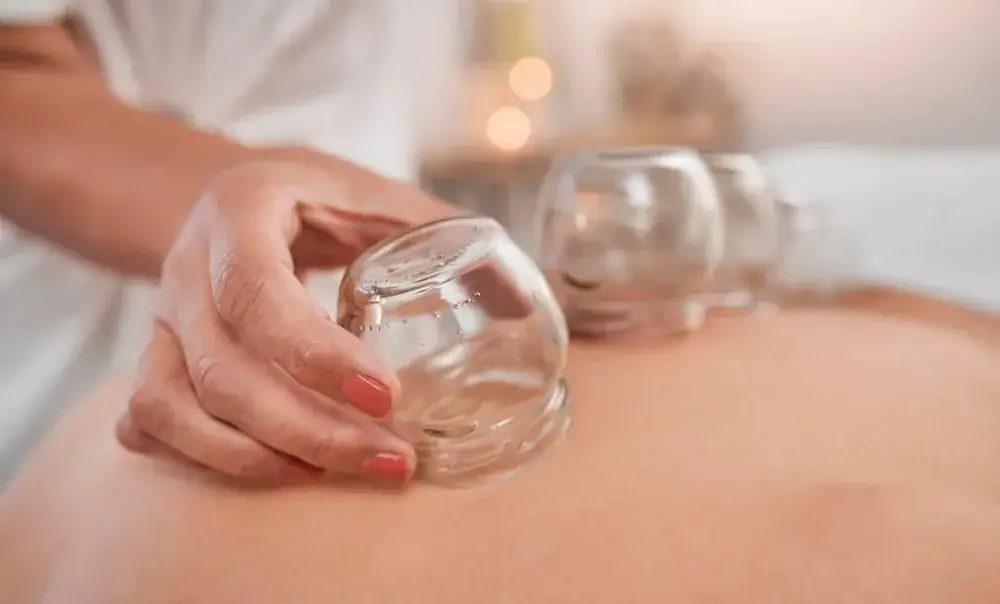
During the session, they place specialized cups on the areas causing problems. The cups create suction that draws blood to the surface, which increases circulation and helps release muscle tension. You’ll feel pulling and tightness, but it shouldn’t hurt. Most sessions last between 15 and 30 minutes, depending on how many areas need treatment.
Dry cupping is the most common method we use. The cups stay in place for several minutes, then the therapist removes them and may repeat the process on different areas. Some people see light bruising afterward, which is normal and fades within a few days.
Cupping often works best when combined with other physical therapy techniques. Your therapist might include stretching, strengthening exercises, or manual therapy during the same visit. The goal is to give you a complete treatment plan, not just one isolated technique.
You’ll typically start with sessions once or twice a week. As your pain decreases and mobility improves, you’ll need fewer visits.
Ready to get started?
Our cupping therapy in Port Jefferson Station addresses chronic pain conditions that don’t respond well to standard treatments. That includes lower back pain, neck stiffness, shoulder tension, headaches, and fibromyalgia. If you’ve been dealing with muscle soreness that won’t quit, this is worth considering.
The treatment improves blood circulation to areas that aren’t getting enough oxygen and nutrients. When blood flow increases, your body can repair damaged tissue more effectively. You also get reduced inflammation, which is often the root cause of ongoing pain.
For people in Port Jefferson Station dealing with the physical demands of daily life, whether that’s work-related strain or just the wear and tear of getting older, cupping provides a non-invasive option. No surgery, no heavy medications, and no need to leave your home.
Because we bring the service to you, it’s easier to stay consistent with treatment. You’re not canceling appointments because you can’t find a ride or because the pain makes it too hard to get out the door. Consistency matters when you’re trying to actually fix a problem instead of just managing it.
Medicare covers our services, and we work with most commercial insurance plans. Cost shouldn’t be the reason you’re still in pain.
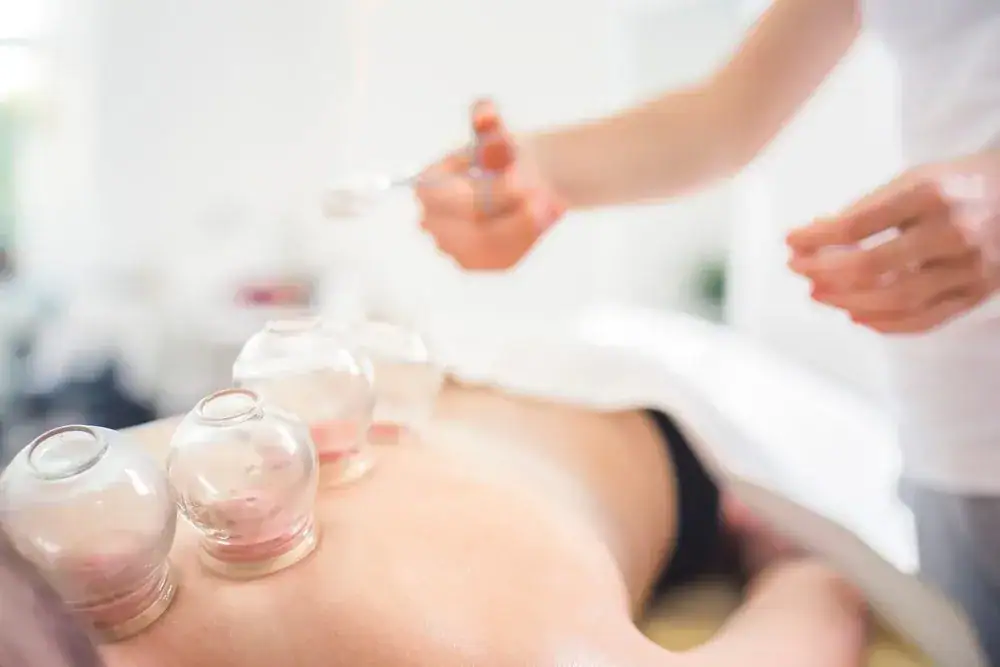
Cupping increases blood flow to painful areas in your back, which helps reduce muscle tightness and inflammation. When muscles are tight for a long time, they restrict circulation and create a cycle where pain leads to more tension, which leads to more pain.
Research shows that cupping can significantly reduce pain levels and improve range of motion, especially when combined with other physical therapy techniques like stretching and strengthening. It’s not a miracle cure, but it addresses the underlying issue: poor circulation and chronic muscle tension.
Most people with chronic back pain notice some improvement after the first few sessions. The key is consistency. One treatment might give you temporary relief, but a series of sessions over several weeks produces lasting results because your body has time to heal properly.
You might see circular marks where the cups were placed. They’re not technically bruises, even though they look similar. The suction brings blood to the surface, which can leave temporary discoloration.
These marks are usually painless and fade within three to seven days. Some people don’t get them at all, depending on how their body responds to treatment and how much suction the therapist uses.
If you’re concerned about visible marks, let your therapist know before the session. They can adjust the technique or placement to minimize discoloration. The marks don’t indicate harm; they’re just a side effect of increased blood flow to the treated area.
Cupping is a technique that our physical therapists use as part of a complete treatment plan. It’s not a replacement for physical therapy; it’s an additional tool that enhances other treatments.
Regular physical therapy might include exercises, manual therapy, and education about how to move without causing more pain. Cupping adds a layer by improving blood flow and releasing deep muscle tension that’s hard to address with stretching alone.
When you combine cupping with movement-based therapy, you get better results than either approach on its own. The improved circulation from cupping makes it easier to do therapeutic exercises, and the exercises help maintain the benefits you get from cupping. It’s about using multiple methods to address pain from different angles.
Yes, when cupping is performed by a licensed physical therapist as part of a Medicare-covered physical therapy treatment plan. Medicare doesn’t cover cupping as a standalone service, but it does cover physical therapy that includes cupping as a treatment technique.
Medcare Therapy Services is a Medicare-approved provider, and we handle the billing and authorization process. You’ll need a referral from your doctor, just like you would for any other physical therapy service.
We also accept most commercial insurance plans. Coverage varies depending on your specific plan, so we verify your benefits before starting treatment. The goal is to make sure you know what’s covered and what your out-of-pocket cost will be before you commit to anything.
Most people start with six to eight sessions over three to four weeks. That gives your body enough time to respond to treatment and for your therapist to assess whether it’s working.
If you’re seeing improvement, you might continue for a few more weeks and then taper off to maintenance sessions. If you’re not getting results after the first several treatments, your therapist will adjust the approach or recommend a different treatment method.
The number of sessions depends on what’s causing your pain, how long you’ve had it, and how your body responds. Chronic conditions that have been present for months or years typically take longer to treat than recent injuries. Your therapist will give you a realistic timeline based on your specific situation, not a generic estimate.
Cupping can reduce the frequency and intensity of tension headaches and some types of migraines, especially when muscle tension in your neck and shoulders is contributing to the problem. Many headaches start with tight muscles that restrict blood flow and create referred pain in your head.
When our therapists apply cups to your neck, upper back, and shoulders, it releases that tension and improves circulation. Better blood flow means less muscle-related pain, which often reduces headache symptoms.
Cupping works best for headaches that have a muscular component. If your migraines are purely neurological or related to other medical conditions, cupping might provide some relief but won’t eliminate the root cause. Your therapist will evaluate whether cupping is appropriate for your specific type of headache during the initial assessment.
Other Services we provide in Port Jefferson Station