
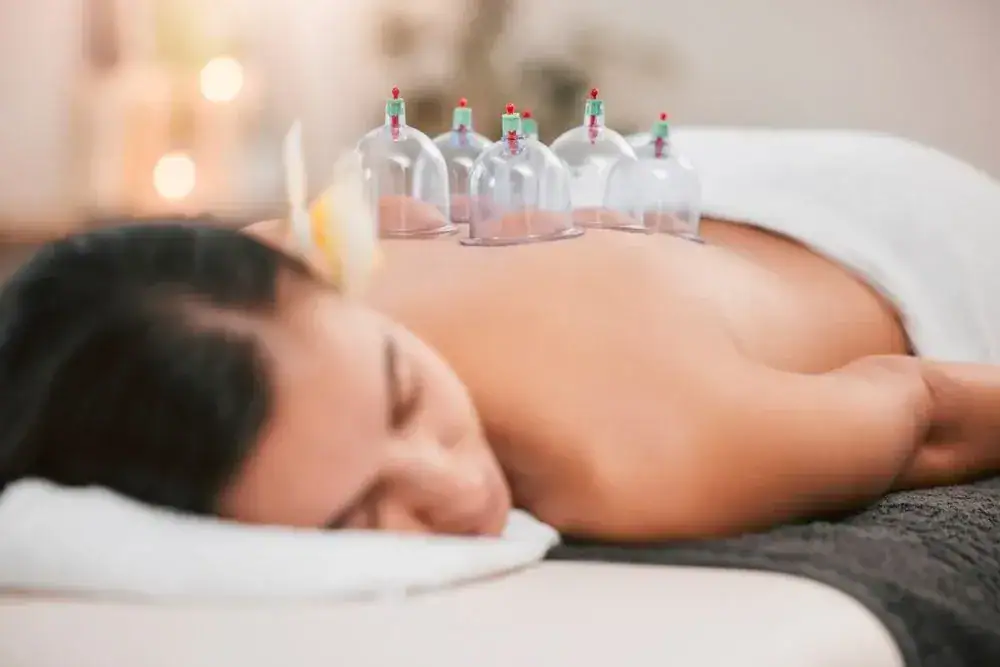

Chronic pain doesn’t just hurt. It limits what you can do, how you sleep, and whether you feel like yourself. When you’ve tried medications that either don’t work or come with side effects you’d rather avoid, cupping therapy offers a different path.
Cupping improves blood flow to areas that aren’t getting enough circulation. That means less inflammation, faster healing, and muscles that actually relax instead of staying locked up. You’re not masking pain—you’re addressing what’s causing it.
Most people notice a difference after the first session. Tightness releases. Range of motion improves. Pain that’s been there for months starts to back off. It’s not magic—it’s increased circulation doing what your body needs it to do.
Medcare Therapy Services has been treating patients across Long Island since 2010. Our Port Jefferson location serves a community where people want local care from providers who actually listen and take time to explain what’s happening.
We’re licensed physical therapists trained in modern cupping techniques and experienced in treating the conditions that bring most people through our doors: chronic neck pain, lower back pain, muscle tension, and recovery from injury. We don’t rush appointments or use one-size-fits-all treatment plans.
Port Jefferson residents deal with the same aging-related pain, sports injuries, and stress-related tension as anywhere else. The difference is having a local clinic that combines evidence-based physical therapy with alternative approaches like dry cupping when it makes sense for your specific situation.
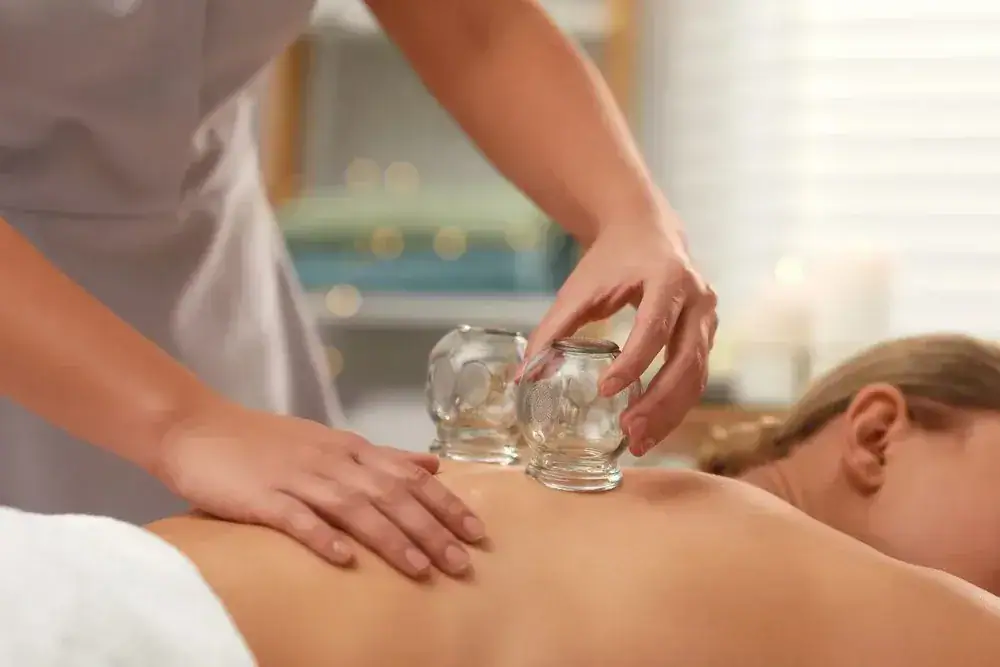
Your first visit starts with an evaluation. We need to understand where your pain is, how long you’ve had it, what makes it worse, and what you’ve already tried. This isn’t a formality—it determines whether cupping is right for you and how we’ll integrate it with other physical therapy techniques.
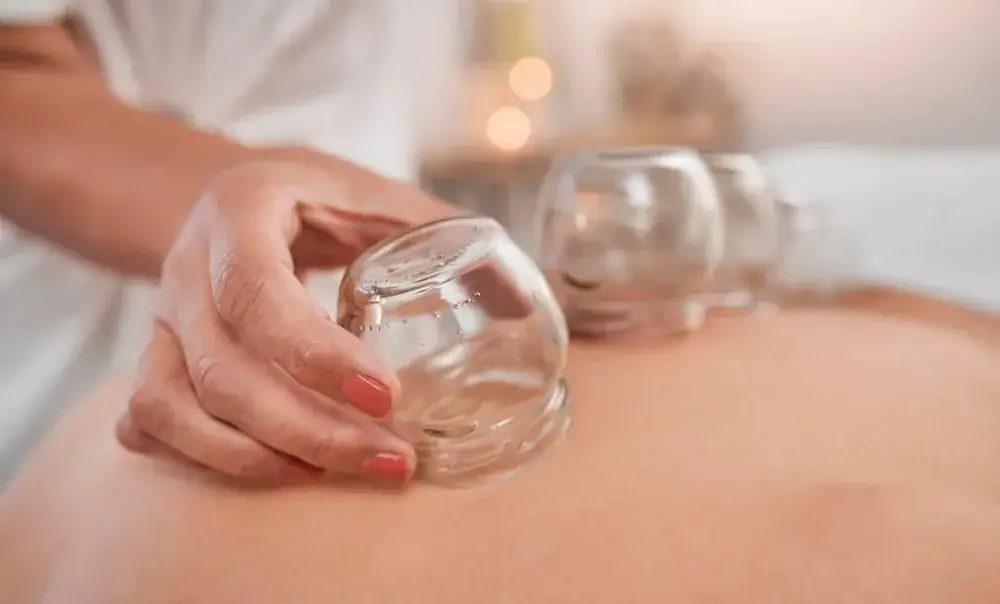
During the treatment, we place specialized cups on your skin over the affected areas. The cups create suction that pulls blood to the surface, increasing circulation to muscles and tissues that need it. You’ll feel pressure and tightness, but it shouldn’t hurt. Most people find it surprisingly relaxing.
Sessions typically last 15 to 30 minutes, depending on what we’re treating. We might use dry cupping on its own or combine it with manual therapy, stretching, or other physical therapy modalities. The cups may leave temporary circular marks that fade within a few days—that’s normal and indicates increased blood flow to the area.
After treatment, many people feel immediate relief. Muscles feel looser. Pain decreases. Movement feels easier. We’ll give you specific guidance on what to expect, how to support your recovery between sessions, and when to come back based on how your body responds.
Ready to get started?
Cupping works well for chronic neck pain, especially if you’ve been dealing with stiffness and limited range of motion for months. It’s also effective for lower back pain that hasn’t responded well to other treatments. We see good results with fibromyalgia patients who need muscle relaxation and stress relief without adding more medications.
Athletes use cupping for recovery after intense training or to address specific injuries. If you’ve got trigger points—those tight knots in your muscles that refer pain to other areas—cupping helps release them faster than manual therapy alone. It’s also useful for general muscle tension from stress, poor posture, or repetitive movements at work.
In Port Jefferson and the surrounding Long Island communities, we’re seeing more patients who want alternatives to pharmaceutical pain management. The opioid crisis has made people rightfully cautious about long-term medication use. Cupping offers a non-invasive option that doesn’t carry risks of dependency or side effects.
Your treatment plan might include cupping as one component of a broader physical therapy approach. We’re not just putting cups on you and calling it done. You’re getting comprehensive care that addresses your specific condition, whether that’s post-surgical rehabilitation, chronic pain management, or injury recovery.
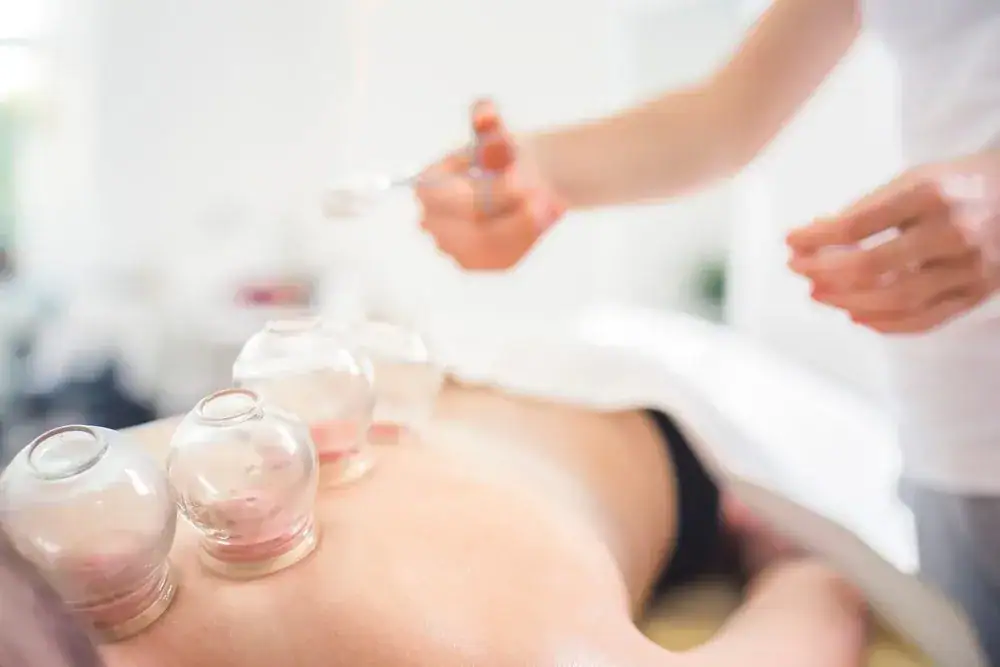
Cupping has been used in traditional medicine for thousands of years, but what matters more is the current research. Peer-reviewed studies show cupping is effective for reducing chronic neck pain and lower back pain—two of the most common complaints we see. It’s not a cure-all, but it’s a legitimate treatment option that physical therapists, chiropractors, and other licensed healthcare providers integrate into care plans.
The mechanism is straightforward. Cupping increases blood flow to areas that aren’t getting adequate circulation. More blood flow means more oxygen and nutrients reaching damaged or inflamed tissues. That speeds healing and reduces pain. It also helps relax muscles that have been tight for so long they’ve forgotten how to release on their own.
Professional athletes use cupping regularly, which brought it into mainstream awareness during the 2016 Olympics. But it’s not just for elite performers. It works for anyone dealing with muscle tension, limited mobility, or chronic pain that hasn’t responded well to other treatments. The key is working with a licensed physical therapist who knows when and how to use it effectively.
You’ll feel a pulling sensation and tightness where the cups are placed, but it shouldn’t be painful. Most people describe it as pressure—similar to a deep tissue massage but more localized. If it hurts, that’s a sign the suction is too strong, and we’ll adjust it immediately.
During the session, many people actually find it relaxing. The increased blood flow creates a warming sensation, and the release of muscle tension often leads to an overall feeling of calm. Some patients even fall asleep during treatment, which tells you it’s not an uncomfortable experience.
After the session, you might feel a bit sore in the treated areas—similar to how you’d feel after a good workout. That soreness typically fades within a day or two. The circular marks left by the cups can look dramatic, but they don’t hurt. They’re basically bruises caused by increased blood flow, and they disappear within three to seven days depending on your circulation and how your body responds.
Some people feel relief after a single session. We’ve had patients come in with acute muscle tension or pain from a recent injury who leave feeling significantly better. But chronic conditions that have been building for months or years typically require multiple sessions to see lasting improvement.
A common treatment plan involves weekly sessions for four to six weeks, then reassessing based on your progress. If you’re responding well, we might space sessions further apart or transition to using cupping only when you have flare-ups. If progress is slower, we’ll look at what else might be contributing to your pain and adjust the overall treatment approach.
The goal isn’t to keep you coming in forever. It’s to reduce your pain, improve your function, and give you tools to manage your condition long-term. Cupping is one tool in that process. How many sessions you need depends on your specific condition, how long you’ve had it, and how your body responds to treatment.
When cupping is performed by a licensed physical therapist as part of your physical therapy treatment plan, it’s often covered under your physical therapy benefits. Insurance companies typically don’t pay for cupping as a standalone service, but they will cover it when it’s integrated into a comprehensive treatment plan for a diagnosed condition.
We verify your insurance benefits before you start treatment so you know what to expect. Every plan is different—some cover physical therapy with minimal copays, others require you to meet a deductible first. We’ll walk you through your specific coverage and any out-of-pocket costs upfront.
If you’re paying out-of-pocket, cupping as part of a physical therapy session is generally more affordable than ongoing medication costs or repeated doctor visits that haven’t solved the problem. We’re transparent about pricing and will work with you to create a treatment plan that fits your budget while still addressing your pain effectively.
Yes. Cupping works well alongside other physical therapy techniques like manual therapy, therapeutic exercise, and stretching. We often combine it with trigger point therapy or use it before exercises to help muscles relax and move more freely. It’s not an either-or situation—it’s about using the right combination of treatments for your specific needs.
If you’re seeing other healthcare providers—a chiropractor, acupuncturist, or pain management specialist—cupping can still fit into your overall care plan. We’ll coordinate with your other providers to make sure everyone’s on the same page and treatments complement each other rather than working against each other.
The one thing to mention is if you’re on blood thinners or have certain skin conditions. Cupping increases blood flow and can cause temporary bruising, so we need to know about any medications or health conditions that might affect how your body responds. That’s why the initial evaluation is important—we’re making sure cupping is safe and appropriate for you specifically.
Cupping performed by a licensed physical therapist is different from cupping at a spa. We’re treating diagnosed medical conditions, not providing relaxation services. Our therapists have clinical training in anatomy, physiology, and how to integrate cupping into evidence-based treatment plans for pain and injury.
When you come to Medcare, you’re getting a full evaluation first. We’re determining why you have pain, what’s causing it, and whether cupping is the right approach. We’re also monitoring your progress, adjusting treatment based on how you respond, and giving you exercises and education to support long-term improvement.
Our Port Jefferson location has been serving this community with professional, licensed care since 2010. We maintain rigorous standards for patient data security, treatment quality, and clinical outcomes. You’re not just getting a trendy treatment—you’re getting comprehensive physical therapy from providers who know what they’re doing and are accountable to professional licensing boards and insurance standards.
Other Services we provide in Port Jefferson