
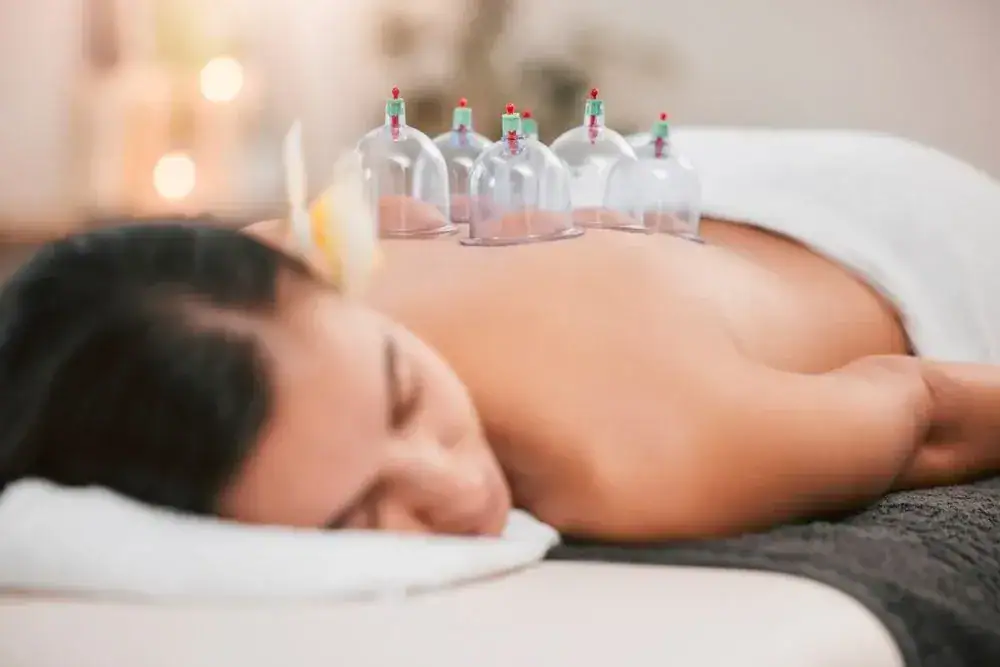

Chronic pain doesn’t just hurt. It changes how you move, what you avoid, and how much energy you have left at the end of the day.
Cupping therapy addresses the root tension in your muscles and fascia. By creating suction that lifts tissue away from underlying structures, it increases blood flow to areas that have been tight or restricted for months. That means less stiffness when you get out of bed, better range of motion during your workout, and fewer days where you’re just managing discomfort instead of living normally.
The treatment works because it targets what’s actually causing the problem. Trapped muscle tension, poor circulation, and fascial adhesions all respond to the mechanical lift cupping provides. You’re not masking symptoms. You’re helping your body reset the way it moves and heals.
Most people notice a difference after the first session. Not a cure, but a shift. Less tightness. More mobility. The kind of relief that makes you think, “Okay, maybe this is actually fixable.”
We’ve served Long Island for over a decade at Medcare Therapy Services. We’re not new to this, and we’re not experimenting with trends that don’t work.
Our physical therapists are trained in modern cupping techniques and use them as part of comprehensive treatment plans. That means you’re not just getting cupping in isolation—you’re getting it integrated with manual therapy, movement training, and whatever else your body actually needs. We treat patients across Nassau County, including right here in Plandome Heights, where people expect quality care without the runaround.
Every Google Business Profile we manage is verified. Every staff member has controlled access. Every patient gets the same level of attention, whether it’s your first visit or your fifteenth. We handle your information securely, and we don’t hand off your care to someone different every time you walk in.
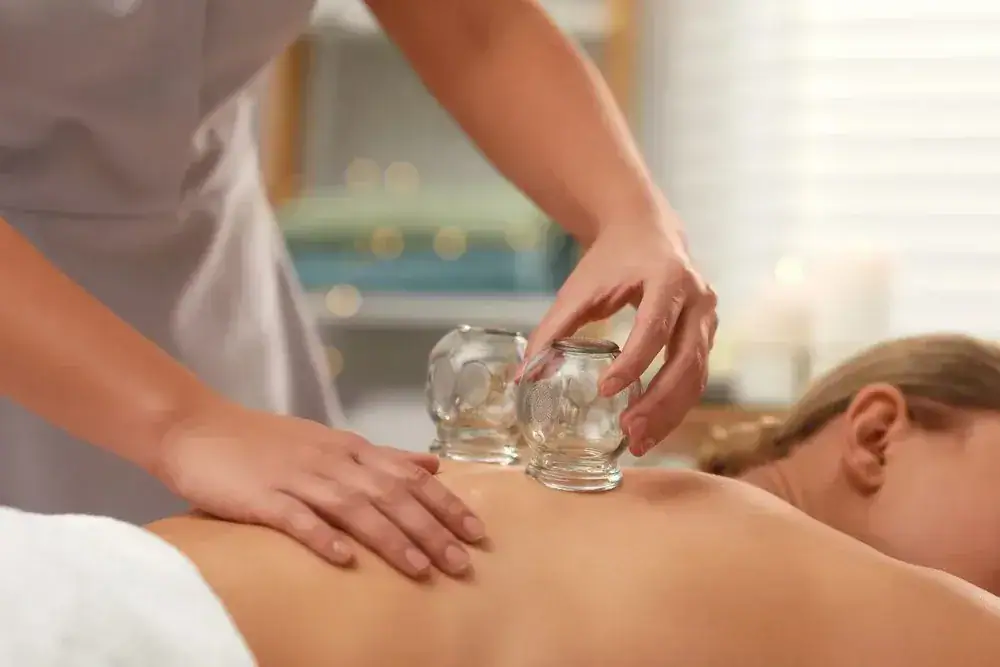
First, we assess where the pain is coming from. Not just where it hurts, but what’s causing it. Tight muscles, restricted fascia, poor movement patterns—we look at the full picture.
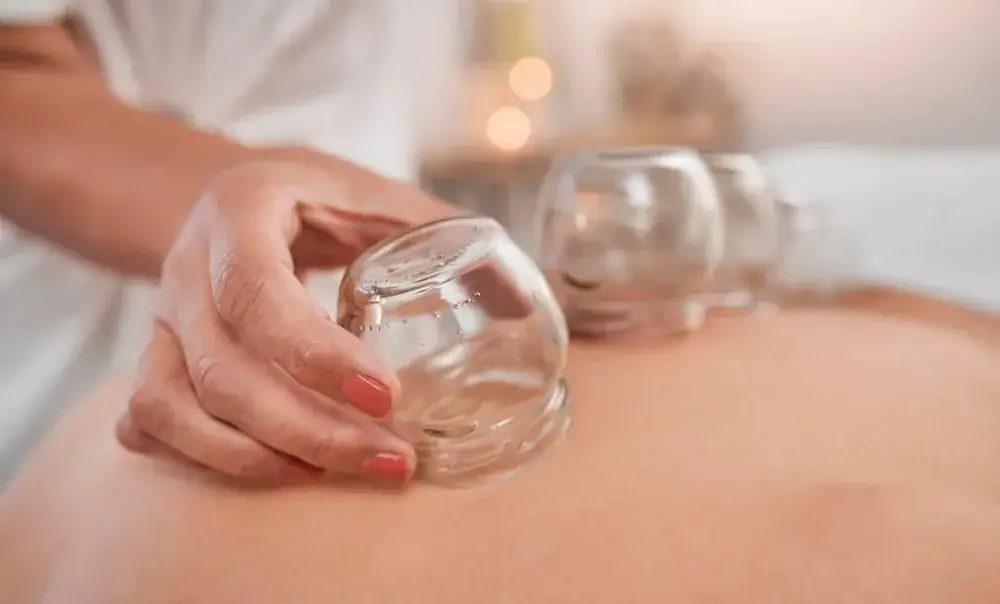
Then we apply the cups. Depending on what you need, we might use stationary cupping (cups stay in one place) or dynamic cupping (cups move with your body as you go through specific movements). The suction pulls tissue upward, separating layers that have been stuck together and bringing fresh blood flow to areas that need it.
You’ll feel the pull, but it shouldn’t hurt. Most people describe it as a deep pressure, like a strong massage. We adjust the intensity based on what your tissue can handle.
Sessions typically last 15 to 30 minutes as part of a broader physical therapy appointment. Afterward, you might see circular marks where the cups were placed. Those aren’t bruises—they’re a result of increased circulation—and they fade within a few days. Some people feel immediate relief. Others notice the difference over the next day or two as inflammation decreases and mobility improves.
Ready to get started?
Cupping isn’t a standalone miracle. It’s a tool that works best when combined with other treatments. At Medcare, that means pairing it with manual therapy, corrective exercises, and education on how to move better.
We use it most often for chronic low back pain, neck pain, shoulder tightness, and knee issues—conditions that affect a lot of people in Plandome Heights and across Nassau County. The area’s demographics skew toward active professionals and older adults managing arthritis or long-term pain, so we see a steady need for non-pharmaceutical options that actually work.
Cupping also helps athletes recover faster. If you’re dealing with muscle soreness after training or restricted range of motion that’s affecting performance, the increased circulation and fascial release can get you back to full capacity quicker than rest alone.
Medicare covers our outpatient physical therapy services for eligible patients, which includes cupping when it’s part of your treatment plan. We’ll walk you through what’s covered during your first visit so there are no surprises.
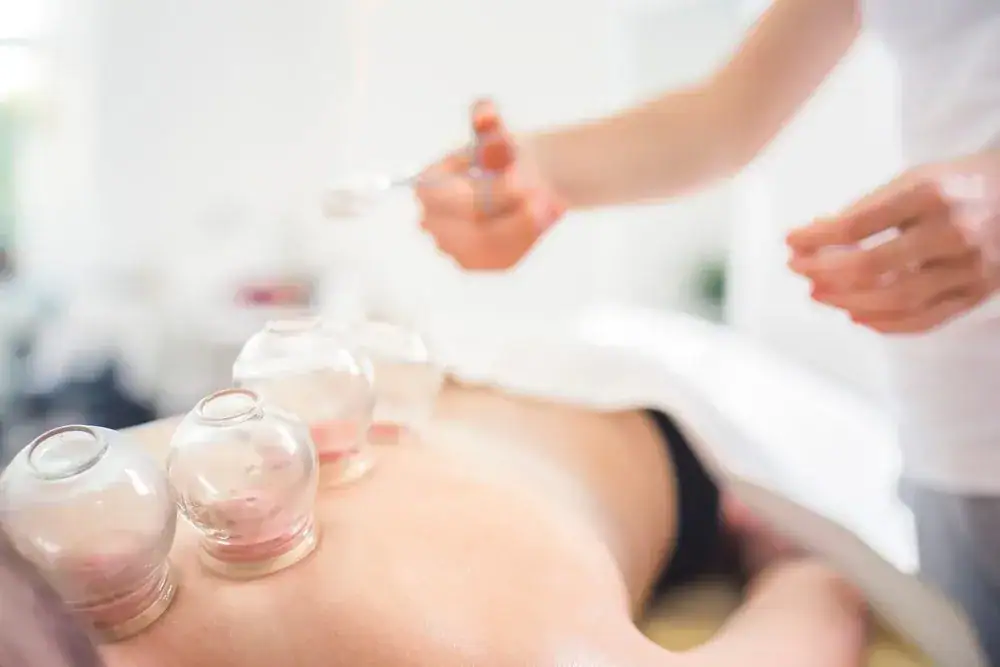
Yes, but let’s be specific about what the research shows. Cupping has moderate-quality evidence supporting its use for chronic pain, low back pain, neck pain, and knee osteoarthritis. That means multiple studies have found it effective, though it’s not a guaranteed fix for everyone.
The way it works is mechanical. Suction lifts tissue, separates fascial layers, and increases blood flow to areas that have been tight or inflamed. That process reduces pain signals and helps muscles relax. For some people, one session provides immediate relief. For others, it takes a few treatments before they notice a significant change.
What cupping doesn’t do is cure underlying structural problems. If you have a herniated disc or severe arthritis, cupping can help manage pain and improve function, but it won’t reverse the damage. It’s most effective when combined with other treatments like manual therapy and exercise, which is how we use it at Medcare.
Dry cupping is what most people think of when they hear “cupping therapy.” It uses suction alone—no needles, no incisions, no added substances. The cups create negative pressure that pulls tissue upward, which increases circulation and releases tension.
Wet cupping, by contrast, involves making small incisions in the skin before applying the cups, so blood is drawn out. That’s not something physical therapists do, and it’s not what we offer at Medcare. Dry cupping is safer, less invasive, and backed by more research for pain relief and muscle relaxation.
There’s also something called “fire cupping,” where a flame is used to create suction inside the cup before it’s applied to the skin. We use modern suction pumps instead, which give us more control over pressure levels and are easier to adjust based on what your body needs. The outcome is the same—better blood flow, less tension—but the process is more precise.
You’ll likely see circular marks where the cups were placed, but they’re not bruises in the traditional sense. Bruises happen when blood vessels break and leak into surrounding tissue. Cupping marks are caused by increased blood flow and the movement of stagnant fluids to the surface.
The marks can range from light pink to deep purple depending on how much tension or stagnation was in that area. They usually fade within three to seven days. Some people don’t get marks at all, especially if their circulation is already good or the suction pressure was lighter.
If the appearance of marks is a concern—say, you have an event coming up—let us know before the session. We can adjust the pressure or focus on areas that won’t be visible. The marks don’t hurt, and they’re not a sign of damage. They’re just part of how the treatment works.
It depends on what we’re treating and how long you’ve been dealing with it. Acute issues—like muscle soreness after a tough workout—might only need one or two sessions. Chronic conditions like long-term back pain or neck stiffness usually require more.
Most people start with twice-a-week sessions for two to three weeks, then taper off as symptoms improve. We reassess after every few visits to see what’s working and what needs adjustment. If cupping isn’t making a difference after four or five sessions, we’ll shift the approach instead of just repeating the same thing.
The goal isn’t to keep you coming in forever. It’s to get you functional again and teach you how to maintain that progress on your own. Some people come back periodically for maintenance when they feel tightness creeping back in, but that’s their choice, not a requirement.
If it’s part of a physical therapy treatment plan, yes—most insurance plans cover it, including Medicare. Cupping isn’t billed separately as its own service. It’s considered a manual therapy technique within your overall PT session, so it falls under the same coverage rules as the rest of your treatment.
We verify your benefits before you start so you know what to expect. Some plans have copays, some have deductibles, and some cover a set number of visits per year. We’ll walk you through your specific situation during your first appointment.
If you’re paying out of pocket, cupping is included in the cost of your physical therapy session. There’s no extra charge for adding it to your treatment plan. We don’t upsell techniques—we use what works.
Absolutely. In fact, that’s how we prefer to use it. Cupping works best when it’s part of a broader plan that includes manual therapy, corrective exercises, and movement training.
For example, if you’re dealing with chronic shoulder pain, we might use cupping to release tight fascia and improve blood flow, then follow it up with joint mobilization and strengthening exercises. The cupping prepares the tissue so the other treatments are more effective. You get better results faster than you would with any single technique alone.
We also coordinate with other providers if needed. If you’re seeing a chiropractor, massage therapist, or sports medicine doctor, we’ll make sure everyone’s on the same page. The last thing you need is conflicting advice or treatments that work against each other. Communication matters, and we handle it.
Other Services we provide in Plandome Heights