
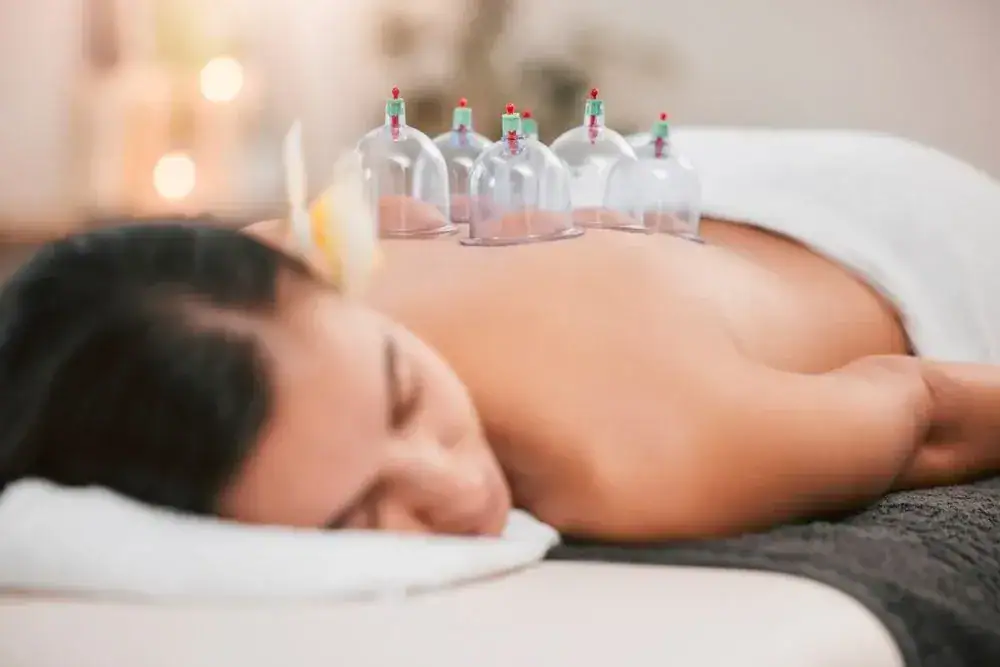

You’ve tried stretching. You’ve tried rest. Maybe you’ve even tried medication that barely touches the problem. Cupping therapy works differently because it addresses what’s actually causing the pain—restricted blood flow, built-up tension, and inflammation deep in the muscle tissue.
When cups create suction on your skin, they pull blood to the surface and encourage fresh circulation to areas that have been starved of it. That’s not just temporary relief. It’s your body getting what it needs to heal properly—oxygen, nutrients, and the ability to flush out waste that’s been sitting in tight, knotted muscle fibers.
Most people notice a difference right away. Less stiffness. Better range of motion. The kind of relief that makes you realize how long you’ve been compensating for pain without even knowing it. For some, it takes a couple of sessions. But the goal is always the same: get you moving again without relying on drugs, injections, or invasive procedures.
We’ve been serving Long Island communities like Plainedge since 2010. We’re not new to this, and we’re not experimenting with trends. Our team includes licensed physical therapists who understand how cupping fits into a broader treatment plan—not as a gimmick, but as a legitimate tool for pain management and muscle recovery.
We work with people who are tired of being told to “just give it time” or handed another prescription. Plainedge residents deal with the same things everyone else does—desk jobs that wreck your neck and shoulders, weekend warrior injuries that don’t heal right, chronic pain that limits what you can do with your family. We treat all of it, and we do it without making you feel like just another appointment.
You’ll find us transparent about what cupping can and can’t do, what your insurance covers, and how long recovery typically takes. No runaround. No upselling. Just honest care from people who’ve been doing this long enough to know what works.
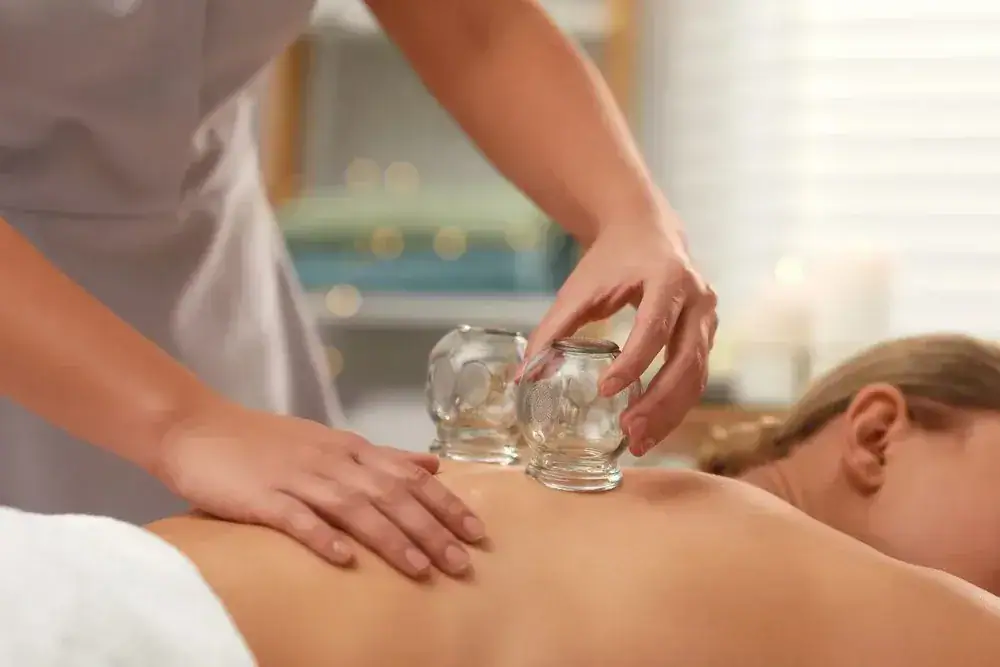
First, we assess where you’re holding tension and what’s limiting your movement. Cupping isn’t one-size-fits-all. Your therapist identifies the specific muscles or areas that need attention based on your pain patterns and mobility restrictions.
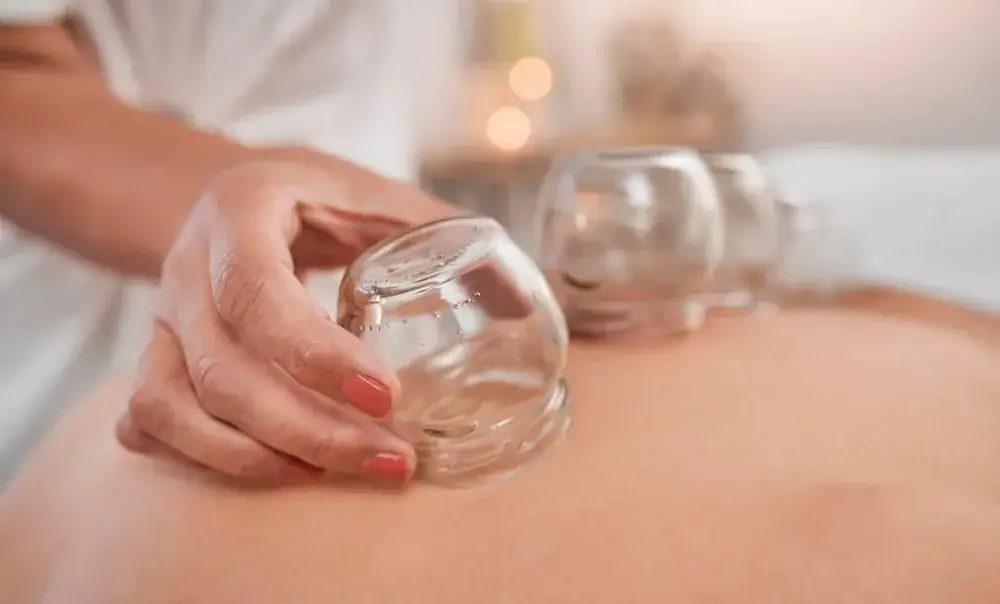
During dry cupping, we place specialized cups on your skin—usually silicone or glass—and create suction that lifts the tissue. You’ll feel a pulling sensation, but it shouldn’t hurt. The cups stay in place for several minutes, or in some cases, your therapist may move them across the muscle to release deeper tension. This increases blood flow to the area, helps break up adhesions, and gives tight muscles room to relax.
After the session, you might see circular marks where the cups were placed. Those aren’t bruises—they’re a sign of increased circulation bringing old blood and metabolic waste to the surface. They fade within a few days and aren’t painful to the touch. Most people feel immediate relief in terms of reduced stiffness or improved range of motion, though the full benefits build over multiple sessions as your body continues healing between treatments.
We’ll give you clear aftercare instructions and let you know what to expect for follow-up. Some conditions resolve in two or three sessions. Others need ongoing support as part of a larger physical therapy plan.
Ready to get started?
Cupping therapy at Medcare isn’t a standalone spa treatment. It’s integrated into your physical therapy plan, which means you’re getting clinical-grade care from licensed professionals who know how to combine cupping with other techniques for maximum benefit.
We offer both stationary dry cupping and silicone cupping, depending on what your body needs. Stationary cupping is ideal for targeting specific trigger points or areas of deep tension—think chronic lower back pain or stubborn knots in your shoulders. Silicone cupping allows for movement across larger muscle groups, which works well for improving overall mobility or treating conditions like IT band syndrome or hamstring tightness.
Plainedge has a higher-than-average median age and an active population that values staying mobile. Whether you’re dealing with age-related stiffness, recovering from a sports injury, or managing chronic pain that’s been limiting your daily routine, cupping gives your muscles the circulation boost they need to heal faster and hurt less. We accept Medicare and most commercial insurance plans, so cost doesn’t have to be a barrier to getting the relief you need.
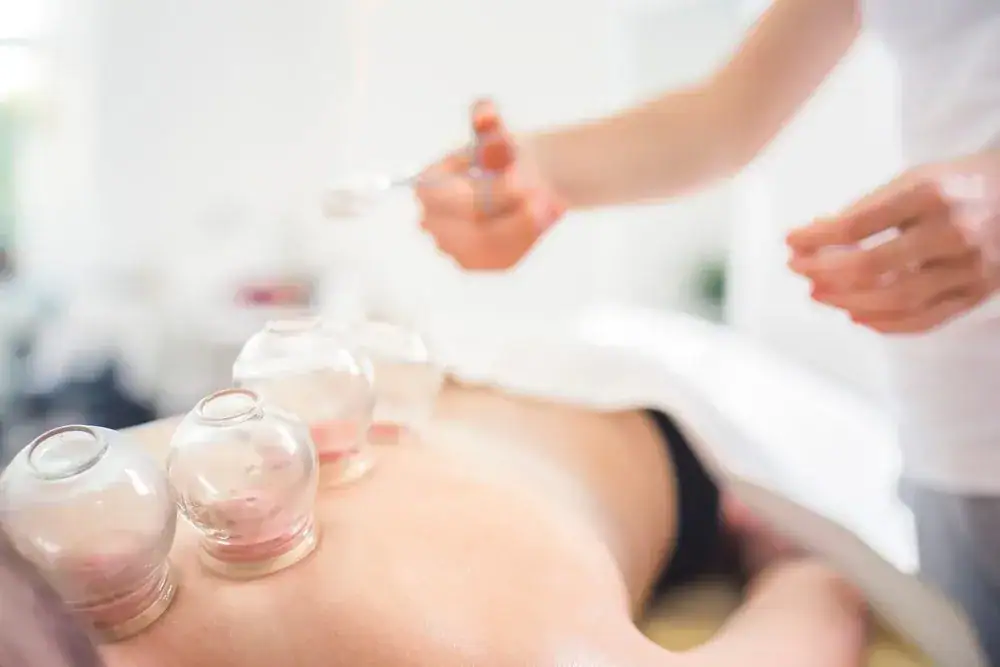
Yes, and there’s clinical evidence to back it up. Cupping increases blood flow to targeted areas, which helps release tight muscles, reduce inflammation, and speed up recovery. Studies show it’s particularly effective for musculoskeletal pain, including back pain, neck pain, and knee pain.
One of our patients—a runner with over a year of persistent pain—reported instant relief after just three minutes of cupping. After two sessions, he was symptom-free and back to his normal routine. That’s not unusual. Cupping works because it addresses the root cause: restricted circulation and built-up tension in the muscle tissue.
It’s not a miracle cure, and it doesn’t work for everyone the same way. But for people dealing with chronic tightness, limited mobility, or pain that hasn’t responded well to other treatments, cupping offers a non-invasive option that actually gets results.
The marks left by cupping aren’t bruises. They’re circular discolorations caused by increased blood flow to the surface of your skin. They look dramatic, but they’re not tender or painful. Most fade within three to five days, and you can speed up the process with proper aftercare like staying hydrated and avoiding intense heat immediately after treatment.
As for pain—cupping shouldn’t hurt. You’ll feel suction and a pulling sensation, which some people find uncomfortable at first, but it’s not sharp or unbearable. If anything feels too intense, your therapist adjusts the pressure immediately.
The marks are actually a sign the treatment is working. They show that old blood and metabolic waste are being drawn out of deep tissue, making room for fresh, oxygen-rich blood to flow in. If you’re concerned about visible marks for an event or something similar, just let us know ahead of time and we can adjust placement or timing.
It depends on what you’re treating and how long you’ve been dealing with it. Acute injuries or recent muscle strain often respond quickly—sometimes in one to three sessions. Chronic conditions like long-term back pain or recurring tension headaches usually need more consistent treatment, often as part of a broader physical therapy plan.
We’ve seen patients get significant relief after a single session, but that doesn’t mean the problem is fully resolved. Cupping helps your body heal, but healing takes time. Your therapist will give you a realistic timeline based on your specific condition, and we’ll adjust the plan as you progress.
Most people start with weekly sessions and then space them out as symptoms improve. The goal isn’t to keep you coming back forever—it’s to get you functional again and give you the tools to maintain that progress on your own.
If cupping is part of your physical therapy treatment plan, it’s often covered under your PT benefits. We accept Medicare and nearly all commercial insurance plans, and we handle the billing process so you’re not left guessing what you owe.
Coverage varies depending on your specific plan, so we recommend calling your insurance provider to confirm your physical therapy benefits before your first appointment. Our team can also verify coverage for you and let you know upfront what your out-of-pocket costs will be.
Even if cupping isn’t specifically listed as a covered service, it’s usually included as part of your overall PT session, which means you’re not paying extra for it as a standalone add-on. We’re transparent about costs from the start, and we’ll never surprise you with hidden fees or charges you weren’t expecting.
Cupping is most commonly used for musculoskeletal issues—back pain, neck pain, shoulder tension, knee pain, and muscle tightness from overuse or injury. But it’s also been shown to help with conditions like myofascial trigger points, limited range of motion, and even some respiratory issues by improving circulation and reducing inflammation.
Athletes use cupping to speed up recovery between training sessions and reduce soreness. People with chronic conditions like arthritis or fibromyalgia use it to manage pain without relying solely on medication. It’s also effective for tension headaches caused by tight neck and shoulder muscles.
That said, cupping isn’t a cure-all. It works best when combined with other physical therapy techniques like stretching, strengthening exercises, and manual therapy. Your therapist will assess whether cupping is appropriate for your specific condition and build a treatment plan that addresses your goals—not just your symptoms.
You can buy cupping kits online, but that doesn’t mean you should use them without guidance. Cupping requires knowledge of anatomy, proper placement, and how much suction to apply. Done incorrectly, it can cause skin irritation, excessive bruising, or even injury.
Licensed physical therapists know where to place cups based on your specific pain patterns and movement restrictions. They also know how to integrate cupping into a larger treatment plan that includes other therapies to maximize results. At-home kits don’t come with that expertise.
If you’re dealing with chronic pain, limited mobility, or an injury that isn’t healing, professional treatment is worth it. You’ll get better results, avoid potential complications, and have someone monitoring your progress to make sure the treatment is actually working. Once you’ve been through a few sessions and understand the technique, your therapist can teach you safe ways to use cupping at home as part of your ongoing care—but starting with a professional is the smarter move.
Other Services we provide in Plainedge