

You’re dealing with back pain that won’t quit, neck tension that’s been there for months, or shoulders that feel locked up no matter what you try. You’ve probably taken more ibuprofen than you’d like to admit. Maybe you’ve tried massage, heat, ice, stretching. Some days are better than others, but the pain keeps coming back.
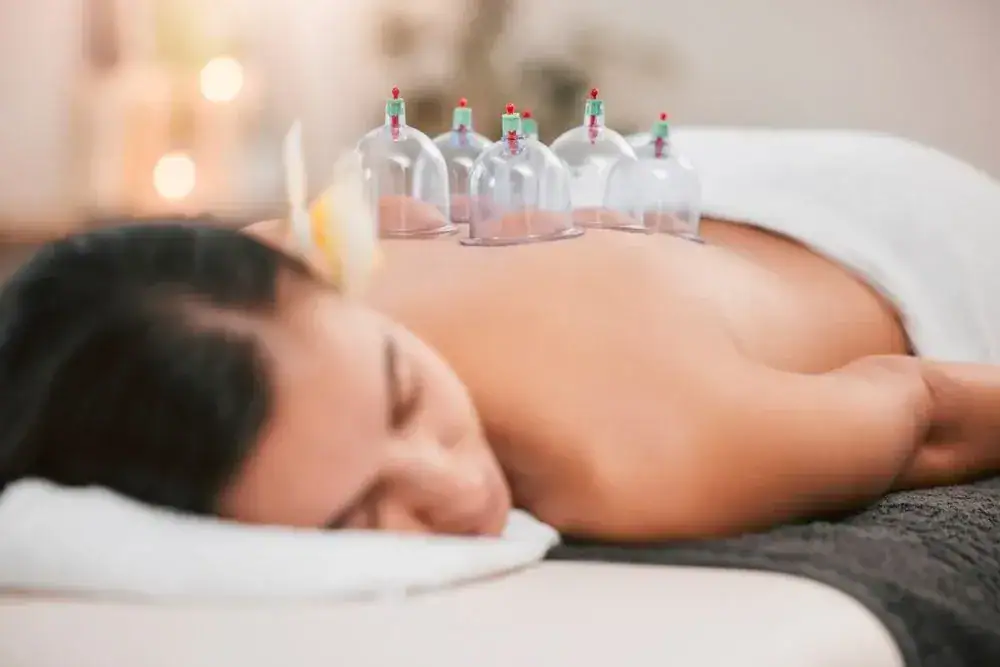
Cupping therapy works by creating suction on your skin that increases blood flow to tight, painful areas. More blood means more oxygen and nutrients reaching damaged tissue. It also helps break up adhesions and scar tissue that restrict your movement. The cups stay on for 5-10 minutes while they do their work.
What you get is real relief. Not just for a few hours, but the kind that lets you sleep through the night, turn your head to check your blind spot, or pick up your kid without wincing. You move better because your muscles aren’t fighting against themselves anymore. The tension releases. The stiffness eases up. You get back to doing what you need to do without planning your day around pain.
We’ve been treating patients across Long Island for years, including right here in Oyster Bay. We’re not a spa offering cupping as an add-on. We’re licensed physical therapists who use cupping as part of a complete treatment approach.
Every cupping session is administered by a licensed PT who understands musculoskeletal conditions, not just the technique itself. We assess your specific pain points, review your medical history, and create a treatment plan that makes sense for your body. That means proper sterilization, appropriate cup placement, and realistic expectations about what cupping can and can’t do.
Oyster Bay residents deal with the same issues we see across Nassau County: desk jobs that wreck your neck and shoulders, weekend warrior injuries that don’t heal right, chronic lower back pain from years of wear and tear. We’ve treated all of it. Our approach is straightforward: figure out what’s causing your pain, treat it effectively, and give you the tools to keep it from coming back.
Your first visit starts with an evaluation. We need to understand where you’re hurting, how long it’s been going on, and what you’ve already tried. We’ll look at your range of motion, check for muscle restrictions, and identify trigger points. This isn’t a quick chat—we’re gathering real information to build your treatment plan.
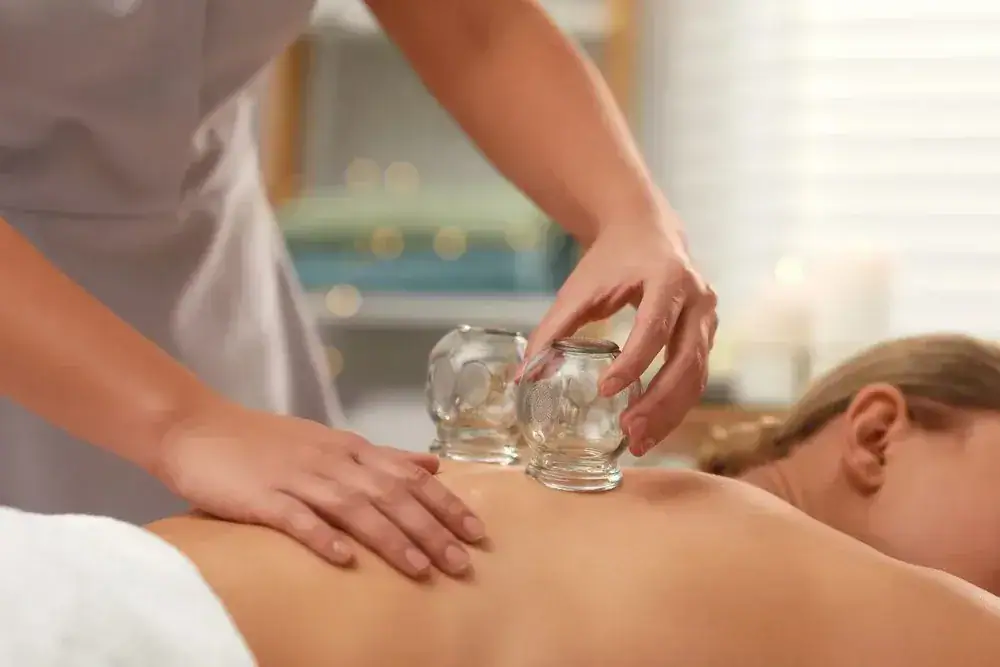
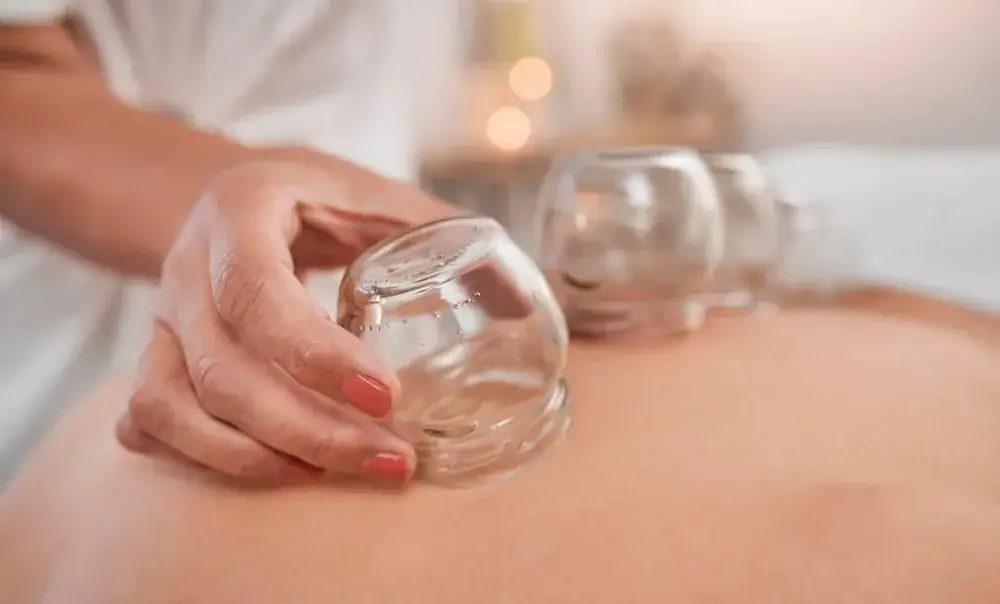
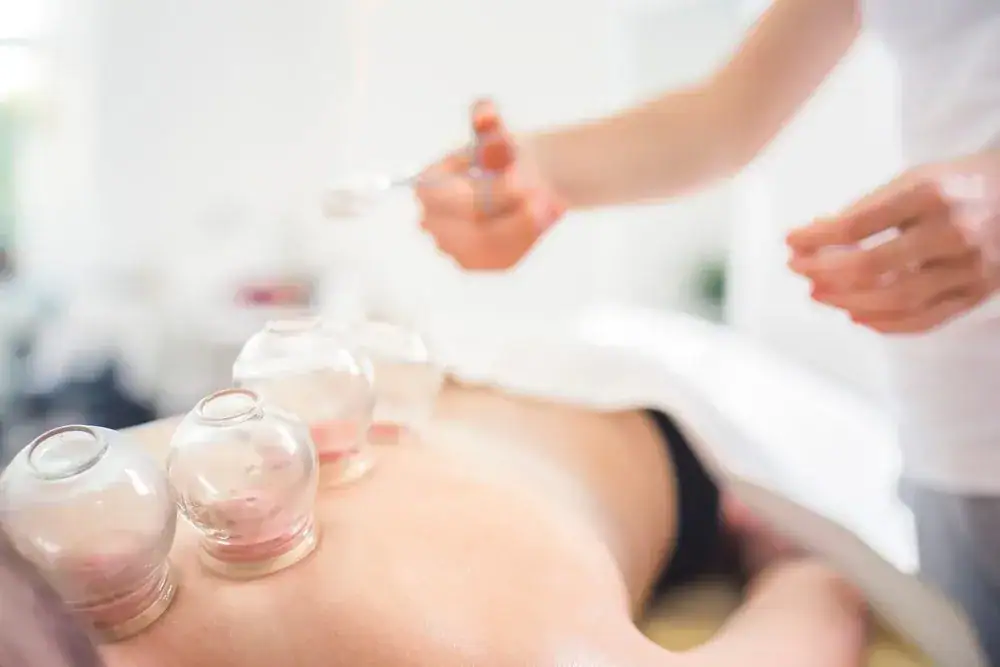
Once we know what we’re dealing with, we clean and prep the treatment area. Then we place cups on specific spots using a pump to create suction. You’ll feel pulling and pressure, but it shouldn’t hurt. The cups stay on for 5-10 minutes while they increase circulation and release tight tissue. Some people find it relaxing. Others just notice the pulling sensation.
After we remove the cups, you’ll see circular marks where they were placed. These aren’t bruises—they’re a result of increased blood flow to the area. They fade within a week to ten days. Most people feel some immediate relief, but the full effect builds over your next few sessions. We’ll usually recommend starting with two sessions per week, then adjusting based on how you respond. Between visits, we might give you stretches or modifications to support the work we’re doing.
Ready to get started?
We use dry cupping, which means no needles, no incisions, no blood. Just suction cups and a pump. It’s a low-risk treatment that works well for chronic pain conditions, muscle tension, trigger points, and restricted mobility. We often combine it with other physical therapy techniques like manual therapy, therapeutic exercise, or myofascial release depending on what your body needs.
Here in Oyster Bay and across Long Island, we see a lot of repetitive strain injuries from desk work, chronic lower back pain, and sports-related muscle issues. Cupping works particularly well for these because it targets the soft tissue restrictions that other treatments miss. It’s also effective for headaches caused by neck tension and for improving recovery time after intense physical activity.
Each session is customized. We’re not running you through a standard protocol. If your left shoulder needs more attention than your right, that’s what we focus on. If you’re recovering from an injury and need gentler treatment, we adjust the suction pressure. If you’re an athlete looking to improve performance and recovery, we can work more aggressively. The treatment adapts to you, not the other way around.
You’ll leave each session with clear information about what we did, why we did it, and what to expect over the next few days. No guessing. No mystery. Just straightforward care that’s designed to get you out of pain and keep you there.
Yes, but you need to understand what it’s doing. Cupping increases blood flow to painful areas, which brings oxygen and nutrients that help tissue heal. It also creates space between muscle layers that have been stuck together, which is often what’s causing your pain and limiting your movement.
For chronic back pain specifically, cupping helps release the deep muscle tension that builds up over time. Your back muscles compensate for poor posture, old injuries, or repetitive movements by staying constantly contracted. That restriction cuts off circulation and creates trigger points. Cupping breaks that cycle by forcing fresh blood into the area and releasing the adhesions.
Research shows that cupping can reduce muscle pain and stiffness, and we see it work consistently with our patients. But it’s not magic. If your back pain is from a herniated disc or spinal stenosis, cupping might help manage symptoms but it won’t fix the underlying issue. That’s why we do a full evaluation first. We need to know if cupping is the right tool for your specific problem, or if you need a different approach.
Usually between three and ten days. The marks look like circular bruises, but they’re not actually bruises in the traditional sense. They’re caused by blood being pulled to the surface and small capillaries expanding under the suction. The darker the mark, the more stagnation or restriction was in that area.
The marks fade gradually, starting from the edges and working inward. They don’t hurt. You might feel some tenderness in the treated area for a day or two, similar to post-workout soreness, but the marks themselves are just visual. If you have an event coming up where you’ll be showing that area of skin, let us know and we can adjust timing or placement.
Some people don’t mark much at all, especially after several treatments. That usually means circulation has improved and there’s less stagnation in the tissue. Others mark heavily every time. Both responses are normal. The marks aren’t an indicator of how well the treatment is working—they’re just a side effect of the process.
Cupping is low-risk when it’s done by a licensed practitioner who knows what they’re doing. The most common side effects are the circular marks and some temporary soreness. Occasionally people feel lightheaded during or after treatment, which is why we have you rest for a few minutes before you leave.
We don’t use cupping if you have certain conditions. Active skin infections, open wounds, or severe varicose veins in the treatment area are all contraindications. If you’re on blood thinners, we need to know because you’ll mark more heavily and we might need to adjust our approach. Pregnant women can receive cupping in some areas but not others, so we evaluate case by case.
The biggest risk is improper technique or leaving cups on too long, which can cause blistering or tissue damage. That’s why licensure matters. We follow strict protocols: cups stay on for no more than 10 minutes, we sterilize equipment between patients, and we monitor your skin response throughout the session. We also take a full medical history before your first treatment to identify any potential issues. When it’s done right, cupping is one of the safer manual therapy techniques available.
Most people notice some improvement after the first session, but real, lasting change usually takes four to six sessions. That’s not us trying to book more appointments—it’s just how tissue responds to treatment. The first session breaks up surface-level restrictions and gets blood moving. Subsequent sessions work deeper and address the underlying patterns causing your pain.
We typically start with twice a week for two to three weeks, then space out to once a week as you improve. If you’re dealing with acute pain from a recent injury, you might see faster results. Chronic conditions that have been building for months or years take longer because we’re undoing patterns your body has held onto for a long time.
Some people use cupping as ongoing maintenance once their pain is under control, coming in every few weeks to prevent issues from building back up. Others complete a treatment series and they’re done. It depends on your specific condition, your goals, and how your body responds. We’ll give you a realistic timeline after your evaluation, and we adjust the plan as we go based on your progress.
Yes, and many do. You probably saw Olympic athletes with cupping marks back in 2016. They weren’t doing it for show—cupping helps with muscle recovery, reduces soreness, and can improve range of motion. For athletes, that translates to better performance and less downtime between training sessions.
Cupping works for athletes because it addresses the muscle tension and microtrauma that builds up from repetitive movements and intense training. It increases circulation to overworked muscles, helps clear metabolic waste that causes soreness, and releases fascial restrictions that limit your range of motion. We’ve treated runners with IT band issues who got relief after just a few sessions, and tennis players with chronic shoulder tension who finally regained full mobility.
The key is timing. Some athletes come in right after competition or hard training to speed recovery. Others use it during their training cycle to maintain tissue health and prevent injuries. We can also use cupping before competition to loosen up tight areas and improve movement quality. It’s versatile. If you’re training seriously for something—whether that’s a marathon, a tournament, or just trying to stay active without getting hurt—cupping can be a useful tool in your overall program.
Training, assessment, and treatment goals. At a spa, cupping is usually offered as a relaxation treatment. The person doing it might have taken a weekend course, but they’re not evaluating your musculoskeletal system or creating a treatment plan based on your specific condition. It might feel good, but it’s not addressing the root cause of your pain.
At a physical therapy clinic like ours, cupping is administered by licensed PTs who understand anatomy, biomechanics, and pathology. We’re not just placing cups randomly—we’re targeting specific muscles, trigger points, and fascial restrictions based on a clinical evaluation. We know which areas to treat, how much suction to use, and how to integrate cupping with other therapies to get you the best results.
We also manage safety differently. We review your medical history, check for contraindications, and monitor your response throughout treatment. If something isn’t working or if we see a reaction that concerns us, we adjust immediately. Our goal isn’t relaxation—though many people do find it relaxing. Our goal is functional improvement: less pain, better movement, and getting you back to your normal activities. That requires clinical expertise, not just technique.
Other Services we provide in Oyster Bay