
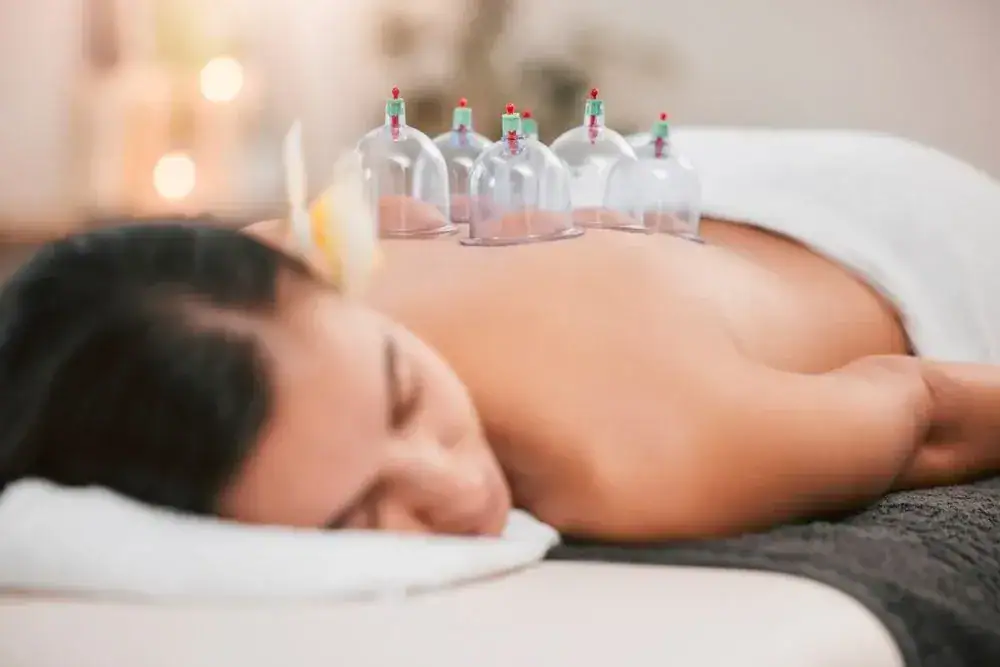

You know that tightness in your back that won’t quit? The shoulder that limits how you reach? The knee pain that changes how you walk? Cupping therapy addresses those issues by increasing blood flow to the exact areas that need it most. The suction from specialized cups pulls fresh circulation into tight, overworked tissue while helping your body release what’s been locked up.
Most people feel a difference during their first session. Not a temporary distraction from pain—actual improvement in how the area moves and feels. Your range of motion opens up. That constant tension starts to ease. You’re not masking the problem or waiting weeks to see if something might work.
Cupping fits naturally into a complete physical therapy plan. It works alongside stretching, strengthening, and hands-on therapy to give you faster, more lasting results. Whether you’re dealing with chronic lower back pain, recovering from an injury, or trying to stay active without constant discomfort, this approach helps your body do what it’s been struggling to do on its own.
We’ve built our reputation across multiple locations in Nassau County by focusing on what actually helps people get better. Our team in Old Westbury combines evidence-based treatments like cupping therapy with personalized care that adapts to your specific situation—not a one-size-fits-all protocol.
Old Westbury residents deal with the same challenges as the rest of Long Island: aging joints, active lifestyles that lead to overuse injuries, and the reality that many people want to avoid long-term medication use. We’ve treated thousands of patients who were looking for a better option than just managing symptoms.
Every treatment plan here starts with understanding what’s limiting you right now and what you need to get back to. We don’t rush through appointments or hand you a generic exercise sheet. You get focused attention, secure management of your care information, and a team that’s been serving this community long enough to know what Old Westbury patients expect.
Your first visit starts with an evaluation. We need to understand where your pain is coming from, what movements are limited, and what’s been tried before. This isn’t a quick chat—it’s a real assessment that determines whether cupping therapy makes sense for your specific condition.
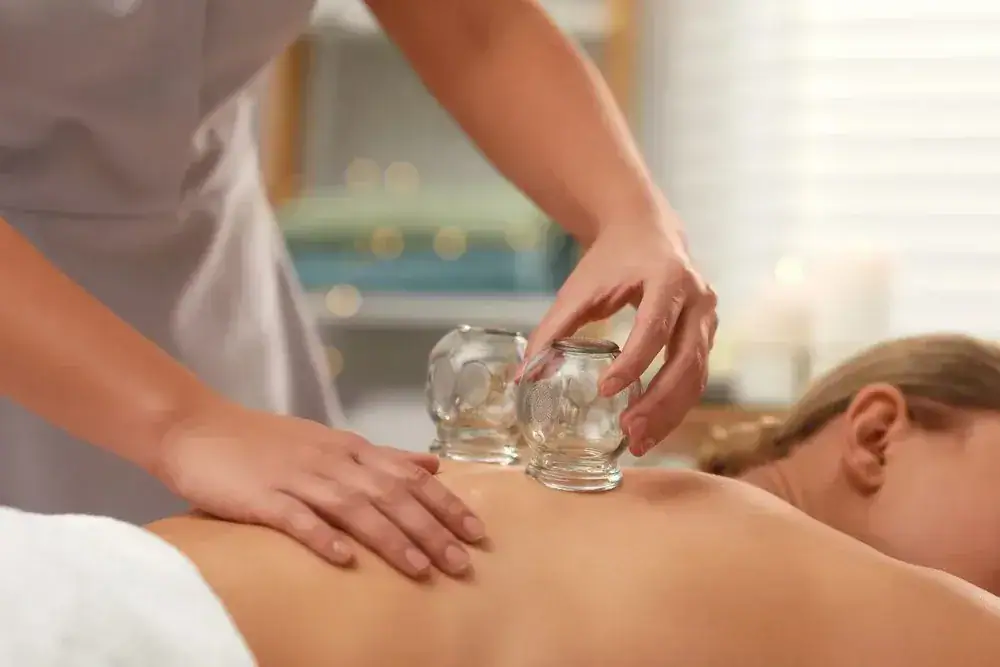
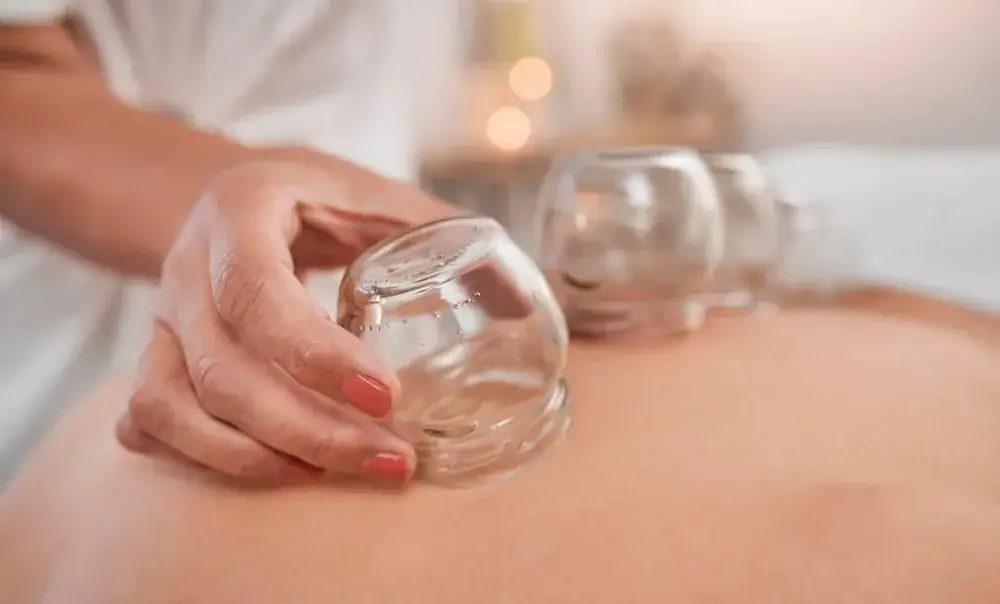
During the treatment itself, your therapist places specialized cups on targeted areas of your body. These create suction that draws blood flow to the tissue underneath. You’ll feel pulling and pressure, but it shouldn’t hurt. Most people find it surprisingly relaxing. The cups stay in place for several minutes while they do their work—loosening tight fascia, reducing inflammation, and helping muscles release tension they’ve been holding.
After the cups come off, you might notice circular marks on your skin. That’s normal and temporary—they fade within a few days. More importantly, you’ll likely notice improved mobility right away. Your therapist will often combine cupping with other techniques during the same session: manual therapy, specific exercises, or stretching that takes advantage of the increased blood flow and reduced muscle tension.
Treatment plans vary based on what you’re dealing with. Some people see significant improvement in just a few sessions. Others with chronic conditions benefit from regular cupping as part of ongoing physical therapy. Your therapist will be straight with you about what to expect and how long it typically takes to see the results you’re after.
Ready to get started?
Cupping therapy at Medcare isn’t a standalone spa treatment. It’s part of comprehensive physical therapy care designed to address real musculoskeletal problems. We use dry cupping—no needles, no blood, just controlled suction applied to specific points based on your evaluation.
This treatment works particularly well for chronic lower back pain, neck tension, shoulder mobility issues, and knee pain—all common complaints among Nassau County residents who are active, aging, or dealing with old injuries that never fully resolved. The therapy increases local blood circulation, helps break up adhesions in tight tissue, and creates space for muscles that have been compressed or overworked.
Old Westbury patients often come to us after trying medication, rest, or other treatments that didn’t fully solve the problem. Many are specifically looking for drug-free pain management because they’ve seen the risks associated with long-term medication use or they simply want their body to heal properly rather than masking symptoms. Cupping addresses the root cause—restricted blood flow, tight fascia, and muscle tension—rather than just covering up what you feel.
You’ll work with licensed physical therapists who understand how to integrate cupping into a complete care plan. That might include therapeutic exercises to strengthen supporting muscles, manual therapy to address joint restrictions, and education about movement patterns that contribute to your pain. Everything is personalized based on your evaluation, your goals, and how your body responds to treatment.
Cupping therapy has moderate-quality clinical evidence supporting its effectiveness for chronic pain conditions, particularly lower back pain, neck pain, and knee osteoarthritis. This isn’t about temporary distraction—it’s about improving blood flow and reducing muscle tension in ways that help your body function better.
Many people do feel immediate relief after a session, but the real value comes from how cupping fits into a complete treatment plan. When combined with strengthening exercises, proper movement patterns, and other physical therapy techniques, the improvements tend to last. Your muscles learn to release tension more easily, your joints move through a fuller range of motion, and the underlying issues get addressed rather than just managed.
That said, cupping isn’t magic. If you’re dealing with severe structural problems, nerve damage, or conditions that require medical intervention, cupping alone won’t fix it. But for musculoskeletal pain caused by tight muscles, poor circulation, or overuse—which describes most of what we see in Old Westbury—it’s an effective, evidence-based tool that helps people get better faster than physical therapy without it.
Your first session starts with an evaluation, not treatment. Your therapist needs to understand your pain, test your range of motion, and determine whether cupping is appropriate for your specific condition. This takes time—expect questions about your medical history, what makes your pain worse or better, and what you’ve already tried.
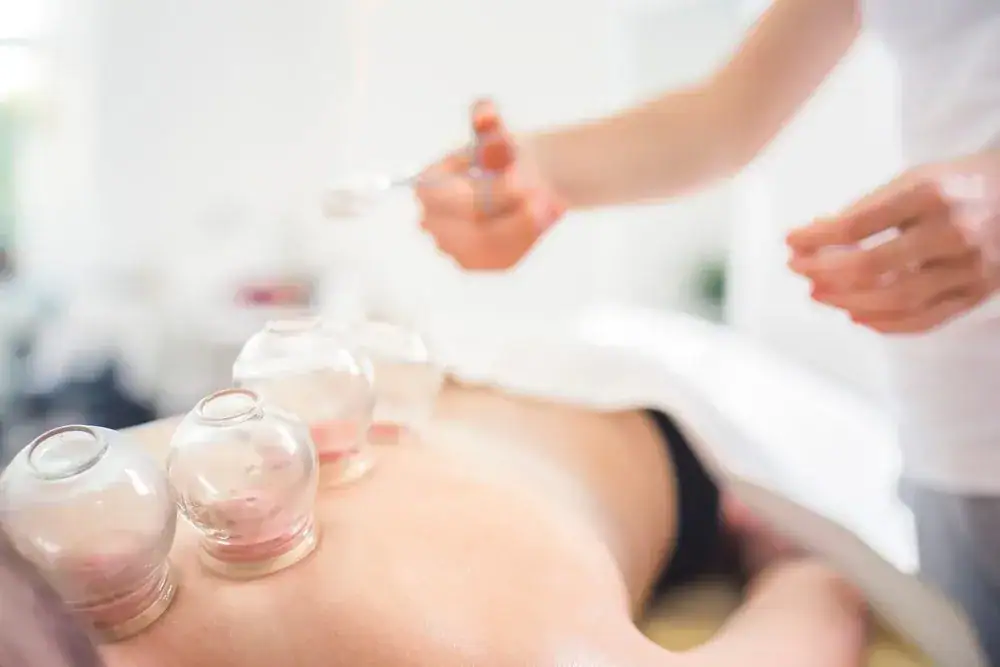
If cupping makes sense for you, treatment usually happens during that same visit. You’ll lie down in a comfortable position while your therapist places cups on the targeted areas. The suction creates a pulling sensation—tight at first, then usually relaxing as your muscles start to release. Cups typically stay in place for 5-15 minutes depending on the area and your tolerance.
Afterward, you’ll see circular marks where the cups were placed. These aren’t bruises in the traditional sense—they’re caused by increased blood flow to the area and usually fade within 3-7 days. Most people feel looser and move better immediately after treatment. Your therapist will likely give you specific exercises or stretches to do at home that build on what the cupping accomplished. Follow-up sessions get scheduled based on how your body responds and what your overall treatment plan requires.
Cupping is widely considered safe when performed by trained professionals like licensed physical therapists. The most common side effect is temporary circular marks on your skin that fade within a week. Some people experience mild soreness in the treated area for a day or two—similar to how muscles feel after a deep massage.
Serious side effects are rare but can include skin irritation or, in very uncommon cases, burns if heat is used improperly. At Medcare, we use dry cupping without heat, which minimizes these risks. Your therapist will check your skin before and during treatment to ensure everything is responding normally.
Cupping isn’t appropriate for everyone. If you’re taking blood thinners, have certain skin conditions, or are pregnant, your therapist will discuss whether cupping is safe for you or if other physical therapy techniques make more sense. That’s why the evaluation matters—we’re not just applying cups to everyone who walks through the door. The treatment gets tailored to your specific situation, and if cupping isn’t the right fit, we’ll tell you what is.
It depends entirely on what you’re treating and how long you’ve been dealing with it. Acute muscle tension or minor injuries often respond quickly—you might feel significantly better after 2-3 sessions. Chronic conditions like long-standing back pain or arthritis typically require more consistent treatment, sometimes 6-8 sessions or ongoing care as part of a maintenance plan.
Your therapist will give you a realistic timeline after your evaluation. They’ll consider how severe your condition is, how your body responds to the first treatment, and what other factors might be contributing to your pain. Some Old Westbury patients come in for a short series of treatments and then they’re done. Others find that regular cupping every few weeks helps them stay active and pain-free long-term.
What matters most is that you’re seeing measurable progress—better range of motion, less pain during specific activities, improved function in daily life. If you’re not improving within a reasonable timeframe, your therapist should adjust the approach or recommend additional evaluation. Physical therapy isn’t about endless appointments. It’s about getting you better and keeping you better with the fewest sessions necessary.
Yes, and in most cases, that’s exactly how cupping works best. At Medcare, we integrate cupping into comprehensive physical therapy plans that might also include manual therapy, therapeutic exercises, stretching protocols, and patient education. These treatments complement each other—cupping increases blood flow and releases muscle tension, which makes your exercises more effective and helps your body respond better to hands-on therapy.
If you’re receiving care from other providers—chiropractors, massage therapists, or medical doctors—let your physical therapist know. Cupping generally works well alongside other treatments, but your care team should be aware of everything you’re doing so they can coordinate effectively. For example, if you’re taking certain medications or receiving injections, timing might matter.
The goal is to create a complete approach that addresses your pain from multiple angles. Cupping handles the muscle tension and circulation issues. Strengthening exercises address weakness that contributes to poor movement patterns. Manual therapy works on joint restrictions. When these treatments work together under one roof with a coordinated plan, you get better results faster than bouncing between different providers who aren’t communicating with each other.
We offer cupping therapy as part of complete physical therapy care, not as an isolated treatment. You’re working with licensed physical therapists who understand musculoskeletal conditions, movement dysfunction, and how to build treatment plans that actually solve problems rather than just providing temporary relief.
Our Old Westbury location serves Nassau County residents who want evidence-based care without the runaround. We don’t oversell what cupping can do, and we don’t use it on every patient regardless of whether it makes sense. Your treatment plan is based on your specific evaluation, your goals, and what your body needs—not a predetermined protocol.
You also get the security and professionalism that comes from working with an established practice. Our digital profiles are properly verified, your patient data is managed securely, and our staff follows rigorous protocols to ensure continuity of care. We’ve been serving multiple communities across Long Island long enough to have a reputation we protect. That means transparent communication, personalized attention, and a team that’s accountable for your results. You’re not just getting cupping therapy—you’re getting a partner in your recovery who knows what they’re doing and has the track record to prove it.
Other Services we provide in Old Westbury