


You stop planning your day around what hurts. That’s what happens when muscle tension releases and blood flow returns to areas that have been tight for months or years.
Cupping therapy uses controlled suction to lift tissue, increase circulation, and break up adhesions that cause stiffness. It’s not a temporary fix. It’s a way to address the root cause of muscle pain, whether that’s from sitting at a desk all day, pushing through workouts, or dealing with chronic neck and back issues that won’t quit.
Most people notice a difference after the first session. Less tightness. Better range of motion. The kind of relief that makes you realize how long you’ve been compensating. And because it’s drug-free, you’re not adding another prescription to manage or worrying about side effects down the line.
We’ve been serving Old Field and the surrounding North Shore communities with professional physical therapy for years. Every cupping session is performed by a licensed physical therapist trained in modern myofascial decompression techniques—not a spa treatment, but a clinical intervention.
We manage multiple locations across Long Island, and we’ve built our reputation on doing things the right way. That means verified credentials, secure patient data, and a team that stays current on evidence-based practices. Old Field residents expect a high standard of care, and we meet it.
You’re not walking into a franchise or a rotating door of staff. You’re working with professionals who understand musculoskeletal pain and how to treat it effectively.
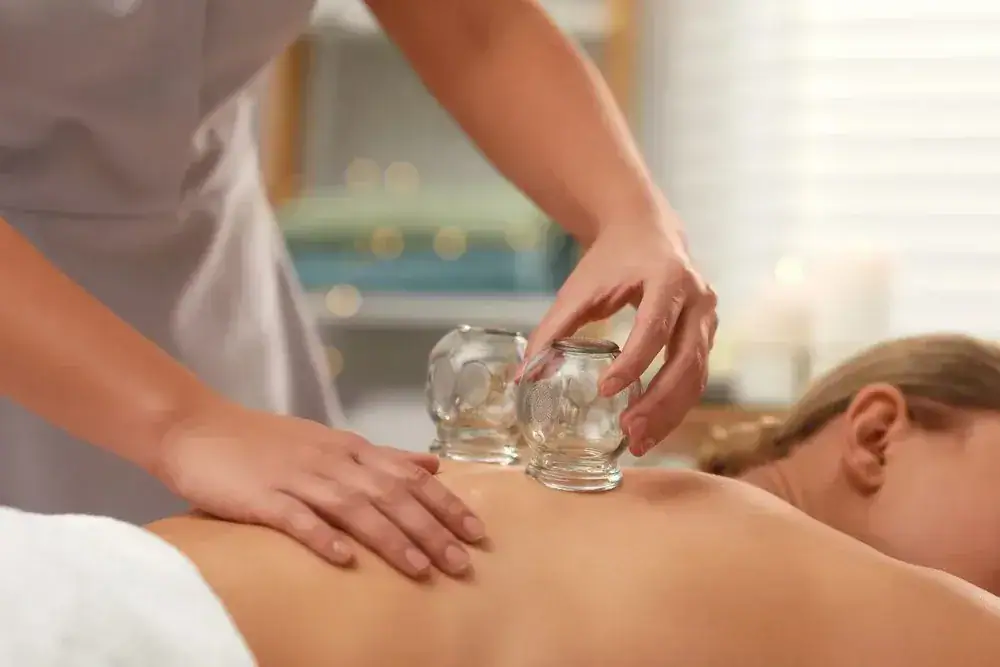
Your therapist starts with an assessment. They need to understand where the pain is, how long it’s been there, and what movements make it worse. This isn’t a one-size-fits-all treatment.
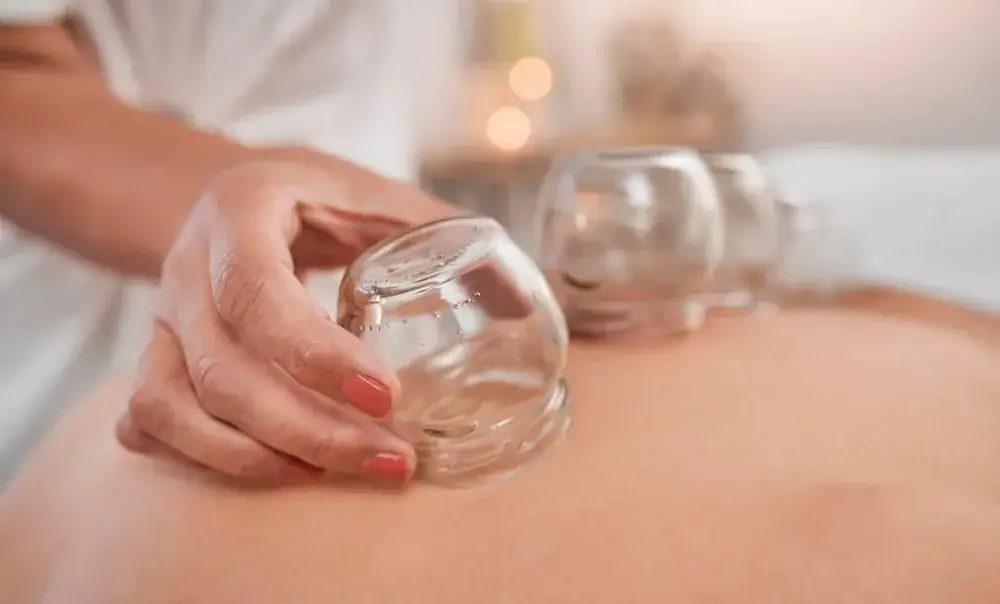
Once they’ve identified the areas to target, they apply cups to your skin using suction. The negative pressure pulls tissue upward, increasing blood flow and hydration to muscles that have been starved of circulation. You’ll feel the pull, but it shouldn’t hurt. Most people describe it as a deep, relieving pressure.
The cups stay on for several minutes, sometimes longer depending on the technique. Your therapist may leave them stationary or move them across your skin to release fascia. Afterward, you might see some circular marks—that’s normal and fades within a few days.
Cupping works best when combined with other physical therapy interventions like manual therapy, stretching, or strengthening exercises. Your therapist will build a plan that makes sense for your specific condition, not just apply cups and send you home.
Ready to get started?
You’re getting a licensed physical therapist who knows how to assess your pain, not just someone who learned cupping in a weekend course. That matters when you’re dealing with chronic issues or trying to avoid re-injury.
Old Field has one of the highest median household incomes on Long Island, and that comes with high-pressure jobs, long hours, and stress that shows up in your neck, shoulders, and back. Cupping therapy addresses that tension directly by improving local blood flow and releasing tight fascia. It’s effective for conditions like chronic neck pain, low back pain, and fibromyalgia—all backed by clinical evidence.
You also get a treatment plan that fits your schedule. Sessions are efficient, and there’s no extended recovery time. You can go back to work, exercise, or whatever else you need to do. And because we integrate cupping with other physical therapy techniques, you’re not just masking symptoms—you’re building long-term mobility and strength.
Yes, and there’s evidence to support it. Studies show that cupping is effective for chronic low back pain when used alongside other physical therapy interventions. It works by increasing blood flow to tight, painful areas and helping to release fascial adhesions that restrict movement.
If you’ve been dealing with back pain for months or years, cupping won’t fix everything in one session. But it can significantly reduce muscle tension and improve your range of motion, which makes other treatments—like strengthening exercises or manual therapy—more effective. Most patients notice less stiffness and better movement after just a few sessions.
The key is working with a licensed physical therapist who can assess your specific condition and build a treatment plan that addresses the root cause, not just the symptoms. Cupping is one tool in that plan, and it’s particularly useful for people who want to avoid long-term medication use or more invasive procedures.
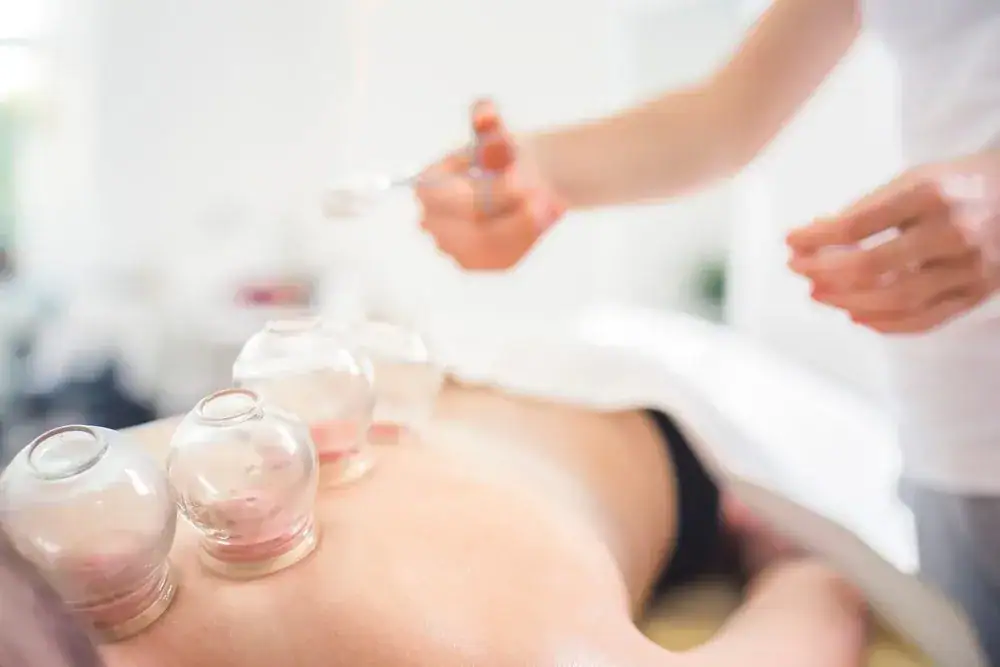
Dry cupping is what most people think of when they hear “cupping therapy.” It uses suction alone—no needles, no incisions, no blood. The cups create negative pressure that pulls tissue upward, increasing circulation and releasing tight muscles. It’s non-invasive and safe when performed by a trained professional.
Wet cupping, by contrast, involves making small incisions in the skin to draw out blood. That’s not what we do here, and it’s not typically part of modern physical therapy practice in the U.S. Dry cupping is the standard in clinical settings because it’s effective, low-risk, and doesn’t require any recovery time.
There’s also something called myofascial decompression, which is essentially dry cupping with a more specific focus on fascia and connective tissue. We may use that term, but the technique is similar—using suction to lift tissue, improve blood flow, and restore mobility. The approach is tailored to your condition, whether that’s muscle tension, sports injury recovery, or chronic pain management.
Some people feel relief after one session. Others need a few weeks of consistent treatment to see lasting change. It depends on what you’re dealing with—acute muscle strain responds faster than chronic pain that’s been building for years.
Your physical therapist will give you a realistic timeline during your initial assessment. They’ll look at your pain level, range of motion, and how your body responds to the first session. If you’re combining cupping with other therapies like stretching, strengthening, or manual techniques, you’ll likely see results faster because you’re addressing the problem from multiple angles.
Most treatment plans involve weekly sessions for a few weeks, then tapering off as you improve. The goal isn’t to keep you coming back indefinitely—it’s to get you functional, pain-free, and able to maintain that progress on your own. If something isn’t working, your therapist will adjust the plan. You shouldn’t be guessing whether treatment is helping.
It depends on your plan and how the treatment is billed. When cupping is performed by a licensed physical therapist as part of a broader physical therapy treatment plan, many insurance companies will cover it under your PT benefits. It’s typically coded as a manual therapy technique, not as a separate service.
That said, coverage varies. Some plans require a referral from your primary care doctor. Others have limits on how many PT sessions they’ll cover per year. We recommend calling your insurance provider before your first appointment to confirm your benefits and understand any out-of-pocket costs.
Our team can help verify your coverage and walk you through what to expect. With 98.2% of Old Field residents having health insurance and a high percentage on employee plans, most people find that their benefits cover at least part of their treatment. If you have questions about billing or need help navigating your plan, just ask during scheduling.
Yes, cupping usually leaves circular marks where the cups were placed. They look like bruises but aren’t painful. The marks are caused by increased blood flow and the breaking up of stagnant fluids in the tissue—it’s actually a sign that the treatment is working.
Most marks fade within three to seven days, depending on how much suction was used and how your body responds. Some people barely mark at all, while others see darker circles that take a bit longer to disappear. Your therapist can adjust the intensity if you’re concerned about visible marks for an upcoming event.
The marks aren’t harmful, and they don’t indicate tissue damage. In fact, many athletes wear them as a badge of honor—you’ve probably seen Olympic swimmers and runners with cupping marks during competitions. If you’re self-conscious about them, let your therapist know. They can modify the treatment or focus on areas that are easier to cover with clothing.
Absolutely. Cupping works best when it’s part of a comprehensive treatment plan. Your therapist might use it alongside manual therapy, joint mobilization, therapeutic exercise, or stretching techniques depending on what your body needs.
For example, if you’re dealing with chronic neck pain from desk work, your therapist might use cupping to release tight muscles in your upper back and shoulders, then follow up with strengthening exercises to improve posture and prevent the pain from coming back. Or if you’re recovering from a sports injury, cupping can help reduce muscle stiffness and improve blood flow, making it easier to regain full range of motion through targeted rehab exercises.
The goal is to address your pain from multiple angles so you get faster, longer-lasting results. Cupping alone can provide relief, but combining it with other evidence-based therapies gives you the best chance of full recovery. Your therapist will design a plan that makes sense for your specific condition and adjust it as you progress.
Other Services we provide in Old Field