
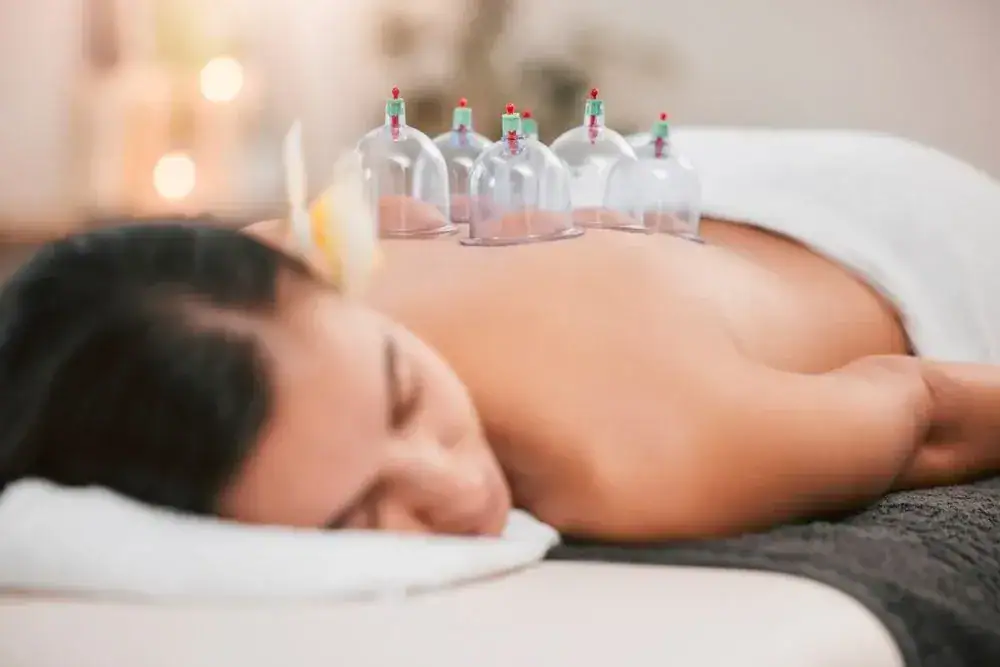

You’re not looking for temporary fixes. You want to sleep through the night without your back waking you up. You want to reach for something without that sharp pull in your shoulder. You want to get through your day without constantly adjusting how you sit, stand, or move.
Cupping therapy works by increasing blood flow to areas where muscles have been tight for too long. That suction you feel during treatment isn’t just for show. It’s pulling fresh blood into tissue that’s been starved of circulation, releasing trigger points that have been locked up for months or years.
Most people notice their range of motion improves after the first session. The tension that’s been limiting how you turn your neck or bend forward starts to let go. Your muscles stop fighting you. And when inflammation drops, so does the constant ache that’s been following you around.
This isn’t about masking symptoms. It’s about giving your body what it needs to actually heal.
We’ve been serving Nassau County for over a decade, with affiliated centers in Smithtown and Speonk. Every therapist on our staff is licensed and trained in hands-on techniques that go beyond standard physical therapy protocols.
You’re not getting a one-size-fits-all treatment plan here. Your first visit includes a full evaluation to figure out what’s actually causing your pain, not just where it hurts. From there, your therapist builds a plan that might include cupping, manual therapy, targeted exercise, or a combination depending on what your body needs.
Old Bethpage residents deal with the same wear and tear everyone on Long Island does: long commutes, desk jobs, weekend warrior injuries, and the kind of chronic pain that builds up slowly until it’s impossible to ignore. We’ve been treating those exact issues since 2010, and we know what works.
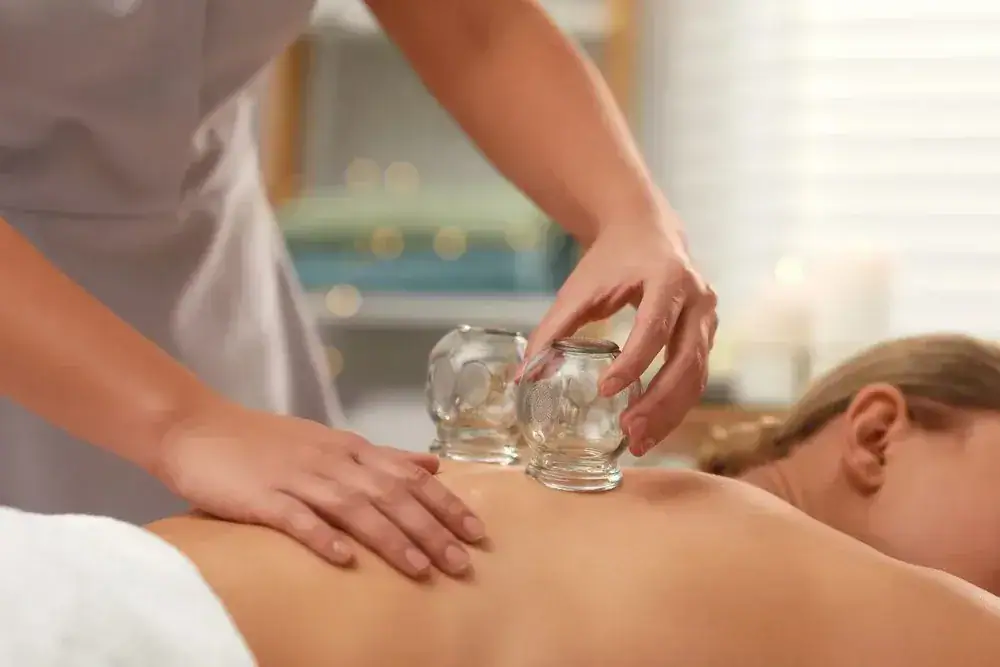
Your first appointment starts with a conversation. Your therapist needs to know where you’re feeling pain, how long it’s been there, and what makes it better or worse. They’ll also assess your range of motion and check for areas of tightness or restricted movement.
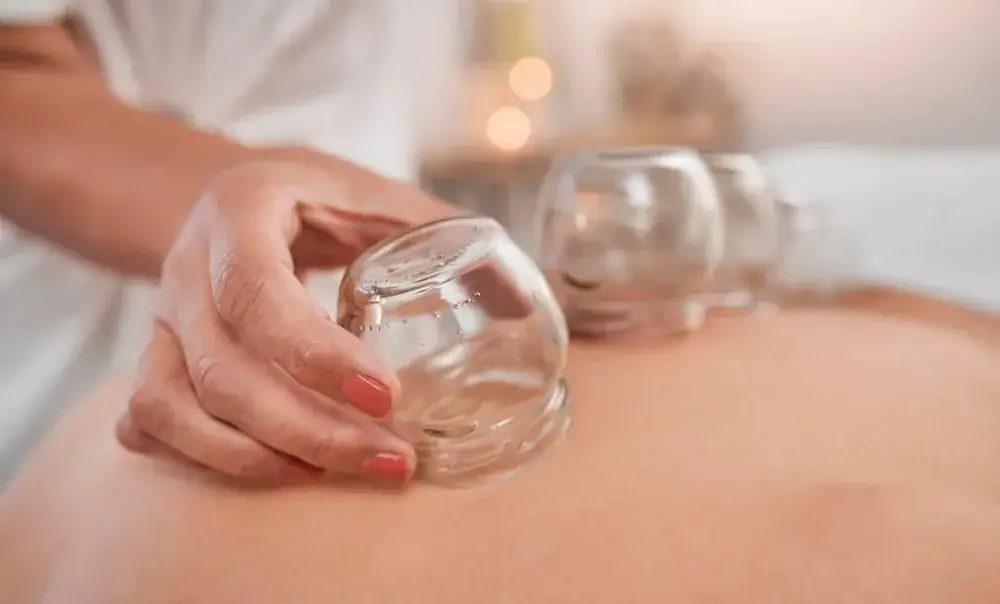
Once they understand what’s going on, they’ll explain how cupping fits into your treatment. Dry cupping uses suction cups placed directly on your skin over the affected muscles. The vacuum effect pulls tissue upward, increasing blood flow and encouraging those tight muscle fibers to release. You’ll feel the suction, but it shouldn’t hurt. Most people describe it as a pulling sensation that’s surprisingly relaxing.
Sessions typically last 30 to 45 minutes. The cups stay in place for several minutes at a time, and your therapist may move them around to target different areas. You might see circular marks afterward, which are normal and fade within a few days. Those marks aren’t bruises; they’re a sign that blood flow increased in areas that needed it.
After your session, you’ll get clear guidance on what to expect and how to support your recovery between visits. Some people feel immediate relief. Others notice gradual improvement over the next few days as inflammation continues to drop.
Ready to get started?
Cupping works well for low back pain, neck pain, shoulder tension, and chronic muscle tightness that hasn’t responded to other treatments. It’s also effective for myofascial pain, where the connective tissue around your muscles gets stuck and limits movement.
Nassau County has a high concentration of desk workers, healthcare professionals, and tradespeople who all deal with repetitive strain in different ways. If you’re sitting for eight hours a day, your hip flexors and lower back take the hit. If you’re on your feet or doing physical labor, it’s usually your shoulders, neck, or knees that start breaking down.
Cupping helps by targeting the specific muscles that are overworked and inflamed. It’s not a cure-all, but when combined with other physical therapy techniques like manual therapy, corrective exercise, and patient education, it gives your body the tools it needs to recover.
We also use cupping for people recovering from sports injuries, car accidents, or surgical procedures where scar tissue and reduced mobility are slowing down progress. The increased circulation helps tissue heal faster and reduces the kind of stiffness that makes rehab feel impossible.
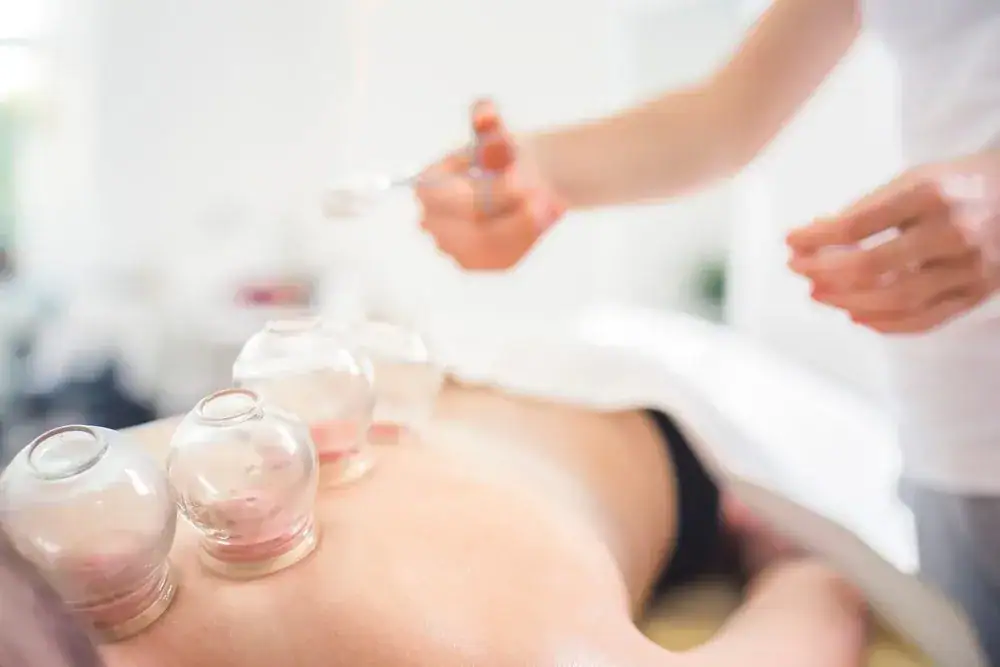
Recent evidence shows that cupping significantly reduces pain for conditions like chronic low back pain, neck pain, knee osteoarthritis, and myofascial pain. Multiple studies confirm that cupping improves pain levels and physical function better than medication alone or standard care.
The reason it works comes down to blood flow and inflammation. When muscles are tight for a long time, circulation gets restricted. That means less oxygen, fewer nutrients, and a buildup of waste products that keep the area inflamed. Cupping reverses that by pulling fresh blood into the tissue and encouraging the body’s natural healing response.
It’s not a trend. We’ve been using cupping for years because it produces measurable results. You’ll see improvement in range of motion, reduced muscle tightness, and lower pain scores after consistent treatment. That’s not placebo; that’s physiology.
Most people notice some relief after their first session, but lasting results usually take four to six visits. It depends on how long you’ve been dealing with pain and how severe the muscle tightness or inflammation is.
If you’re coming in with acute pain from a recent injury, you might feel significantly better within two or three sessions. Chronic conditions that have been building for months or years take longer because your body needs time to break old patterns and rebuild healthier movement.
Your therapist will give you a realistic timeline during your evaluation. They’ll also adjust your treatment plan based on how you’re responding. Some people need cupping once or twice a week at first, then taper down to maintenance visits. Others combine it with other physical therapy techniques and see faster progress. The goal is always to get you better as quickly as possible, not to keep you coming back indefinitely.
Cupping leaves circular marks that look like bruises, but they’re not the same thing. Bruises happen when blood vessels break. Cupping marks happen when blood flow increases and stagnant fluid gets pulled to the surface. They don’t hurt like bruises do.
The marks usually fade within three to seven days, depending on how much tension was in the area and how your body responds. Darker marks mean there was more stagnation and restricted circulation in that spot. Lighter marks mean better blood flow to begin with.
If you’re concerned about visible marks, let your therapist know. They can adjust the suction intensity or place cups in areas that are easier to cover with clothing. But most people don’t mind the marks once they understand what they mean and feel the relief that comes with treatment.
When cupping is performed by a licensed physical therapist as part of your treatment plan, it’s typically covered under your physical therapy benefits. Insurance companies don’t usually bill cupping as a separate service. It’s considered a manual therapy technique, which is a standard part of physical therapy care.
Your coverage depends on your specific plan, deductible, and whether you’ve met your out-of-pocket maximum for the year. We accept most major insurance plans and can verify your benefits before your first visit so you know exactly what to expect.
If you’re paying out of pocket, cupping is included in the cost of your physical therapy session. You’re not charged extra for it. The focus is on using whatever techniques will get you better, not on upselling additional services.
Yes. Cupping works well alongside other physical therapy techniques like manual therapy, dry needling, corrective exercise, and stretching protocols. Most treatment plans use a combination of methods because different techniques address different parts of the problem.
If you’re already seeing a chiropractor, massage therapist, or another healthcare provider, let your physical therapist know. They’ll coordinate your care to make sure everything works together and nothing conflicts. Cupping is considered a complementary treatment, which means it enhances other therapies rather than replacing them.
You should also mention any medications you’re taking, especially blood thinners or anti-inflammatory drugs. These don’t usually prevent you from getting cupping, but your therapist needs to know so they can adjust treatment intensity if needed. The goal is safe, effective care that fits into your overall health plan.
We use cupping as a clinical treatment for specific musculoskeletal conditions. We assess your movement, identify the muscles causing your pain, and apply cupping in a targeted way to address those issues. It’s not about relaxation; it’s about fixing a problem.
Spas and wellness centers often offer cupping as part of a massage or relaxation package. That’s fine if you’re looking for general stress relief, but it’s not the same as therapeutic cupping performed by a licensed healthcare provider who understands anatomy, injury mechanics, and rehabilitation.
At Medcare, cupping is one tool in a larger treatment plan. Your therapist combines it with other techniques and gives you exercises to reinforce the progress you’re making. You’re not just getting temporary relief; you’re building long-term improvement in how your body moves and feels.
Other Services we provide in Old Bethpage