


You know that tightness in your back that won’t quit, no matter how much you stretch? Or the shoulder tension that makes reaching overhead feel like a chore? Cupping therapy works by creating negative pressure on your skin, pulling blood flow to tight areas and giving your fascia room to move again.
Most people notice their range of motion improving within a few sessions. That stiffness you’ve been living with starts to back off, and movements that used to hurt don’t anymore.
The real benefit isn’t just feeling better during treatment. It’s being able to get back to your normal routine without constant discomfort slowing you down. Whether that’s gardening, playing with grandkids, or just getting through your day without reaching for another pain pill.
We’ve been bringing physical therapy to homes across Long Island since 2010. Our licensed therapists work with patients in Oakdale who’d rather not deal with the hassle of driving to appointments or sitting in waiting rooms.
We’re affiliated with established practices like Physical Therapy Associates of Smithtown and Speonk Physical Therapy. That means you’re getting the same level of professional care you’d find in a clinic, just in your living room instead.
We accept Medicare and most commercial insurance plans. Your therapist shows up with everything needed for your session, assesses what’s actually going on with your body, and builds a treatment plan that makes sense for your specific situation.
Your first session starts with an assessment. Your physical therapist asks about your pain, checks your range of motion, and figures out which areas need attention. This isn’t a one-size-fits-all approach.
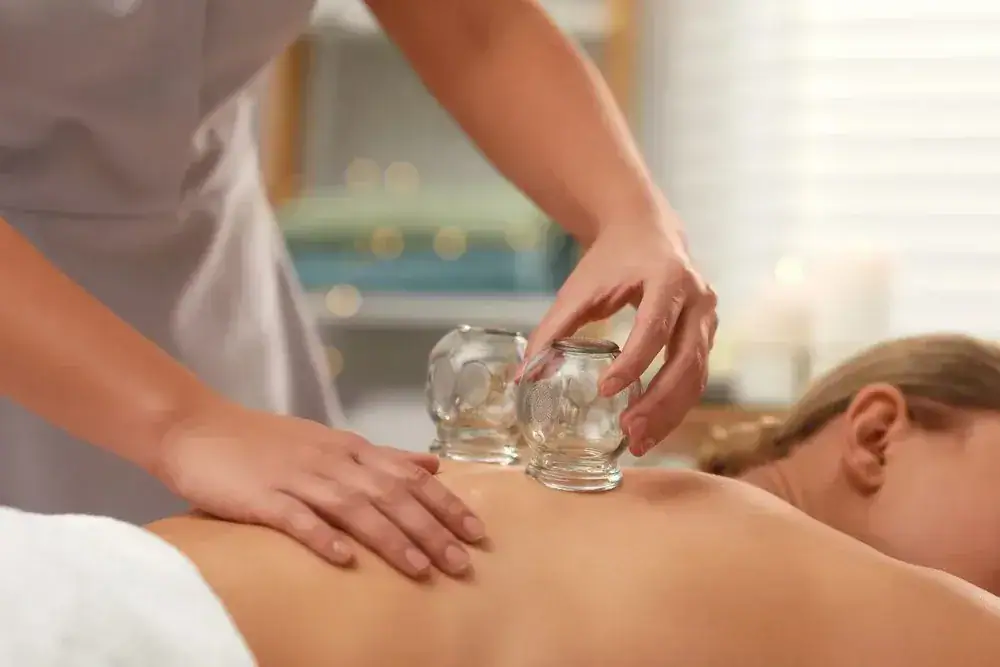
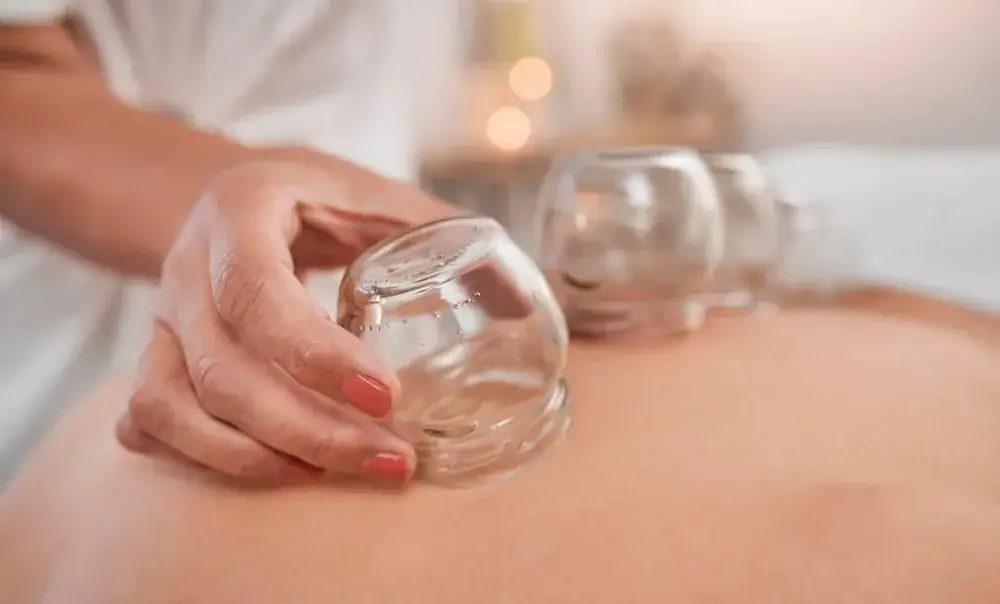
For dry cupping, your therapist places specialized cups on tight or painful areas. The suction pulls your skin up slightly, increasing blood flow and releasing tension in the underlying tissue. Some of our therapists use static cupping where cups stay in place, while others use dynamic cupping, moving the cups along your muscles while you go through specific movements.
Sessions typically last 30 to 45 minutes. You might see some circular marks on your skin afterward—that’s normal and they fade within a few days. Most patients feel looser right away, though the full benefits build over multiple sessions.
Your therapist often combines cupping with other physical therapy techniques. Stretching, strengthening exercises, and manual therapy work together to address the root cause of your pain, not just mask the symptoms.
Ready to get started?
Our cupping therapy in Oakdale addresses the issues that bring most people to physical therapy in the first place. Chronic back pain, neck stiffness, shoulder tension, and knee discomfort all respond well to this approach.
Given Oakdale’s median age of 48 and large senior population, many residents deal with age-related muscle tightness and reduced mobility. Cupping helps by improving circulation to areas that have become stiff over time, making it easier to maintain independence and stay active.
You’re not just getting cups placed on your back and sent on your way. Your treatment includes a full physical therapy evaluation, personalized cup placement based on your specific muscle groups, and integration with other therapy techniques that support long-term improvement.
The home-based model matters here. You don’t have to worry about driving after treatment when you’re already relaxed. You’re in a comfortable environment where your therapist can see how you actually move in your daily space, not just on a clinic table.
Research shows moderate-quality evidence supporting cupping for chronic pain conditions, particularly low back pain, neck pain, and knee osteoarthritis. That doesn’t mean it’s a miracle cure, but it does mean there’s legitimate clinical backing for why we use it.
The mechanism makes sense. Cupping increases blood flow to areas that aren’t getting enough circulation, helps release fascial adhesions that restrict movement, and reduces muscle tension that contributes to pain. When combined with physical therapy exercises and movement training, patients typically see better results than with either approach alone.
Most people notice some improvement within three to five sessions, though chronic conditions that have been building for years take longer to address. Your therapist will be straight with you about realistic timelines based on what they’re seeing during your assessment.
Medicare covers cupping therapy when it’s provided as part of a physical therapy treatment plan by a licensed physical therapist. That’s exactly what we offer. You’re not going to a spa for cupping—you’re receiving it as a therapeutic intervention within your Medicare-covered outpatient physical therapy benefits.
Your therapist documents cupping as part of your overall treatment approach for conditions like chronic pain, limited range of motion, or muscle dysfunction. As long as the therapy is medically necessary and prescribed by your doctor, Medicare typically covers it under your physical therapy benefits.
Most commercial insurance plans follow similar guidelines. We verify your coverage before starting treatment so you know what to expect. No surprises on billing, and no paying out of pocket for something you thought was covered.
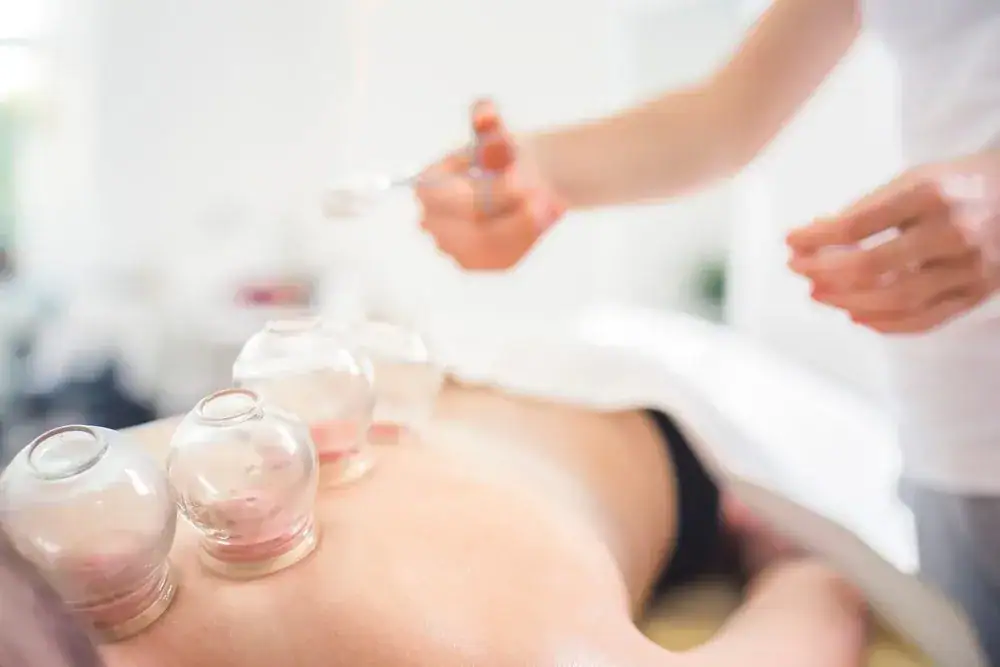
Dry cupping uses suction only—no needles, no incisions, nothing invasive. Your therapist places cups on your skin, creates negative pressure using either a pump or heat, and that suction does the work. It’s the most common type used in physical therapy settings.
Wet cupping involves making small incisions and is typically practiced in traditional Chinese medicine settings, not by physical therapists. Fire cupping uses flame to create suction but achieves the same result as modern pump-based methods.
For physical therapy purposes, dry cupping is what you’ll receive. It’s safe, low-risk, and integrates well with other therapy techniques. Your therapist might use it before stretching to loosen tight areas, or during movement exercises to enhance tissue mobility while you’re actively using those muscles.
Those circular marks usually fade within three to seven days, depending on how tight your muscles were and how much suction was used. They’re not bruises in the traditional sense—they’re caused by blood being drawn to the surface, which is actually part of the therapeutic effect.
If you have an event coming up where you’d rather not have visible marks, let your therapist know. They can adjust the suction intensity or place cups in areas that won’t be visible. The marks don’t hurt and most people forget about them after the first session.
Some patients never get significant marking at all. It varies based on your tissue quality, hydration level, and how restricted your fascia is. The presence or absence of marks doesn’t determine whether the treatment is working—how you feel and move afterward does.
Athletes use cupping therapy specifically for faster muscle recovery and reduced exercise-induced soreness. Studies on professional athletes showed improved range of motion and decreased pain levels after cupping treatments, which is why you see Olympic competitors using it.
For active adults in Oakdale dealing with overuse injuries, strains, or chronic sports-related pain, cupping helps by promoting circulation to damaged tissue and reducing the muscle tension that often develops around an injury site. Your body can heal more efficiently when blood flow improves and muscles aren’t constantly guarding.
Your physical therapist combines cupping with strengthening exercises and movement retraining to address why the injury happened in the first place. Just loosening tight muscles isn’t enough if your movement patterns are setting you up for re-injury. The goal is getting you back to your activity safely, not just temporarily feeling better.
The treatment itself is the same whether you’re in a clinic or at home. The difference is everything around the treatment. You’re not spending time driving, sitting in a waiting room, or rushing to make an appointment time that doesn’t quite work with your schedule.
For Oakdale residents with mobility limitations, transportation challenges, or busy schedules, home therapy removes a significant barrier. Your therapist comes to you, sees how you move in your actual environment, and can give you exercises that fit your real-world setup.
You also get more personalized attention. Your therapist isn’t bouncing between multiple patients in a clinic setting. The session is focused entirely on you, your goals, and what your body needs that day. For many people, especially those managing chronic conditions or recovering from surgery, that level of individualized care makes a measurable difference in outcomes.
Other Services we provide in Oakdale