
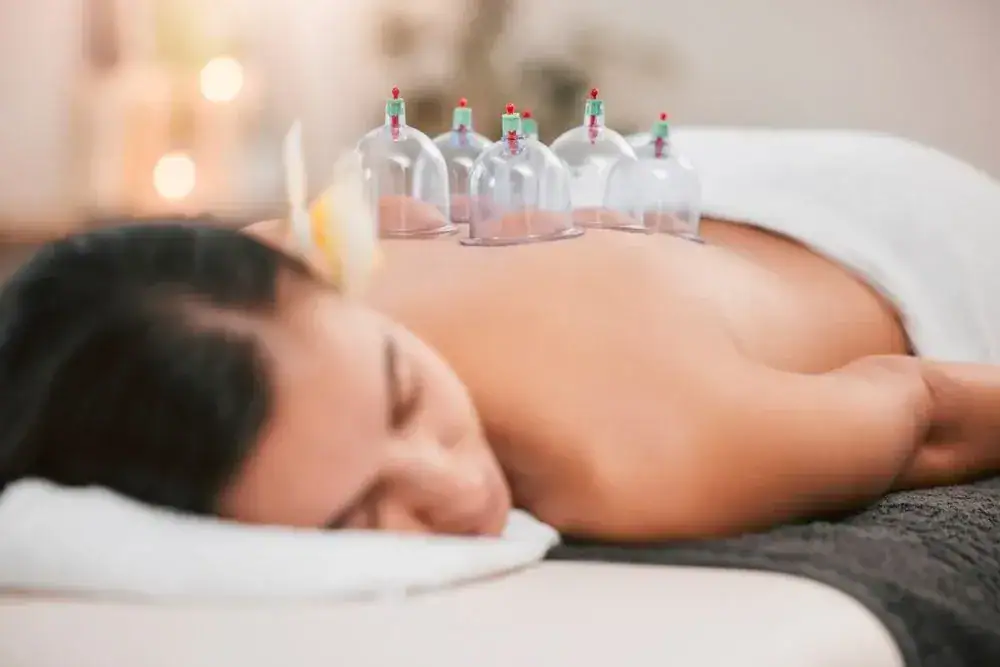

Your back stops screaming every time you bend over. Your neck doesn’t lock up after a day at your desk. You can reach for something on a high shelf without wincing.
That’s what cupping therapy does when it’s done right. It increases blood flow to areas that have been tight and oxygen-starved for months or years. The suction pulls stagnant fluid out and brings fresh circulation in, which means your tissues can finally start healing instead of just hurting.
Most people notice their range of motion improving within the first few sessions. The muscle tightness that’s been limiting your movement starts to release. You’re not just masking pain—you’re addressing what’s causing it in the first place.
This isn’t about temporary relief that wears off by dinner. Cupping therapy works on the fascia, the connective tissue that wraps around your muscles. When that tissue gets restricted from injury, poor posture, or repetitive strain, it creates pain and limits how you move. Dry cupping helps restore proper fascial glide so your body can move the way it’s supposed to.
Medcare Therapy Services has been serving Long Island communities since 2010. We’re not a wellness spa offering cupping as an add-on—we’re licensed physical therapists who use cupping as part of comprehensive treatment plans.
That distinction matters. Our therapists have clinical training in musculoskeletal conditions, pain management, and rehabilitation. They know how to assess your specific issue and determine whether cupping will help, or if you need a different approach entirely.
We accept Medicare and most commercial insurance, which means you’re getting medical-grade care at a fraction of what you’d pay out-of-pocket elsewhere. For Northwest Harbor residents who have difficulty getting to appointments, we bring the same quality therapy directly to your home. You get the same licensed professionals, same treatment standards, just without the drive.
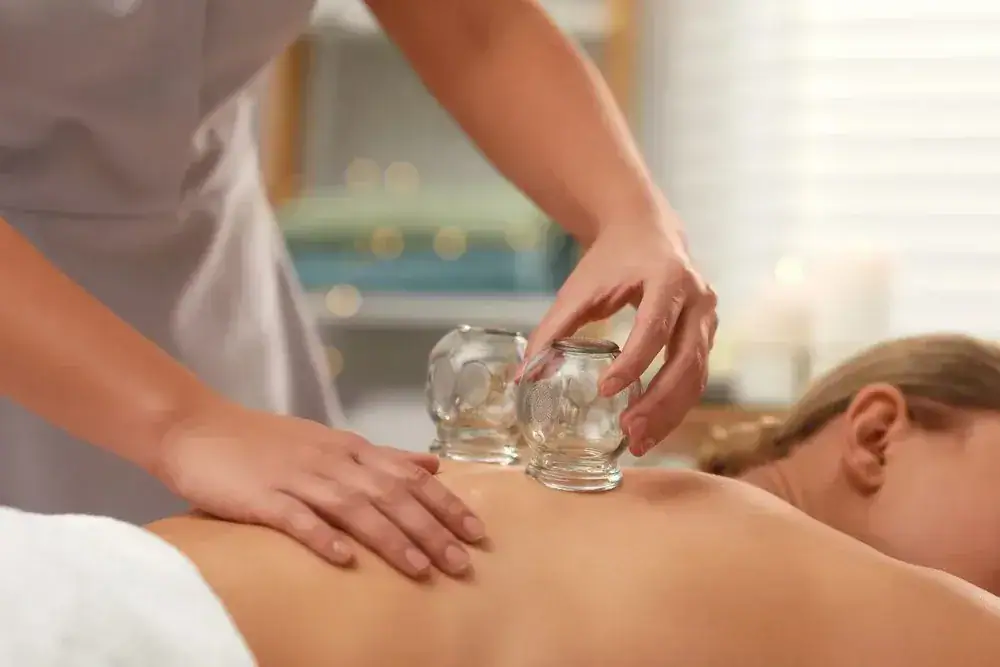
Your therapist starts with an evaluation. They’ll ask about your pain—where it is, how long you’ve had it, what makes it worse. They’ll check your range of motion and identify which muscles or fascia are restricted.
Then comes the cupping itself. We use dry cupping, which means no needles, no incisions, nothing invasive. Your therapist places specialized cups on your skin over the problem areas. The cups create suction that pulls your tissue upward, increasing blood flow and releasing fascial restrictions.
Some therapists keep the cups stationary for several minutes. Others use a technique called dynamic cupping, where they move the cups across your skin while the suction is active. The approach depends on what your body needs.
You’ll feel a pulling sensation, but it shouldn’t hurt. Most people find it surprisingly relaxing once they get used to the feeling. Sessions typically last 15 to 30 minutes as part of a broader physical therapy treatment.
After your session, you might have circular marks where the cups were placed. Those marks aren’t bruises—they’re a sign of increased blood flow to the area. They fade within a few days to a week.
Ready to get started?
Cupping works particularly well for chronic back pain, neck pain, and shoulder tension—the kind of pain that comes from sitting at a desk for years or lifting things the wrong way. If you’ve been dealing with muscle tightness that won’t release no matter how much you stretch, cupping can help.
Athletes use it for recovery and to improve performance. The increased circulation helps muscles repair faster after hard training. The improved range of motion translates directly to better movement quality.
People with knee osteoarthritis often see significant pain reduction. The therapy helps manage inflammation and keeps the joint moving better, which matters when you’re trying to stay active as you age.
Here in Northwest Harbor and across the East End, we see a lot of active adults who refuse to let pain slow them down. They’re gardening, playing tennis, walking the beach. Cupping helps them keep doing what they love without constantly managing discomfort.
The therapy also works well alongside other treatments. If you’re already doing physical therapy, cupping can enhance those results. It’s not an either-or situation—it’s another tool that helps your body heal more effectively.
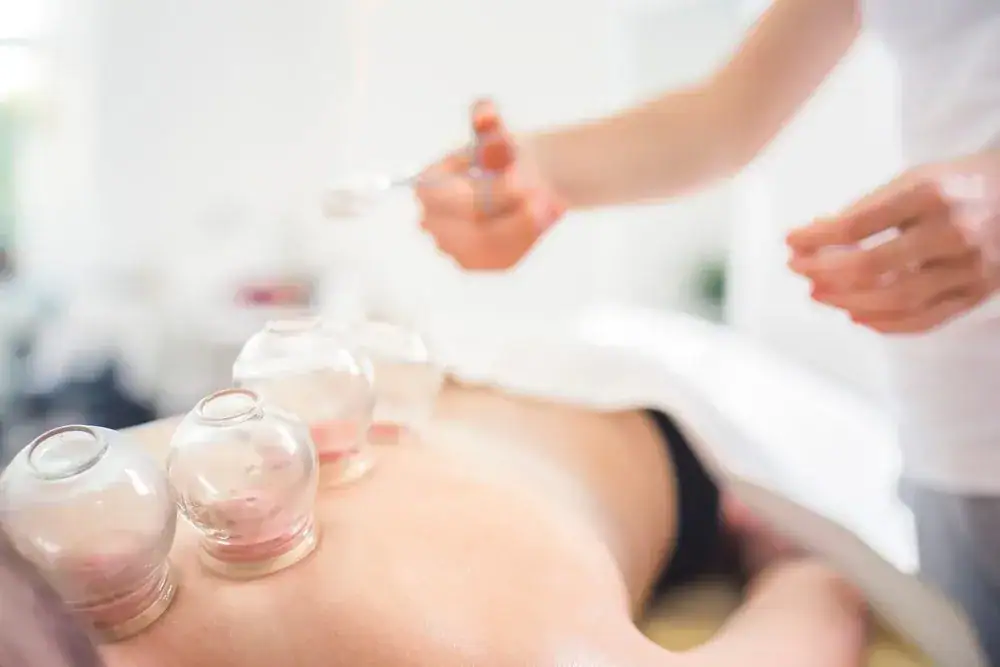
There’s clinical evidence behind cupping, not just anecdotal reports. Studies show moderate-quality evidence that cupping therapy reduces chronic pain, particularly for low back pain, neck pain, and knee osteoarthritis. Research on athletes found that cupping significantly improved range of motion and reduced pain levels.
The mechanism makes physiological sense. The suction increases local blood circulation, which brings oxygen and nutrients to tissues that need them. It also creates a decompression effect on fascia and muscles, which helps release restrictions that limit movement and cause pain.
That said, cupping isn’t magic. It works best as part of a broader treatment plan that might include strengthening exercises, manual therapy, and movement education. Your results depend on what’s causing your pain, how long you’ve had it, and how consistently you follow through with treatment. Most people notice improvement within three to six sessions, but chronic conditions that developed over years won’t resolve in a week.
The circular marks left by cupping aren’t actually bruises. Bruises happen when blood vessels break and leak blood into surrounding tissue, usually from impact. Cupping marks are different—they’re caused by increased blood flow and the movement of stagnant fluids to the surface.
The marks look like circular discolorations ranging from light pink to dark purple, depending on how restricted the tissue was and how much suction was used. Areas with more stagnation or restriction tend to show darker marks. They’re not painful and they fade within three to seven days for most people.
If you’re concerned about visible marks for an upcoming event, let your therapist know. They can adjust the suction intensity or focus treatment on areas that won’t be visible. The therapy still works with lighter suction—you just might need a few more sessions to get the same results.
We approach cupping as a clinical treatment for specific musculoskeletal conditions. We’re assessing your movement patterns, identifying dysfunction, and using cupping to address particular restrictions that are causing your pain or limiting your mobility.
A spa might offer cupping as a relaxation service, which is fine if that’s what you’re looking for. But if you’re dealing with chronic pain, a sports injury, or limited range of motion, you need someone who understands anatomy, biomechanics, and rehabilitation. Our physical therapists have that clinical training.
We also integrate cupping with other evidence-based treatments. You might get cupping to release tight fascia, then do specific exercises to restabilize the area and prevent the problem from coming back. That comprehensive approach is what creates lasting results instead of temporary relief. Plus, when a licensed physical therapist provides the treatment, insurance is more likely to cover it.
When cupping is performed by a licensed physical therapist as part of your treatment plan, it’s typically covered under your physical therapy benefits. We accept Medicare and most commercial insurance plans, which means you’ll pay whatever your normal physical therapy copay or coinsurance is.
Insurance companies cover it because we use cupping to treat diagnosed medical conditions—things like chronic pain, muscle strains, or limited mobility. It’s not considered alternative medicine when it’s part of a skilled therapy session.
Before your first appointment, we verify your benefits so you know exactly what to expect. Some plans have visit limits or require prior authorization, but we handle that paperwork. If you’re paying out-of-pocket for any reason, we’ll discuss costs upfront. There are no surprise bills.
Most people notice some improvement within two to three sessions, but the total number depends on what we’re treating and how long you’ve been dealing with it. Acute issues—like a recent muscle strain—often respond faster than chronic conditions you’ve had for years.
A typical treatment plan might involve six to eight sessions over several weeks, combined with other physical therapy techniques. Your therapist will reassess your progress regularly and adjust the plan based on how you’re responding.
Some people come in for periodic maintenance sessions after their initial treatment plan, especially if they’re managing a chronic condition or training hard for athletics. Others complete their treatment and don’t need ongoing care. It’s not about keeping you coming back forever—it’s about getting you functional and keeping you there.
Yes. We specialize in home-based physical therapy for Northwest Harbor residents who find it difficult to leave home due to pain, mobility issues, or other limitations. We bring the same equipment and expertise directly to you.
Home therapy works particularly well for older adults, people recovering from surgery, or anyone whose pain makes driving uncomfortable. You get one-on-one attention in a familiar environment without the stress of getting to an appointment.
Your therapist will bring everything needed for your session, including cupping equipment and any other tools required for your treatment plan. The quality of care is identical to what you’d receive in our clinic. We just meet you where you are, literally.
Other Services we provide in Northwest Harbor