

You’re not looking for temporary relief that wears off in an hour. You want to move without wincing, sleep through the night, and get back to the things you’ve been avoiding because your back, shoulders, or knees won’t cooperate.
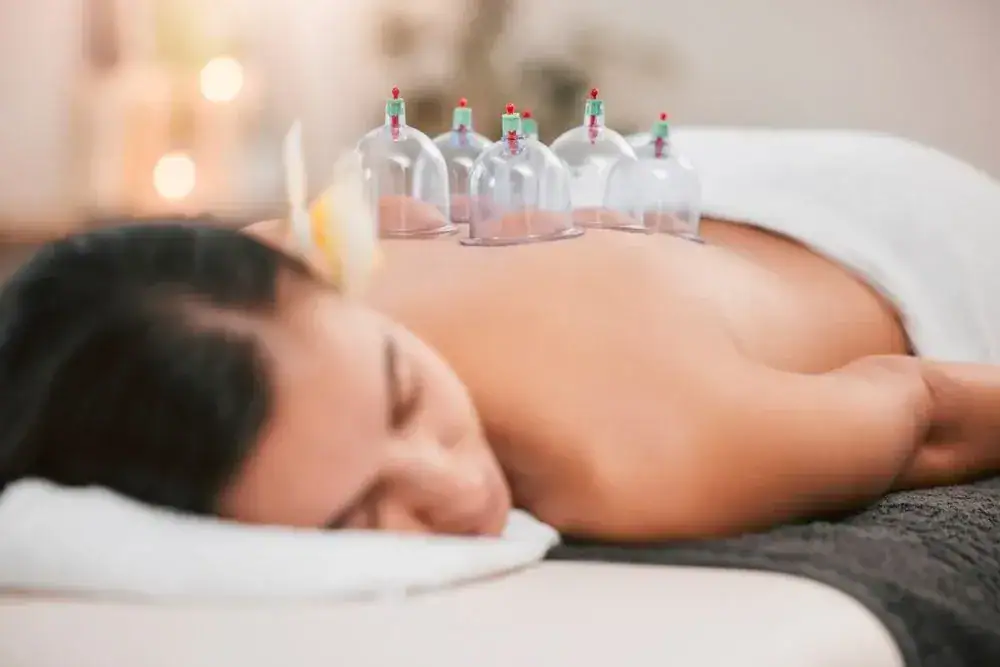
Cupping therapy works by creating suction on the skin that pulls blood to the surface and encourages tight muscle fibers to release. That increased circulation helps reduce inflammation, which is often what’s keeping you stuck in a pain cycle. When fascial layers separate and glide properly again, you get real range of motion back—not just on the treatment table, but when you’re reaching for something or getting out of a chair.
This isn’t about chasing trends. We use cupping because it works for chronic musculoskeletal pain, post-surgical stiffness, and stubborn injuries that haven’t responded to other treatments. You’re not masking symptoms—you’re addressing the tightness, restricted movement, and inflammation that’s been limiting you.
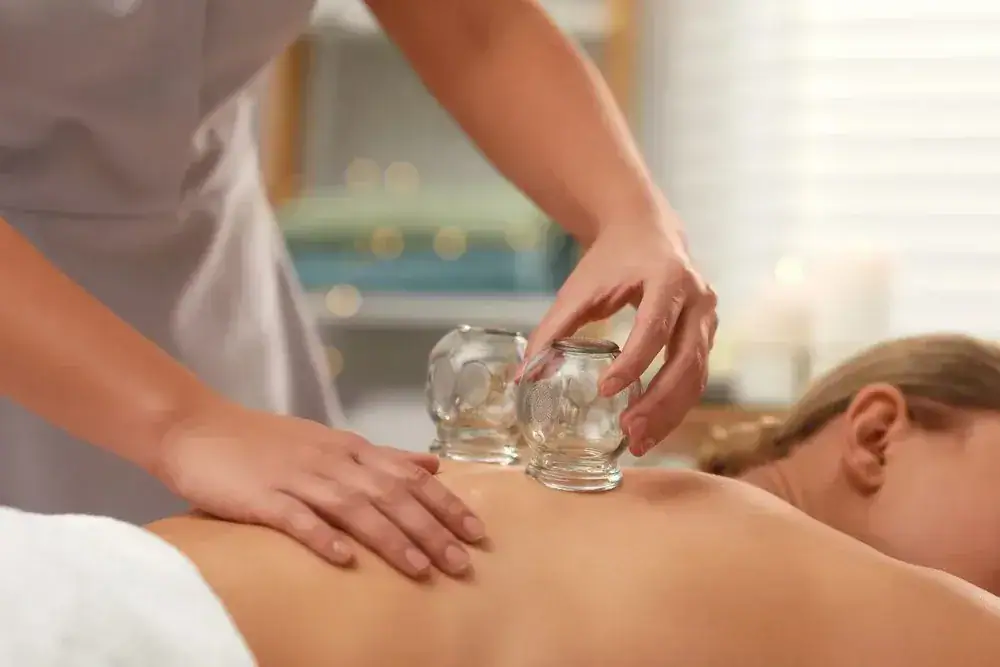
First, your therapist evaluates where you’re experiencing pain, stiffness, or limited movement. They’re looking at how you move, where the tightness is, and what’s been tried before. This isn’t a one-size-fits-all approach—we incorporate cupping into a broader physical therapy plan based on what your body needs.
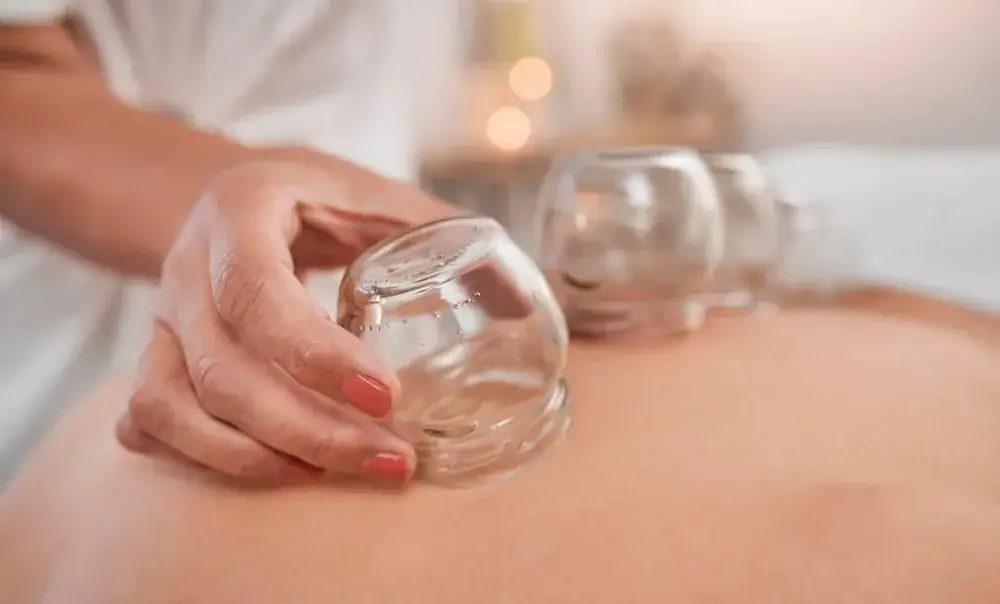
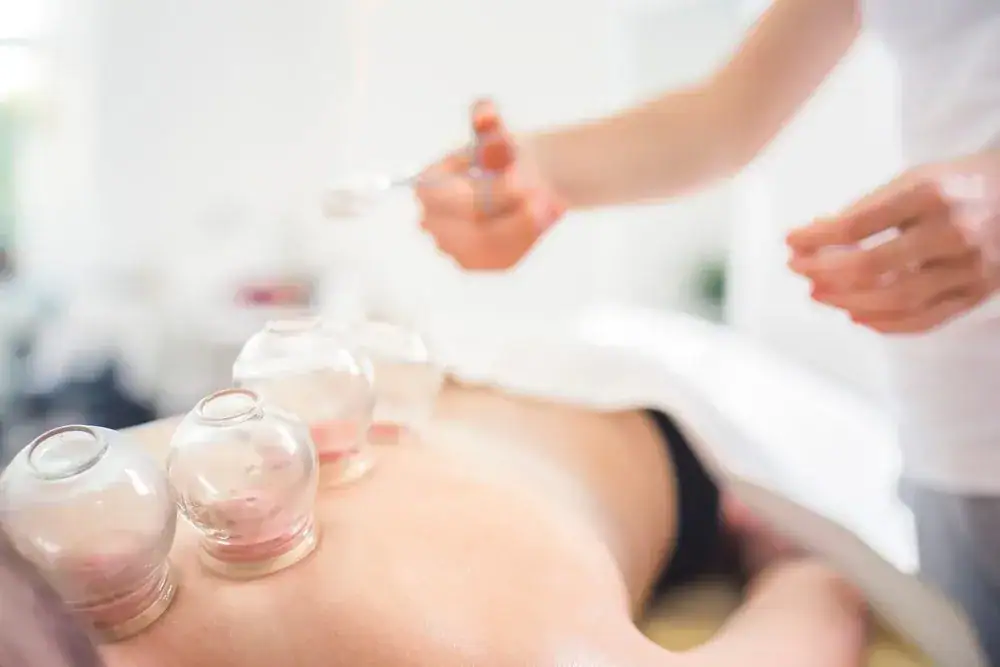
During the session, cups are placed on targeted areas to create suction. In dry cupping, the cups stay in place for several minutes, drawing blood flow to the area and encouraging muscle fibers to loosen. Sometimes we use dynamic cupping, where cups are moved across the skin while maintaining suction—this is especially helpful for breaking up fascial adhesions and improving tissue mobility.
You might see some circular marks afterward. That’s normal—it’s not bruising, it’s the result of increased blood flow to the surface. Those marks fade within a few days, and most people report feeling looser and less restricted almost immediately.
Treatment frequency depends on your condition. Some people feel significant relief after two or three sessions. Others with chronic pain or long-term stiffness benefit from ongoing care as part of a maintenance plan.
Ready to get started?
Cupping therapy in Northville isn’t a standalone service—it’s integrated into your physical therapy plan. That means you’re also getting manual therapy, targeted exercises, and education on how to manage pain between sessions. The goal is functional improvement, not just temporary relief.
This treatment is especially effective for chronic lower back pain, neck stiffness, shoulder tension, and knee pain from osteoarthritis. We also use it frequently in post-surgical recovery to reduce scar tissue buildup and restore normal movement patterns. Athletes use it to speed recovery after intense training or injury.
Because we come to your home, you’re not dealing with the hassle of getting to an appointment when you’re already in pain. Your therapist brings everything needed, sets up in a comfortable space, and works with you in an environment where you’re relaxed and not rushed. For older adults in Northville dealing with mobility challenges, that makes a real difference in whether treatment actually happens consistently.
We also coordinate with your doctor. If cupping is part of your prescribed physical therapy plan, we handle the communication and documentation to keep everyone on the same page.
There’s moderate-quality research showing that cupping therapy reduces pain in people with chronic musculoskeletal conditions, including lower back pain, neck pain, and knee osteoarthritis. It’s not a miracle cure, but it’s also not just hype—we use it because it produces measurable improvements in pain levels and range of motion.
The mechanism is straightforward. Suction increases blood flow to the area, which helps reduce inflammation and brings oxygen and nutrients that support healing. It also creates mechanical lift in the fascia, which can release restrictions that limit movement and contribute to pain.
Most healthcare providers recommend cupping as part of a broader treatment plan, not as a standalone fix. When combined with targeted exercises, manual therapy, and patient education, it’s an effective tool for managing chronic pain without relying solely on medication.
You’ll likely see circular marks where the cups were placed, but they’re not bruises in the traditional sense. Bruising happens when blood vessels break and leak into surrounding tissue. Cupping marks are caused by blood being drawn to the surface—it’s increased circulation, not damage.
The marks are usually dark red or purple and can last anywhere from a few days to a week, depending on how much suction was used and how your body responds. They don’t hurt, and they fade on their own without any special treatment.
If you’re concerned about visible marks for an event or occasion, let your therapist know ahead of time. They can adjust the intensity or focus on areas that won’t be visible. Most people don’t mind the marks once they understand what’s causing them, especially when they’re feeling less pain and moving better.
Cupping therapy is covered when it’s performed by a licensed physical therapist as part of a prescribed physical therapy treatment plan. Medicare covers outpatient physical therapy services, and cupping falls under manual therapy techniques when it’s medically necessary and documented properly.
We handle the billing and coordination with Medicare and most major insurance plans. That means verifying your coverage, submitting claims, and making sure the documentation supports the treatment you’re receiving. You’re not left guessing what’s covered or dealing with surprise bills.
If you have a referral from your doctor for physical therapy and cupping is appropriate for your condition, it’s typically covered under your existing benefits. We’ll confirm your specific coverage before starting treatment so you know what to expect.
Massage uses compression—pushing down into the muscle to release tension. Cupping does the opposite. It uses suction to lift tissue away from underlying structures, which creates space between fascial layers and allows them to glide properly again.
That lifting action is particularly effective for releasing deep restrictions that compression alone can’t reach. It’s also useful for breaking up scar tissue and adhesions that form after surgery or injury. When fascia gets stuck together, it restricts movement and causes pain—cupping mechanically separates those layers.
We use cupping as part of a treatment plan that includes other manual techniques, exercises, and functional training. It’s not about relaxation, though many people do find it relaxing. The focus is on improving how you move and reducing pain that’s limiting your daily activities.
Yes, especially when scar tissue is restricting movement. After surgery, your body forms scar tissue as part of the healing process. Sometimes that tissue gets dense or adheres to surrounding structures, which limits range of motion and causes stiffness.
Cupping helps improve scar tissue mobility by lifting and separating the layers. That mechanical action, combined with increased blood flow to the area, can restore movement patterns that were limited post-surgery. We commonly use it after knee replacements, shoulder surgeries, and spinal procedures.
Your physical therapist will assess when it’s appropriate to start cupping based on where you are in recovery. It’s not used immediately after surgery—there’s a healing timeline that needs to be respected. But once you’re cleared for manual therapy, cupping can be an effective tool for regaining function and reducing the pulling or tightness people often feel around surgical sites.
If you’re dealing with limited mobility, chronic pain that makes travel difficult, or you’re recovering from surgery, getting to a clinic becomes another obstacle. Home-based therapy removes that barrier. You get the same licensed, skilled treatment without the physical strain of leaving your house.
For older adults in Northville, this makes a significant difference in treatment consistency. When therapy happens at home, you’re more likely to stick with the plan because you’re not canceling appointments due to transportation issues, bad weather, or simply not feeling up to the trip.
There’s also a comfort factor. You’re in your own space, which tends to be less stressful than a clinical environment. Your therapist can see how you move in your actual living environment and make recommendations that fit your daily routine. That context matters when the goal is functional improvement in real life, not just on a treatment table.
Other Services we provide in Northville