
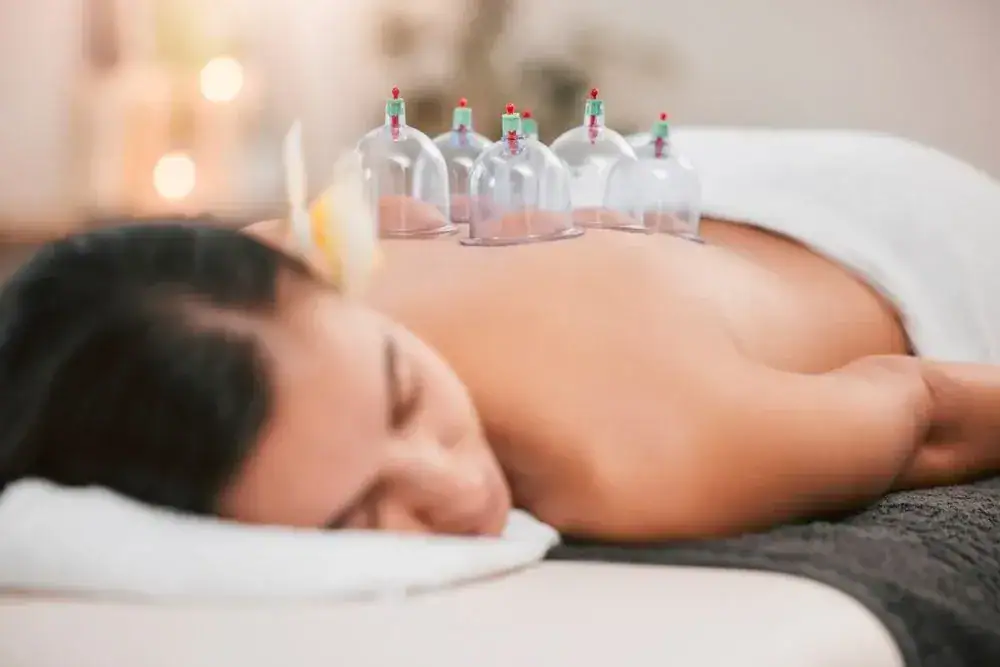

You’ve tried stretching. You’ve tried heat. You’ve probably tried ignoring it and hoping the tightness goes away on its own.
Cupping therapy works differently. The suction lifts tissue away from the muscle, creating space where there wasn’t any. Blood flows back into areas that have been tight for weeks or months. Fascia that’s been stuck starts to glide again.
Most people notice their range of motion improving within the first few sessions. Shoulders that wouldn’t rotate suddenly do. Lower backs that locked up every morning start loosening. It’s not a miracle—it’s mechanical. The cups create negative pressure that pulls blood to the surface, relaxes muscle fibers, and breaks up adhesions that manual therapy alone can’t always reach.
You’re not just managing pain. You’re addressing why the pain keeps coming back.
We’ve been serving Long Island since 2010. We’re licensed physical therapists who accept Medicare and most commercial insurance, which matters when you’re trying to get consistent care without surprise bills.
Northport and the surrounding Suffolk County area has one of the fastest-growing older adult populations in New York. That means more people dealing with chronic pain, mobility issues, and recovery from surgery. We see it every day.
We don’t just add cupping as an extra. We integrate it into your physical therapy plan when it makes sense for your specific condition—whether that’s post-surgical recovery, chronic back pain, or restricted movement that’s keeping you from normal activity.
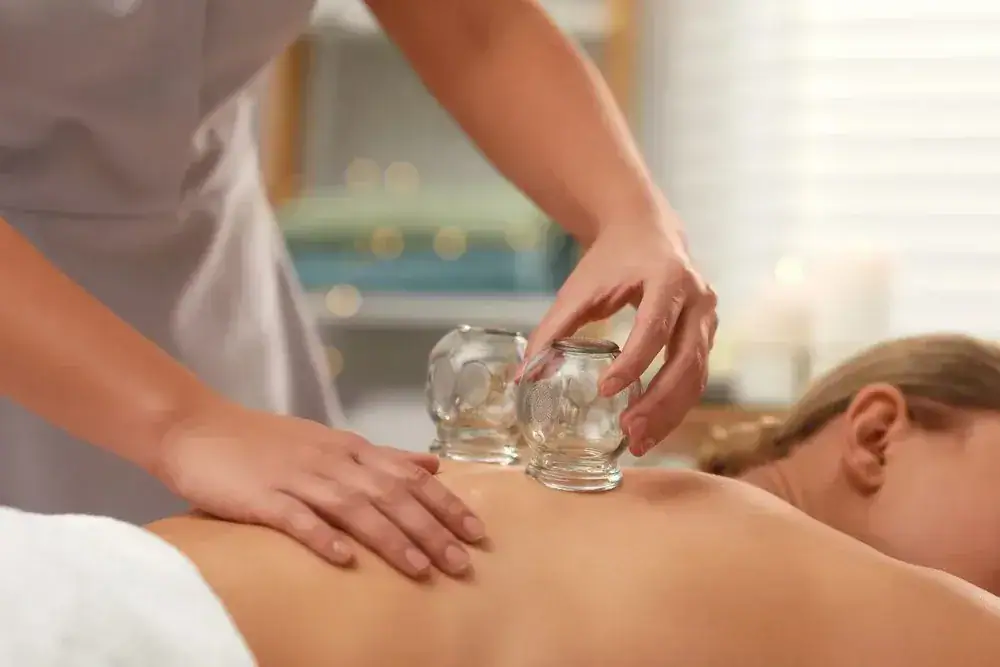
Your therapist evaluates your pain points and mobility restrictions first. Cupping isn’t a standalone treatment—it works best when combined with the rest of your physical therapy plan.
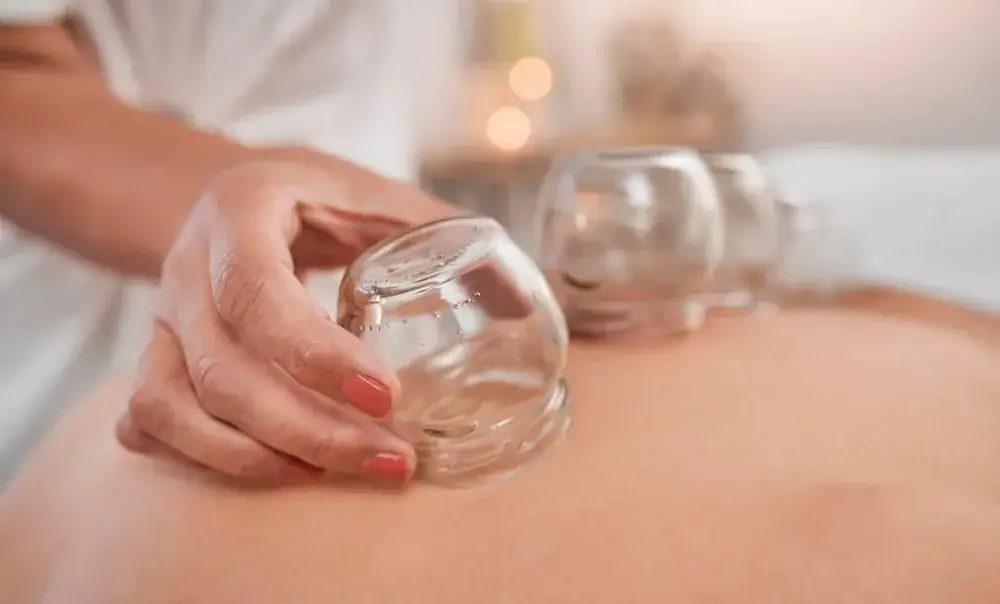
We use dry cupping, which means no incisions or blood. Cups are placed on your skin, usually on your back, shoulders, neck, or legs depending on where you’re dealing with tightness or pain. The suction pulls tissue upward, increasing circulation to that area and mechanically separating fascial layers that have been stuck together.
You’ll feel the pull, but it shouldn’t hurt. Most people say it’s a strange sensation at first, then surprisingly relaxing. The cups stay on for several minutes while you’re lying still. Afterward, you might have circular marks where the cups were—they’re not bruises, they’re just increased blood flow to the surface, and they fade within a few days.
Some people feel immediate relief. Others notice the difference a day or two later when they realize they’re moving easier or sleeping better. Your therapist will adjust the approach based on how your body responds.
Ready to get started?
Cupping works well for chronic muscle tension—the kind that doesn’t go away with rest or basic stretching. If you’ve been dealing with persistent neck pain, shoulder tightness, or lower back discomfort, this is worth trying.
It’s also effective for people recovering from injuries or surgery who need to restore range of motion. Athletes use it to speed up recovery between training sessions. Older adults use it to manage arthritis pain and maintain mobility as their bodies change.
In Northport and across Long Island, we’re seeing more patients ask about non-pharmaceutical pain management. With nearly 40% of Suffolk County residents over 55 dealing with some form of chronic pain or mobility limitation, people want options that don’t just mask symptoms. Cupping addresses the root mechanical issue: tight fascia, poor circulation, and muscle adhesions that limit movement.
We combine cupping with manual therapy, targeted exercises, and education on how to maintain results at home. You’re not just getting a 15-minute session and sent on your way—you’re getting a full physical therapy treatment plan that uses cupping as one tool among several.
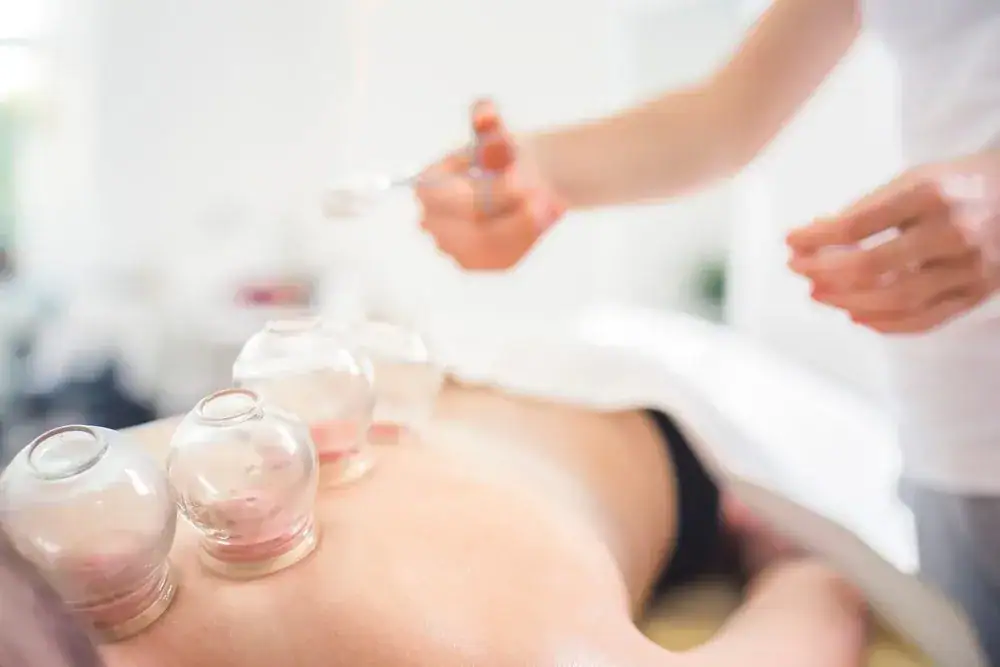
Yes, but it’s not magic—it’s mechanical. Cupping creates suction that lifts your skin and the tissue underneath away from the muscle. That does two things: it increases blood flow to areas that have been tight and oxygen-deprived, and it separates fascial layers that have been stuck together.
Studies show cupping significantly reduces pain and improves range of motion, especially for chronic lower back issues. But here’s the thing: it works best when it’s part of a broader treatment plan. If your back pain is coming from weak core muscles or poor posture, cupping will give you temporary relief, but you’ll need strengthening exercises and movement retraining to keep the pain from coming back.
Most of our patients in Northport dealing with chronic back pain see the best results when we combine cupping with manual therapy and a home exercise program. You get faster relief from the cupping, and longer-lasting results from addressing the underlying cause.
You’ll likely have circular marks where the cups were placed, but they’re not bruises in the traditional sense. Bruises happen when blood vessels break. Cupping marks happen because suction draws blood to the surface of your skin.
The marks can range from light pink to deep purple depending on how much tension and stagnation was in that area. They usually fade within three to seven days. Some people get very faint marks, others get darker ones—it varies based on your circulation, how tight your muscles are, and how your body responds to the treatment.
If you’re concerned about visible marks and have an event coming up, let your therapist know. We can adjust the suction intensity or place cups in areas that clothing will cover. The marks don’t hurt and they’re not a sign of damage—they’re actually a sign the treatment is working and bringing fresh blood flow to areas that needed it.
Massage pushes tissue down into the muscle. Cupping pulls tissue up and away from it. That difference matters when you’re dealing with fascia that’s been compressed or stuck for a long time.
Massage is great for general relaxation and working out surface-level knots. Cupping gets deeper without the therapist having to apply intense pressure. It’s especially useful for people who find deep tissue massage too painful, or for areas where manual pressure isn’t getting results.
When you combine both—which we often do during physical therapy sessions—you get better outcomes. The cupping lifts and separates tissue, the manual work addresses specific trigger points and adhesions, and together they restore mobility faster than either technique alone. You’re not choosing one or the other. You’re using the right tool for the specific problem your body is dealing with.
If cupping is part of your physical therapy treatment plan, Medicare and most commercial insurance plans will cover it. It’s billed as part of your PT session, not as a separate alternative therapy service.
Here’s what that means practically: you come in for physical therapy to address pain, limited mobility, or post-surgical recovery. Your therapist evaluates you and determines that cupping would help achieve your treatment goals. It gets incorporated into your session along with other techniques like manual therapy, therapeutic exercise, or neuromuscular re-education.
We accept Medicare and nearly all commercial insurances at Medcare Therapy Services. Before your first appointment, we verify your benefits so you know what your copay or coinsurance will be. No surprises. If you have questions about whether your specific plan covers PT services that include cupping, call our office and we’ll check for you before you commit to anything.
Most people notice some improvement within two to three sessions, but how many you’ll need total depends on what we’re treating and how long you’ve been dealing with it.
If you’re coming in for acute muscle tightness from overuse or a recent injury, you might only need a handful of sessions. If you’re managing chronic pain that’s been building for years, you’ll likely need ongoing treatment as part of a longer physical therapy plan—maybe eight to twelve sessions spread over several weeks.
Your therapist will give you a realistic timeline after your initial evaluation. We’re not going to string you along or keep scheduling sessions you don’t need. The goal is to get you functional, teach you how to maintain the results, and get you back to your normal life. Some people continue occasional maintenance sessions after they’ve hit their goals, especially if they’re active or dealing with a chronic condition. But that’s your call, not ours.
Yes, especially if your shoulder pain is coming from muscle tightness, rotator cuff issues, or fascial restrictions. Cupping increases blood flow to the shoulder area and helps release tension in muscles that have been compensating for weakness or injury.
Shoulder problems are tricky because limited range of motion usually isn’t just about one tight muscle—it’s about how your whole shoulder girdle is moving. Cupping can address the muscular component by relaxing overactive muscles and improving tissue mobility. But you’ll also need targeted exercises to strengthen weak stabilizers and retrain movement patterns.
We see a lot of shoulder cases in Northport, especially among older adults recovering from falls or rotator cuff repairs, and younger active people dealing with overuse injuries. Cupping speeds up the recovery process when combined with the right rehab exercises. You get pain relief faster, which means you can tolerate the strengthening work better, which means you recover full function sooner.
Other Services we provide in Northport