
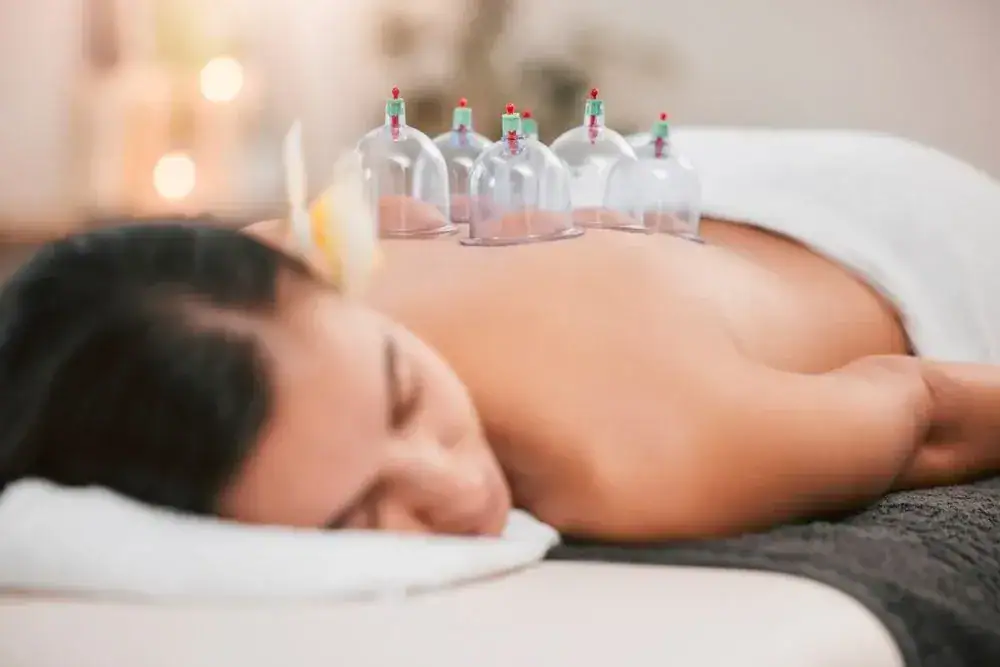

You’ve tried stretching. You’ve tried heat packs. You’ve probably tried ignoring it and hoping it goes away. But that knot in your shoulder, that persistent lower back ache, or that neck tension that makes turning your head uncomfortable—it’s still there.
Cupping therapy works by creating suction on your skin that pulls blood flow to the area, releases trapped muscle tension, and encourages your body to send fresh, oxygen-rich blood where it’s needed most. The result isn’t just temporary relief. It’s your muscles actually loosening, inflammation decreasing, and pain levels dropping without you having to take another pill.
Most people notice the difference after one session. That tight spot that’s been bothering you for weeks starts to feel different—not just covered up, but genuinely better. Your range of motion improves. You move without wincing. And you start to realize that chronic pain doesn’t have to be something you just live with.
We’ve been serving Long Island communities for over a decade, and we’ve built our reputation on one simple principle: your care matters more than our convenience. We’re not a corporate chain where you’re a number. We’re a local practice where your therapist actually remembers your name and your goals.
In North Valley Stream, where the median household income is $145,000 and people work hard in professional roles, you don’t have time for treatments that don’t work. You need real solutions from people who know what they’re doing. Our team includes licensed physical therapists trained in modern cupping techniques, and we integrate this therapy with your overall treatment plan—not as a gimmick, but as a legitimate tool for pain management and recovery.
We manage our practice with the same care we give our patients. Every detail, from how we secure your information to how we schedule your appointments, is handled with professionalism and transparency.
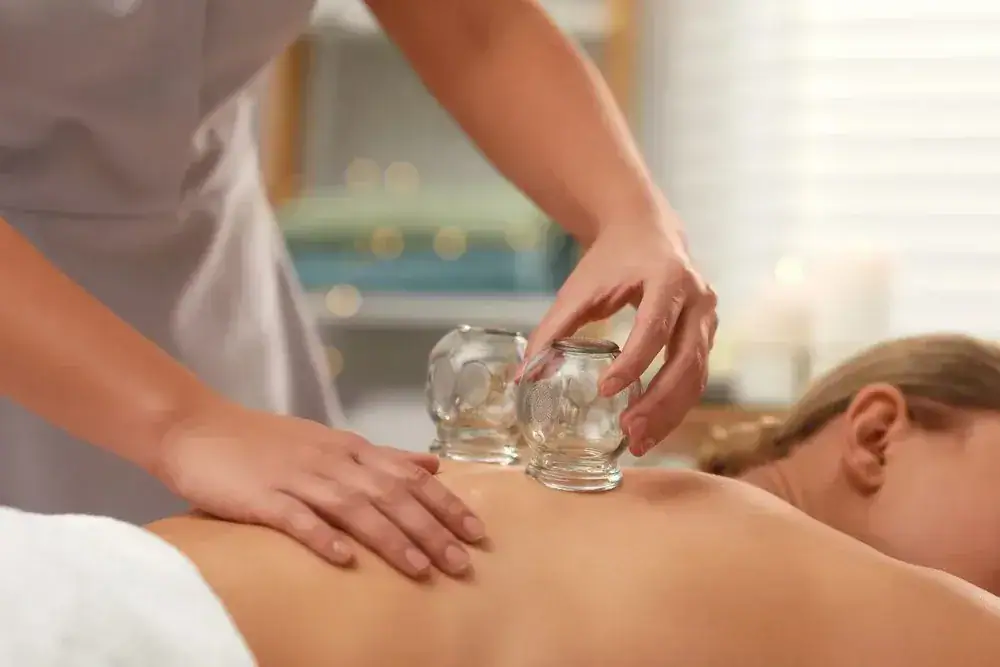
When you come in for cupping therapy, we start with a conversation. Where does it hurt? How long has this been going on? What makes it better or worse? This isn’t small talk—it’s how we figure out the right approach for your specific situation.
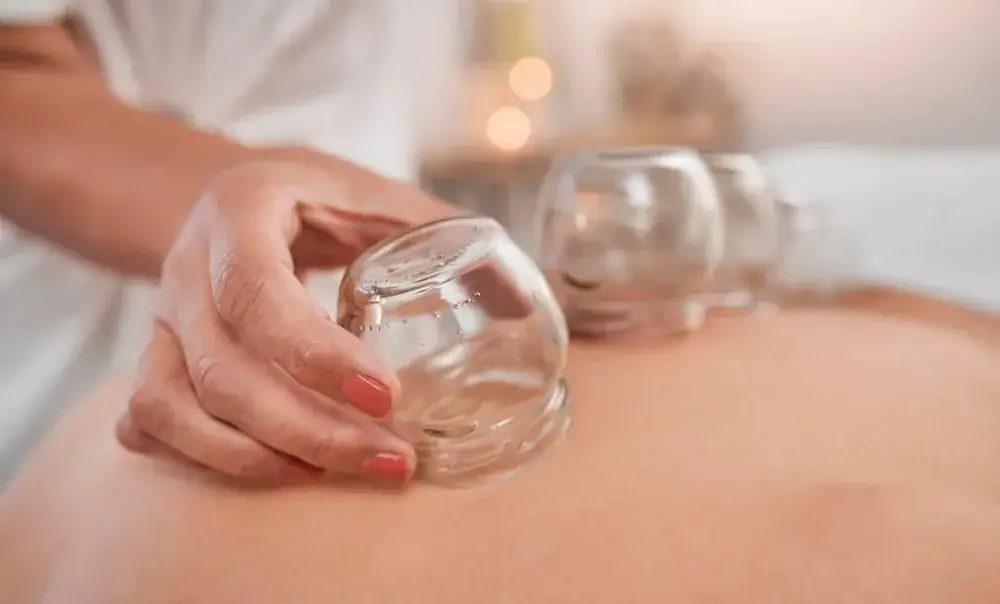
Once we understand what you’re dealing with, we place specialized cups on the affected area. These cups create suction that draws your skin up slightly, increasing blood flow to muscles and tissues that aren’t getting enough circulation. You’ll feel a pulling sensation, but it shouldn’t hurt. Most people find it oddly satisfying, like a deep tissue massage that gets into places your hands can’t reach.
The cups stay on for 5 to 15 minutes, depending on what we’re treating. During that time, your body is actively responding—sending healing blood flow to the area, releasing muscle tension, and starting the recovery process. When we remove the cups, you might see circular marks on your skin. Those aren’t bruises. They’re a sign that stagnant blood and tension are being cleared out.
After your session, many people feel immediate relief. Others notice the difference over the next day or two as inflammation decreases and mobility improves. We’ll talk about how many sessions you might need based on your condition, but this isn’t a treatment that requires you to commit to months of appointments before seeing results.
Ready to get started?
Cupping therapy at Medcare isn’t a standalone spa treatment. It’s part of a comprehensive approach to pain management and physical therapy. We use dry cupping—the method that’s been clinically shown to reduce pain levels and improve function for conditions like chronic lower back pain, neck tension, muscle strains, and sports injuries.
In North Valley Stream, where 28% of residents are between 45 and 64—the age range where chronic pain becomes more common—we see a lot of people who’ve been told to “just deal with it” or rely on medications they’d rather not take. Cupping gives you another option. It’s low-risk, non-invasive, and works with your body’s natural healing processes instead of masking symptoms.
We also integrate cupping with other physical therapy techniques when it makes sense. If you’re recovering from an injury, dealing with arthritis, or managing a condition like ankylosing spondylitis, cupping can complement your treatment plan and speed up your progress. You’re not just getting cups placed on your back and sent home. You’re getting a treatment designed around what your body actually needs.
And because we know healthcare costs matter—especially when the average household in North Valley Stream earns $168,981 and is making careful decisions about where to spend—we’re transparent about pricing and work with you to make care accessible.
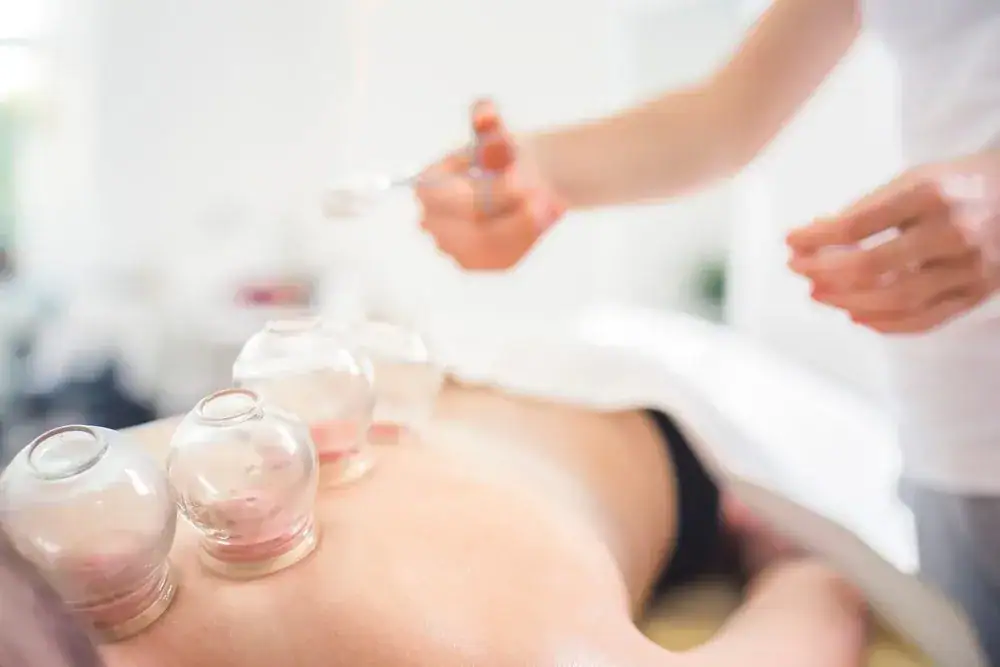
Cupping therapy has been studied in over 234 clinical publications across 31 countries, and the research consistently shows it’s effective for reducing pain—particularly for chronic lower back pain, neck pain, and musculoskeletal conditions. It’s not a placebo. Clinical trials have found that cupping decreases pain levels more effectively than sham therapy, and it does so with very low risk of adverse effects.
The reason it works comes down to blood flow and muscle tension. When cups create suction on your skin, your body responds by sending fresh blood to that area. This improves circulation, delivers oxygen and nutrients to damaged tissues, and helps clear out metabolic waste that contributes to inflammation and pain. At the same time, the suction releases tight muscle fibers and fascia, which is why people often feel immediate relief after a session.
This isn’t a new trend that celebrities invented. Cupping has been used for thousands of years in traditional medicine, and modern physical therapists have adopted it because it works. The National Center for Complementary and Integrative Health acknowledges that cupping shows promising effects for pain management when used as part of a comprehensive treatment approach.
Cupping therapy is most effective for musculoskeletal pain and conditions that involve muscle tension, poor circulation, or inflammation. We regularly use it to treat chronic lower back pain, neck pain and stiffness, shoulder tension, knee pain from osteoarthritis, muscle strains and sports injuries, and tension headaches or migraines.
It’s also helpful for people dealing with conditions like ankylosing spondylitis, fibromyalgia, and myofascial pain syndrome—basically any condition where tight muscles and restricted blood flow are contributing to your symptoms. Some patients use cupping as part of their recovery from surgery or injury to speed healing and reduce scar tissue formation.
What cupping won’t do is cure structural problems like herniated discs or torn ligaments. It’s not a replacement for surgery when surgery is actually needed. But for the vast majority of chronic pain conditions—the kind that don’t show up clearly on an MRI but make your daily life miserable—cupping can provide significant relief. We’ll assess your specific situation during your first visit and let you know honestly whether cupping is likely to help or if you’d be better served by a different approach.
Many people feel noticeably better after just one session. That doesn’t mean your problem is completely solved, but it does mean you’ll have a good sense of whether cupping is helping. For acute issues like a recent muscle strain or sudden neck stiffness, you might only need two to four sessions before you’re back to normal.
Chronic conditions take longer. If you’ve been dealing with lower back pain for years or have ongoing tension from a desk job, you’ll likely benefit from a series of sessions over several weeks. Most people in that situation come in once or twice a week for four to six weeks, then taper off as their symptoms improve. The goal isn’t to keep you coming forever—it’s to get you to a point where your pain is manageable and you can maintain your progress on your own.
We’re upfront about this from the start. After your first session, we’ll give you a realistic estimate of how many appointments we think you’ll need based on your condition and how your body responds. Some people need ongoing maintenance sessions every few weeks, especially if their pain is related to a chronic condition or a job that constantly aggravates the same area. Others get the relief they need and don’t come back unless something flares up again.
The circular marks you see after cupping aren’t bruises, and they’re not harmful. They’re caused by the suction pulling stagnant blood and fluids to the surface of your skin. The darker the mark, the more congestion or tension was in that area. It’s actually a sign that the treatment is working—your body is clearing out what doesn’t belong there.
These marks typically fade within three to seven days, depending on how much tension was present and how your body processes it. They don’t hurt. You might feel a little tender in the area, similar to how you’d feel after a deep tissue massage, but it’s not painful. Most people forget the marks are even there after a day or two.
If you have an event coming up where you’ll be wearing something that shows your back or shoulders, just let us know. We can adjust the treatment or schedule it so the marks have time to fade. But for most people, the marks are a small trade-off for the relief they get. And honestly, once you feel how much better your muscles feel, you stop caring what the marks look like.
Cupping therapy is often covered by insurance when it’s provided as part of a physical therapy treatment plan, which is how we deliver it at Medcare. We don’t offer cupping as a standalone spa service—it’s integrated into your overall therapy, which means it’s typically billed under your physical therapy benefits.
Coverage varies depending on your specific insurance plan, so we recommend calling your insurance company to ask about coverage for physical therapy services that include cupping or manual therapy techniques. Most plans that cover physical therapy will cover cupping when it’s medically necessary and prescribed by your doctor or performed by a licensed physical therapist.
We’ll work with you to verify your benefits before you start treatment, and we’re transparent about costs upfront. If your insurance doesn’t cover cupping or if you haven’t met your deductible yet, we’ll let you know what your out-of-pocket cost will be so there are no surprises. Our goal is to make effective pain relief accessible, and we’ll help you figure out the most affordable way to get the care you need.
Yes, and in most cases, combining cupping with other treatments makes both more effective. Cupping works well alongside physical therapy exercises, massage therapy, chiropractic adjustments, and even acupuncture. The increased blood flow and muscle relaxation from cupping can actually help your other treatments work better because your tissues are more receptive and less guarded.
If you’re currently taking medication for pain or inflammation, cupping won’t interfere with that. Many people use cupping specifically because they want to reduce their reliance on pain medications, and it’s safe to do both while you’re transitioning. Just let us know what medications you’re taking so we have a complete picture of your care.
The one thing we’ll assess carefully is timing. If you’re doing multiple types of manual therapy or bodywork, we might space them out so your body has time to respond to each treatment. But generally, cupping integrates smoothly into whatever else you’re doing for pain management or recovery. We’ll coordinate with your other providers if needed to make sure everyone is on the same page about your treatment plan.
Other Services we provide in North Valley Stream