
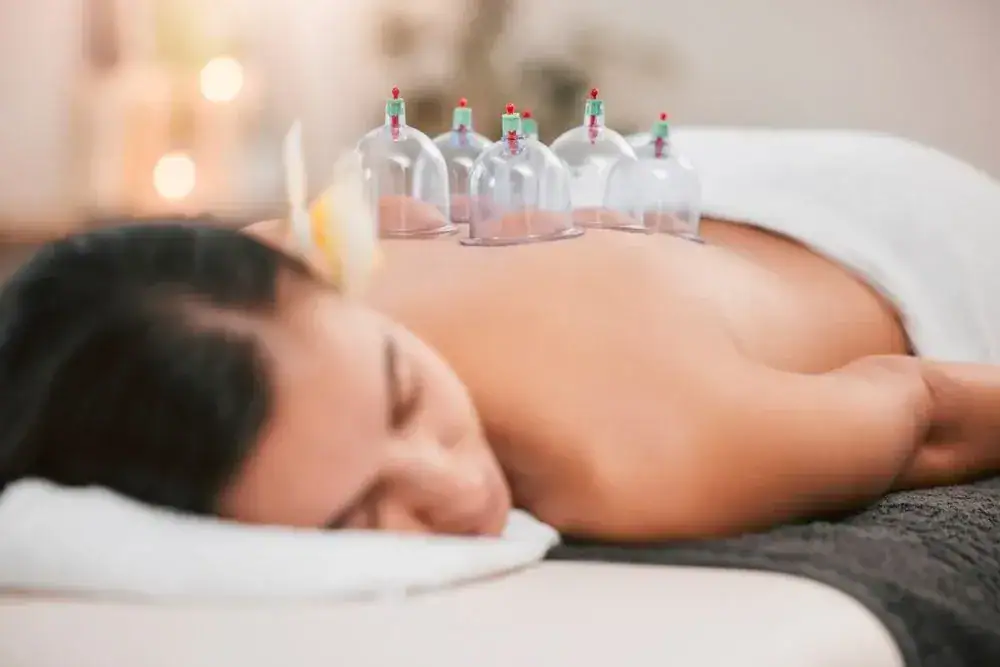

You wake up and your neck doesn’t scream at you. You reach for something on a high shelf without that sharp pull in your shoulder. Your lower back lets you stand from a chair without bracing yourself first.
That’s what cupping therapy does when it’s done right. It increases blood flow to areas that have been tight and restricted for months or years. It lifts and separates fascial layers that have been stuck together, causing that deep ache you can’t seem to stretch away.
The suction from the cups creates space in your tissues. More space means better circulation. Better circulation means your body can finally start healing areas it’s been struggling to reach. Inflammation drops. Muscle tension releases. Range of motion comes back.
This isn’t about temporary relief that wears off by dinner. Cupping therapy addresses the mechanical restrictions causing your pain. When combined with physical therapy, you’re not just managing symptoms. You’re fixing what’s broken.
We’ve been providing in-home physical therapy across Long Island since 2010. We’ve built our reputation in communities like North Sea by showing up consistently and delivering care that actually moves the needle.
Our therapists are trained in cupping therapy as part of comprehensive treatment plans. We don’t just slap cups on your back and call it a day. We assess what’s causing your pain, determine if cupping will help, and integrate it with other proven techniques.
North Sea residents deal with the same challenges as the rest of the Hamptons area. Active lifestyles, aging joints, old sports injuries that never quite healed right. You need someone who understands how to treat real problems, not just check boxes on a treatment form.
We accept Medicare, Medicaid, and most major insurance plans. Our team handles the paperwork so you can focus on getting better.
Your therapist starts with an evaluation. Where’s the pain? What makes it worse? How long has this been going on? We need to understand what we’re treating before we start treatment.
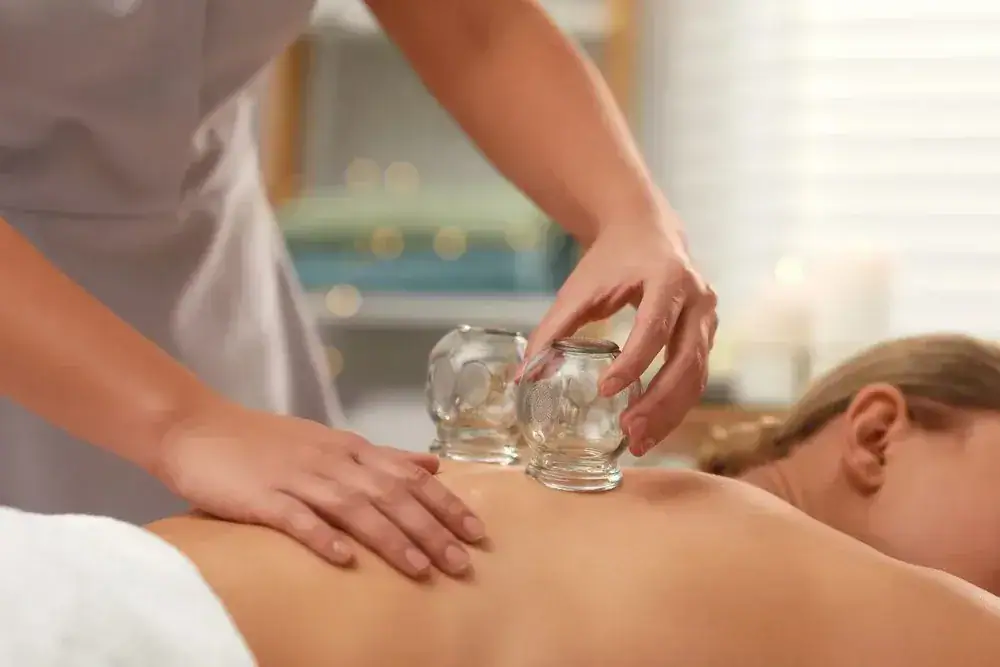
If cupping therapy makes sense for your condition, we’ll explain exactly what we’re doing and why. We place cups on specific areas where your fascia is restricted or your muscles are chronically tight. The suction pulls tissue up into the cup, creating negative pressure that increases blood flow and releases adhesions.
Most people feel immediate relief in the treated area. That tight, knotted feeling starts to ease. You might see circular marks on your skin afterward—that’s normal and they fade within a few days. Those marks show where blood flow was restricted and is now moving again.
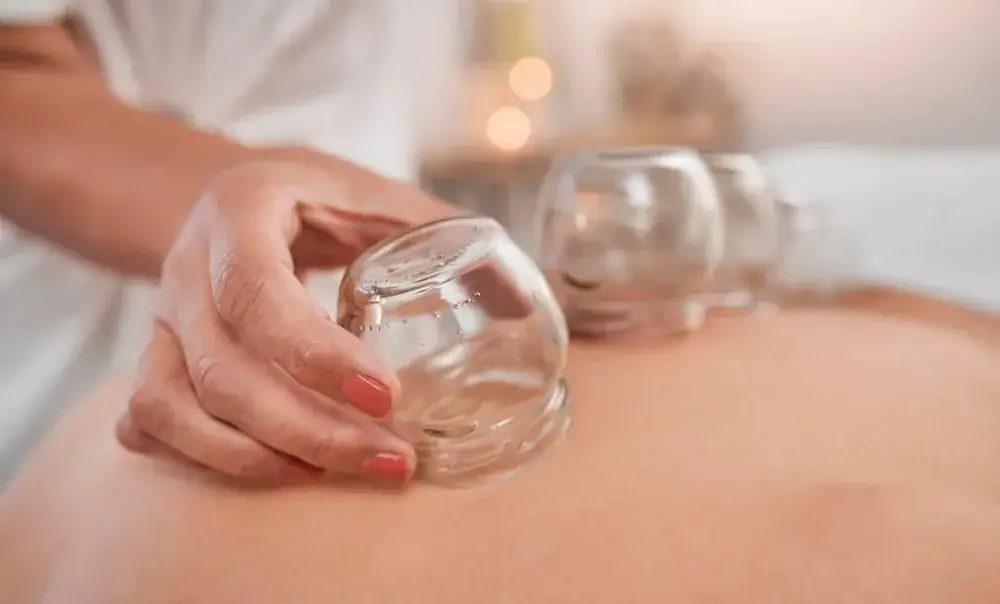
We typically use dry cupping, which means no needles or incisions. Just cups, suction, and strategic placement based on your specific pain patterns. Sessions usually last 15-20 minutes as part of your overall physical therapy treatment.
You’ll likely need multiple sessions. One treatment helps, but consistent therapy over several weeks creates lasting change. Your therapist will map out a realistic plan based on how your body responds.
Ready to get started?
Here’s what makes our approach different: we come to your home in North Sea. No driving to appointments when your back is killing you. No sitting in waiting rooms. No rushing to make it on time when you’re already exhausted from pain.
Your therapist brings everything needed for cupping therapy and physical therapy. We work in whatever space is comfortable for you—living room, bedroom, wherever you can relax and let the treatment work.
This matters more than you might think. Pain is exhausting. The last thing you need is the stress of getting to and from appointments. Home-based care means you can rest immediately after treatment instead of getting in a car and navigating traffic.
North Sea’s aging population—like much of Long Island—increasingly needs services that meet them where they are. The baby boomer generation is hitting the age where chronic pain becomes a daily reality. Transportation becomes harder. Home-based therapy isn’t just convenient; for many people, it’s the difference between getting care and going without.
We also integrate cupping with your full physical therapy plan. It’s not a standalone treatment. It’s one tool among many we use to address your specific condition, whether that’s chronic back pain, neck stiffness, knee problems, or recovery from an injury.
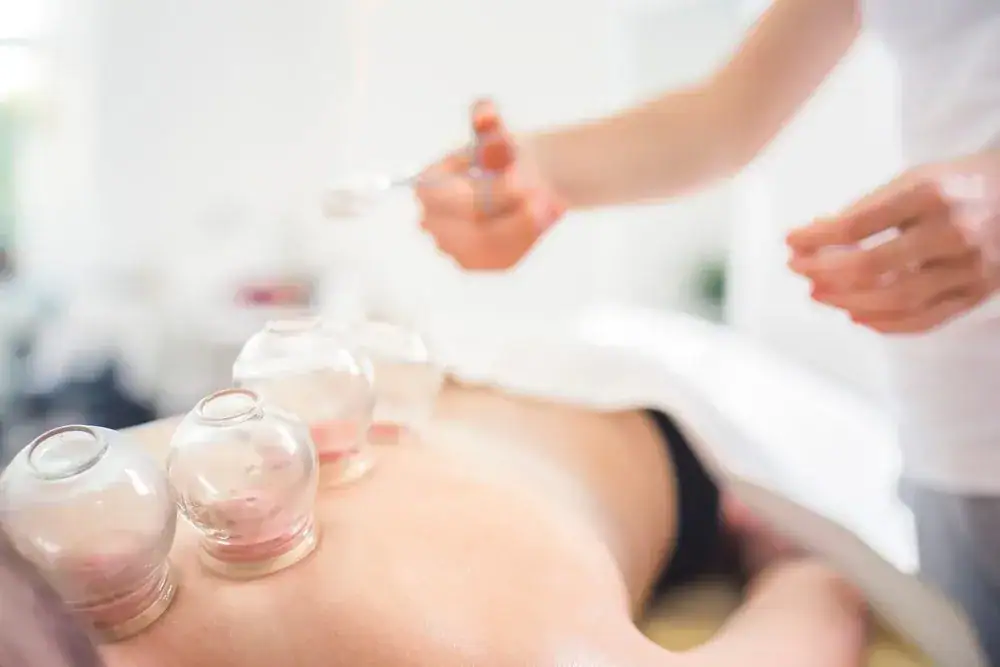
Yes, and the research backs this up. Studies show moderate-quality evidence that cupping therapy reduces chronic back pain more effectively than standard care alone. It’s not magic—it’s mechanics.
Your back pain often comes from fascial restrictions and muscle tension that have built up over time. Cupping creates negative pressure that lifts and separates those stuck tissue layers. This increases blood flow to areas that have been starved of circulation, reduces inflammation, and allows your muscles to finally relax.
Most people with chronic back pain have tried everything: stretching, heat, ice, medications, regular physical therapy. Cupping adds another dimension by addressing tissue restrictions that other treatments can’t quite reach. When we combine it with targeted exercises and manual therapy, you’re attacking the problem from multiple angles.
You won’t be pain-free after one session. But most people notice a difference in how their back feels—less tight, more mobile, easier to move without that constant ache. Over several weeks of treatment, those improvements compound.
Cupping therapy is very safe when performed by trained professionals. The marks you see after treatment are temporary and fade within a few days to a week. They’re not bruises in the traditional sense—they’re a sign of stagnant blood being drawn to the surface where your body can process it.
The suction doesn’t damage your skin or underlying tissue. It pulls blood and fluid into areas that need better circulation. Those circular marks show where the cups were placed and where blood flow was restricted. As your circulation improves with repeated treatments, the marks typically become lighter.
An Australian study tracked over 18,000 cupping patients over seven years and found only 20 burn-related injuries. That’s an extremely low risk profile. Burns only happen when cups are heated improperly—something professional therapists are trained to avoid.
The most common side effect is temporary soreness in the treated area, similar to how you might feel after a deep tissue massage. Some people feel lightheaded immediately after treatment, which passes quickly. Serious complications are rare when you’re working with someone who knows what they’re doing.
Cupping therapy is a technique we use within physical therapy—it’s not separate from it. Think of it as another tool in the treatment toolbox, used when it makes sense for your specific condition.
Regular physical therapy focuses on exercises, stretches, manual therapy, and movement re-education. These approaches work on strengthening weak areas, improving flexibility, and teaching your body better movement patterns. Cupping adds a fascial release component that other techniques can’t quite replicate.
The negative pressure from cupping lifts tissue in a way that’s opposite to massage, which pushes tissue down. This lifting action is particularly effective for releasing fascial adhesions—those stuck areas where layers of connective tissue have glued themselves together and restricted your movement.
We use cupping when someone has stubborn muscle tightness that isn’t responding well to stretching alone, when fascial restrictions are limiting range of motion, or when we need to increase blood flow to a specific area that’s been chronically tight. It’s integrated into your overall treatment plan, not used in isolation.
In most cases, yes. We accept Medicare, Medicaid, and most major insurance plans. Cupping therapy is billed as part of your physical therapy treatment, not as a separate service.
Insurance companies cover physical therapy when it’s medically necessary—meaning you have a diagnosed condition that therapy can improve. If cupping is part of your treatment plan for that condition, it’s typically covered under your physical therapy benefits.
Medicare coverage is particularly important for North Sea residents, since much of our community is at or near retirement age. Medicare Part B covers physical therapy services when they’re prescribed by a physician and provided by a licensed therapist. Home-based therapy is covered when you’re homebound or when in-home treatment is medically appropriate.
We handle the insurance verification and paperwork. Before starting treatment, we’ll confirm your coverage and let you know what, if any, out-of-pocket costs you’ll have. Most people pay a copay per visit, depending on their specific plan. We’ll never surprise you with unexpected bills.
Most people need somewhere between 6 and 12 sessions to see significant, lasting improvement. That’s not a hard rule—some conditions respond faster, others take longer. It depends on how long you’ve had the problem and how severe it is.
Chronic pain that’s been building for years won’t disappear in one session. Your fascia has been restricted, your muscles have been compensating, and your movement patterns have adapted around the pain. Undoing all that takes time and consistent treatment.
You’ll likely feel some relief after your first session. That tight, achy feeling often eases immediately. But that initial relief isn’t the same as fixing the underlying problem. We need multiple sessions to create lasting tissue changes and retrain your body to move without pain.
Your therapist will reassess your progress regularly. If you’re improving, we’ll continue with the plan. If you’re not seeing the changes we’d expect, we’ll adjust the approach. The goal is always to get you better as efficiently as possible, not to string out treatment indefinitely.
Cupping therapy works best for musculoskeletal pain—the kind that comes from tight muscles, restricted fascia, and poor circulation in specific areas. Lower back pain, neck pain, and shoulder pain respond particularly well. These are the most common complaints we see in North Sea.
Knee pain from osteoarthritis often improves with cupping combined with strengthening exercises. The increased blood flow helps reduce inflammation around the joint, while the fascial release improves how the muscles around your knee work together.
Chronic headaches that stem from neck tension can improve dramatically. When we release the tight muscles at the base of your skull and improve circulation to that area, the frequency and intensity of headaches often drops.
Sports injuries and old injuries that never quite healed right are also good candidates. If you’ve got scar tissue limiting your movement or an area that’s been chronically tight since an injury years ago, cupping can help break up those restrictions and restore normal tissue mobility. We see this a lot with former athletes who are now dealing with the long-term effects of old injuries.
Other Services we provide in North Sea