


You wake up without that familiar ache in your lower back. You reach for something on a high shelf and your shoulder doesn’t scream at you. You finish a workout and recover faster than you have in months.
That’s what happens when cupping therapy addresses the root cause of muscle tension and restricted blood flow. The suction created during treatment pulls fresh blood and oxygen into areas that have been tight and starved of circulation. Adhesions between your fascia and muscle tissue start to release. Your body gets the space it needs to actually heal instead of just masking symptoms.
Most people notice they can move more freely after their first session. The tightness that’s been limiting your range of motion starts to ease. You’re not constantly adjusting your posture to avoid pain. You sleep better because you’re not waking up every time you roll over.
This isn’t about temporary relief that wears off in a few hours. Cupping therapy works with your body’s natural healing process to create lasting change in how your muscles function and feel.
We bring cupping therapy to North New Hyde Park through licensed physical therapists who’ve been trained in proper technique and application. This isn’t a spa treatment or something you’re getting from someone who took a weekend course.
Our therapists understand musculoskeletal conditions because they treat them every day. They know when cupping therapy makes sense as part of your treatment plan and when it doesn’t. They know how to adjust pressure, placement, and duration based on what your body needs.
North New Hyde Park has plenty of physical therapy options, and you’ve probably tried a few. What makes us different is the combination of traditional PT expertise with alternative modalities like cupping that actually have research backing them. You’re getting both the clinical knowledge and the willingness to use methods that work even if they’re not conventional.
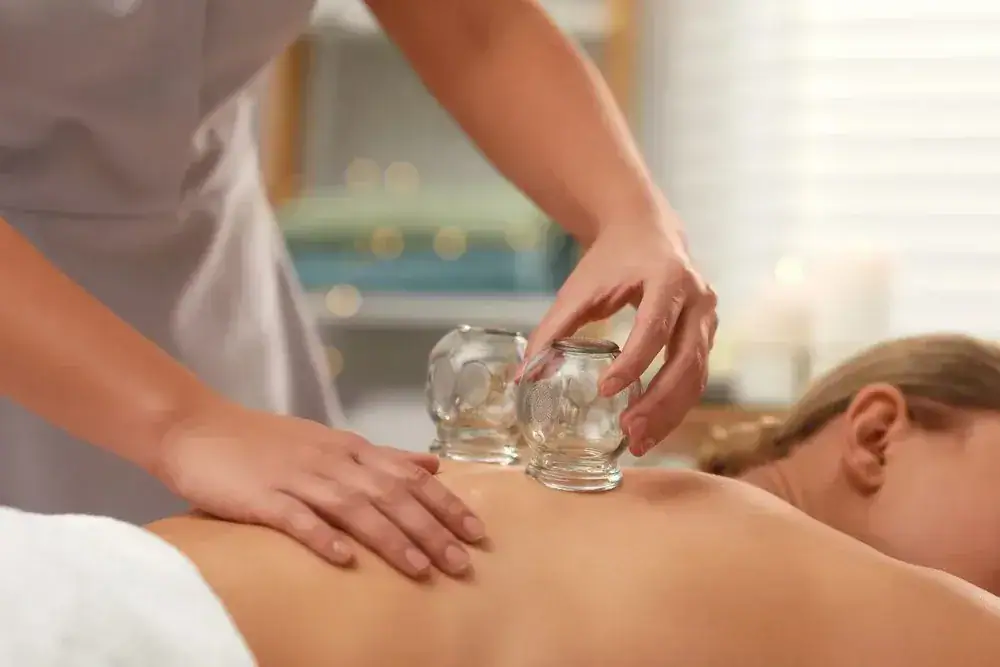
Your therapist starts with an assessment of where you’re holding tension and what’s causing your pain. They’re looking at your posture, your range of motion, and the specific areas that need attention. This isn’t guesswork.
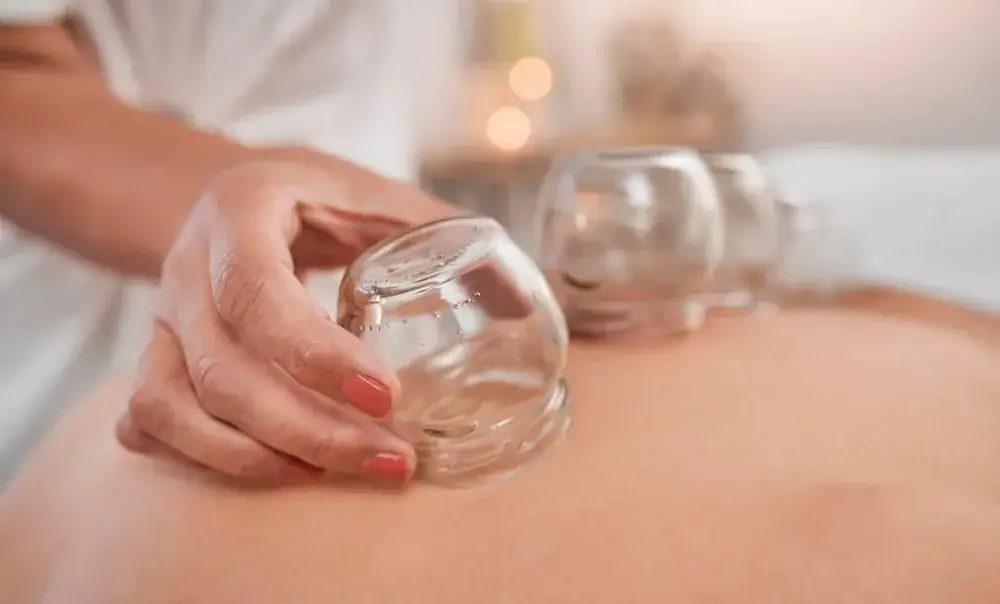
During the actual cupping treatment, your therapist places specialized cups on your skin over the problem areas. The cups create suction that pulls tissue upward, increasing blood flow and creating space between layers of fascia, muscle, and connective tissue. Some therapists use stationary cups that stay in one place for several minutes. Others use a gliding technique where they move the cups across your skin to release larger areas.
You’ll feel pulling and pressure, but it shouldn’t hurt. Most people find it surprisingly relaxing once they get used to the sensation. Sessions typically last 5-10 minutes for the cupping portion, though your full appointment will be longer as your therapist works on other aspects of your treatment plan.
After treatment, you might have circular marks on your skin where the cups were placed. These aren’t bruises in the traditional sense. They’re caused by blood being drawn to the surface and they fade within a week or two. Your therapist will explain what to expect and how to care for the treated areas.
Ready to get started?
Cupping therapy at Medcare is integrated into a comprehensive physical therapy approach. You’re not just getting cups placed on your back and sent home. Your therapist uses cupping as one tool within a larger treatment strategy designed around your specific condition.
For people in North New Hyde Park dealing with chronic back pain, neck tension, or shoulder problems, this matters. The area has a high concentration of desk workers, healthcare professionals, and people who’ve been dealing with pain long enough to be skeptical of quick fixes. Cupping works here because it’s combined with movement therapy, strengthening exercises, and education about how to prevent the problem from coming back.
We use dry cupping, which means no incisions or blood removal. The cups create negative pressure through suction alone. Your therapist can adjust the intensity based on your tolerance and the depth of tissue they need to reach. Some sessions focus on releasing superficial fascia. Others target deeper muscle adhesions that have been limiting your movement for months or years.
You’ll also get clear guidance on what to do between sessions. Cupping creates an opportunity for healing, but you need to support that process with proper movement, hydration, and sometimes modifications to how you’re using your body during work or exercise. Your therapist explains all of this in plain terms you can actually use.
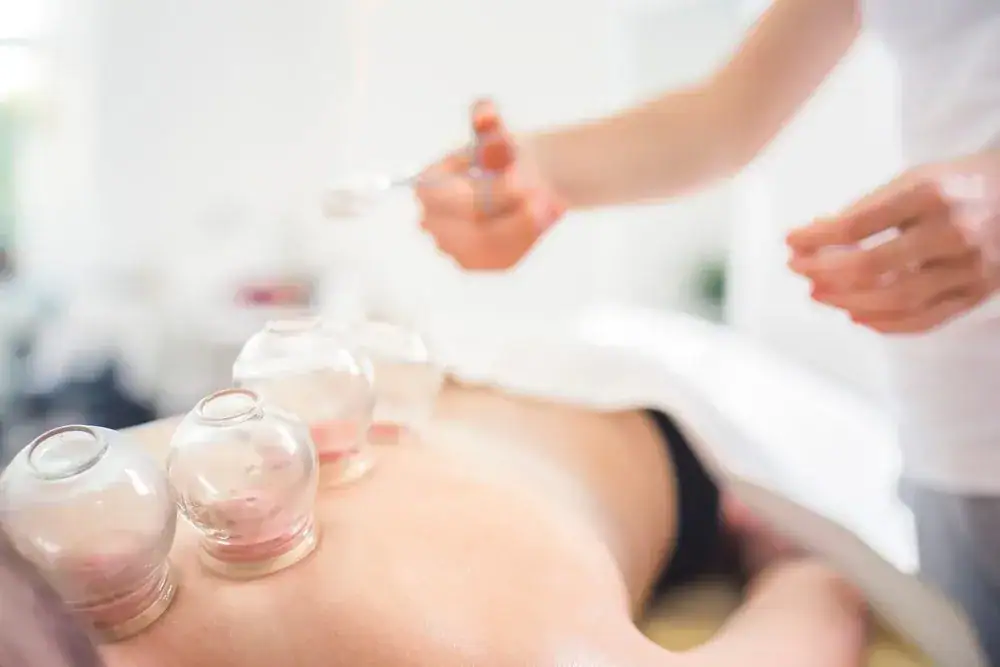
Cupping therapy has measurable effects on blood flow, tissue mobility, and pain reduction that go beyond placebo. Research shows it increases circulation to treated areas, which delivers oxygen and nutrients your muscles need to heal. It also creates mechanical separation between tissue layers that have been stuck together, which is why people often feel immediate improvement in range of motion.
That said, it’s not magic. Cupping works best when it’s part of a complete treatment plan that addresses why you’re in pain in the first place. If your back hurts because you sit hunched over a computer for eight hours a day, cupping will help release the tension and improve blood flow, but you’ll also need to work on posture and core strength to keep the problem from coming back.
The marks left by cupping are visible evidence of increased blood flow to the area. That’s not cosmetic. That’s your body responding to treatment by sending resources to tissue that needs repair. Most people notice reduced pain and easier movement within a day or two of their first session, which is faster than you’d expect from placebo alone.
The circular marks left by cupping typically fade within 5-10 days, though this varies based on how much stagnation was in the tissue and how your body responds to treatment. Areas with more tension and restricted blood flow tend to show darker marks initially. As you continue treatment and circulation improves, the marks usually become lighter and fade faster.
The marks themselves don’t hurt. They’re caused by blood being drawn to the surface of your skin, not by broken blood vessels like a bruise. You might feel some tenderness in the treated area for a day after your session, similar to how muscles feel after a deep tissue massage, but the marks themselves aren’t painful to touch.
If you’re concerned about visible marks for work or social reasons, talk to your therapist. They can adjust the intensity of treatment or focus on areas that will be covered by clothing. The marks are a normal part of the process, but they’re not required for the treatment to be effective. Some people show minimal marking even with intensive treatment, while others mark easily. Neither is better or worse.
Cupping therapy shows the strongest results for musculoskeletal pain and tension. This includes chronic back pain, neck stiffness, shoulder problems, and muscle tightness that limits your movement. It’s particularly effective for people who feel like their muscles are constantly tight no matter how much they stretch, or who have specific knots and trigger points that won’t release with traditional massage or physical therapy alone.
Athletes and active people use cupping for muscle recovery and to address overuse injuries. The increased blood flow helps clear metabolic waste from muscles and speeds up the repair process after intense training. If you’re dealing with IT band syndrome, rotator cuff issues, or persistent muscle strains, cupping can be a useful addition to your recovery plan.
Research also supports cupping for specific conditions like nocturnal leg cramps and certain types of headaches that stem from neck and shoulder tension. It’s less effective for nerve pain, joint problems that involve bone or cartilage damage, or conditions that need surgical intervention. Your physical therapist will be honest about whether cupping makes sense for your particular situation or if you need a different approach.
When cupping is performed by a licensed physical therapist as part of your physical therapy treatment plan, it’s often covered under your PT benefits. Insurance companies typically don’t reimburse for cupping as a standalone service, but when it’s integrated into a comprehensive treatment approach for a diagnosed musculoskeletal condition, it falls under the umbrella of physical therapy modalities.
Coverage varies significantly between insurance plans. Some plans cover cupping without issue. Others require documentation showing that cupping is medically necessary for your specific condition. Your therapist will include cupping in your treatment notes and explain how it addresses your diagnosis and treatment goals.
The best approach is to contact your insurance provider before your first appointment and ask specifically about coverage for physical therapy modalities and manual therapy techniques. We can provide documentation and codes to help you verify coverage. Even if cupping itself isn’t separately reimbursed, your overall PT sessions should be covered according to your plan’s benefits, and cupping is simply one technique used during those sessions.
Most people notice some improvement after their first cupping session, particularly in how their muscles feel and how easily they can move. That initial relief tells you the treatment is working, but it doesn’t mean you’re done. Lasting change typically requires multiple sessions spread over several weeks.
For acute issues like a recent muscle strain or temporary tightness from overuse, you might need 3-5 sessions before you’re back to normal. For chronic conditions that have been building for months or years, expect a longer timeline. Your therapist will likely recommend 6-10 sessions initially, with the frequency decreasing as you improve. The goal is to get you to a point where you can maintain the improvements on your own.
The exact number depends on several factors: how severe your condition is, how your body responds to treatment, whether you’re doing the exercises and modifications your therapist recommends between sessions, and what’s causing the problem in the first place. Someone with chronic back pain from a desk job will need ongoing management even after the initial treatment series. Someone recovering from a sports injury might need intensive treatment for a few weeks and then occasional maintenance. Your therapist will give you a realistic timeline based on what they’re seeing in your specific case.
A physical therapist approaches cupping as a clinical treatment for diagnosed musculoskeletal conditions. We assess your movement patterns, identify the specific structures causing your pain, and determine that cupping will address those problems. We know anatomy at a level that allows us to target exactly where the restriction is and how much pressure to use based on the depth of tissue involved.
Spa cupping is generally focused on relaxation and general wellness. The person performing the treatment may have training in cupping technique, but they’re not evaluating your condition from a rehabilitation perspective. They’re not integrating cupping with corrective exercises, movement retraining, or a progressive treatment plan designed to resolve your underlying problem.
The other major difference is documentation and accountability. When we use cupping, we document your response to treatment, track objective measures like range of motion and pain levels, and adjust your treatment plan based on results. We’re also operating under a physician’s referral in most cases, which means there’s medical oversight of your care. This matters for insurance coverage, continuity of care, and making sure you’re getting treatment that’s actually appropriate for your condition rather than just something that feels good temporarily.
Other Services we provide in North New Hyde Park