


You’re not looking for temporary relief that wears off by dinner. You want to move without wincing. Sleep without waking up stiff. Get through your day without planning around your back, neck, or shoulders.
Cupping therapy increases blood flow to tight, overworked muscles and breaks up the adhesions that keep you locked up. That means less pain, better range of motion, and the ability to do normal things without constantly adjusting how you move.
Most people notice a difference after the first session—not a miracle, but enough to realize something’s actually working. Over time, the improvements stack. Your body starts remembering what it feels like to move freely again, and you stop organizing your life around what hurts.
We’ve been treating patients across Long Island since 2010. We specialize in home-based physical therapy for people who find it difficult—or just impractical—to drive to a clinic when they’re already in pain.
Our licensed physical therapists bring the same clinical expertise you’d get in an office, but without the commute, the waiting room, or the stress of getting there. North Lindenhurst residents benefit from personalized treatment plans that fit their schedules, their homes, and their actual lives.
We accept Medicare and most commercial insurance plans, which matters in a community where 93% of residents have health coverage. You’re not paying out of pocket for care that should be accessible.
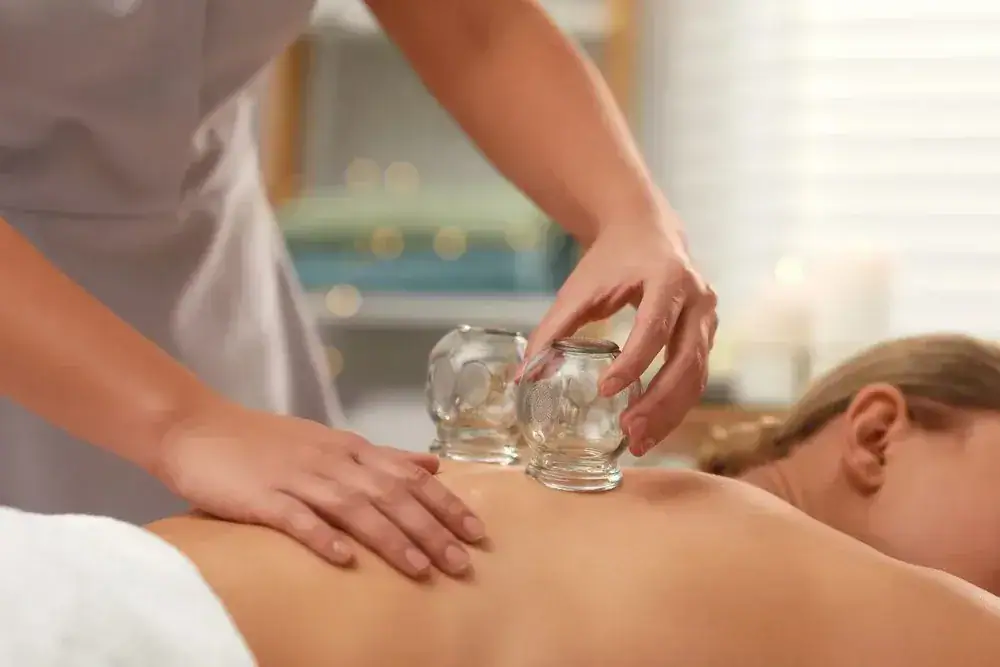
Your therapist starts with an assessment. They’ll ask about your pain—where it is, how long you’ve had it, what makes it worse. They’ll check your range of motion and identify which muscles are contributing to the problem.
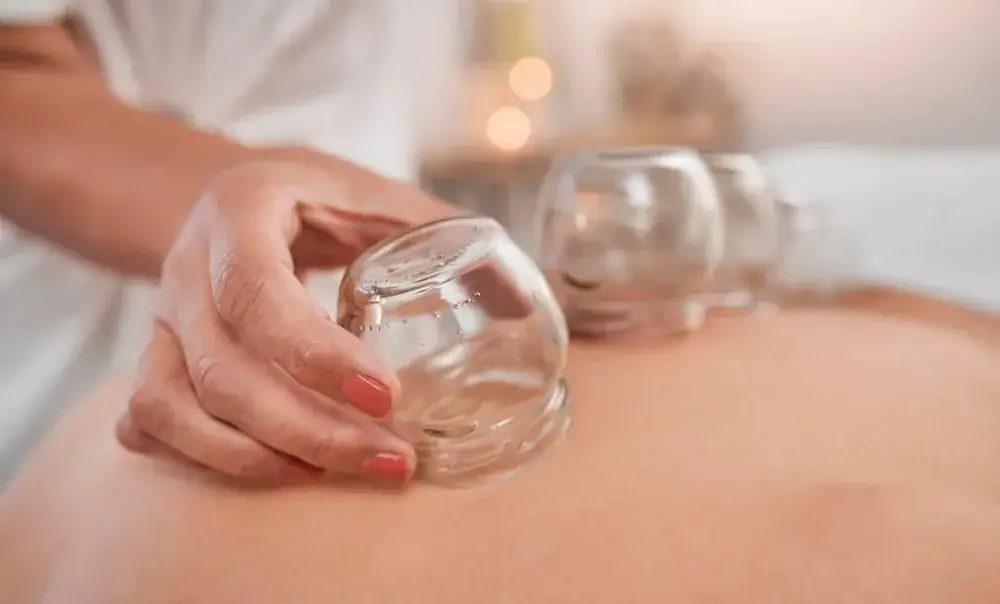
During dry cupping, small cups are placed on your skin over the affected areas. Suction pulls the tissue upward, increasing blood flow and releasing tension in the muscle. It’s not painful—most people describe it as a tight pulling sensation that actually feels relieving. The cups stay in place for several minutes, then your therapist removes them and may follow up with stretching or manual therapy.
You might see circular marks afterward. They’re not bruises—they’re a sign of increased circulation—and they fade within a few days. Some people feel immediate relief. Others notice the difference over the next day or two as inflammation decreases and mobility improves. Your therapist will recommend a treatment schedule based on your condition, usually starting with a few sessions over a couple of weeks.
Ready to get started?
Cupping therapy works for chronic low back pain, neck pain, shoulder tightness, and muscle stiffness that limits how you move. It’s particularly effective for myofascial pain—the kind that comes from overuse, poor posture, or old injuries that never fully healed.
In North Lindenhurst, where the largest employment sector is healthcare and social assistance, many residents deal with repetitive strain from physically demanding work. Cupping helps by reducing muscle spasms, improving circulation, and breaking up scar tissue that restricts movement. It’s also useful for people managing knee osteoarthritis or recovering from sports injuries.
This isn’t a replacement for physical therapy—it’s part of it. We integrate cupping into a broader treatment plan that may include strengthening exercises, manual therapy, and education on how to prevent the problem from coming back. The goal is functional improvement, not just temporary pain relief. You should be able to do more, move better, and rely less on medications that only mask the issue.
Yes, and there’s clinical evidence supporting it. Multiple studies show that cupping therapy provides measurable pain reduction for chronic low back pain, particularly when combined with physical therapy. It’s not a cure, but it’s effective at reducing inflammation and muscle tension that contribute to ongoing pain.
The mechanism is straightforward. Suction increases blood flow to the area, which helps flush out metabolic waste and brings in oxygen and nutrients that support healing. It also lifts and separates tissue layers, reducing adhesions that restrict movement. For people who’ve tried medications, injections, or standard PT without lasting results, cupping offers a non-invasive option that addresses the soft tissue component of pain.
Most patients notice improvement within two to three sessions, though the timeline depends on how long you’ve had the pain and what’s causing it. Acute flare-ups respond faster than chronic conditions that have been building for years.
If you have Medicare or commercial insurance, cupping is typically covered when it’s provided by a licensed physical therapist as part of your treatment plan. It’s billed under physical therapy services, not as a separate alternative treatment, which is why most plans cover it without issue.
We accept Medicare and nearly all commercial insurance plans common in North Lindenhurst, where over 93% of residents have health coverage. We handle the verification and billing, so you’re not navigating that process on your own. If you have a high-deductible plan, you may have some out-of-pocket costs until you meet your deductible, but the treatment itself is covered.
Before your first session, we confirm your benefits and let you know what to expect. No surprises, no unexpected bills showing up later. If there’s any cost-sharing, you’ll know upfront.
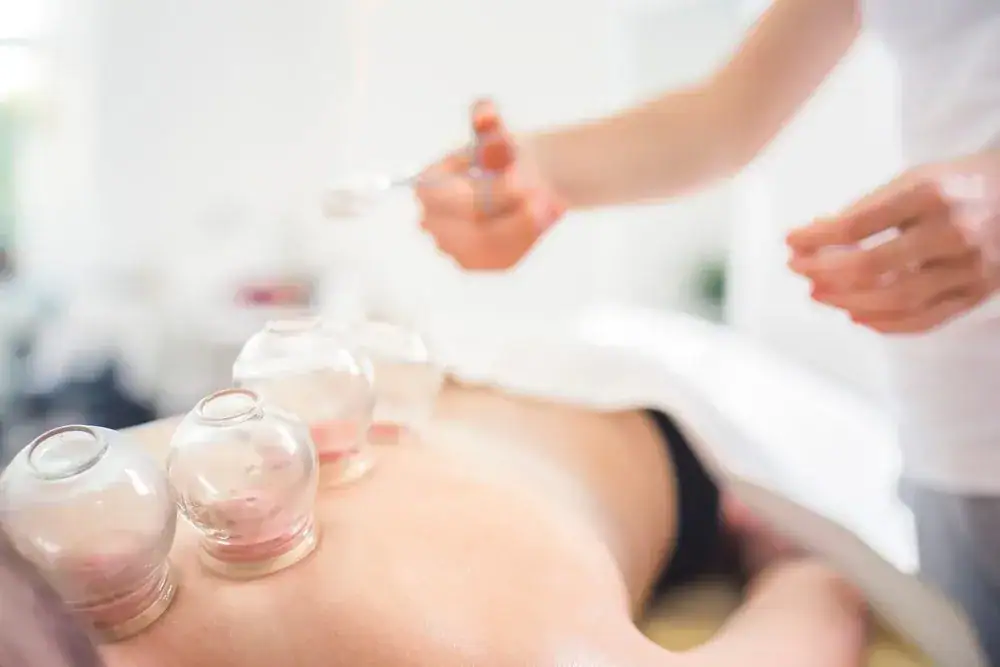
Dry cupping uses suction only—no needles, no incisions, no blood. The cups create negative pressure that pulls tissue upward, increasing circulation and releasing muscle tension. It’s the most common form used in physical therapy and the safest for most people.
Wet cupping involves making small cuts in the skin to draw out blood, and fire cupping uses a flame to create suction. Those methods are used in traditional medicine practices but aren’t typically part of physical therapy treatment in the U.S. Dry cupping gives you the therapeutic benefits—pain relief, improved mobility, reduced muscle tightness—without any invasive techniques.
The marks left behind look dramatic, but they’re not painful and they fade within three to seven days. They’re caused by increased blood flow to the surface, not tissue damage. Most people find the treatment relaxing, especially when muscle tension finally releases.
Your therapist arrives with all the equipment needed and starts with an evaluation. They’ll ask about your pain history, check your movement, and explain how cupping fits into your overall treatment plan. The goal is to understand what’s causing your pain, not just where it hurts.
During the session, you’ll lie down in a comfortable position—usually on a table the therapist brings, or on your bed if that works better. The cups are applied to the affected areas and left in place for five to ten minutes. You’ll feel a pulling sensation, but it shouldn’t hurt. Many people find it relieving, especially if the area has been tight for a long time.
Afterward, your therapist may do some manual therapy or give you exercises to support the treatment. The first session usually lasts about 45 minutes to an hour. You can go about your day normally afterward—there’s no downtime or recovery period. Some people feel immediate relief, others notice it over the next day as inflammation decreases.
Yes. Neck and shoulder pain often come from muscle overuse, poor posture, or stress that causes chronic tightness in the upper trapezius and surrounding muscles. Cupping targets those areas by increasing blood flow and releasing fascial restrictions that keep the muscles locked up.
For people who work at desks, drive frequently, or carry tension in their shoulders, cupping provides relief that stretching alone doesn’t achieve. The suction reaches deeper layers of tissue and helps break up adhesions that form from repetitive strain. Combined with corrective exercises and posture education, it’s an effective way to address the root cause, not just the symptoms.
Clinical research supports cupping for neck pain specifically, with studies showing reduced pain intensity and improved range of motion after a series of treatments. It’s not a one-and-done solution, but it’s a legitimate tool for managing chronic upper body tension that interferes with daily life.
Most people notice some improvement after the first or second session, but lasting results usually take four to six sessions over a few weeks. The exact number depends on your condition, how long you’ve had the pain, and how your body responds to treatment.
Acute pain—like a recent muscle strain—responds faster than chronic pain that’s been building for months or years. If you’re dealing with long-term tightness or limited mobility, your therapist will likely recommend a series of sessions spaced a few days apart, then taper off as you improve. The goal is to get you to a point where you’re maintaining progress on your own, not dependent on ongoing treatment.
Your therapist will reassess after each session and adjust the plan based on what’s working. If you’re not seeing improvement after three or four sessions, they’ll modify the approach or explore other techniques. The focus is always on measurable progress, not just continuing treatment indefinitely because it feels good.
Other Services we provide in North Lindenhurst