
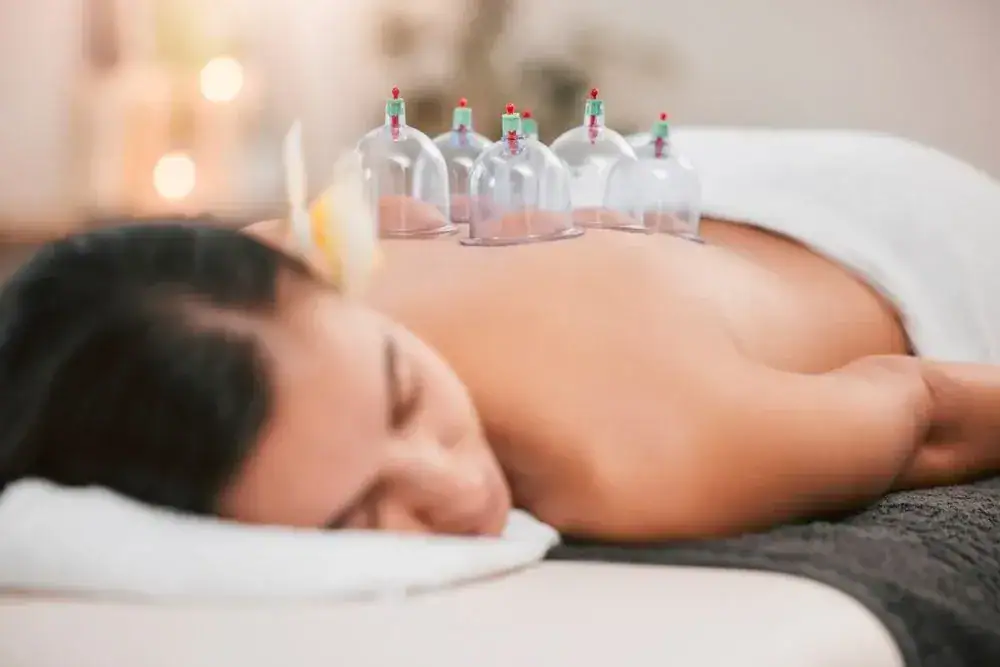

Imagine waking up without that constant ache in your lower back. Or reaching for something on a high shelf without wincing. That’s what happens when muscle tension releases and blood flow improves to the areas that need it most.
Cupping therapy works by placing specialized cups on your skin for 10-15 minutes, creating gentle suction that draws blood to the surface. This isn’t some trendy wellness fad—it’s a technique with thousands of years of use, now backed by clinical research showing real results for chronic pain, muscle tightness, and limited mobility.
The suction lifts and separates your fascia, breaking up adhesions and scar tissue that restrict movement. Your muscles get the oxygen-rich blood they need to heal. Inflammation decreases. Range of motion improves. You start doing the things you’ve been avoiding because they hurt too much.
Most people notice looser muscles and less pain within the first few sessions. If you’ve been managing pain with medication and want a different approach, or if physical therapy alone hasn’t given you the relief you need, cupping can be the missing piece.
We’ve served Long Island communities for over a decade, and we know North Bellport well. This is a working community—people in manufacturing, retail, healthcare—dealing with real physical demands that add up over time.
We’re licensed physical therapists who treat cupping as part of comprehensive care, not a standalone gimmick. We accept Medicare and most commercial insurance, and we offer home visits for people who can’t easily get to a clinic. That matters in a community where 11% of residents are over 64 and mobility challenges are real.
You’ll work with professionals who verify credentials, manage your data securely, and communicate clearly about your treatment plan. No runaround, no surprises on your bill, no treating you like a number.
First, we assess your pain. Where is it? What makes it worse? What have you already tried? This isn’t a cookie-cutter approach—your treatment depends on your specific condition.
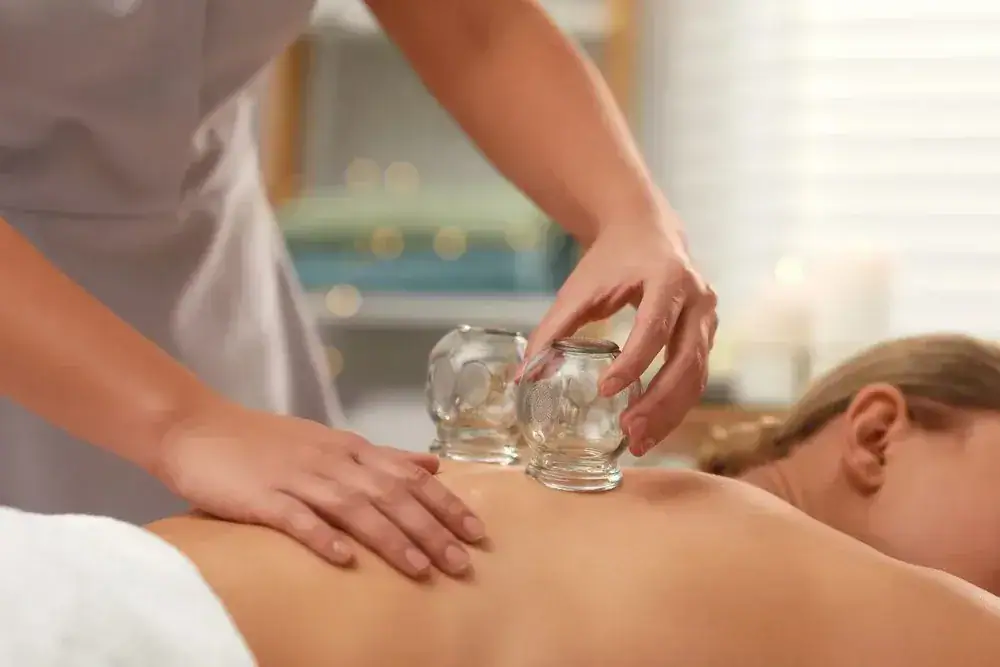
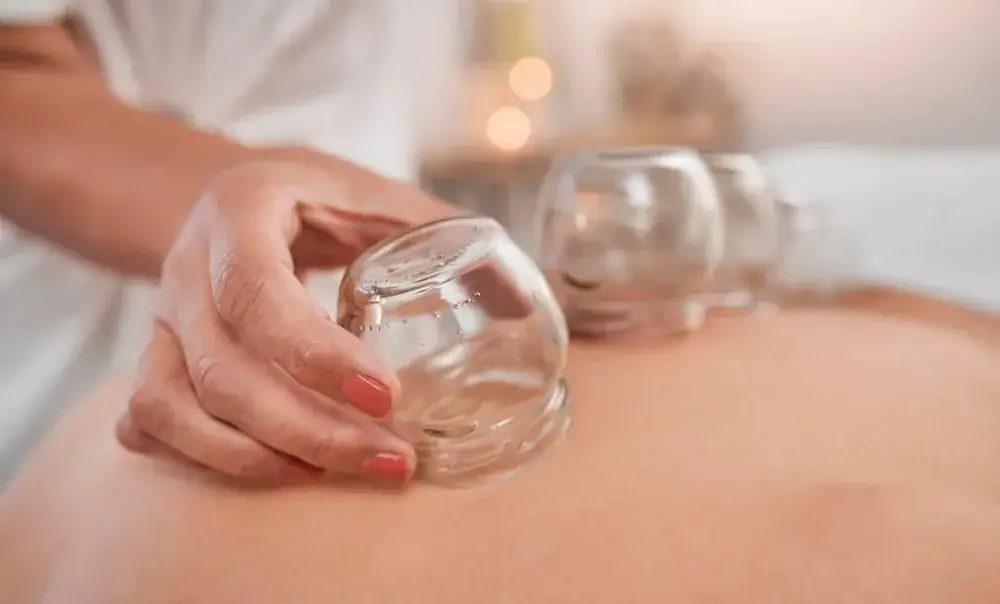
During the session, we place smooth cups on the affected areas. The suction can come from heat or a manual pump, depending on the technique. You’ll feel a tight pulling sensation, but it shouldn’t hurt. The cups stay in place for 10-15 minutes while you relax.
As the suction works, blood rushes to the area. This increased circulation brings nutrients and oxygen that help repair damaged tissue. The mechanical lift separates fascial layers that have stuck together, which is often the source of that deep, stubborn pain.
After we remove the cups, you’ll see circular marks on your skin. They’re not bruises—they’re a sign of increased blood flow. They fade within a few days to a week. Most people feel immediate relief in muscle tightness, though the full benefits build over multiple sessions.
We typically recommend starting with twice-weekly sessions, then spacing them out as you improve. Some people combine cupping with other physical therapy techniques for faster results. We’ll adjust based on how you respond.
Ready to get started?
Cupping works particularly well for chronic back pain, neck stiffness, and shoulder tension—the exact issues that plague people working physical jobs or sitting at desks all day. In North Bellport, where manufacturing and retail are major employers, we see a lot of repetitive strain and overuse injuries. Cupping helps.
It’s also effective for post-exercise soreness if you’re active. Athletes use it to speed recovery and reduce delayed onset muscle soreness. The increased blood flow helps flush out metabolic waste and delivers the nutrients your muscles need to rebuild.
Beyond pain relief, cupping reduces inflammation throughout the treated area. If you’re dealing with swelling or chronic inflammatory conditions, the suction helps move stagnant fluid and brings down that persistent puffiness. You’ll notice improved flexibility as tight fascia loosens and scar tissue becomes more mobile.
We use dry cupping, which is the suction-only method. It’s safe, non-invasive, and the side effects are limited to those temporary circular marks and mild skin sensitivity. No needles, no incisions, no medications. Just mechanical stimulation that triggers your body’s natural healing response.
This isn’t a replacement for all physical therapy—it’s one tool in a complete treatment plan. But for the right conditions, it delivers results that medications and stretching alone can’t match.
Yes, and the research backs it up. Multiple clinical studies show cupping reduces pain intensity for chronic lower back pain, often more effectively than standard care alone. The mechanism is straightforward: suction increases blood circulation to your back muscles, which are often starved of oxygen when they’re chronically tight.
When muscles stay contracted for long periods, they compress blood vessels and restrict nutrient delivery. Cupping reverses this by pulling fresh blood to the surface and encouraging those muscle fibers to release. You’re not just masking pain—you’re addressing the underlying tension and poor circulation that cause it.
Most people with chronic back pain notice improvement within three to four sessions. The relief builds over time as inflammation decreases and tissue quality improves. If you’ve been dealing with back pain for months or years, cupping combined with targeted physical therapy exercises gives you a real shot at getting off the pain-management treadmill.
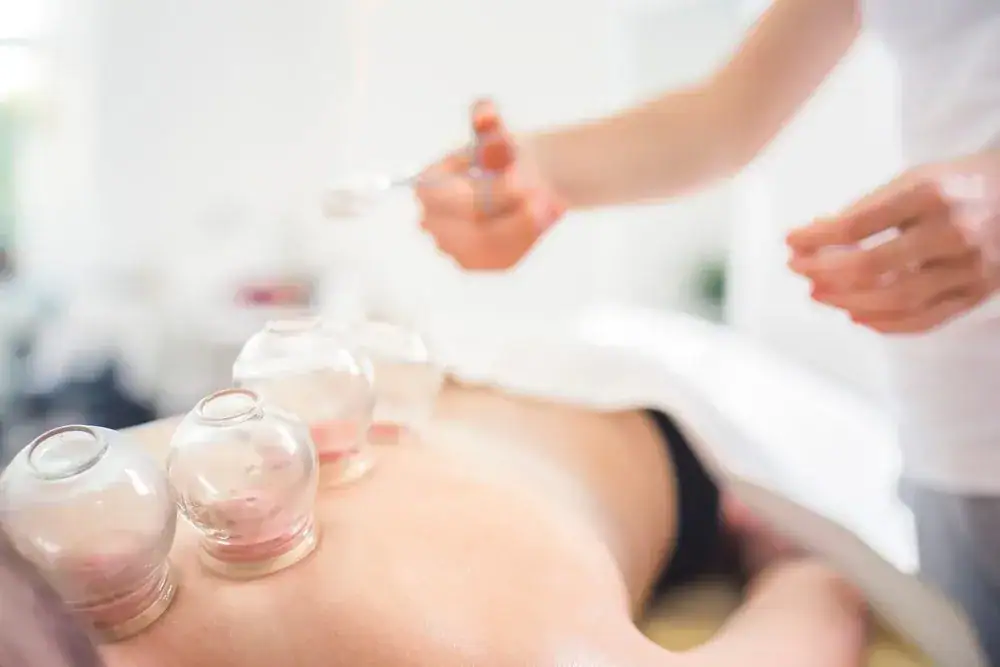
Dry cupping uses suction only—we place cups on your skin, create a vacuum, and leave them for several minutes. There’s no breaking of the skin, no blood removal, nothing invasive. This is what we practice at Medcare, and it’s the most common form used in physical therapy settings.
Wet cupping involves making small incisions in the skin before applying the cups, allowing a small amount of blood to be drawn out. It’s more common in traditional Chinese medicine practices and requires different training and licensing. The theory is that removing small amounts of blood helps eliminate toxins, though the evidence for this is less robust than for dry cupping.
For pain relief, muscle tension, and improved mobility, dry cupping delivers the results you need without any cutting. The suction alone is enough to increase blood flow, release fascial adhesions, and reduce inflammation. It’s also safer, with fewer risks of infection or scarring. Unless you have a specific condition that might benefit from wet cupping, dry cupping is the practical, evidence-based choice for musculoskeletal issues.
Typically three to seven days, depending on how much stagnation was in the tissue. Those circular marks aren’t bruises in the traditional sense—they’re areas where blood has been drawn to the surface through suction. The darker the mark, the more congestion was present in that area.
If your muscles are extremely tight or you have poor circulation, the marks might be darker and last closer to a week. As your condition improves with repeated treatments, you’ll often notice the marks become lighter and fade faster. That’s actually a good sign—it means circulation is improving and there’s less stagnation to clear.
The marks don’t hurt. You might have some tenderness in the treated area for a day or two, similar to post-workout soreness, but the discoloration itself is painless. If you’re concerned about visible marks for an event or occasion, let us know beforehand. We can adjust cup placement or timing to minimize visibility, though the marks are part of how the treatment works. Most people consider them a small trade-off for significant pain relief.
When cupping is performed as part of a physical therapy treatment plan, it’s often covered under your physical therapy benefits. Medicare covers physical therapy services when they’re medically necessary and provided by licensed therapists—which is exactly what we offer at Medcare.
Coverage depends on your specific plan and whether you’ve met your deductible. Most commercial insurance plans also cover physical therapy that includes cupping, though you may have copays or coinsurance. We accept Medicare and nearly all commercial insurances, and we’ll verify your benefits before starting treatment so you know what to expect.
The key is that cupping needs to be part of a documented treatment plan for a diagnosed condition, not just a standalone wellness service. If you’re dealing with chronic pain, limited mobility, or recovering from an injury, and your doctor has recommended physical therapy, there’s a good chance your cupping sessions will be covered. We handle the billing and work directly with your insurance to minimize your out-of-pocket costs. Call us to verify your specific coverage before your first appointment.
Absolutely. Athletes have been using cupping for exactly this reason—it speeds recovery, reduces muscle soreness, and helps prevent the buildup of tension that leads to injury. When you exercise intensely, your muscles accumulate metabolic waste products and develop micro-tears that need repair.
Cupping increases blood flow to the treated muscles, which accelerates the delivery of oxygen and nutrients needed for repair. It also helps flush out lactic acid and other waste products that contribute to that heavy, sore feeling after a hard workout. The mechanical lift from the suction releases fascial restrictions that can limit your range of motion and make you more prone to strains.
If you’re dealing with delayed onset muscle soreness—that deep ache that shows up a day or two after training—cupping can cut that recovery time significantly. Many people schedule cupping sessions the day after intense workouts or competitions. You’ll feel looser, recover faster, and be ready to train again sooner. It’s particularly useful if you’re training for an event or dealing with chronic tightness that’s affecting your performance. Combined with proper stretching and rest, cupping gives active people a real edge in recovery.
We start with a conversation about your pain—where it is, how long you’ve had it, what makes it better or worse, and what you’ve already tried. This helps us determine if cupping is right for you and which areas to focus on. We’ll also check your medical history to make sure there are no contraindications.
During the treatment, you’ll lie comfortably while we place cups on the targeted areas. You’ll feel a tight pulling sensation as the suction takes hold, but it shouldn’t be painful. If it is, tell us immediately—we can adjust the pressure. The cups stay in place for 10-15 minutes while you relax. Some people find it surprisingly calming.
When we remove the cups, you’ll see those circular marks we talked about. We’ll give you guidance on what to do afterward—usually just staying hydrated and avoiding intense activity for the rest of the day. Most people feel immediate relief in muscle tightness, though some experience mild soreness similar to a deep tissue massage. That’s normal and fades quickly. We’ll schedule your next session based on your condition and how you respond. The goal is consistent progress, not a one-time fix.
Other Services we provide in North Bellport