

You’ve probably tried the usual options. Heat packs that help for an hour. Stretches that don’t quite reach the problem. Maybe medications you’d rather not keep taking.
Cupping therapy works differently. It increases blood flow directly to tight, painful areas and mechanically lifts fascial layers that have been stuck together for months or years. That means less muscle spasm, better range of motion, and the kind of relief that lasts beyond the treatment table.
Most people notice decreased pain within the first few sessions. Your shoulders drop. Your neck turns without that sharp catch. You sleep better because you’re not waking up every time you shift positions.
The treatment stimulates your body’s natural endorphin release, so you’re not just masking pain—you’re addressing inflammation and muscle tightness at the source. And because it’s administered by licensed physical therapists, it integrates with your existing therapy plan instead of replacing it.
We’ve been treating patients across Long Island since 2010. Our affiliated centers—Physical Therapy Associates of Smithtown and Speonk Physical Therapy—have even deeper roots in this community, some going back to 2000.
That means we’ve seen what works and what doesn’t. We’ve treated everyone from home-bound seniors in New Suffolk to athletes in Hampton Bays to post-surgical patients in Riverhead.
We accept Medicare and most commercial insurance plans because we want treatment to be accessible, not a financial burden. Our physical therapists are trained in cupping techniques and use them as part of comprehensive care plans—not as a standalone gimmick. You get the same personalized attention and transparent communication that’s kept patients coming back for over a decade.
Your physical therapist starts with an evaluation. Where’s the pain? What movements make it worse? What have you already tried?
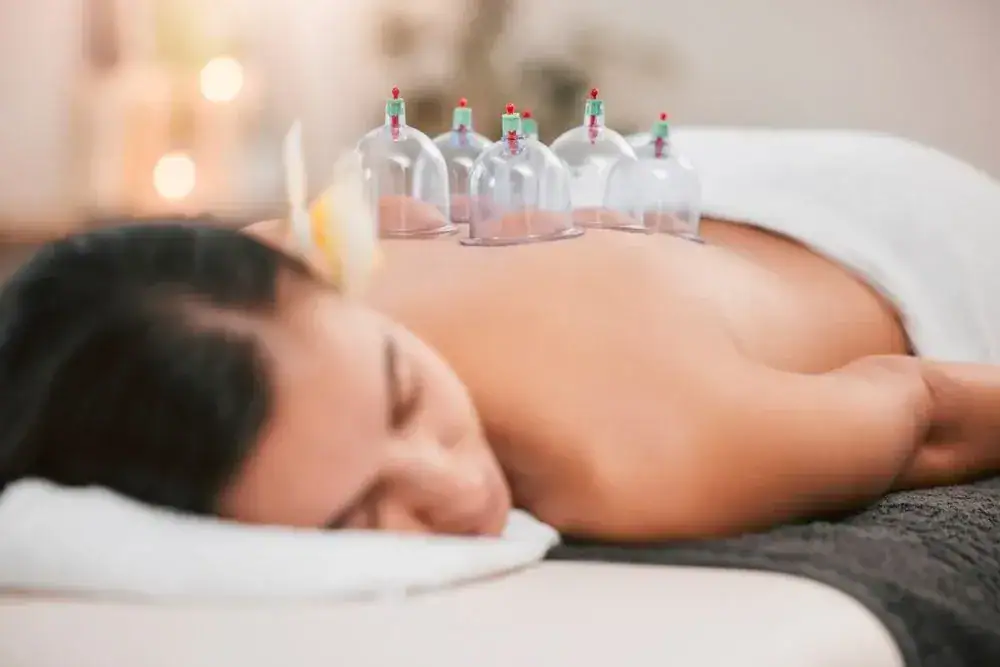
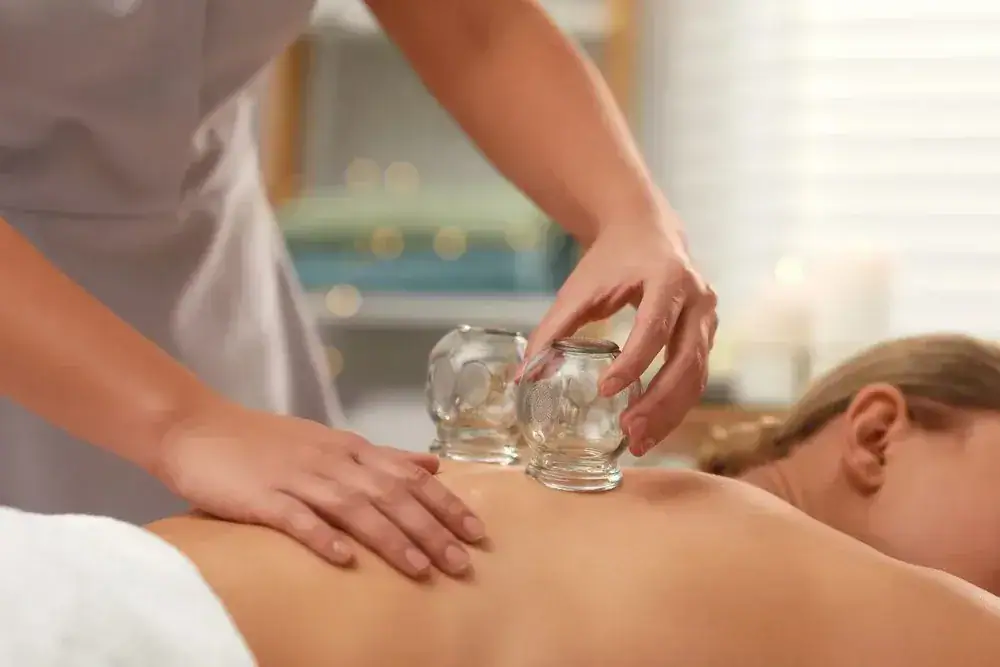
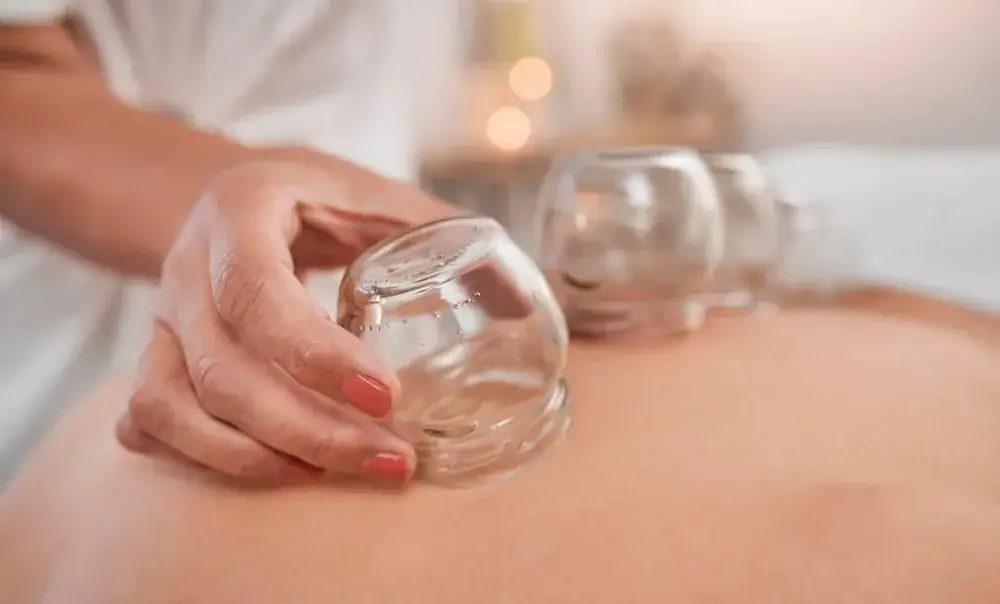
Then comes the actual cupping. Small cups are placed on your skin over the problem areas—usually your back, neck, or shoulders. Suction is created either through heat or a manual pump, and the cups stay in place for several minutes. You’ll feel a pulling sensation, but it shouldn’t hurt.
The suction draws blood to the surface and creates space between muscle fibers and fascial layers that have been compressed. This mechanical lifting is what helps decrease muscle tightness and improve tissue mobility. Some people see temporary circular marks where the cups were placed—that’s normal and fades within a few days.
Most treatment plans include cupping as part of a broader physical therapy program. You might do some targeted exercises before or after to maximize the benefits. Sessions typically last 30 to 45 minutes, and many patients notice improved range of motion right away.
Ready to get started?
Cupping therapy at Medcare isn’t a spa service. It’s a clinical intervention delivered by licensed physical therapists who understand anatomy, pain patterns, and how to integrate cupping with other evidence-based treatments.
You’re getting dry cupping, which uses suction without any incisions or bloodletting. It’s safe, low-risk, and supported by moderate-quality evidence for conditions like chronic low back pain, neck pain, and knee osteoarthritis. We use it most often for patients dealing with persistent muscle tension, limited mobility, or pain that hasn’t responded well to other approaches.
Because we serve New Suffolk and the surrounding Suffolk County communities, we also offer home visits for patients who have difficulty traveling. That’s particularly helpful for older adults or anyone recovering from surgery who needs treatment but can’t easily get to a clinic.
Treatment is personalized. Your therapist adjusts cup placement, suction intensity, and session length based on how your body responds. And because we accept Medicare and most insurance plans, you’re not paying out-of-pocket for every visit.
Yes, and there’s clinical evidence to back that up. Studies show that cupping therapy can significantly reduce chronic low back pain and improve function, especially when combined with physical therapy exercises.
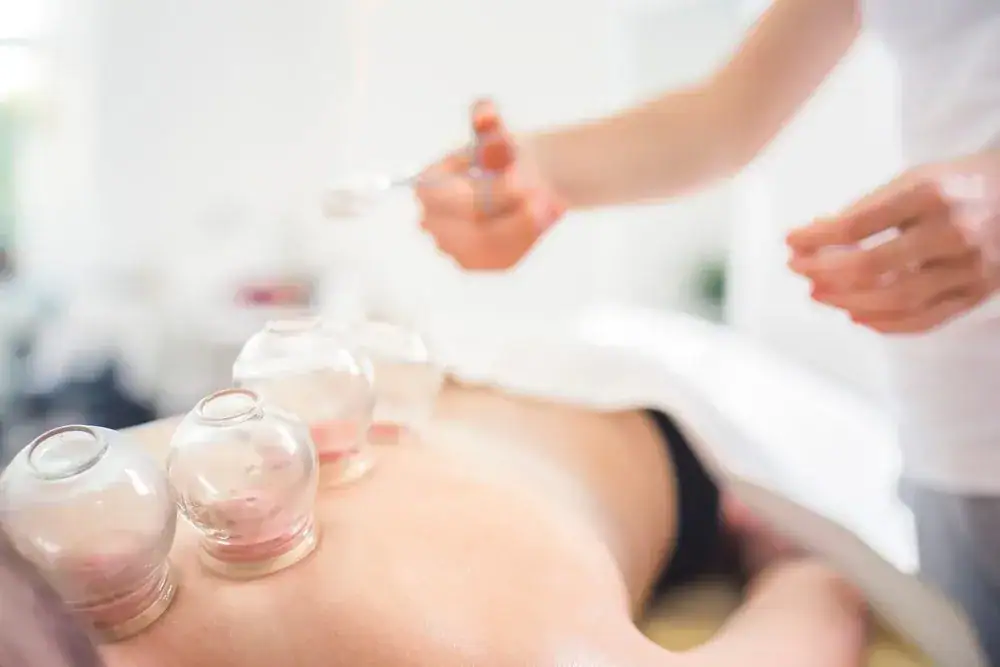
The mechanism is straightforward. Cupping increases blood flow to painful areas, reduces muscle spasms, and helps release fascial restrictions that contribute to stiffness. When your physical therapist places cups along your spine or across your shoulder blades, the suction creates space between tissue layers that have been compressed or adhered together.
Most patients notice some improvement within two to three sessions, but lasting results usually require a series of treatments as part of a complete care plan. It’s not a one-time fix, but it’s effective for people who haven’t found relief through medication or basic stretching alone.
You’ll likely see circular marks where the cups were placed, but they’re not bruises in the traditional sense. They’re caused by increased blood flow to the surface and usually fade within three to seven days.
The marks don’t hurt and they’re not a sign of injury. In fact, many practitioners view them as an indication that the treatment is working—bringing fresh blood and oxygen to areas that were previously tight or restricted.
If you’re concerned about visible marks for an upcoming event, let your therapist know. They can adjust suction intensity or choose placement areas that are easier to cover with clothing. But for most people, the temporary marks are a small trade-off for the pain relief and improved mobility they experience afterward.
When cupping is performed by a licensed physical therapist as part of your physical therapy treatment plan, it’s often covered under your existing benefits. We accept Medicare and most commercial insurance plans.
Coverage depends on your specific plan and whether cupping is billed as part of a broader therapy session or as a standalone service. Our team verifies your benefits before you start treatment so there are no surprises.
If you’re a Medicare patient in New Suffolk or anywhere in Suffolk County, we’re experienced in working within those guidelines. We’ll handle the paperwork and let you know upfront what your responsibility will be. The goal is to make treatment accessible, not to create a financial burden on top of the pain you’re already dealing with.
Massage uses compression—pushing down into muscle tissue to release tension. Cupping does the opposite. It uses suction to lift tissue away from underlying structures, creating space and drawing blood flow to the area.
That lifting action is particularly effective for fascial restrictions and deep muscle tightness that don’t always respond to hands-on pressure. It’s also useful for areas that are too painful to tolerate deep massage or for patients who need a different approach after other treatments haven’t worked.
At Medcare, cupping is administered by physical therapists, not massage therapists. That means it’s integrated into a clinical treatment plan with specific goals—like increasing your shoulder range of motion or reducing chronic neck pain. You’re not just relaxing for an hour. You’re working toward measurable functional improvements.
Yes. We offer home visits for patients who have difficulty traveling to one of our clinic locations. That’s especially helpful if you’re dealing with severe pain, limited mobility, or you’re recovering from surgery.
Our physical therapists bring the necessary equipment to your home and provide the same quality of care you’d receive in the clinic. Home-based cupping therapy is common for older adults in New Suffolk and surrounding areas who want treatment but face transportation challenges.
We’ll evaluate your condition, perform the cupping treatment, and give you exercises or guidance you can continue between sessions. Insurance and Medicare often cover home visits when they’re medically necessary, and our team handles the verification process so you know what to expect before we schedule your first appointment.
Most people notice some improvement within two to four sessions, but the total number depends on what you’re treating and how long you’ve been dealing with the problem. Chronic conditions that have been building for years usually require more sessions than acute muscle strain.
Your physical therapist will evaluate your progress after each visit and adjust the treatment plan accordingly. Some patients come in once or twice a week for a few weeks, then taper to maintenance sessions once a month. Others integrate cupping into ongoing physical therapy and use it as needed when pain flares up.
The key is consistency. Cupping works best when it’s part of a complete approach that includes targeted exercises, movement education, and lifestyle adjustments. One session might give you temporary relief, but a series of treatments combined with active participation in your recovery is what leads to lasting change.
Other Services we provide in New Suffolk