
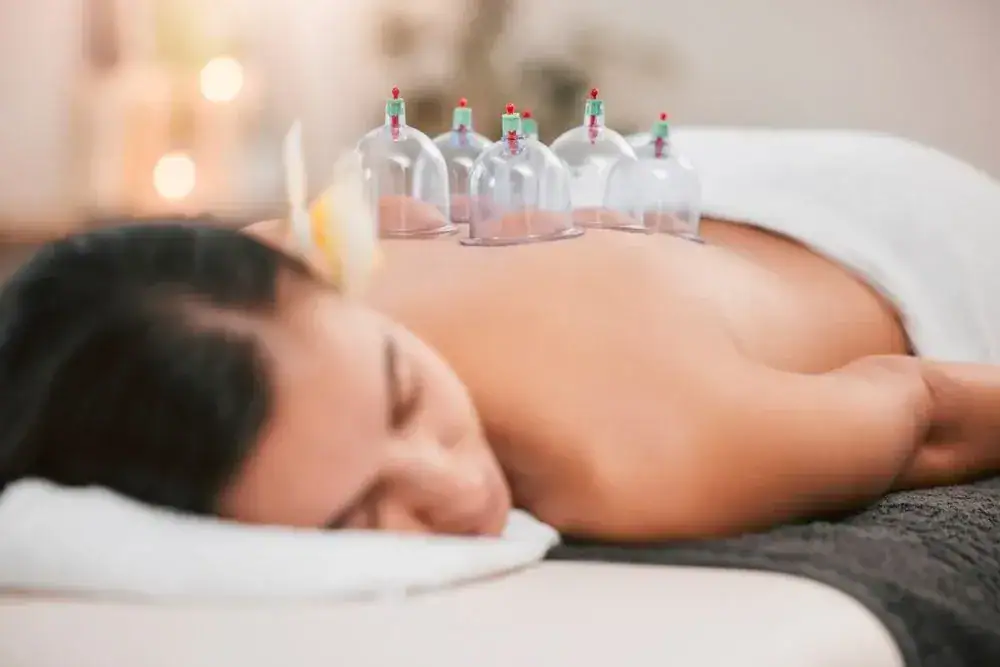

You wake up without that stiffness in your lower back. You reach for something on a high shelf without wincing. You play with your grandkids without counting down the minutes until you need to sit down.
That’s what happens when cupping therapy actually works. The suction pulls blood flow to tight, painful areas—flushing out inflammation and giving your muscles room to heal. Most people feel looser after the first session. Some get relief they haven’t felt in years.
This isn’t about masking pain. It’s about addressing what’s causing it—whether that’s chronic neck tension, lower back pain that won’t quit, or knee discomfort that’s kept you from walking the way you used to. Dry cupping combined with physical therapy gives your body two ways to recover: increased circulation and targeted muscle release.
You’re not signing up for endless appointments. You’re getting a treatment that’s been used for thousands of years, now backed by licensed therapists who know exactly how to apply it for modern pain conditions.
Medcare Therapy Services has been serving Long Island since 2010. We’re licensed physical therapists who specialize in home-based care, which matters in a community like Moriches where nearly 30% of residents are over 65 and getting to an office isn’t always easy.
We don’t run a high-volume clinic. We bring professional therapy to your home, with the same equipment and expertise you’d get anywhere else—just without the commute, the waiting room, or the hassle.
Cupping therapy is one tool we use when it makes sense. Not every patient needs it. But for chronic pain, muscle tightness, or recovery that’s stalled out, it’s proven to help. We combine it with hands-on physical therapy so you’re getting a complete plan, not just one technique.
We start with an evaluation. That means asking about your pain—where it is, how long it’s been there, what you’ve already tried. We also test your range of motion and identify which muscles are locked up or inflamed.
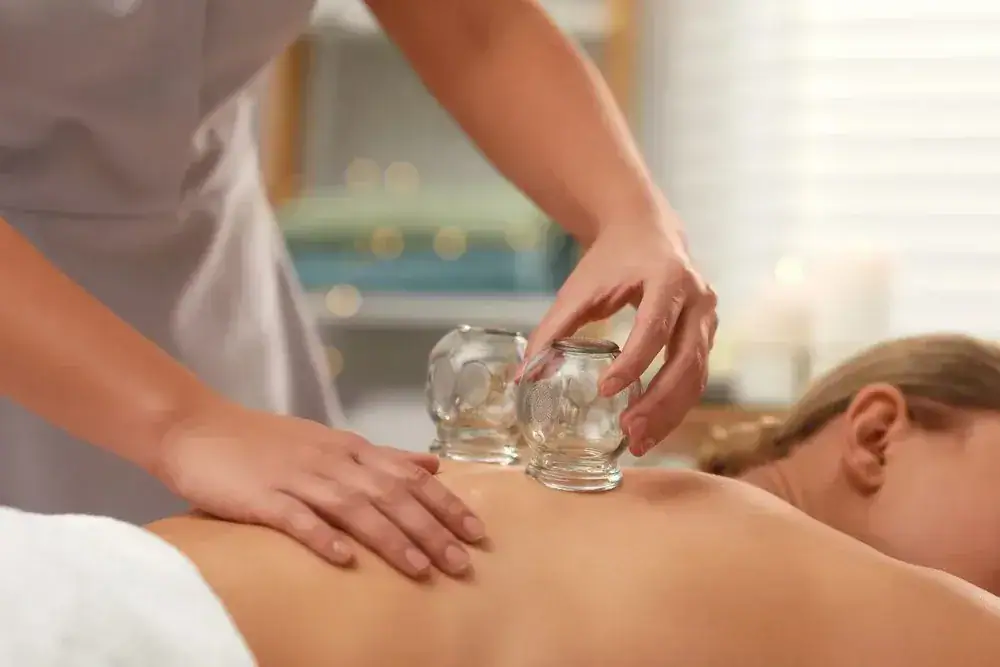
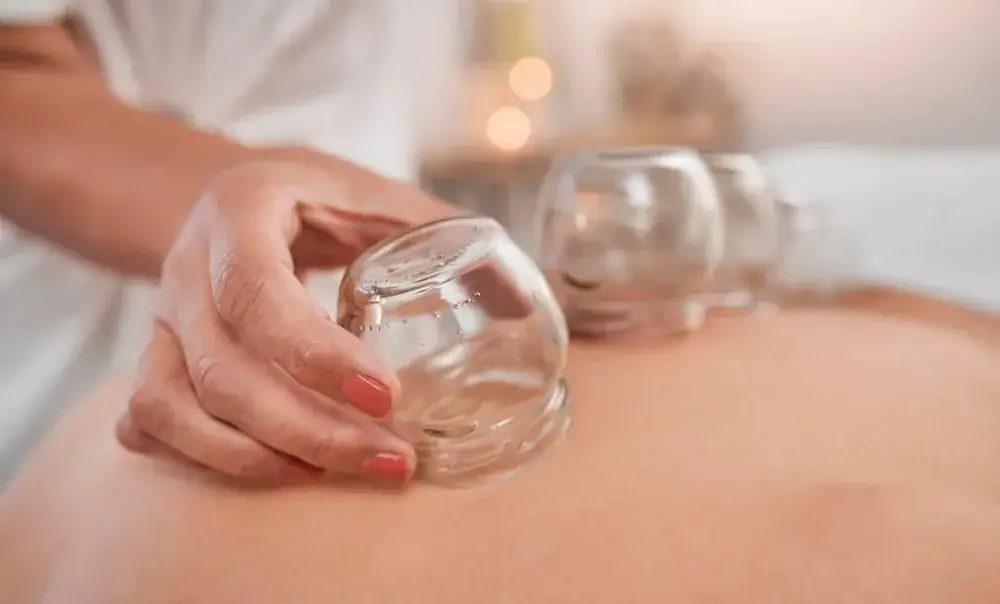
Then we apply the cups. These are small suction devices placed on your skin, usually on your back, shoulders, neck, or legs depending on where you hurt. The suction pulls tissue upward, increasing blood flow and releasing tension in the muscle. It doesn’t hurt—most people say it feels like a deep tissue massage.
Each cup stays on for 5 to 15 minutes. You might see some circular marks afterward. Those aren’t bruises—they’re increased blood flow to the area, and they fade in a few days. After we remove the cups, we move into hands-on physical therapy: stretching, strengthening, and mobility work that keeps the progress going.
Most patients notice a difference right away. Tightness eases. Pain drops. Movement feels smoother. We usually recommend a series of sessions depending on your condition, but you’ll know after the first one whether this is working for you.
Ready to get started?
You’re getting more than cupping. You’re getting a full physical therapy plan that’s built around your specific condition. That includes an initial assessment, hands-on therapy, cupping sessions as needed, and a home exercise program you can actually follow.
In Moriches, where over half of adults over 65 deal with lower limb pain and nearly a third experience upper limb discomfort, we see a lot of chronic issues that haven’t responded to standard treatment. Cupping works well for those cases because it targets inflammation and muscle tightness at the source.
We also coordinate with your doctor if needed. If you’re on Medicare, our services are covered under outpatient physical therapy. If you’ve been putting off treatment because of cost or access, that’s one less barrier.
Every session is scheduled around your availability. We come to your home in Moriches, Center Moriches, or East Moriches—wherever you are. Same-day appointments are often available. You’re not waiting weeks to start feeling better.
Yes, and there’s research to back it up. Studies show that cupping therapy provides moderate-quality evidence for relief of chronic low back pain, especially when combined with physical therapy. The suction effect increases blood flow to the affected area, which helps reduce inflammation and flush out toxins that build up in tight muscles.
For chronic pain, one session usually isn’t enough. Most people need a series of treatments to see lasting improvement. But many patients report feeling noticeably better after just one session—less stiffness, easier movement, reduced pain when bending or lifting.
If you’ve tried physical therapy before without much success, adding cupping can make a real difference. It’s not a replacement for strengthening and mobility work. It’s a complement that helps your muscles respond better to the therapy.
Cupping therapy is safe when performed by a licensed professional. It’s a low-risk, non-invasive treatment that’s been used for thousands of years. The most common side effect is circular marks on your skin where the cups were placed.
Those marks aren’t bruises in the traditional sense. They’re caused by increased blood flow to the area, which is actually part of the healing process. They’re usually painless and fade within a few days to a week. Some people don’t get marks at all, depending on their skin and the intensity of the suction.
We adjust the suction level based on your comfort and your condition. If you have sensitive skin or you’re concerned about visible marks, let us know. We can modify the treatment. The goal is relief, not discomfort.
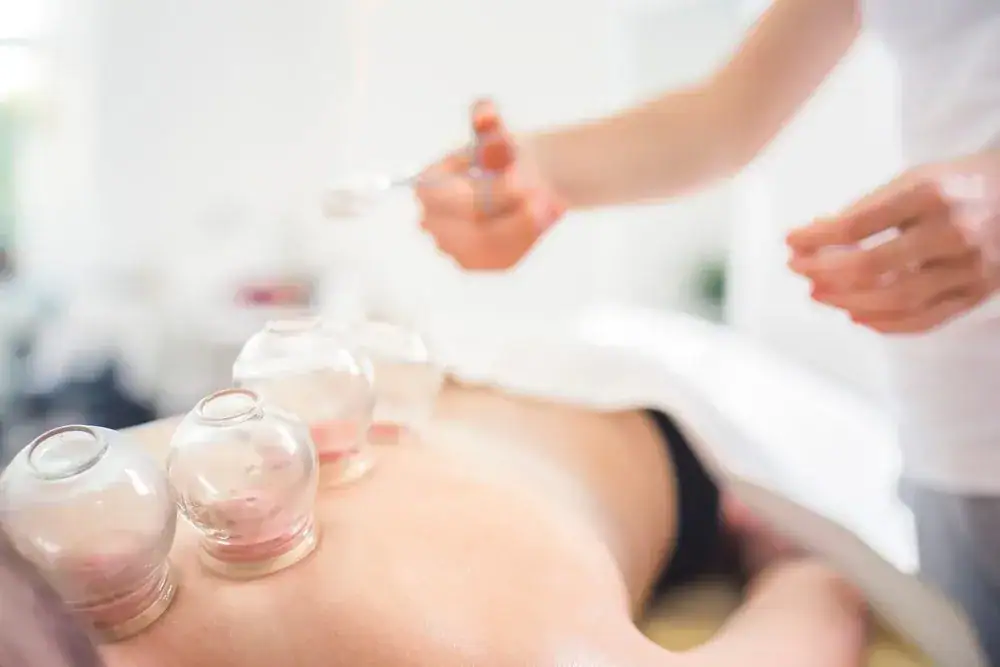
Dry cupping uses suction only—no needles, no incisions, no bloodletting. The cups create a vacuum on your skin, pulling tissue upward to increase circulation and release muscle tension. It’s the most common type of cupping used in physical therapy settings.
Wet cupping, by contrast, involves making small cuts in the skin to draw out blood. That’s not something we do, and it’s not necessary for pain relief or muscle recovery. Dry cupping is just as effective for the conditions we treat—back pain, neck pain, knee pain, muscle tightness—and it’s much simpler.
Fire cupping is another variation where a flame is used to create suction. We use modern suction cups that don’t require fire. Same result, safer process. You get the therapeutic benefit without any unnecessary risk.
Absolutely. In fact, that’s how we use it. Cupping isn’t a standalone treatment—it’s most effective when combined with physical therapy exercises, stretching, and strengthening work. The suction helps relax tight muscles and reduce pain, which makes it easier for you to do the movements that actually rebuild strength and mobility.
If you’re already seeing a physical therapist elsewhere and want to add cupping, talk to them first. Most therapists are open to it, especially if your progress has plateaued. If you’re starting fresh with us, we’ll build cupping into your plan from the beginning if it makes sense for your condition.
We also work with your doctor. If there’s a medical reason you shouldn’t have cupping—like a bleeding disorder or certain skin conditions—we’ll know before we start. Your safety comes first.
It depends on your condition. Acute pain—like a recent muscle strain—might respond in one to three sessions. Chronic pain that’s been around for months or years usually takes longer, often six to eight sessions before you see significant, lasting improvement.
Most people feel some relief after the first session. That doesn’t mean you’re done. It means the treatment is working, and your body needs more time to fully heal. We’ll give you a realistic timeline during your initial evaluation based on what we find.
You’re not locked into a long-term contract. We reassess after every few sessions. If cupping isn’t helping, we’ll try something else. If it’s working, we’ll keep going until you hit your goals. The plan adjusts based on your progress, not a preset schedule.
If cupping is part of your physical therapy treatment plan, it’s typically covered under your outpatient PT benefits. Medicare covers it when provided by a licensed physical therapist, which we are. Most private insurance plans follow similar guidelines.
Coverage depends on your specific plan and whether you’ve met your deductible. We recommend calling your insurance company before your first session to confirm your benefits. We can provide the necessary codes and documentation to help you get that information.
If you’re paying out of pocket, we’ll give you a clear cost estimate upfront. No surprises. No hidden fees. You’ll know what you’re paying before we start treatment.
Other Services we provide in Moriches